
What Is Fa Ban Xia? Medicinal Part, Identification, and Common Formulas
Many people overseas interested in Chinese medicine often come across the name “Fa Ban Xia” when researching and may mistakenly think it is a distinct plant. In fact, Fa Ban Xia is a commonly used processed form of Ban Xia (Pinellia ternata) rhizome prepared with standard adjuvants; its safety profile and clinical applications are distinctly different from raw Ban Xia. This article will help you systematically understand Fa Ban Xia from the perspectives of visual identification, medicinal part, processing significance, common formulas, and usage precautions, providing a reliable reference for study or selection.
What Does Fa Ban Xia Look Like? How to Identify It Quickly?
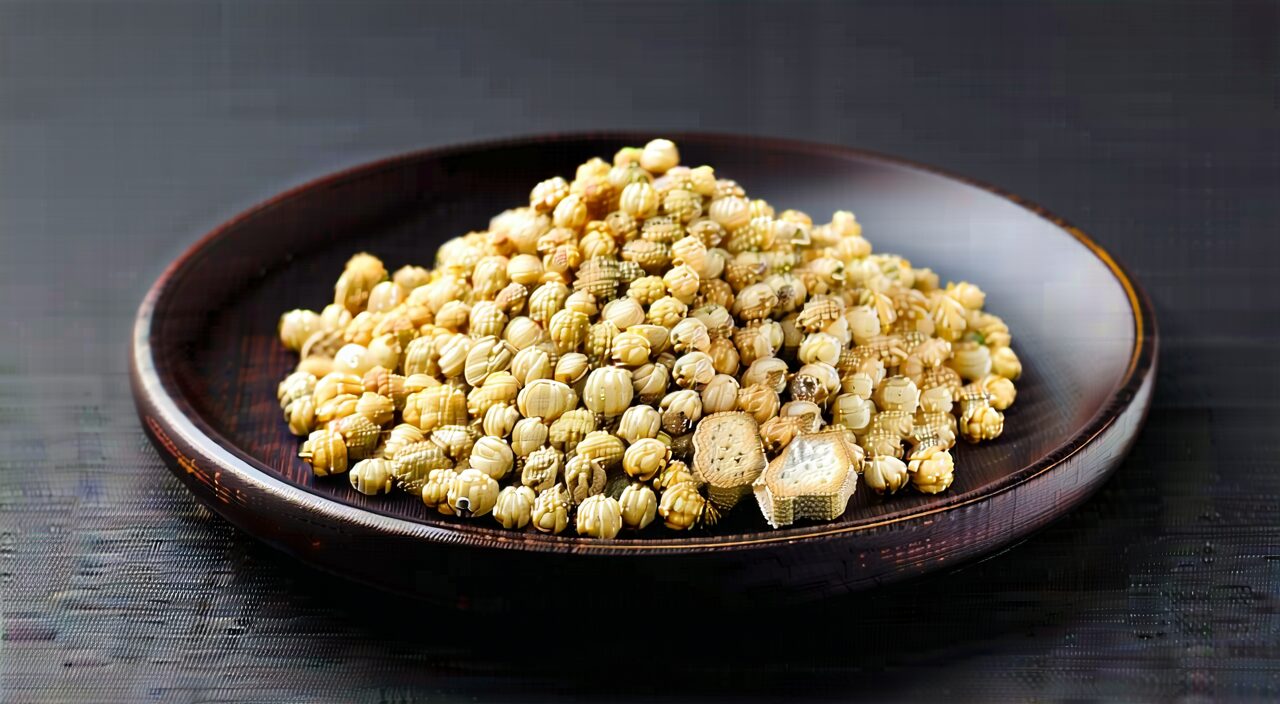
Fa Ban Xia typically appears as subspherical, semi-round, or irregular granular pieces, not completely uniform in size. High-quality pieces usually have a yellowish-white, light yellow, or slightly light brown surface, sometimes with residual traces of the outer skin. The texture is relatively hard and brittle, breaking easily to reveal a relatively flat fracture surface that is whitish or starchy. It has a subtle mixed odor of licorice, lime, and a hint of pungent aroma characteristic of processing, markedly different from the obvious numbing sensation of raw Ban Xia. If the color is too dark, the texture overly soft and waxy, or if there is a sour or musty smell, the quality is likely poor or storage inappropriate. When purchasing, look for these features and choose products that appear clean, naturally colored, and have a mild, non-irritating odor.
What Exactly Is the Medicinal Part of Fa Ban Xia?
The medicinal part of Fa Ban Xia remains the dried rhizome of the plant Ban Xia (Pinellia ternata) from the Araceae family. Raw Ban Xia is quite irritant and is generally not taken orally in its unprocessed form. Traditional processing involves selecting raw Ban Xia, soaking it in water, then treating it with a licorice-lime solution or a combination of licorice, lime, and ginger according to standardized procedures before drying. Through this process, the irritant components are adjusted, and its nature shifts from “warm and drying” to “mild and moderate,” making it more suitable for formula use. Thus, although we call it Fa Ban Xia, its origin is always the Ban Xia rhizome; the key difference lies in whether it has undergone standardized processing.
How Does Traditional Chinese Medicine Understand Fa Ban Xia?
In traditional Chinese medicine (TCM) theory, Fa Ban Xia is generally considered acrid and warm, entering the spleen, stomach, and lung meridians. Classical herbals summarize its main actions as drying dampness and transforming phlegm, directing qi downward to stop vomiting, and dispersing stuffiness and masses. When dampness and turbidity impair the spleen and stomach’s transport functions, leading to profuse phlegm, chest tightness, nausea, or poor appetite, Fa Ban Xia often serves as an important ingredient in formulas. It differs from direct cough suppressants in that it works indirectly by activating qi flow and reducing phlegm production. However, its application relies heavily on pattern differentiation; it is not suitable for all types of phlegm cough, especially not for dry-phlegm or yin deficiency with fire conditions. Therefore, TCM practitioners typically evaluate the tongue coating, pulse, and other signs before deciding to use Fa Ban Xia.
How Does Modern Research View the Safety of Fa Ban Xia?
One focus of modern pharmacological research is the detoxification mechanism of processing. The irritant compounds present in raw Ban Xia are significantly altered after treatment with adjuvants like licorice and lime, reducing the risk of mucosal irritation. However, reduced toxicity does not mean zero risk. Improper use, such as large overdoses or self-administration of the single herb without professional guidance, can still cause mouth and throat discomfort, nausea, or gastrointestinal irritation. Current research provides data supporting traditional processing experience and indicates that properly processed Fa Ban Xia is relatively safe when used in compound formulas, but it should still be used under the guidance of an experienced professional.
What Are the Differences Between Fa Ban Xia, Jiang Ban Xia, and Qing Ban Xia?
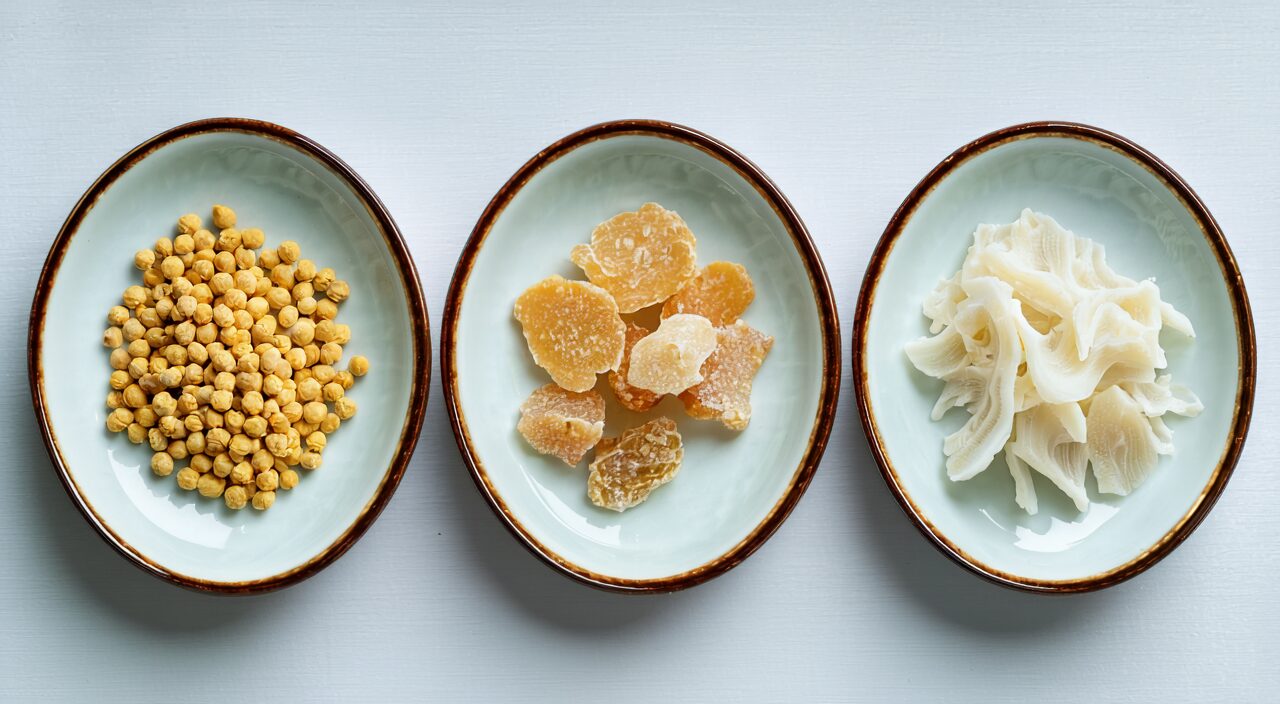
These three are the most commonly used processed products of Ban Xia, differing in adjuvants and emphasis, and they are often confused. Fa Ban Xia uses licorice and lime solution as the main adjuvants, resulting in a yellowish-white color and a relatively mild nature; traditionally, it is more focused on drying dampness and transforming phlegm, often used in formulas for profuse phlegm with cough and asthma, or damp-turbidity obstructing the middle burner. Jiang Ban Xia (ginger-processed Ban Xia) is prepared with ginger and alum; the pieces often appear semi-translucent or light yellowish-brown. Due to the addition of ginger, its action of directing qi downward to stop vomiting is more pronounced, making it traditionally more suitable for rebellious stomach qi, vomiting, and epigastric fullness. Qing Ban Xia (alum-processed Ban Xia) is mainly soaked in alum solution, yielding a whiter color and brittle texture; it dries dampness and transforms phlegm while further reducing irritation, serving as a compromise in some traditional formulas. Visually, Fa Ban Xia granules are coarser and starchy, Jiang Ban Xia has a strong translucent appearance, and Qing Ban Xia is whiter. In actual use, which type to choose should follow a TCM practitioner’s pattern differentiation and specific formula requirements; self-substitution is not recommended.
Which Classical Formulas Use Fa Ban Xia?
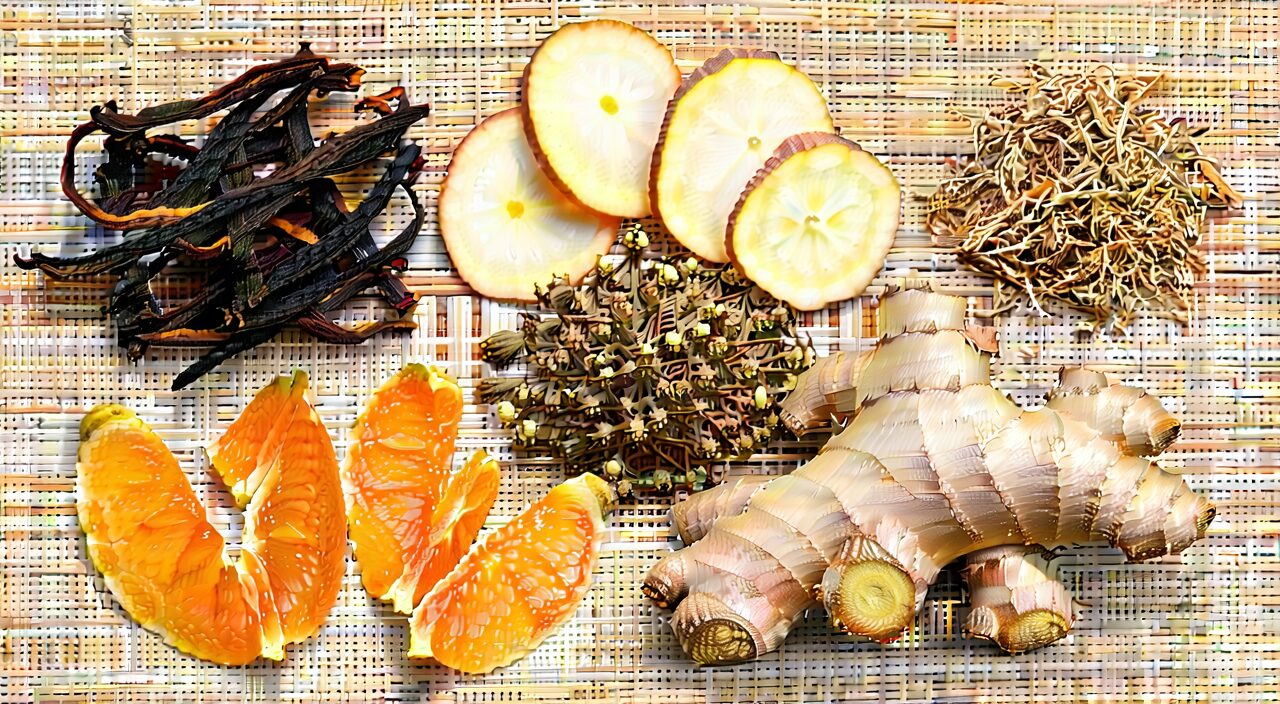
Fa Ban Xia is a frequent component in many traditional formulas. The following examples are provided for educational exchange on Chinese medicine; specific product compositions should comply with actual preparation standards and prescriptions. In Er Chen Wan, Fa Ban Xia is often combined with Chen Pi (tangerine peel) and others, traditionally used for damp-phlegm cough, chest and diaphragm fullness, and nausea with a desire to vomit, with Fa Ban Xia serving as the core herb for drying dampness and transforming phlegm. Ban Xia Bai Zhu Tian Ma Tang contains Fa Ban Xia, Bai Zhu (white atractylodes), Tian Ma (gastrodia), and others, traditionally used for dizziness, headache, and chest tightness due to wind-phlegm disturbing the upper body, embodying the principle of transforming phlegm and extinguishing wind. Xiang Sha Liu Jun Zi Tang adds Fa Ban Xia, Mu Xiang (costus root), and Sha Ren (cardamom) to Si Jun Zi Tang base, mostly used for indigestion, epigastric distension, and belching caused by spleen deficiency and dampness obstruction. Some preparations of Huo Xiang Zheng Qi San include Fa Ban Xia, combined with Huo Xiang (patchouli), Zi Su (perilla leaf), Fu Ling (poria), etc., used for nausea, diarrhea, chest tightness resulting from external wind-cold and internal dampness stagnation. Users should consider their own constitution and seek professional advice; do not self-apply these formulas without guidance.
What Precautions Should Be Taken When Using Fa Ban Xia?
Although Fa Ban Xia is processed, it still requires cautious use. First, it should generally be avoided during pregnancy, as Ban Xia–related herbs are traditionally considered to pose risks for pregnancy. Second, cases of yin deficiency with dry cough, scanty phlegm, or blood-streaked sputum do not match its warm and drying nature and should not be used alone. Additionally, individuals with sensitive constitutions are advised to start with a small dose when first using Fa Ban Xia decoctions or patent medicines containing it, and to observe for any oral or throat irritation or stomach discomfort. If long-term or continuous use is needed, it is recommended to do so under the guidance of a TCM practitioner and not to combine it on one’s own. If persistent discomfort occurs, discontinue use promptly and consult a professional.
Summary
Fa Ban Xia is derived from the Ban Xia rhizome and, after standardized processing with adjuvants such as licorice and lime, becomes milder in nature. Traditionally, it is primarily used for drying dampness and transforming phlegm in related formulas. It differs from Jiang Ban Xia and Qing Ban Xia in adjuvants, appearance, and application emphasis, and the choice should be based on pattern differentiation. It is important to note that processing reduces toxicity but does not guarantee absolute safety; risks during pregnancy, in cases of yin deficiency with dry cough, and oral/pharyngeal irritation must still be taken seriously. Professional guidance should be sought before use. This article is intended for educational purposes on Chinese medicine and cannot replace individualized diagnosis or treatment advice.