
What Is Ginger-Processed Pinellia? Medicinal Part, Identification, and Common Formulas
Jiang Ban Xia is not a casual mix of fresh ginger and Pinellia, but a standardized processed herbal decoction piece. When exploring traditional Chinese medicine (TCM) formulas, many people become curious about “Jiang Ban Xia”: What does it actually look like? Which part of the plant is used? How is it different from Fa Ban Xia? Which classic formulas include it? This article addresses these questions, offering an objective reference for overseas TCM enthusiasts to build a basic understanding of Jiang Ban Xia while paying close attention to its usage boundaries.
What Does Jiang Ban Xia Look Like? How to Identify It?
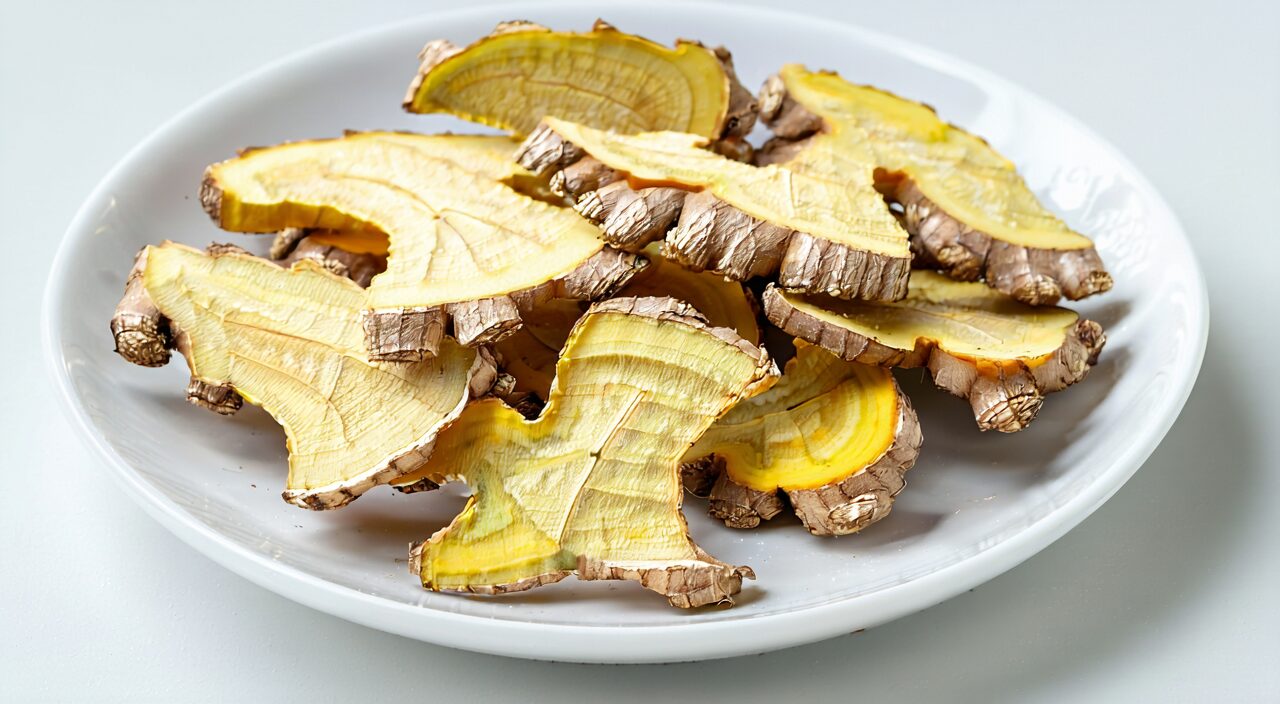
Jiang Ban Xia decoction pieces commonly appear as roundish or irregular slices and granules, with some shapes close to oblate spherical. The surface is brownish-yellow to pale yellow, sometimes showing longitudinal cutting marks or fine cracks. The texture is brittle and hard, easy to snap off; the broken surface is yellowish-white, slightly starchy, occasionally with tiny pores. When smelled closely, it has a faint ginger aroma, without the strong numbing and irritating sensation of raw Pinellia. In the market, Jiang Ban Xia is usually relatively uniform in size with few impurities. From an identification perspective, pieces that are intact, brownish-yellow, clearly yellowish-white on the broken surface, and with a natural ginger scent that is not overly intense are more recognized. Compared with similar-looking species such as Arisaema, Jiang Ban Xia tends to be smaller, more brittle, and the broken surface leans more toward yellowish-white, though self-identification remains difficult and sourcing through reliable channels is recommended.
What Is the Medicinal Part of Jiang Ban Xia?
The original plant of Jiang Ban Xia is Pinellia ternata from the Araceae family, and the medicinal part used is the underground tuber. After harvesting, the outer skin and rootlets are removed, followed by preliminary steps such as cleaning, soaking, and boiling. It is then further decocted or steeped with fresh ginger and alum to reduce toxicity and enhance therapeutic effects. Finally, it is cut into slices or crushed into granules and dried, becoming the Jiang Ban Xia found in pharmacies. This process is not simply mixing with ginger juice; it involves a standardized procedure with specific temperatures, times, and excipient ratios. Therefore, raw Pinellia and fresh ginger cannot be casually mixed as a substitute.
How Does TCM Understand Jiang Ban Xia?
Traditional Chinese medicine classifies Jiang Ban Xia as entering the Spleen, Stomach, and Lung meridians. It is warm in nature and acrid in taste, often used in treatment strategies to warm and transform cold-damp phlegm, descend rebellious qi, and stop vomiting. When cold-damp phlegm and dampness stagnate in the middle burner, symptoms such as chest tightness, nausea, and a white greasy tongue coating can easily arise. The acrid and warm properties of Jiang Ban Xia help diffuse turbid dampness, and with the auxiliary effects of ginger and alum, its ability to descend rebellious qi and harmonize the stomach becomes more prominent. Therefore, when a physician diagnoses internal obstruction of phlegm-dampness or upward rebellion of stomach qi, Jiang Ban Xia often appears in corresponding combinations. It is important to emphasize that Jiang Ban Xia is relatively warm and drying, suitable for cold-damp type phlegm and vomiting, but not appropriate for yin deficiency with dry cough or phlegm-heat accumulation. Whether it suits an individual must be determined by a TCM professional based on tongue and pulse presentations and overall symptoms.
How Does Modern Research View Jiang Ban Xia?
Modern research on Jiang Ban Xia mainly focuses on the principle of toxicity reduction through processing. Raw Pinellia contains calcium oxalate raphides and certain lectin proteins that can easily pierce the oral and pharyngeal mucosa, causing intense discomfort. After processing with fresh ginger and alum, the raphide structures are destroyed, toxic proteins are inactivated, and the irritant effect is greatly reduced, while some alkaloids, polysaccharides, and other components are retained. Some experiments suggest that Jiang Ban Xia shows certain activities in inhibiting inflammatory mediators and regulating gastrointestinal contractions, but these are mostly basic studies or animal experiments, and there is still some distance from guiding clinical use. Therefore, the traditional concept of reducing toxicity and enhancing efficacy can be taken as a reference direction, but it cannot directly infer specific pharmacological effects or safety promises.
What Are the Differences Between Jiang Ban Xia, Fa Ban Xia, and Qing Ban Xia?
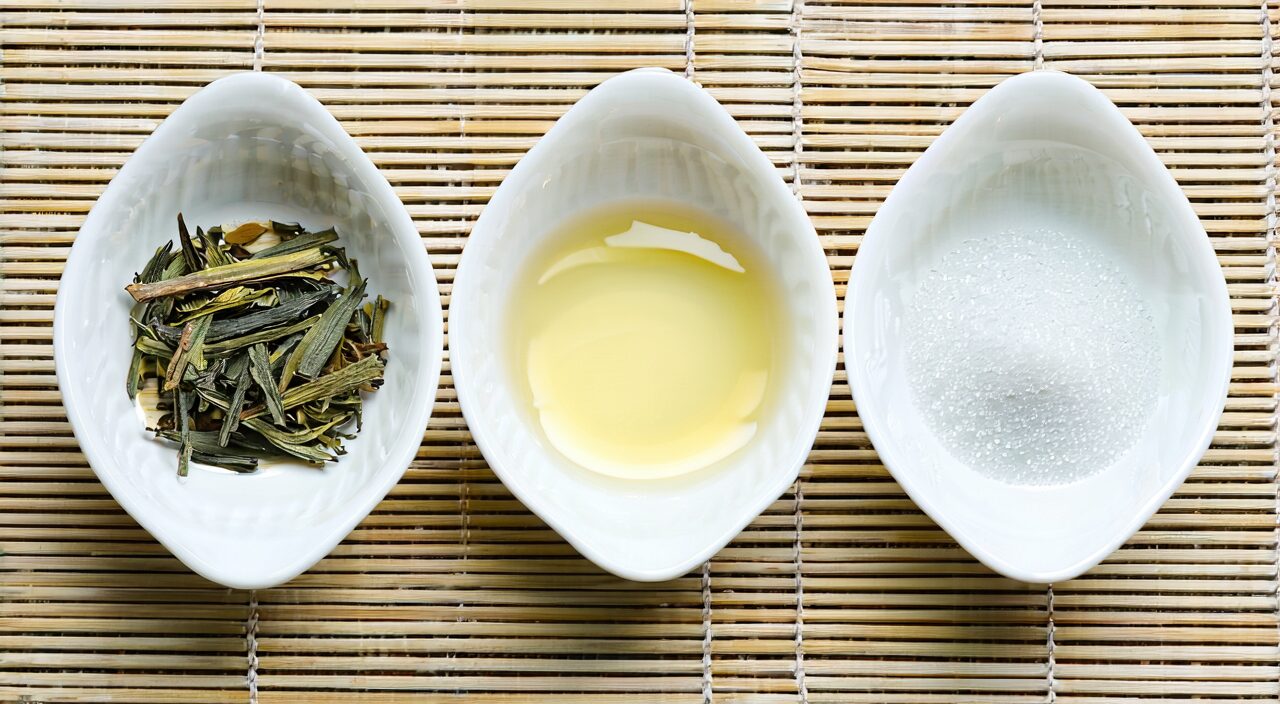
All three are processed Pinellia products, but due to different excipients, their emphasis differs:
- Jiang Ban Xia: Prepared with fresh ginger and alum, it is inclined to descend rebellious qi, stop vomiting, warm the middle, and transform phlegm. It is often used for manifestations such as phlegm-damp vomiting and stuffiness in the chest and epigastrium.
- Fa Ban Xia: Prepared with licorice and lime, it leans towards drying dampness and transforming phlegm. It is more considered in situations of spleen deficiency generating dampness, with profuse cough and phlegm.
- Qing Ban Xia: Prepared with alum only, it has a weaker irritant nature and excels at transforming phlegm. It can be chosen for damp-phlegm cough without obvious cold or heat bias.
These three decoction pieces also differ in appearance, color, smell, and texture: Jiang Ban Xia is brownish-yellow with a ginger smell; Fa Ban Xia tends to be yellowish-white to pale yellow with a slight licorice sweetness; Qing Ban Xia is whitish and brittle, with a more noticeable alum taste. In contemporary dispensing, the “Ban Xia” mentioned in classic formulas should be determined as to which processed product to use based on the prescription requirements and specific pathogenesis; self-substitution is not advisable.
Which Classic Formulas Use Jiang Ban Xia?
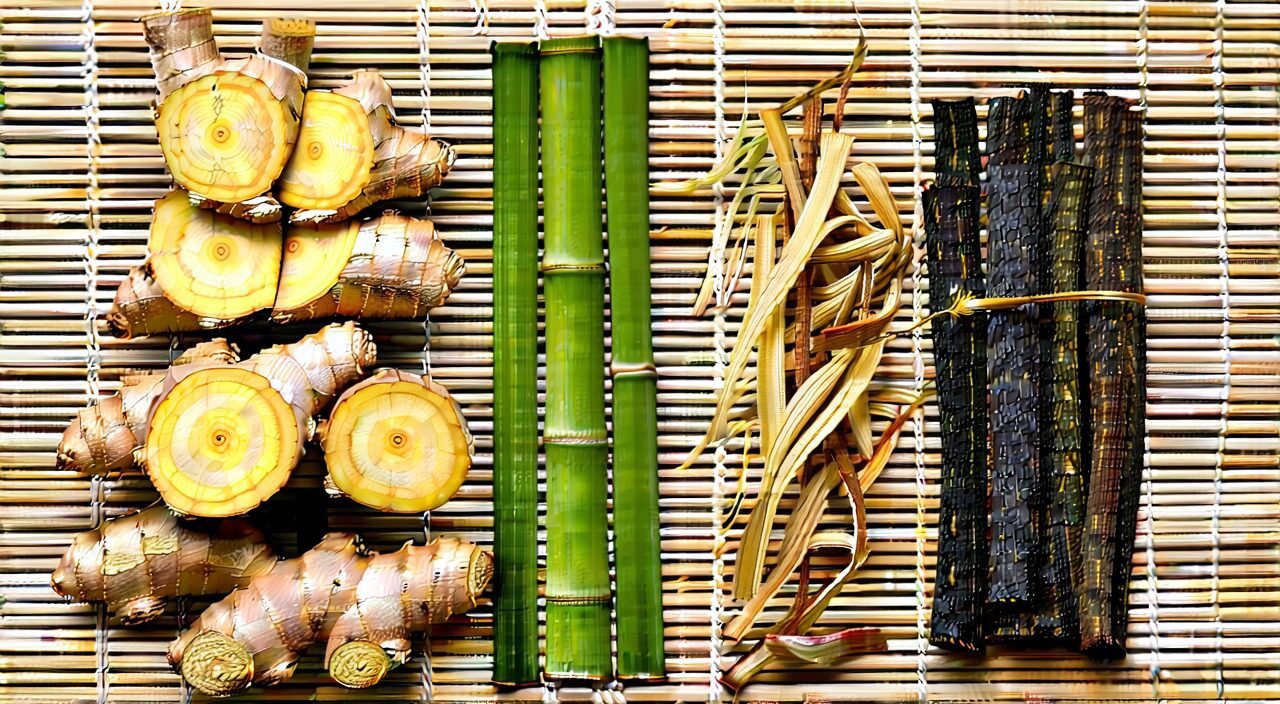
There are quite a few traditional formulas that use Jiang Ban Xia. Here are a few as reference examples:
- Xiao Ban Xia Tang (Minor Pinellia Decoction): Composed of only Pinellia and fresh ginger, originating from ancient texts, it is often used to address sudden nausea and vomiting caused by stomach cold with phlegm-fluid retention. In modern clinics, Jiang Ban Xia is mostly used directly, both to reduce toxicity and enhance the antiemetic effect.
- Ban Xia Xie Xin Tang (Pinellia Decoction to Drain the Epigastrium): Combines Huang Lian, Huang Qin, Gan Jiang, etc., to address epigastric fullness and nausea caused by intermingled cold and heat. The formula uses Pinellia to descend rebellion and dissipate binds, and Jiang Ban Xia is usually more appropriate to include.
- Xuan Fu Dai Zhe Tang (Inula and Hematite Decoction): Contains Xuan Fu Hua, Dai Zhe Shi, etc., targeting belching and regurgitation due to stomach deficiency and phlegm obstruction. Jiang Ban Xia assists in descending rebellion and transforming phlegm, addressing both root and branch.
- Wen Dan Tang (Warm the Gallbladder Decoction): Composed of Ban Xia, Zhu Ru, Zhi Shi, etc., traditionally used for heart vexation, insomnia, chest tightness, and nausea caused by gallbladder-stomach disharmony and phlegm-heat internal disturbance. The Pinellia in it is often processed with ginger to balance the overall cold and heat.
These formulas reflect the TCM pattern differentiation approach. Practical application must be prescribed by a licensed TCM practitioner based on specific symptoms and constitution; self-preparation and consumption should not be attempted.
What Precautions Should Be Taken When Using Jiang Ban Xia?
Although Jiang Ban Xia is a processed product, it still has usage boundaries that need attention. First, pregnant women: traditional experience and most TCM textbooks list it as requiring caution or contraindication, and it should not be used during pregnancy without proper guidance. Those with yin deficiency and dry cough, presenting as dry cough with little phlegm, dry mouth and throat, and warm palms and soles, are also unsuitable because the warm and drying nature of Jiang Ban Xia may worsen the discomfort. Unprocessed raw Pinellia has significant toxicity and can easily irritate the oral, pharyngeal, and digestive mucosa; it must never be consumed on one’s own. Likewise, one should not purchase raw Pinellia tubers to process at home, because the detoxification process requires strict parameter control. There is insufficient data on the safety of long-term or high-dose use, so short-term application under the guidance of a TCM practitioner is generally recommended. If persistent vomiting, severe abdominal pain, tarry stools, weight loss, or other symptoms occur, prompt medical attention is necessary, and one should not rely solely on Jiang Ban Xia for management.
Summary
Jiang Ban Xia is the decoction piece of Pinellia tuber that has been properly processed with fresh ginger and alum. It has the visual characteristics of being brownish-yellow, brittle, and faintly ginger-scented. Traditional Chinese medicine often uses it for conditions such as cold-phlegm and vomiting. Its differences from Fa Ban Xia and Qing Ban Xia lie in the excipients and therapeutic emphasis, while formulas like Xiao Ban Xia Tang and Ban Xia Xie Xin Tang mostly include Jiang Ban Xia for descending rebellion and transforming phlegm. For the general reader, understanding the original plant and the processing logic of Jiang Ban Xia is important, but specific usage must be carried out under professional guidance. It should not be regarded as a daily dietary supplement or a universal self-care item. Any health issue must be based on pattern differentiation and diagnosis, avoiding blind application.