
What Is Luo Han Guo? Medicinal Parts, Identification, and Common Formulas
Many people know Luo Han Guo only as a “sweet sugar substitute” or a “soothing throat tea ingredient,” but are less clear about its complete medicinal parts, typical appearance, and differences from similar herbs such as Pang Da Hai. Centered on the ripe fruit of Luo Han Guo, this article sorts out its different roles in the contexts of medicinal herb, food, and sugar substitute promotion, helping overseas readers gain a more comprehensive understanding of this common moistening and cooling remedy.
What Does Luo Han Guo Look Like? How to Identify It
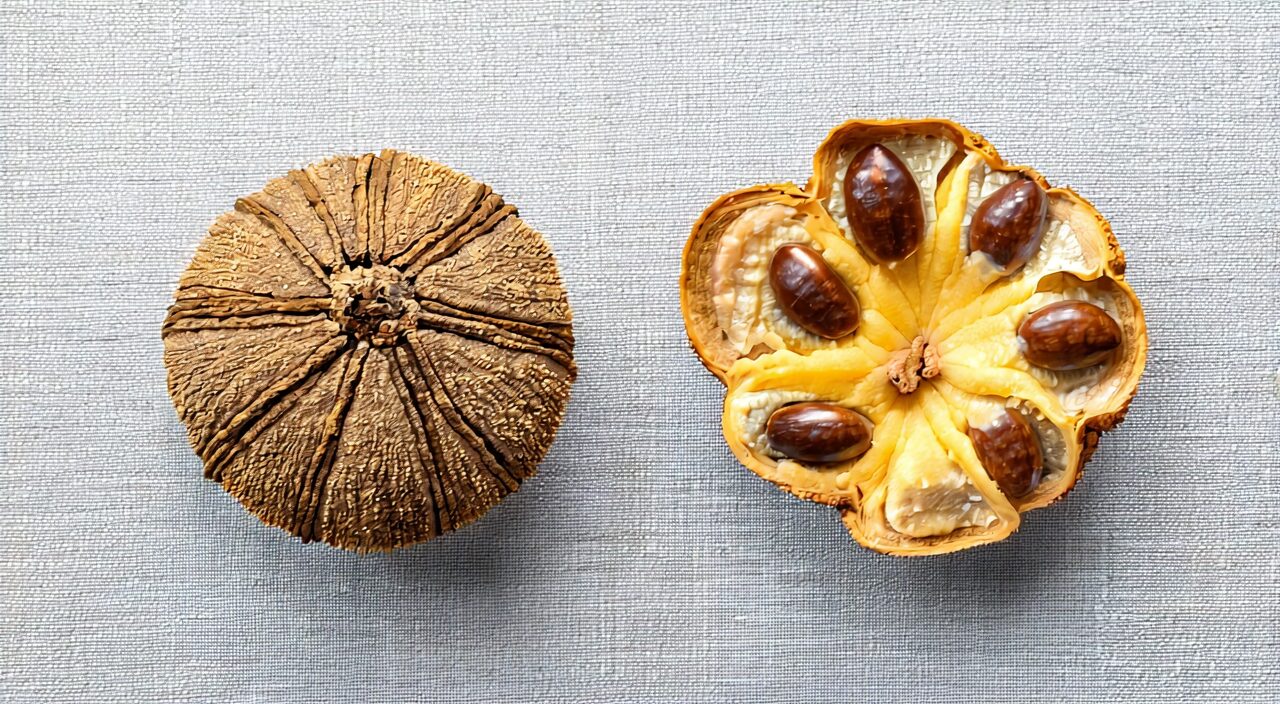
The fruit of Luo Han Guo is typically spherical or slightly flattened ovoid, usually 4–8 cm in diameter. When fresh, the peel is green, and as it matures and dries, the color gradually turns yellowish-brown, greenish-brown, or dark brown. The surface of the dried product often shows fine, short hairs and feels slightly rough to the touch; some products pressed into flat cakes may have indentations. The shell becomes brittle after drying and cracks easily. When broken open, you can see densely packed pale brown, flat-ovoid seeds surrounded by yellowish-brown fleshy arils. The whole fruit carries a natural sweet aroma; if you smell sour or moldy odors, it may have absorbed moisture and spoiled. For identification, besides color and shape, you can also note the brittleness of the shell and the distribution of seeds—these are important references for distinguishing Luo Han Guo from other similar fruits.
What Are the Medicinal Parts of Luo Han Guo?
The medicinal material used in traditional Chinese herbal medicine is the dried ripe fruit of Siraitia grosvenorii, a plant in the Cucurbitaceae family. The fruit is harvested when it turns from green to yellow in autumn, and then dried by airing or low-temperature drying until fully dry. The entire fruit is used medicinally—not just the pulp or extracted seeds, but the shell together with the seeds. In daily use for infusions or decoctions, the dried fruit is usually broken into pieces so that both the shell and seeds come into contact with water, which better facilitates the dissolution of mogrosides, polysaccharides, and other constituents. Therefore, understanding the complete medicinal part also helps differentiate industrial products that use only mogrosides as food sweeteners, avoiding confusion between the sugar substitute concept and the traditional experience of consuming the whole fruit.
How Does Traditional Chinese Medicine View Luo Han Guo?
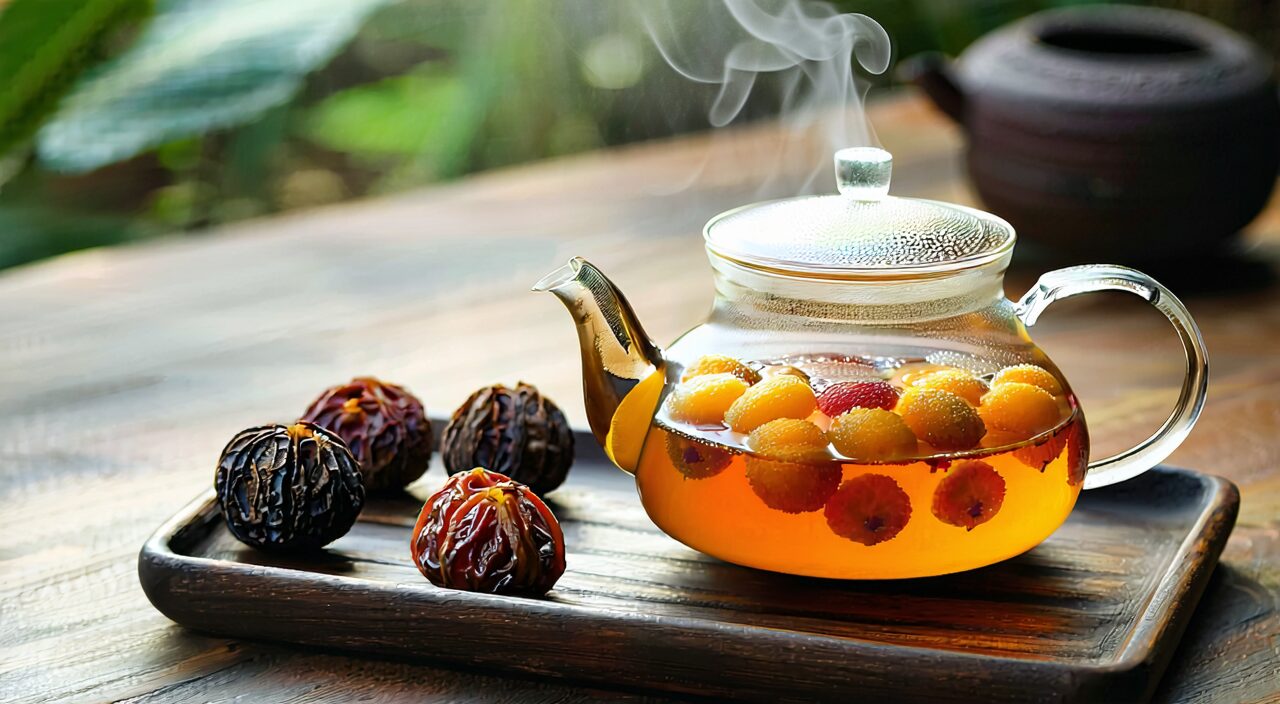
In traditional Chinese medicine theory, Luo Han Guo is cool in nature, sweet in flavor, and enters the Lung and Large Intestine meridians. It mainly acts in three directions: clearing heat and moistening the lung, benefiting the throat and restoring the voice, and lubricating the intestines to relieve constipation. For manifestations of “dryness” and “heat” such as lung-heat dry cough, dry and sore throat, and hoarseness, it is often used as part of daily care, especially suitable for auxiliary conditioning during seasonal dryness or times of heavy voice use. At the same time, its lubricating nature makes it frequently included in protocols for intestinal dryness and constipation to help alleviate a dry bowel state. However, precisely because it is cool and moistening, people with spleen-stomach deficiency cold, who are prone to abdominal cold pain or loose stools, are generally not advised to use it in large amounts alone. Whether it is suitable and how it should be combined still requires comprehensive judgment based on constitution and current condition.
What Do Modern Studies Say About Luo Han Guo?
Modern research on Luo Han Guo mostly focuses on its contained mogrosides. These compounds are intensely sweet yet low in calories, and are widely used in the food industry as a natural sugar substitute. But what the whole fruit releases when infused or decocted goes far beyond mogrosides alone, also including polyphenols, flavonoids, polysaccharides, and other complex constituents. The traditional practice of drinking the whole-fruit water relies more on its comprehensive moistening and cooling effects rather than merely meeting a sweet taste. For those with blood sugar management needs, when drinking Luo Han Guo water or products containing Luo Han Guo, it is important to check whether additional sucrose, honey, or other sweeteners have been added. One should not assume that a product containing mogrosides can lower blood sugar or replace glucose-lowering treatment simply because it “contains a sugar substitute.” This distinction is crucial for correctly viewing the daily use of Luo Han Guo.
What Are the Differences Between Luo Han Guo, Pang Da Hai, and Figs?
These three often appear in soothing throat tea blends, but they differ markedly in appearance, behavior when soaked, and emphasis of use.
- Appearance: Luo Han Guo is a spherical or ovoid dry fruit with a brittle shell and a seed-filled interior. Pang Da Hai is an elliptical seed with fine surface lines and a hard texture. Fig is a flattened-globose or obovoid fleshy receptacle that shrivels when dried, containing numerous tiny seeds inside.
- Soaking characteristics: Pang Da Hai swells rapidly in water, expanding several times in volume into a sponge-like gelatinous mass. Water infused with Luo Han Guo turns yellowish-brown and is markedly sweet. Figs change little in volume when soaked, and their taste is relatively mild and sweet.
- Usage emphasis: Luo Han Guo leans toward clearing the lung and moistening dryness, benefiting the throat and restoring the voice, and additionally moistening the intestines. Pang Da Hai is more commonly used for sudden hoarseness or a burning sensation in the throat, excelling at opening the voice. Figs simultaneously consider fortifying the spleen and moistening the intestines, carrying a slight nourishing quality within their moistening nature.
Which Formulas Use Luo Han Guo?
In the classical formulas of ancient Chinese medical texts, traditional prescriptions named after Luo Han Guo are not common. Most products containing Luo Han Guo on the market today are modern Chinese patent medicines or preparations derived from empirical formulas. The following two types are relatively common:
- Luo Han Guo Cough Syrup: These preparations often combine Luo Han Guo with loquat leaf, platycodon root, mint, and others, targeting cough, dry throat, and sticky phlegm caused by externally contracted wind-heat or lung heat, serving as an auxiliary approach to clear heat, transform phlegm, and relieve cough.
- Luo Han Guo and Solomon’s Seal Granules: Pairing Luo Han Guo with yu zhu (Solomon’s seal rhizome), these granules focus on nourishing yin and moistening the lung. They may be more suitable as a daily option for people with lung-dryness cough, dry throat and mouth, and signs of yin deficiency.
In addition, Luo Han Guo extracts are also added to some modern lung-clearing and throat-soothing lozenges, troches, or granules, often combined with traditional lung-moistening materials such as honeysuckle flower, chrysanthemum flower, and ophiopogon tuber. These are commonly used for auxiliary care in conditions like voice overuse and throat dryness. The suitable population and usage direction differ among products, so it is advisable to read the instructions clearly and make a comprehensive judgment based on individual constitution before use.
What Precautions Should Be Taken When Using Luo Han Guo?
Even though Luo Han Guo is quite common in daily moistening and cooling care, several situations still warrant extra attention.
- Caution in spleen-stomach deficiency cold: Luo Han Guo is cool in nature. Those who easily feel cold in the stomach, experience post-meal bloating, or have unformed stools may experience worsened discomfort if they drink it in excess.
- Not recommended in large quantities during diarrhea: Luo Han Guo has an intestine-lubricating effect, so when diarrhea or pronounced borborygmus is present, it may further affect intestinal condition.
- Pay attention to sugar-containing compound products: Some Luo Han Guo throat lozenges or instant granules are formulated with added sucrose, honey, or high-fructose corn syrup. When purchasing, carefully check the ingredient list, especially for those with blood sugar management needs.
- The sugar substitute concept is not the same as glucose-lowering treatment: Although mogrosides have a relatively small direct impact on blood sugar, carbohydrates from the whole fruit or other compound ingredients can still affect blood glucose levels. One should not misinterpret “contains Luo Han Guo extract” as meaning the product can lower blood sugar or replace medication.
Summary
Luo Han Guo is used medicinally as the dried ripe fruit. In traditional Chinese medicine, it is mainly used from the perspectives of clearing heat and moistening the lung, benefiting the throat and restoring the voice, and lubricating the intestines to relieve constipation. Understanding its visual identification points, complete medicinal part, and differences from Pang Da Hai and figs helps form a clearer recognition in daily tea drinking and product selection. For people with a coldness-prone spleen-stomach constitution or special health needs, cautious judgment based on individual circumstances is required, and the sugar substitute concept should not be equated with therapeutic effect. This article is for general informational reference only; any specific usage advice should be taken under the guidance of a professional doctor or pharmacist.