
What Is Pang Da Hai? Medicinal Part, Identification Methods, and Common Formulas
Many people have heard of Pang Da Hai when they have a sore throat, but when holding a piece, they often find it hard to tell whether it is a fruit or a seed, and they wonder why such a small thing expands so much when soaked in water. This article will clarify Pang Da Hai from several aspects, including its appearance identification, medicinal part, traditional usage, differences from similar herbs, and common preparations.
What Does Pang Da Hai Look Like? How to Identify It?
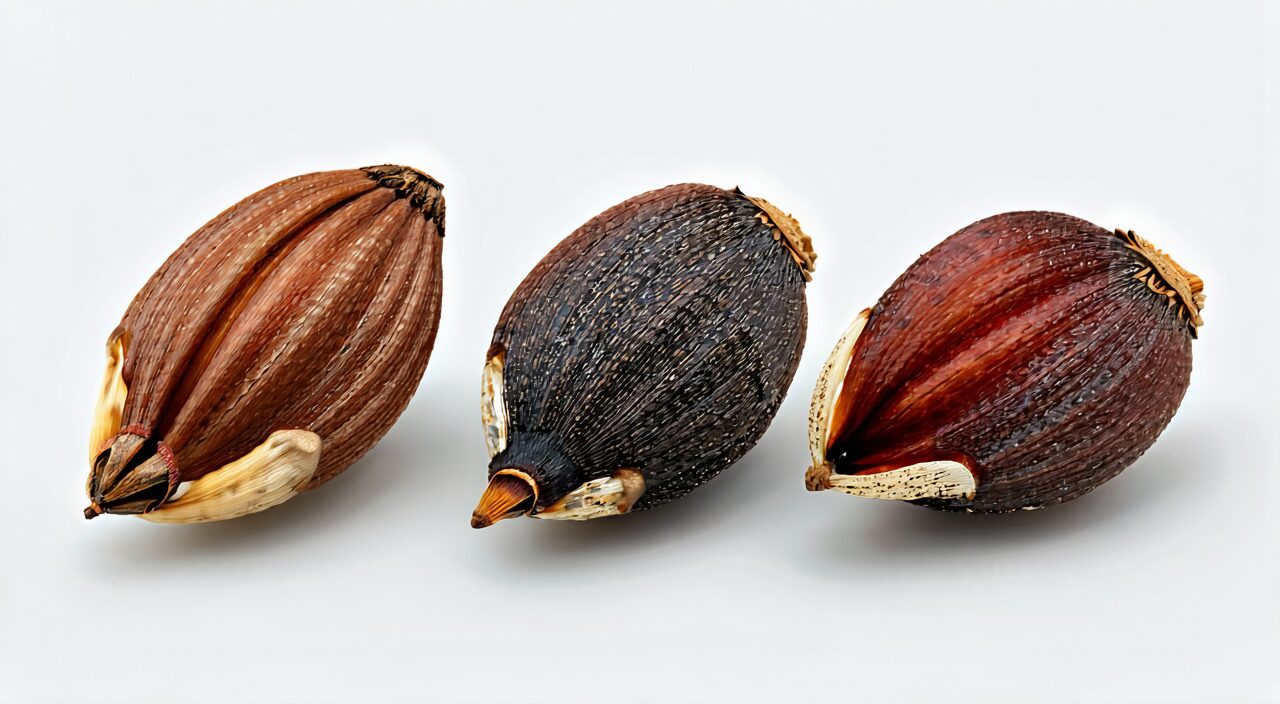
The crude drug of Pang Da Hai is spindle-shaped or oval, somewhat like an olive that is thicker in the middle and pointed at both ends, but generally more shriveled. The length is about 2 to 3 cm, and the diameter about 1 to 1.5 cm, with some variation in size. The surface is brownish or dark brown with fine, irregular wrinkles, giving it a somewhat shrunken appearance. It is very light; you can hardly feel its weight in your palm, and a gentle squeeze reveals a certain elasticity inside the shell.
The most convenient and intuitive way to identify Pang Da Hai is to soak it in water. Place a dried seed in warm or hot water, and it will absorb water quickly and expand rapidly. The seed coat gradually changes from a shrunken state into a transparent film, while the inner kernel swells into a sponge-like mass, increasing several or even over ten times in volume, eventually forming a lump of light brown, soft, porous jelly-like substance. This unique swelling characteristic is not found in many similar herbs and is often used as a basic method to verify the authenticity and quality of Pang Da Hai.
What Is the Medicinal Part of Pang Da Hai?
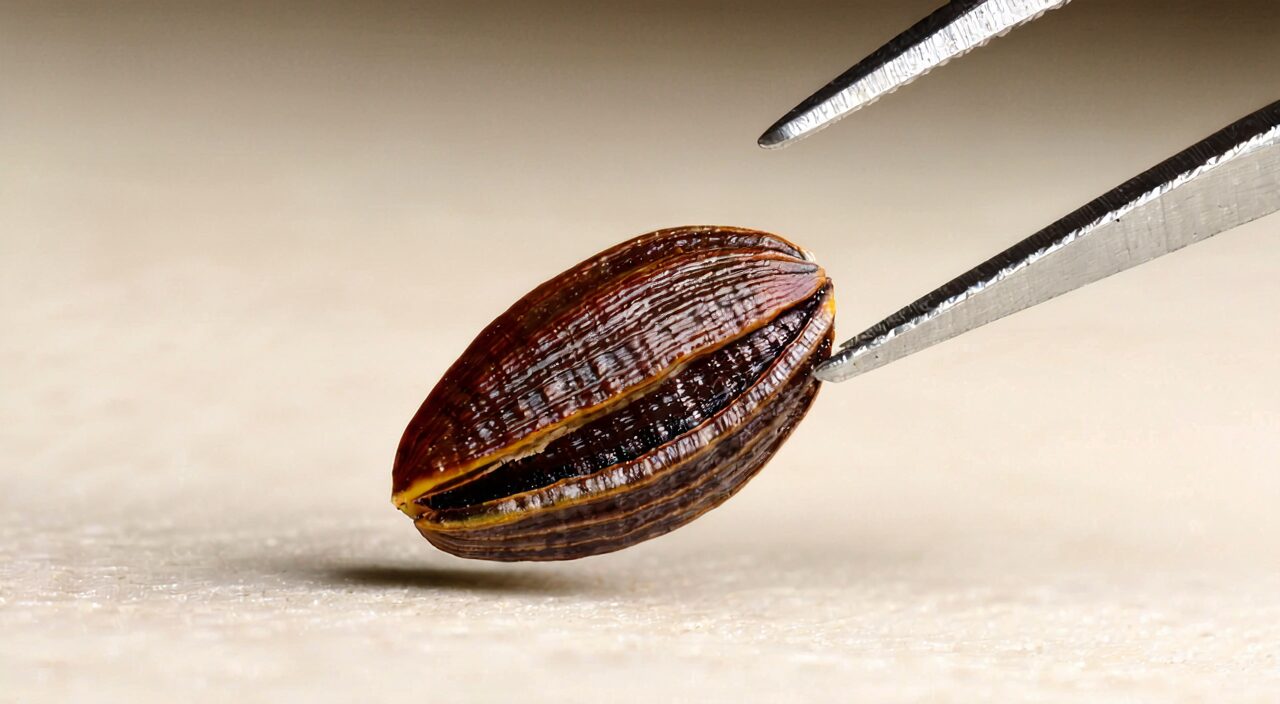
The medicinal part used is the mature seed of Pang Da Hai, not the fruit skin or pulp. The herb is derived from the fruit of the sterculia plant, Pang Da Hai (Scaphium scaphigerum). After the fruit ripens, the seeds are removed and processed through cleaning and drying. When the fruit matures, the seed still has a membranous inner seed coat, but after drying, the commercially available Pang Da Hai is the familiar brownish, finely wrinkled dry seed.
In traditional quality assessment, seeds that are large, plump, with a glossy seed coat and a high swelling ratio after soaking are considered superior. If the seeds are shriveled, dull in color, swell poorly, or disintegrate into fragments when soaked, they do not properly express the herb’s original properties. Knowing the medicinal part helps judge texture and completeness when selecting the herb, and also gives a clearer premise for the “swelling in water” feature—it occurs only with mature, structurally intact seeds.
How Does Traditional Chinese Medicine Understand Pang Da Hai?
In traditional Chinese medicine, the nature and flavor of Pang Da Hai are generally described as sweet and cold, entering the Lung and Large Intestine meridians. Its actions mainly focus on the Lung and throat, as well as the intestines.
Traditionally, one common use is to clear the Lung, resolve phlegm, benefit the throat, and restore the voice. When hoarseness and a dry, sore throat belong to a Lung heat or wind-heat pattern, Pang Da Hai may be used alone as a drink or in combination to help relieve throat discomfort and recover the voice. Another use is to moisten the intestines and promote bowel movements. Since the seeds contain components that can mildly lubricate the intestines, Pang Da Hai has traditionally been used as a moistening laxative for constipation caused by dry heat.
It should be emphasized that these understandings are based on traditional experience and fundamental nature-and-flavor theory, and they are not suitable for all types of throat discomfort or constipation. If symptoms lean toward wind-cold or phlegm-dampness, or are accompanied by spleen deficiency and cold signs, using Pang Da Hai alone may not address the pattern correctly and could even worsen the discomfort. Therefore, whether it is appropriate to use this herb still needs to be determined by considering individual constitution and symptom characteristics.
What Have Modern Studies Found?
Modern research on Pang Da Hai mainly focuses on the components in its seeds, including sterculin, polysaccharides, fatty acids, and some water-soluble mucilages. In vitro studies suggest that aqueous extracts of Pang Da Hai may produce a physical coating and moistening effect on the throat mucosa, consistent with the swelling characteristic it displays in water. In addition, some experiments have observed that Pang Da Hai extracts have certain prokinetic effects on the intestines and anti-inflammatory potential, but these largely remain at the laboratory research stage, and results from different sources and extraction methods are not entirely consistent.
These preliminary findings provide some understandable clues for the traditional uses of this herb, but they should not be simply extrapolated to mean “Pang Da Hai can cure diseases.” Viewing traditional experience and modern research together helps in rationally understanding this medicinal material.
How Is Pang Da Hai Different from Luo Han Guo and Mu Hu Die?
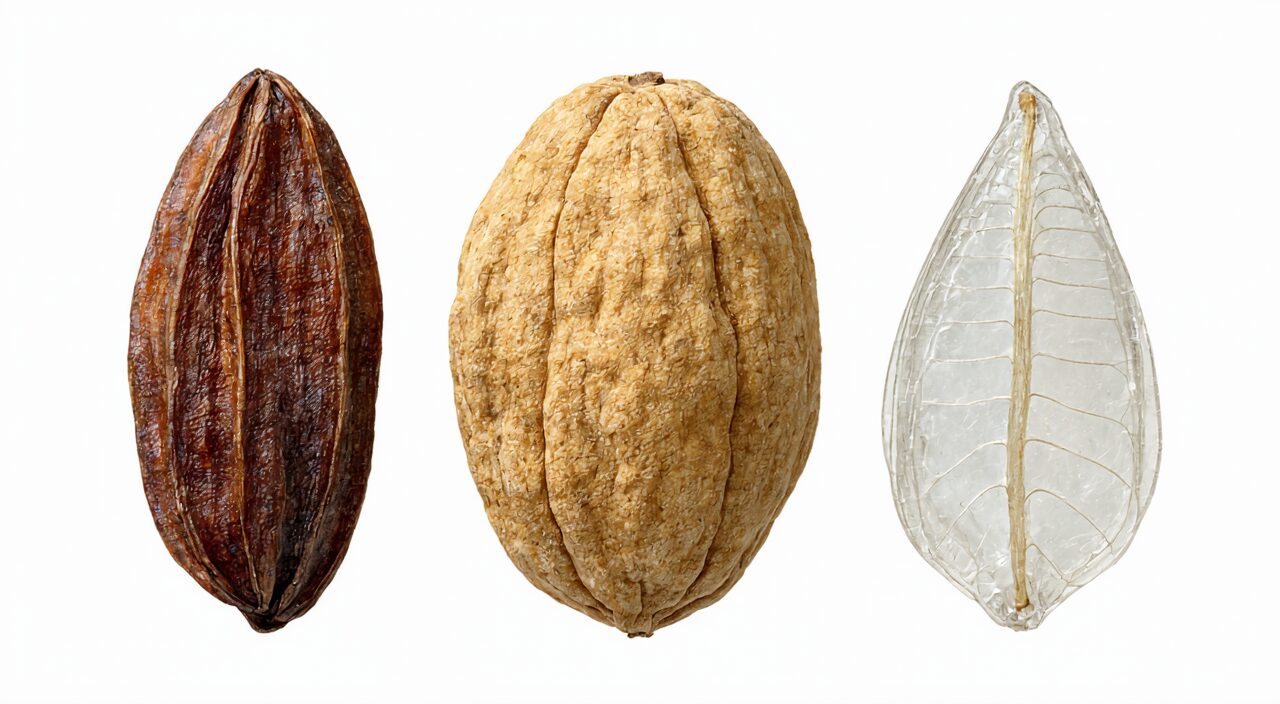
All three are commonly used for throat discomfort, but they differ markedly in origin, appearance, and the behavior when soaked, which can lead to confusion.
Morphologically, Pang Da Hai is a spindle-shaped or oval dry seed that swells into a sponge-like mass when soaked. Luo Han Guo is a complete dry fruit, round or oblong, with a yellowish-brown surface and a short fruit stalk; for brewing, it is usually broken open, and both the shell and pulp are steeped together, yielding a deep brownish-yellow infusion with a distinctly sweet taste. Mu Hu Die consists of flat, butterfly-shaped thin slices, which are the transparent, membranous wing-like outer layer of the seed; they are very light, show almost no expansion when soaked, and do not noticeably deepen the color of the water.
In traditional usage, Pang Da Hai is more inclined to benefit the throat and restore the voice, while also moistening the intestines; Luo Han Guo is more for clearing heat, moistening the Lung, stopping cough, and resolving phlegm, and is often used for dry throat and dry cough patterns; Mu Hu Die is more for benefiting the throat, soothing the Liver, and harmonizing the Stomach, sometimes used for hoarseness accompanied by a sensation of a lump in the throat or emotional stress. Although there is some overlap among the three, each has its own emphasis and they are not interchangeable. If you are unsure which pattern fits your condition, it may help to first clarify whether your symptoms are mainly a Lung-heat type with throat burning and pain, a dry-cough type with a dry cough and scant phlegm, or a stagnation type with emotional tension, and then see which herb’s traditional use aligns more closely.
What Formulas Contain Pang Da Hai?
Compared with herbs like Jie Geng (Platycodon root), Gan Cao (licorice), and Mai Dong (Ophiopogon) that frequently appear in throat formulas, Pang Da Hai is not that common in classical prescriptions. More often, it is used alone as a soak drink, or combined with small amounts of Jie Geng, Chan Tui (cicada slough), Mai Dong, Xuan Shen (Scrophularia), etc., for temporary relief of occasional hoarseness or throat dryness.
Notably, in recent years, Pang Da Hai has become more commonly seen in modern throat preparations. For example, Pang Da Hai Qing Yan syrups, Pang Da Hai lozenges, and some Chinese patent medicines for clearing the throat and benefiting the diaphragm often use Pang Da Hai as a main ingredient, combined with Bo He (mint), Ju Hua (chrysanthemum), Jin Yin Hua (honeysuckle), etc., with an emphasis on clearing and soothing the throat and protecting the voice. These products are mostly modern dosage forms developed based on traditional combination principles. When using them, it is important to pay attention to the specific ingredients, the types of presentations they are suitable for, and the indications and contraindications on the packaging. None of these products are meant for unrestricted daily consumption, and they should especially not be used as ordinary snacks or beverages for long periods.
What Precautions Should Be Taken When Using Pang Da Hai?
Although Pang Da Hai is often perceived as relatively gentle, it is, after all, cold in nature, and several aspects still require special attention.
First, it is not suitable for people with a cold and deficient Spleen-Stomach constitution or those prone to diarrhea. Because Pang Da Hai has a lubricating effect on the intestines, if the stools are already loose or there is a tendency to abdominal pain and loose stools after eating cold dishes, using Pang Da Hai may worsen diarrhea or cause abdominal discomfort. Second, people with low blood pressure should also exercise caution. Some observations suggest that Pang Da Hai may have some effect on blood pressure; although the specific mechanism is not yet clear, those with a tendency to low blood pressure should avoid large amounts or frequent use.
Furthermore, it is not recommended to use Pang Da Hai as a daily health tea for prolonged periods. Long-term and large-quantity use may interfere with Spleen-Stomach function and even lead to unnecessary adverse reactions. If it is just an occasional dry throat after talking a lot, steeping one or two seeds temporarily may be acceptable. However, if hoarseness, a lump-in-throat sensation, or pain persists for several days without improvement, or is accompanied by cough, fever, or difficulty swallowing, it is necessary to consult a doctor promptly to rule out vocal cord nodules, chronic laryngitis, or other throat conditions requiring specialized treatment. Pregnant women and children should only decide to use it after evaluation by a healthcare professional.
Summary
Pang Da Hai is a highly recognizable Chinese herb. Its medicinal part is the mature seed, and its most distinctive feature is the rapid swelling into a sponge-like mass when soaked in water. Traditionally, it is used for clearing the Lung, benefiting the throat, and moistening the intestines to promote bowel movements, but because it is cold in nature, it is not suitable for long-term or large-quantity use by people with a cold and deficient Spleen-Stomach, diarrhea, or low blood pressure. When experiencing hoarseness or throat discomfort, it is advisable to first observe the type and duration of the symptoms and then, based on personal constitution, cautiously decide whether to use it. If necessary, seek further professional diagnosis.