
What Is Zhen Zhu Mu? Medicinal Parts, Identification, and Common Formulas
When encountering traditional Chinese medicinal materials, many people become curious about “Zhen Zhu Mu” (Mother of Pearl). Is it the same as a pearl? What does it actually look like, and how does Traditional Chinese Medicine (TCM) use it? This article delves into its visual identification, medicinal part, traditional understanding, and differences from pearl and oyster shell, aiming to help readers build a clear impression of Zhen Zhu Mu.
What Does Zhen Zhu Mu Look Like? How to Identify It?
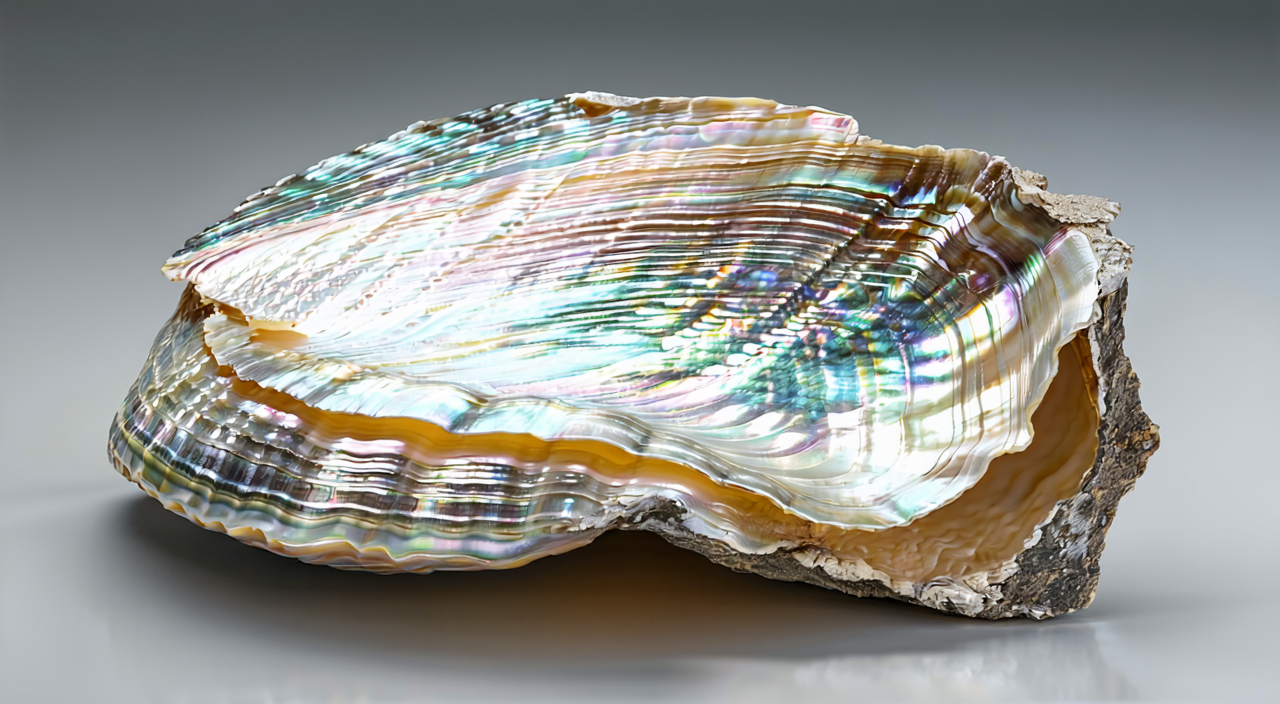
The typical appearance of Zhen Zhu Mu is irregular, flaky or layered shell fragments of varying sizes and thicknesses, usually ranging from one millimeter to several millimeters thick. The outer surface is generally grayish-brown, dark gray, or marked with brown stripes of varying shades. Some pieces may even show traces of moss-like attachments or residual aquatic organism shells, feeling relatively rough to the touch. The inner surface, however, displays a pearl-like iridescent luster in silvery white, pale blue, or light green, resembling stacked layers of mica. It is formed by multiple thin lamellar structures peeling away layer by layer, and a soft pearlescent refraction can be seen when rotated under light. The edges mostly exhibit a delaminated state, which is a very prominent identification feature. Dried Zhen Zhu Mu is hard but slightly brittle, easily breaking into small pieces along the laminations, and clear layered textures can be seen at the fracture points. When distinguishing it, focusing on the two key points—the inner nacreous layer and the laminated structure—allows you to differentiate it well from other common shells.
What Is the Medicinal Part of Zhen Zhu Mu?
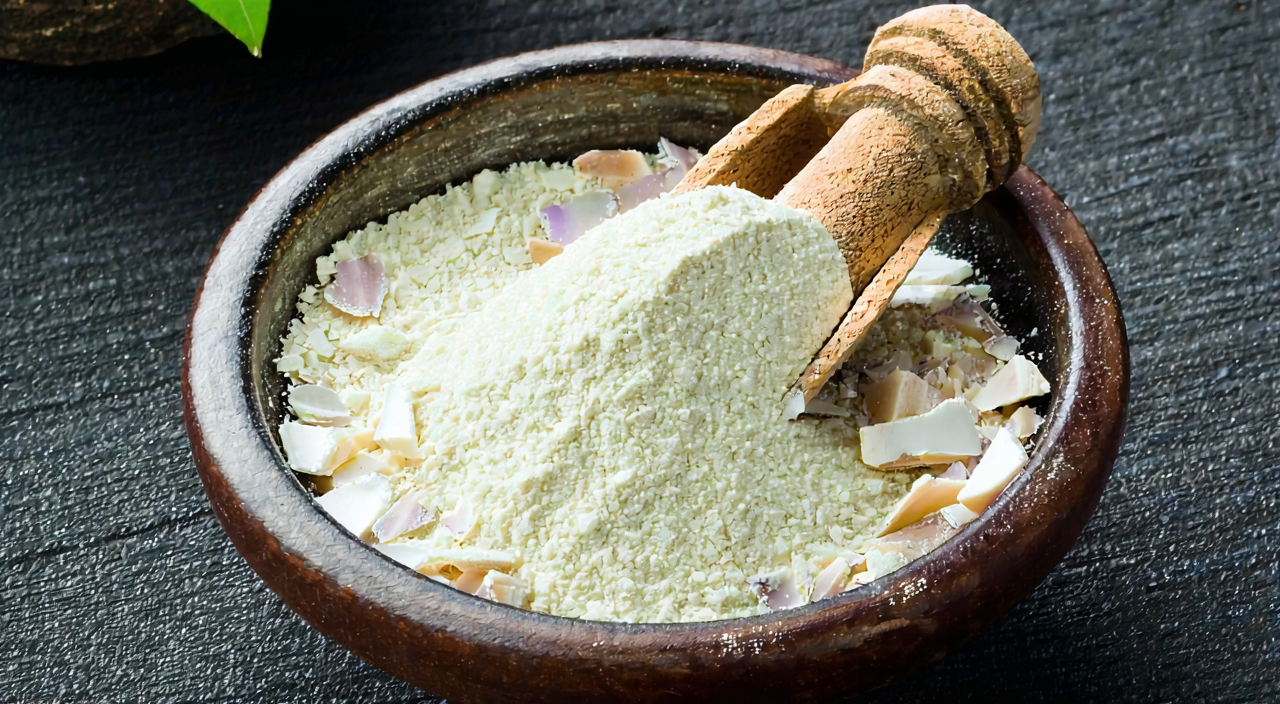
The medicinal part of Zhen Zhu Mu is the entire shell of animals from the Pteriidae (pearl oyster) or Unionidae (freshwater mussel) families, not the soft body inside. During harvesting and processing, sufficiently large shells are typically collected. Residual flesh and mud-sand impurities are removed first, followed by repeated thorough washing, then air-drying or low-temperature drying. Depending on the intended use, they undergo crushing or calcination processing. For raw use, the dried shells are generally directly crushed into coarse powder or small pieces, making it easier to fully extract the internal components during decoction. For calcined Zhen Zhu Mu, the cleaned shells are placed into a calcining furnace or crucible and heated to a high temperature, making the shells crisp and fragile. After cooling, they are crushed into fine powder. The calcined product shows a markedly diminished pearlescent luster, with a color tending toward grayish-white or pale yellow, and a porous, loosened texture. Regardless of the specification, it is usually further processed into a fine powder to reduce inconvenience during decoction and improve patient compliance.
How Does TCM Understand Zhen Zhu Mu?
Traditional Chinese Medicine often approaches the actions of Zhen Zhu Mu from the perspectives of calming the liver and subduing yang, settling the spirit and arresting fright, and improving vision to remove nebula. The concept of calming the liver and subduing yang is mainly applied to manifestations caused by liver yin deficiency and liver yang hyperactivity, such as irritability, dizziness, distending headache, and facial flushing. Ancient practitioners believed that shell-derived medicinal substances possess heavy, settling properties that can guide hyperactive qi downward to return to its proper place. The approach of settling the spirit and arresting fright frequently manifests in patterns like spirit restlessness, nocturnal insomnia, palpitations with susceptibility to fright, and night crying in children. In traditional usage, it is often combined with spirit-calming herbs like Suan Zao Ren (Semen Ziziphi Spinosae), Bai Zi Ren (Semen Platycladi), and Yuan Zhi (Radix Polygalae). As for improving vision and removing nebula, Zhen Zhu Mu is considered capable of clearing liver heat and nourishing liver yin. For red, swollen, painful eyes and blurred vision caused by liver fire flaring upward, or ocular nebula caused by liver deficiency with heat, it is often paired with herbs such as Ju Hua (Flos Chrysanthemi), Jue Ming Zi (Semen Cassiae), and Mi Meng Hua (Flos Buddlejae). These are all traditional regulatory directions. Whether they are suitable for an individual still requires comprehensive judgment based on constitution, specific manifestations, and professional advice.
What Are the Preliminary Modern Research Findings on the Components of Zhen Zhu Mu?
Modern component analysis shows that Zhen Zhu Mu primarily contains a large amount of calcium carbonate. In addition, trace elements such as magnesium, zinc, iron, and copper, as well as small amounts of proteins and peptides, have been detected. Calcium carbonate is often observed to have a certain neutralizing effect on gastric acid, providing a perspective on why some ancient formulas containing Zhen Zhu Mu were used for discomfort related to hyperacidity. Some in vitro experiments and small-scale animal studies have also identified active fragments from the hydrolysate or enzymatic hydrolysate of Zhen Zhu Mu that may possess sedative or anticonvulsant potential, but this direction remains in the laboratory exploratory stage and is still far from clinical application. Overall, modern research provides limited material reference for traditional uses but cannot be directly equated with confirmation of efficacy, nor can it derive any therapeutic conclusions.
What Are the Differences Between Zhen Zhu Mu, Pearl, and Mu Li (Oyster Shell)?
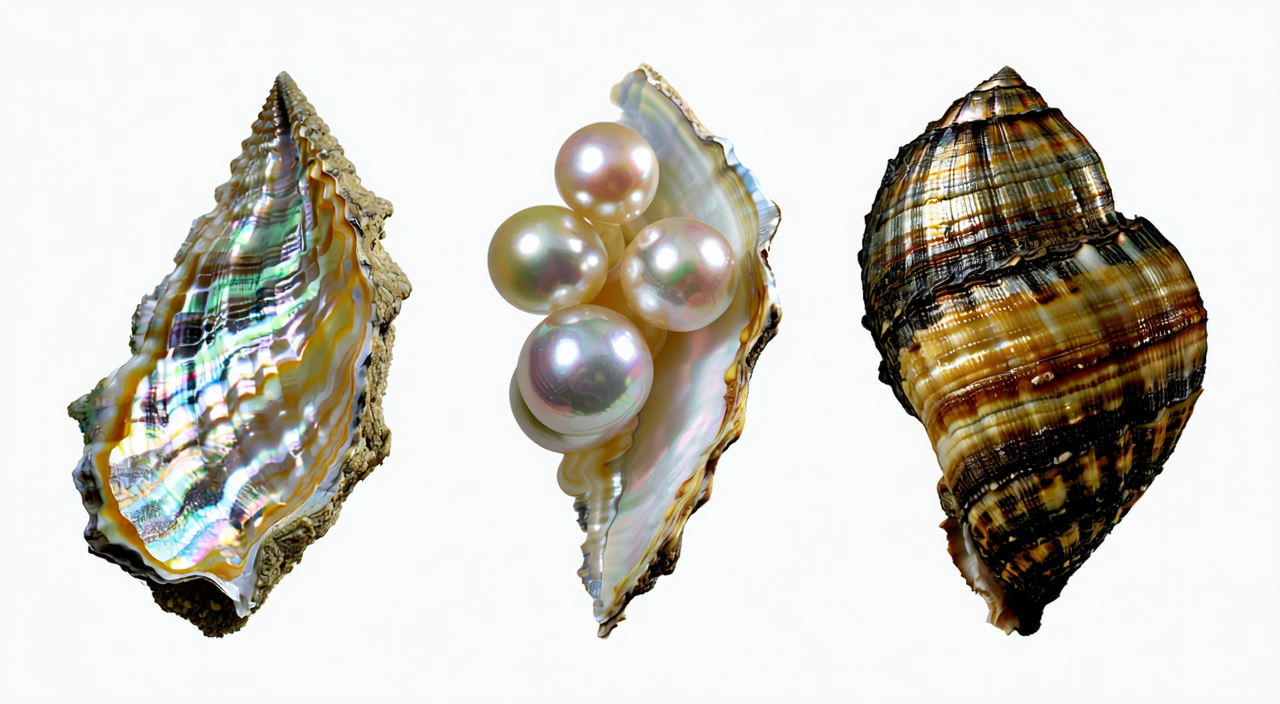
All three originate from products or shells of aquatic animals and are commonly used in traditional formulas for settling the spirit or calming the liver, but their sources, appearance, and primary application directions differ. Pearl is a bead-like object formed when a mollusk’s mantle is stimulated by a foreign body and continuously secretes nacre to encase it. It is tiny in size, dense and hard in texture, has an integrated, lustrous sheen, and is expensive. Traditionally, it is used internally to settle the spirit and arrest fright, and externally for skincare or eye care. Zhen Zhu Mu is the inner shell layer of the same type of mollusk or mussel, generally appearing as relatively large, sheet-like, laminated structures with delaminated pearlescent luster. It has more extensive resources and tends to be used as a decoction ingredient. Mu Li refers to the shells of Ostreidae (oyster) family animals. They have a thick and heavy appearance, with a surface layer that is often gray or off-white with distinct scale-like textures or layered protrusions. The inner surface is smoother but lacks the mica-like, multi-layered iridescence of Zhen Zhu Mu. In traditional practice, Mu Li is more focused on calming the liver and subduing yang, softening hardness and dissipating nodules, and astringing and securing. Additionally, in processing, Mu Li often requires pre-decoction to remove fishy odor and facilitate the extraction of active constituents, while Zhen Zhu Mu can be directly crushed and decocted or calcined, showing slightly different usage habits. Recognizing these differences helps avoid confusion when purchasing or using them.
Which Formulas Use Zhen Zhu Mu?
Zhen Zhu Mu plays a relatively important role in some traditional formulas. Here are a few briefly introduced as directions for understanding. Zhen Zhu Mu Wan (Mother of Pearl Pill) often features Zhen Zhu Mu as a key ingredient, combined with blood-nourishing substances like Dang Gui (Radix Angelicae Sinensis), Chuan Xiong (Rhizoma Chuanxiong), and Shu Di Huang (Radix Rehmanniae Preparata). It is often used for palpitations, insomnia, and vexation caused by yin-blood deficiency and liver yang hyperactivity, typically presented in pill form. Zhen Zhu Mu Tang (Mother of Pearl Decoction) varies in combinations depending on emphasis; some add Long Gu (Os Draconis) and Mu Li to enhance the heavy settling and spirit-calming effects, while others combine Fu Shen (Sclerotium Poriae Pararadicis) and Suan Zao Ren as a decoction approach for settling the spirit and arresting fright. Additionally, there is a category broadly termed liver-calming and spirit-settling formulas, which use Zhen Zhu Mu together with Tian Ma (Rhizoma Gastrodiae), Gou Teng (Ramulus Uncariae cum Uncis), Ju Hua, Bai Ji Li (Fructus Tribuli), etc., commonly applied for dizziness, vertigo, irritability, and easy anger, associated with traditional concepts of “liver wind” or “liver yang.” Although these formulas each have their own focus, they are only reference ideas for traditional regulation and are not suitable for direct personal formula selection. Those interested in related formulas are advised to read product instructions carefully, consider their own constitution, and make comprehensive judgments under professional guidance, rather than applying them based solely on formula names.
What Precautions Should Be Taken When Using Zhen Zhu Mu?
Zhen Zhu Mu’s nature tends toward cold and settling. People with weak spleen and stomach function, especially those who frequently feel cold in the epigastric region, are prone to diarrhea, or have poor appetite, need to exercise extra caution before use. Those with long-term loose stools or tendencies toward chronic diarrhea should also not use it alone lightly, to avoid exacerbating gastrointestinal burden. Additionally, attention should be paid to the potential problem of mineral-derived contamination, as the growth environment of shells is easily influenced by water quality. It is safer to choose Zhen Zhu Mu products with standardized processing and clear source records. If self-grinding into powder, ensure it is ground sufficiently fine; otherwise, coarse calcium carbonate particles may increase the likelihood of digestive discomfort. It should also be noted that if symptoms like insomnia, palpitations, or irritability persist without relief, or are accompanied by chest tightness, weight loss, or extremely low mood, one should not simply rely on a particular medicinal substance. Instead, priority should be given to consulting a qualified physician for a comprehensive evaluation.
Summary
Zhen Zhu Mu comes from the shells of Pteriidae (pearl oyster) or Unionidae (freshwater mussel) family animals, with the inner surface’s pearl-like luster and laminated structure as key identification points. Traditionally, it is often applied from the perspectives of calming the liver and subduing yang, settling the spirit and arresting fright, and improving vision to remove nebula. It has clear differences from pearl and Mu Li in terms of source, appearance, and primary uses. Formulas containing Zhen Zhu Mu, such as Zhen Zhu Mu Wan, Zhen Zhu Mu Tang, and liver-calming spirit-settling formulas, need to be understood cautiously in conjunction with constitution and symptoms. When using it, special attention should be paid to unsuitable conditions such as spleen-stomach deficiency cold, and professional guidance should be sought when necessary. This article serves as a popular science reference only and cannot replace professional diagnosis or treatment advice.