
What Is Quan Xie? Medicinal Parts, Identification, and Common Formulas
Many people are curious about insect-based medicines in Chinese medicine, and Quan Xie (scorpion) is one that is often mentioned yet easily misunderstood. In traditional practice, it is usually associated with convulsions, stubborn pain, and similar conditions. However, it is not simply any ordinary scorpion used directly as medicine, nor can it be taken casually. This article begins with its origin, appearance, and medicinal parts, then gradually explores the traditional Chinese medicine understanding, modern research findings, comparison with centipede and stiff silkworm, and the risks that must be taken seriously.
What Does Quan Xie Look Like? How to Identify It?
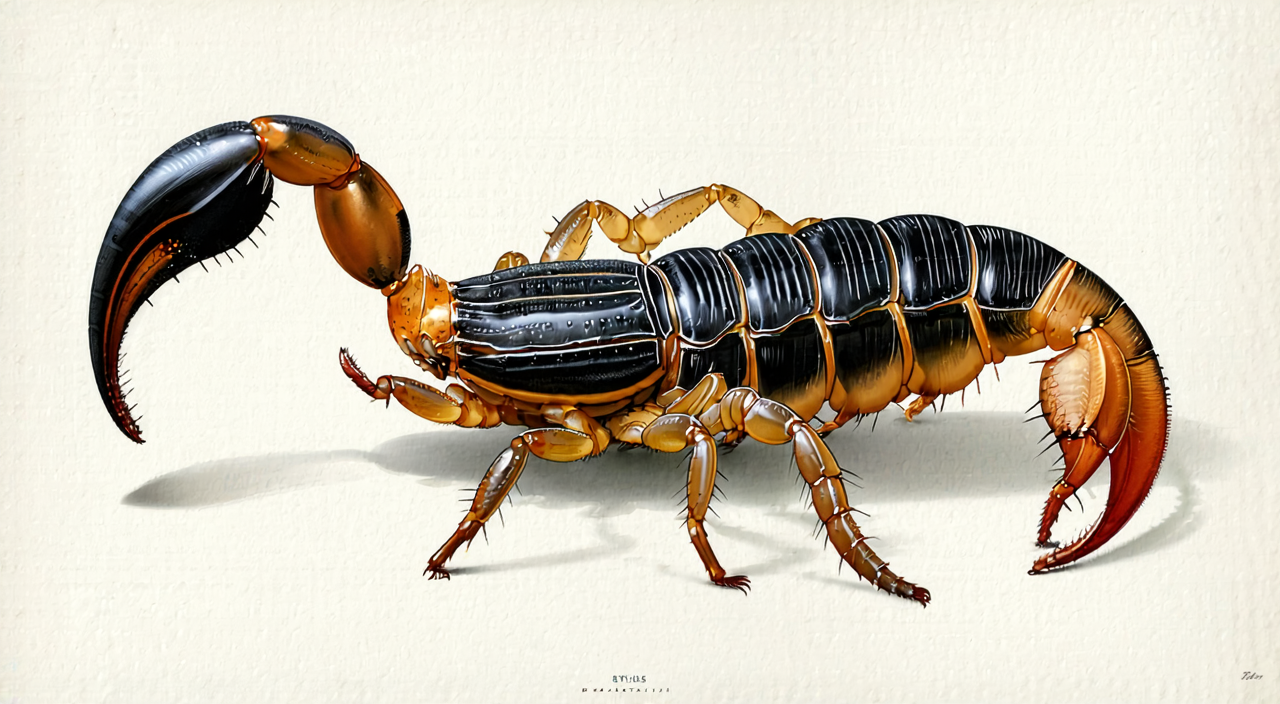
The source animal of Quan Xie is the East Asian scorpion (Buthus martensii), belonging to the phylum Arthropoda, class Arachnida. It is not very large; the adult body length is generally about 4 to 6 centimeters. The cephalothorax is short, with a pair of small chelicerae and a pair of relatively thick pincer-like pedipalps in the front, resembling two small pincers. The dorsal surface of the cephalothorax has a raised carapace, with eyes distributed centrally or anterolaterally. The thorax bears four pairs of walking legs, each ending in a claw. The abdomen can be divided into a preabdomen and a postabdomen. The preabdomen is wider, consists of seven segments, and often has granular protrusions on the dorsal side; the postabdomen is slender, like a tail, made up of six segments, with the terminal segment swollen into a sac-like venom bulb, from which a sharp, curved stinger extends. After drying, the whole scorpion turns yellowish-brown or brownish, and the tail often curls up into a hook shape toward the back, which is an important identifying feature.
What Are the Medicinal Parts of Quan Xie?
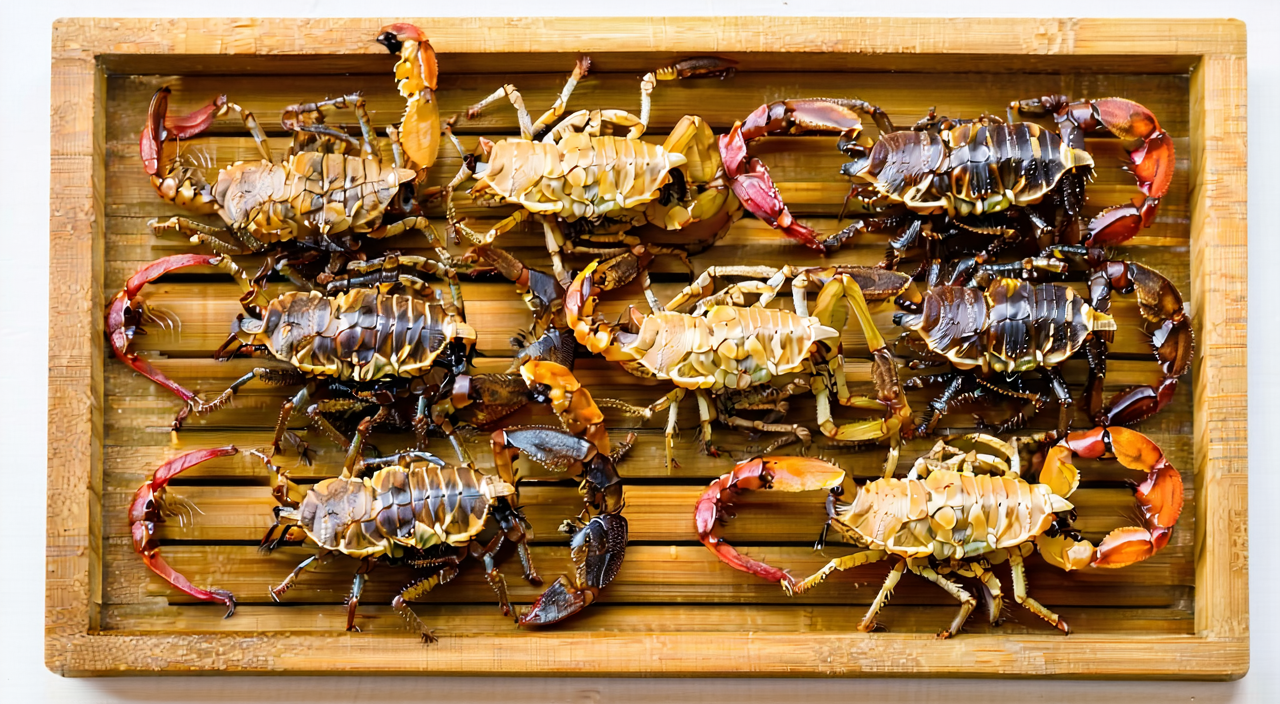
As a traditional animal medicine, the medicinal part of Quan Xie is the dried whole body, that is, the complete specimen including the cephalothorax, preabdomen, postabdomen, and tail stinger. After collection, it is typically boiled in salt water and then dried. In traditional processing, this is done to facilitate preservation, remove impurities, and reduce its harsh nature to some extent, but it does not mean the toxicity is completely eliminated. The Quan Xie found on the market is mostly whole, with little mud inside the abdomen, light in weight, and slightly salty in taste. However, it must be made clear that this is only for informational purposes; individuals are not advised to capture, process, or use any scorpion body that has not been processed according to proper standards.
How Does Traditional Chinese Medicine Understand Quan Xie?
Traditional Chinese medicine generally understands Quan Xie from the perspectives of calming wind and stopping spasms, unblocking collaterals and relieving pain, and attacking toxin and dispersing masses. In manifestations related to internal stirring of liver wind, such as convulsions, spasms, and facial distortion, Quan Xie may be used to calm internal wind and relieve muscle tension. For stubborn headaches, joint and limb pain, wind-damp impediment pain, and other recalcitrant problems arising from “chronic disease entering the collaterals,” Quan Xie is considered to have a strong ability to travel through and unblock the collaterals, which can assist in pain relief to some extent. In some traditional experience, it is also used for sores, swellings, toxin, and scrofula, situations related to the accumulation of toxic pathogens, in order to attack toxin and disperse masses. However, these are merely interpretations from the perspective of traditional theory, and whether it is suitable for an individual must be determined by a professional Chinese medicine practitioner based on the specific constitution and current state; self-application is not recommended.
What Aspects Does Modern Research Focus On?
Modern research on Quan Xie mainly focuses on scorpion venom components. Scorpion venom contains various bioactive polypeptides, some of which are neurotoxic. Some components have a significant effect on ion channels of nerve cells. This may partly explain the neuromuscular abnormalities that occur when Quan Xie is used in excess, while at the research level, there are also investigations into analgesic, anticonvulsant, anti-inflammatory, and anticoagulant effects. However, its toxic risks are just as important as its pharmacological activities. The neurotoxins in Quan Xie, if the dosage is not properly controlled, can cause dizziness, nausea, blood pressure changes, and in severe cases even affect respiration. At the same time, as a heterologous protein, Quan Xie may also trigger allergic reactions. Therefore, Quan Xie can only be considered as a medicinal material that is processed according to standards and has a clearly defined dosage, under professional supervision; it must never be used raw or in excessive amounts on one’s own.
How Does Quan Xie Differ from Centipede and Stiff Silkworm?
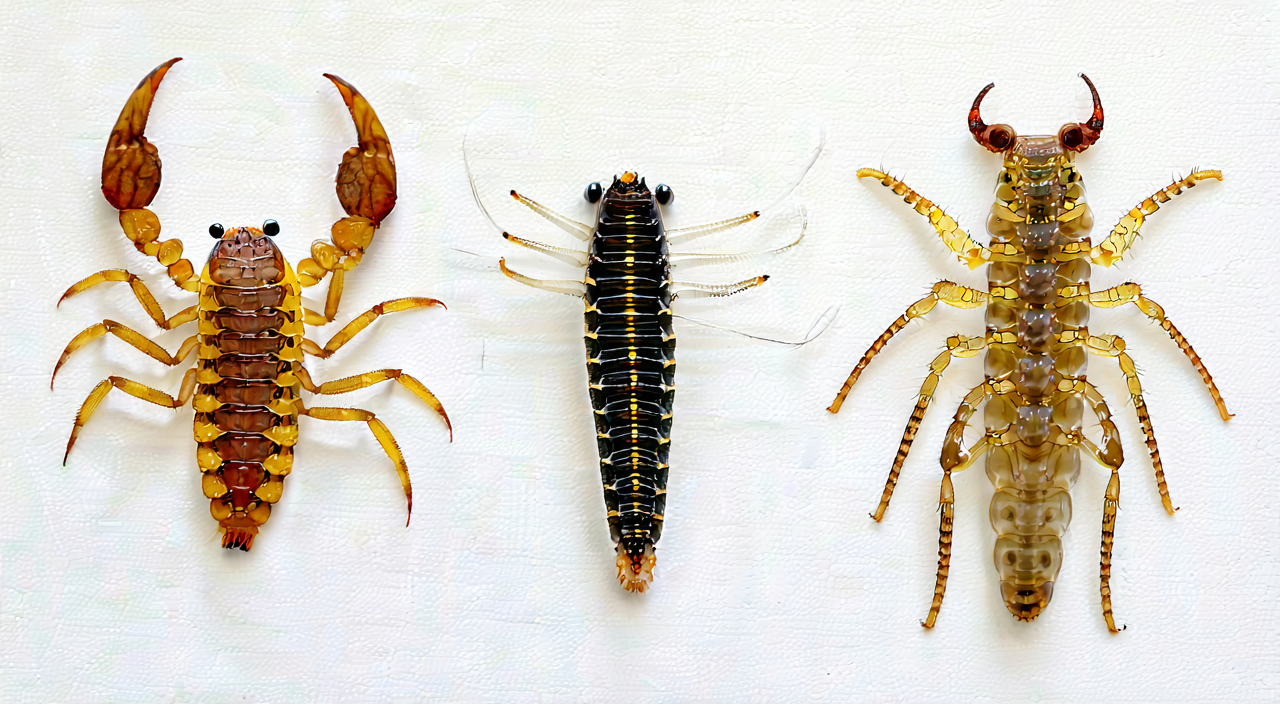
In terms of appearance, the three are easily distinguished. Quan Xie is scorpion-shaped, with conspicuous pincer-like pedipalps and a curled tail with a stinger; centipede (Wu Gong) has a flat, multi-segmented body, with one pair of walking legs per segment, appearing as a long strip; stiff silkworm (Jiang Can) is the dried body of silkworm larvae infected with Beauveria bassiana, covered with a white powdery substance on the surface, hard and brittle, resembling a stiff dead silkworm. In traditional applications, although all three belong to the category of insect wind-calming medicinals, the approaches differ. Quan Xie excels at unblocking collaterals and relieving pain, and is often combined with other medicinals for stubborn headaches and impediment pain; centipede has an even stronger ability to travel and penetrate, commonly used for conditions where toxic pathogens are deep-seated and pain is intense; stiff silkworm focuses more on transforming phlegm and dispersing masses, and expelling wind, usually applied for facial paralysis and throat impediment caused by wind-phlegm. In some formulas, all three may be used together, but each has its own emphasis, and the usage rationale should not be confused.
Which Formulas Contain Quan Xie?
In traditional formulas, Quan Xie is usually not used alone, but as part of a compound prescription, working together with other medicinal substances. Qian Zheng San is a relatively representative formula, consisting of Bai Fu Zi (Typhonium Rhizome), Quan Xie, and Jiang Can (stiff silkworm), and was traditionally used for facial distortion and similar manifestations related to wind pathogen obstructing the collaterals. Zhi Jing San is mainly composed of Quan Xie and Wu Gong (centipede), traditionally used for limb convulsions and spasms, with a relatively strong spasm-stopping effect. Xiao Huo Luo Dan contains Chuan Wu (Aconite Root), Cao Wu (Kusnezoff Aconite Root), Di Long (Earthworm), Quan Xie, and others, often targeting stubborn impediment such as wind-cold-damp impediment, limb numbness, and pain. Quan Xie San exists in several compositional versions and is often used for infantile convulsions and lockjaw. All these formulas demonstrate the traditional application rationale of Quan Xie in specific directions, but they are not suitable for everyone, and even less should they be used as a routine painkiller or calming formula on one’s own.
What Precautions Should Be Taken When Using Quan Xie?
As a toxic animal medicine, Quan Xie requires that several safety bottom lines be maintained. First, never collect, process, or take it orally on your own. Even with properly processed medicinal material, the dosage must be determined by a qualified professional. Second, individuals with allergic constitution, pregnant women, breastfeeding women, and children should all avoid Quan Xie. Third, those with bleeding tendencies, those using anticoagulant medications, or those with recent or planned surgery also need to be especially cautious, because Quan Xie may affect blood coagulation. Fourth, if during use any abnormalities such as skin rash, chest tightness, difficulty breathing, worsening muscle stiffness, or impaired consciousness occur, it should be stopped immediately and emergency medical attention sought. Fifth, for severe, chronic, or recurrent convulsions, intense headaches, facial paralysis, or symptoms accompanied by chest pain and palpitations, one should not first turn to Quan Xie but should promptly seek diagnosis and emergency treatment from modern medicine.
Summary
Quan Xie is an animal medicine whose toxic risks must be fully respected. Its morphological identification, medicinal parts, and processing methods all have clear specifications. Traditional Chinese medicine uses it from the perspectives of calming wind, stopping spasms, unblocking collaterals, and dispersing masses, but these approaches must be treated with caution within the framework of modern toxicological understanding. Regardless of the channel through which readers encounter Quan Xie or formulas containing it, this article should only be taken as objective information; any direction of use and dosage must be comprehensively evaluated under the guidance of a professional Chinese medicine practitioner, and self-experimentation must absolutely be avoided.