
What is Szechuan Chinaberry Bark? Its Medicinal Parts, Identification Methods, and Common Formulas
Many overseas readers interested in traditional Chinese medicine may come across the medicinal substance “Szechuan Chinaberry Bark” (Ku Lian Pi) when exploring formulas for expelling parasites or topical skin treatments. Derived from plants, its use differs from commonly used gentle herbs—it contains strong toxic components and must be strictly identified and used with caution. This article discusses the visual identification, medicinal parts, traditional understanding, modern toxicology research, differentiation from similar herbs, and common formulas, aiming to help readers build an objective and safe understanding.
What Does Szechuan Chinaberry Bark Look Like? How to Identify It?
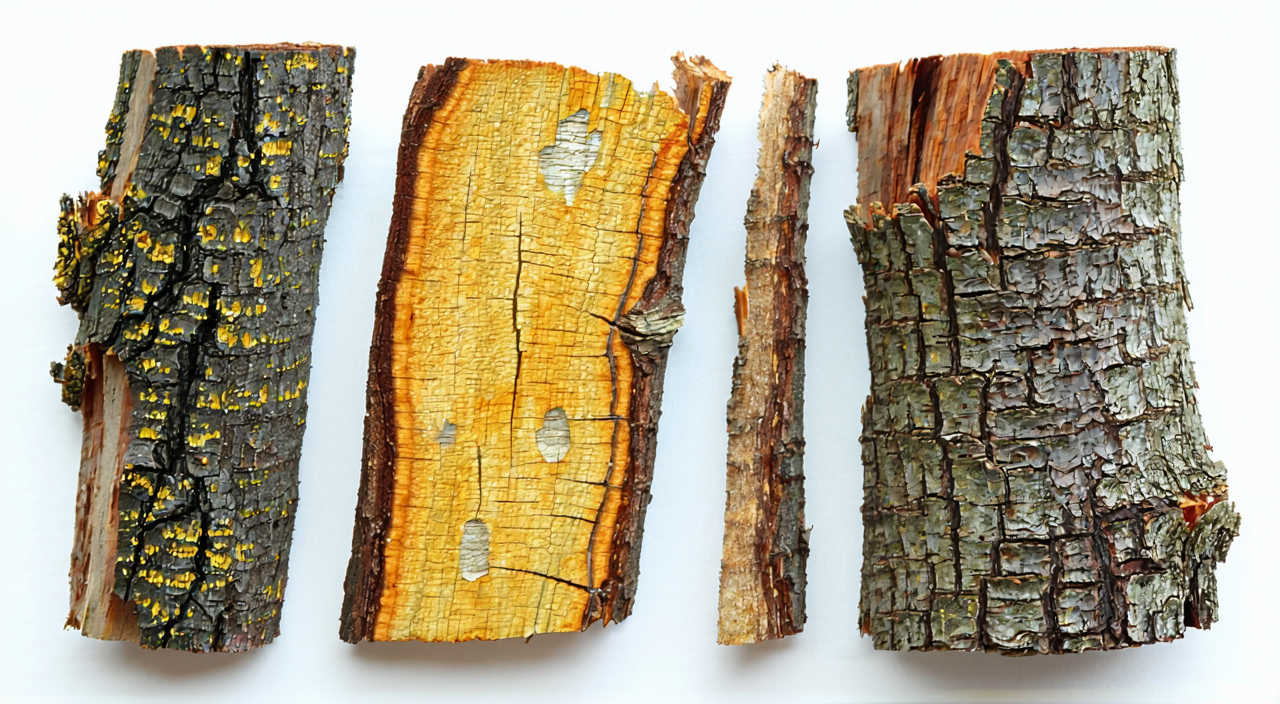
Szechuan Chinaberry Bark typically appears as irregular trough-shaped or rolled pieces, sometimes semi-tubular or plate-like. The outer surface is grayish-brown or grayish-tan, rough and uneven, often with longitudinal cracks and transverse lenticels, and occasionally remnants of grayish-white cork patches. The inner surface is pale yellow or yellowish-white, relatively smooth, and easily leaves an oily mark when scratched with a fingernail. The texture is tough and not easily broken; the fracture surface is characteristically fibrous, and tearing it reveals layers of fine fibers separating. Root bark is often even more fibrous, with less uniform thickness, and frequently twisted into irregular curls, with a darker inner surface. Traditionally, root bark is considered to have stronger deworming power. There may be slight differences in appearance depending on the region of origin, but the common features are clear longitudinal wrinkles and cracks of varying depth. If the bark pieces are very thin, have an overly neat fracture, or lack obvious fibers, one should be wary of adulterants. Although identification can be roughly based on these features, final confirmation requires microscopic or physicochemical methods. General users are not advised to harvest or purchase and use it solely based on appearance.
What Are the Medicinal Parts of Szechuan Chinaberry Bark?
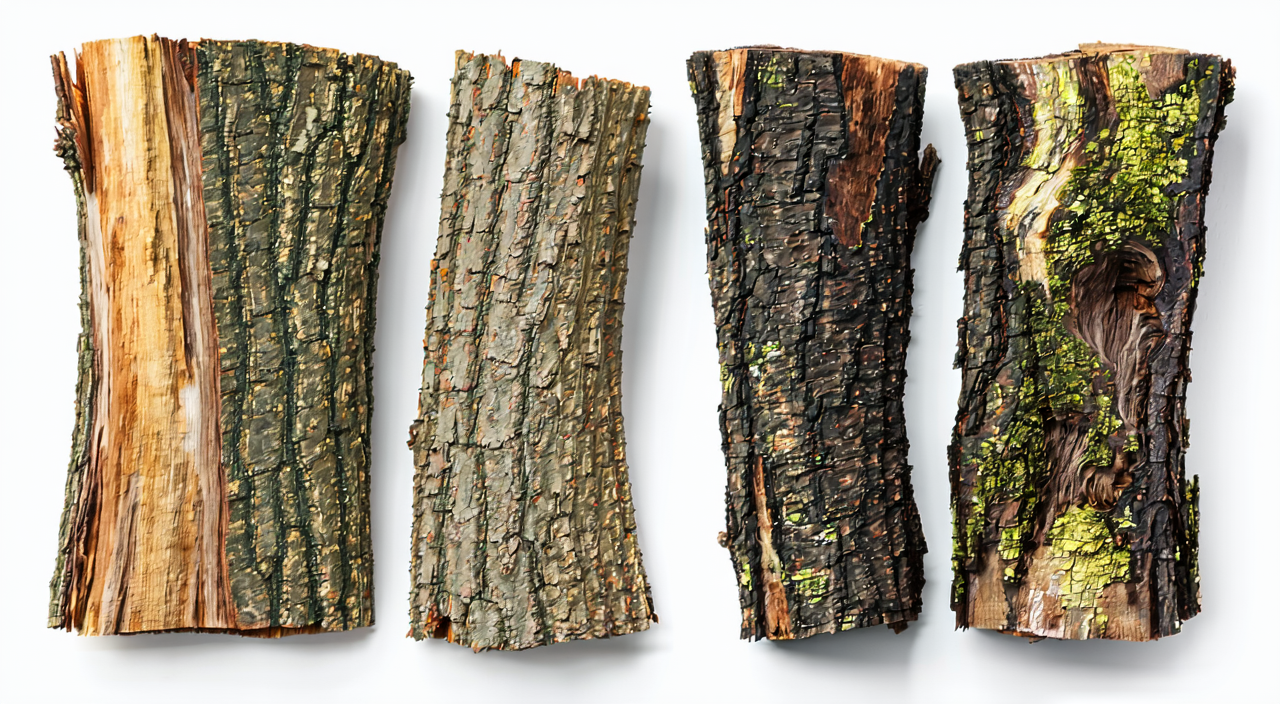
The medicinal parts of Szechuan Chinaberry Bark are the dried trunk bark and root bark of Melia toosendan or Melia azedarach. Both can be used, but root bark is usually considered more potent. Harvesting is generally done in spring and autumn. After stripping the trunk bark or digging out the root bark, the outer rough cork layer is first removed, and the material is washed clean, cut into sections, and dried in the sun. In some regions, it is cut while fresh and then dried in the shade to preserve active compounds. In modern commerce, trunk bark is more common and is typically processed before circulation—such as shredding, dry-frying, or stir-frying with bran—to moderate irritation and reduce toxicity. Szechuan Chinaberry Bark cannot be brewed like common herbal teas. Internal use must undergo professional processing and strict dosage calculation; it usually appears only as one ingredient in particular formulas. Arbitrarily adjusting the dose or using it alone can easily cause safety issues. Therefore, understanding the medicinal parts is more about identifying Chinese materia medica rather than guiding daily selection.
How Does Traditional Chinese Medicine View Szechuan Chinaberry Bark?
In TCM theory, Szechuan Chinaberry Bark is bitter and cold in nature, slightly toxic, and enters the liver, spleen, and stomach meridians. Traditionally, it is understood from two angles: “expelling parasites” and “treating tinea.” For abdominal pain, poor appetite, sallow complexion, and emaciation caused by parasitic accumulation, classical herbals list it as one of the optional remedies, often combined with herbs such as Rangoon Creeper (Shi Jun Zi) and betel nut (Bing Lang), hoping to expel parasites through its bitter-cold properties. For external use, decoctions for washing or powdered applications are recorded for improving tinea capitis, scabies, and certain itchy skin conditions. Early medical texts like the Mingyi Bielu emphasized its toxicity, warning that it should be used only briefly and stopped as soon as symptoms resolve, and often paired with licorice, jujube, or other herbs to moderate its intensity. These uses belong to traditional experience and historical understanding; their suitability under modern conditions varies greatly with individual constitution, cold-heat status, and overall condition. Ancient formulas cannot be directly applied and must be carefully assessed by professionals using modern diagnostics.
What Has Modern Research Revealed?
Modern pharmacological studies have isolated triterpenoid compounds such as toosendanin and azadirachtin from Szechuan Chinaberry Bark. In laboratory conditions, these compounds have shown inhibitory effects on the activity of parasites like roundworms and pinworms, possibly related to interference with parasite energy metabolism. However, extensive research has also confirmed that Szechuan Chinaberry Bark and its main constituents possess clear hepatotoxicity and neurotoxicity. In animal experiments, a single large dose can cause ataxia, convulsions, drowsiness, and other symptoms, with pathological examination revealing widespread necrosis of liver cells. Reports of poisoning from accidental ingestion or improper use in humans are numerous; mild cases present with nausea, vomiting, right upper quadrant pain, and soaring transaminase levels, while severe cases can progress to liver failure or even coma. The therapeutic index of these toxicities is very narrow, and no recognized safe dosage window has been established. Consequently, many regions have imposed strict restrictions on the use of Szechuan Chinaberry Bark, and it is never recommended for inclusion in daily health care or household herbal kits. For general readers, understanding these studies is not meant to find a basis for use but to truly recognize the dangers of self-experimentation.
How Does Szechuan Chinaberry Bark Differ from Rangoon Creeper and Toosendan Fruit?
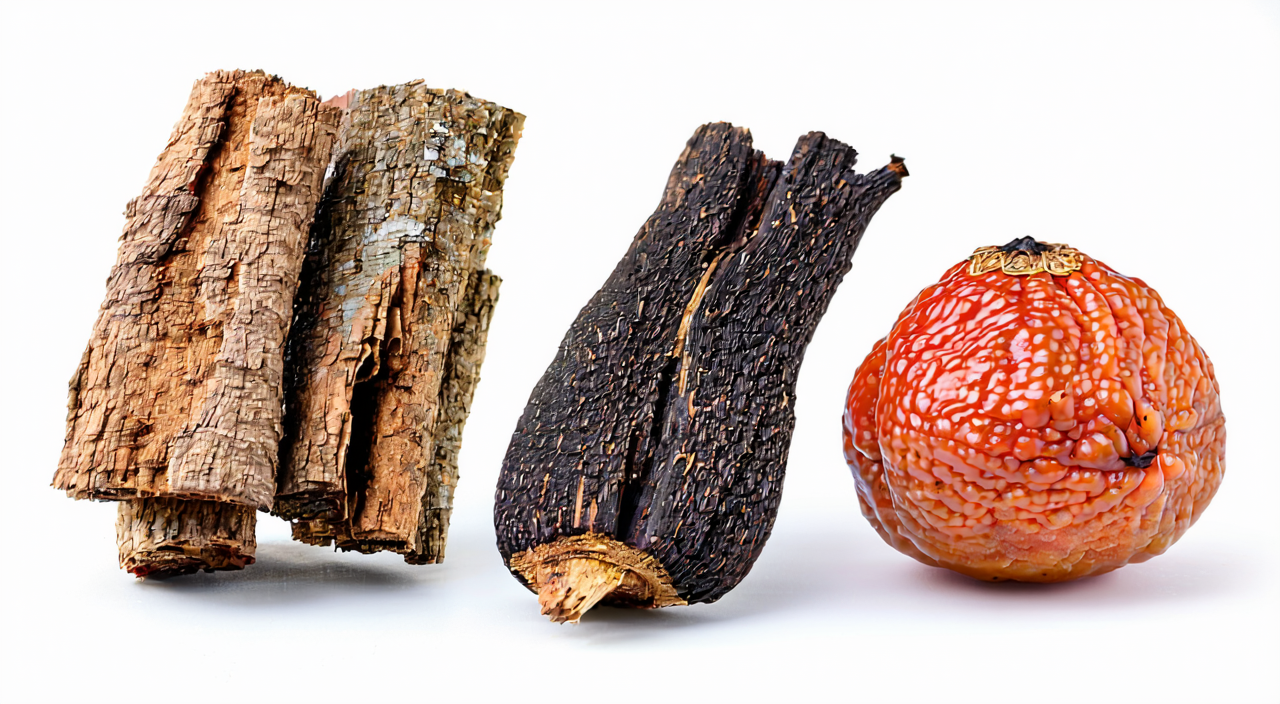
These three herbs are all commonly seen in traditional deworming approaches, but their sources, parts used, and precautions differ notably. Rangoon Creeper (Shi Jun Zi) is the dried ripe fruit of Quisqualis indica, spindle-shaped with multiple ridges on the surface; it is traditionally used for childhood malnutrition accompanied by parasitic accumulation and is generally considered less toxic than Szechuan Chinaberry Bark, though it still requires careful use after dry-frying—overdose can easily cause hiccups, dizziness, etc. Toosendan Fruit (Chuan Lian Zi) is the dried ripe fruit of Melia toosendan, nearly spherical, mainly used to move qi, relieve pain, soothe the liver, and drain heat. It also appears in deworming formulas, but its qi-moving effect is more prominent, and it likewise has hepatotoxicity. Szechuan Chinaberry Bark is derived from the bark or root bark and, in traditional understanding, has the strongest deworming power but also the most pronounced liver toxicity. The three cannot be arbitrarily substituted for one another. If a formula originally calls for Szechuan Chinaberry Bark, replacing it with Rangoon Creeper or Toosendan Fruit may not only change the therapeutic direction but also completely alter the safety profile. Recognizing these differences helps make more rational judgments when encountering information about these herbs.
Which Formulas Use Szechuan Chinaberry Bark?
In traditional formulas, Szechuan Chinaberry Bark is rarely used alone; it is usually a key ingredient in deworming formulas, with deliberately controlled dosage and combination. For example, “Ku Lian Gen Pi Wan” (Szechuan Chinaberry Bark Pill) features the root bark as the main component, combined with other herbs, traditionally used for complex patterns of recurrent abdominal pain and wasting due to parasitic accumulation. “Hua Chong Wan” (Transform Parasites Pill) combines Szechuan Chinaberry Bark with Rangoon Creeper, Carpesium fruit (He Shi), betel nut, and others, targeting mixed intestinal parasitic infections. “Ku Lian Pi San” (Szechuan Chinaberry Bark Powder) was sometimes used externally and sometimes taken internally in small amounts in ancient times, aimed at situations where skin tinea and itching coexisted with parasitic accumulation. The reason these formulas include multiple herbs is precisely that traditional doctors recognized the strong toxicity of Szechuan Chinaberry Bark and sought to restrain or buffer its intensity with other substances. In modern TCM clinical practice, these classical formulas have almost all been modified and adapted based on pattern differentiation; the original formulas are rarely applied directly, and patients are never allowed to fill the prescriptions on their own. Understanding these formulas is more about grasping the role of Szechuan Chinaberry Bark in traditional theory rather than obtaining a guide for use.
What Precautions Should Be Taken with Szechuan Chinaberry Bark?
First, self-administering internal doses is absolutely forbidden, and long-term or repeated use must be avoided. Second, pregnant women, breastfeeding women, children, and individuals with impaired liver function should completely avoid contact. Third, even external use should limit the area and duration; avoid application on broken or ulcerated skin to prevent transdermal absorption leading to adverse reactions. Fourth, if symptoms such as nausea, vomiting, drowsiness, loss of appetite, vague upper abdominal pain, or yellowing of the eyes occur shortly after exposure, the possibility of liver injury must be highly suspected. Stop use immediately and go to the emergency room. Do not induce vomiting on your own, and do not take any so-called antidote herbs without clear guidance; bring a sample of the remaining substance and seek medical attention promptly. There have been past cases where people mistakenly trusted folk remedies and drank a decoction of Szechuan Chinaberry Bark, resulting in severe consequences. These lessons repeatedly remind us that even if we respect traditional medicines, safety must always come before efficacy.
Summary
Szechuan Chinaberry Bark is a traditional herb with potent action but prominent toxicity. From visual identification to distinguishing medicinal parts, all knowledge serves to build a more complete understanding, not to encourage its use. Although it shares similar indications with Rangoon Creeper and Toosendan Fruit, each has different strengths and weaknesses and cannot be confused. Modern research has used data to confirm the marked hepatotoxicity and neurotoxicity of Szechuan Chinaberry Bark, further demonstrating that self-experimentation may bring unacceptable risks. The content of this article is provided only as objective popular science reference and cannot replace professional diagnosis or treatment advice. For any health concerns, always consult qualified medical professionals.