
What Is Chun Pi? Medicinal Parts, Identification, and Common Formulas
Chun Pi is a commonly used astringent herb in Chinese medicine, obtained from the root bark or trunk bark of the tree of heaven (Ailanthus altissima). Because of its name, many people confuse it with the Chinese toon tree (Toona sinensis). The tender leaves of the Chinese toon are often eaten as a vegetable, while Chun Pi comes from an entirely different species. The two differ markedly in plant source, characteristics, and uses. For those interested in Chinese medicine abroad, correctly identifying Chun Pi, distinguishing it from similar herbs, and understanding its traditional functions and classic formulas are prerequisites for safe use. This article provides a relatively complete reference covering appearance, medicinal parts, TCM understanding, comparisons with similar items, common formulas, and precautions.
What Does Chun Pi Look Like? How to Identify It
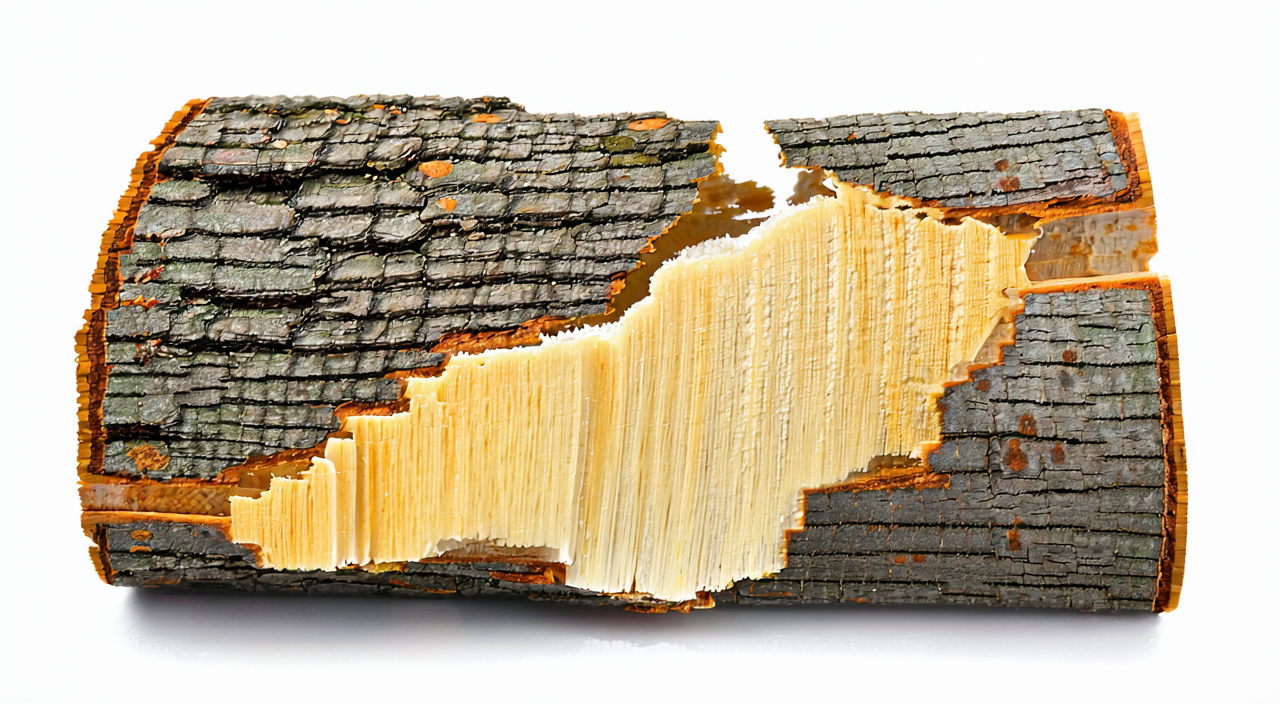
Chun Pi decoction pieces often appear as irregular trough-shaped, semi-cylindrical, or curled slices of varying lengths, about one to several millimeters thick. The outer surface is grayish-brown to grayish-brown, very rough, with visible longitudinal cracks, transverse lenticels, and grayish-white lichen patches. After scraping off the outer cork layer, a relatively smooth yellowish-brown bark layer is revealed. The inner surface is pale yellow to pale brownish-yellow, with fine longitudinal striations and occasional fibrous strands. The texture is hard and brittle; it snaps with a crisp sound. The cross-section is extremely fibrous and can be peeled apart layer by layer, similar to the layered feel of cardboard. Tasting it gives a slightly astringent and somewhat fishy flavor. Compared with Chinese toon bark, the outer surface of Chinese toon bark is relatively smoother, with fewer and less prominent lenticels; the inner surface is lighter in color, and the fibrous nature is weaker. These differences can serve as simple identifiers in the field or at the pharmacy.
Medicinal Parts of Chun Pi: Root Bark or Trunk Bark?
The medicinal substance Chun Pi uses the dried root bark or trunk bark of the tree of heaven. Among them, root bark is often preferred because traditional experience considers it more potent. The best harvest seasons are spring and autumn, when the bark separates easily from the wood. During processing, the stripped bark is cleaned of coarse outer layers, washed, cut into shreds or short segments, and dried in the sun or at low temperature. After drying, the surface color of the pieces darkens slightly, and the texture becomes brittle. Commercial grades generally favor bark that is thick, in large pieces, with little cork layer and a bright yellow inner surface. It must be emphasized again that the bark of the edible Chinese toon tree is not considered authentic Chun Pi. The plant origin must be verified when purchasing or using it.
How Does Traditional Chinese Medicine View Chun Pi?
In Chinese medicine, Chun Pi is classified as a heat-clearing and dampness-drying herb with additional astringent properties. Its nature and flavor are bitter, astringent, and cold, and it mainly enters the large intestine, stomach, and liver meridians. Traditional theory holds that clearing damp-heat helps reduce abnormal vaginal discharge and improve chronic diarrhea, while its astringent nature consolidates the effect once the pathogenic factors have mostly subsided, preventing further depletion. Therefore, it appears relatively often in patterns of damp-heat pouring downward, such as red-and-white vaginal discharge, chronic diarrhea, and bloody stools. However, if damp-turbidity is still exuberant or in the early stages of acute diarrhea, premature astringing may trap the pathogens, causing distension and delayed recovery. In actual clinical practice, Chun Pi is rarely used alone; it is often combined with deficiency-tonifying, qi-regulating, or heat-clearing and dampness-draining herbs to balance the relationship between the righteous and the pathogenic, avoiding the mistake of “closing the door and keeping the thief inside.”
Components of Chun Pi in Modern Research
The quassinoid compounds, condensed tannins, and flavonoids contained in Chun Pi are the focus of modern studies. In vitro experiments suggest these components may have the ability to inhibit certain bacteria and modulate inflammatory responses, which somewhat corresponds to the traditional idea of treating damp-heat vaginal discharge and intestinal damp-heat. However, current evidence mostly remains at the experimental stage, lacking large-scale human clinical data. Therefore, this information serves more as supplementary reference for understanding traditional uses and cannot be taken as direct proof of efficacy. Specific applications still require caution and should be evaluated in light of individual health conditions.
Distinguishing Chun Pi, Ku Lian Pi (Chinaberry Bark), and Huang Bai (Phellodendron Bark)
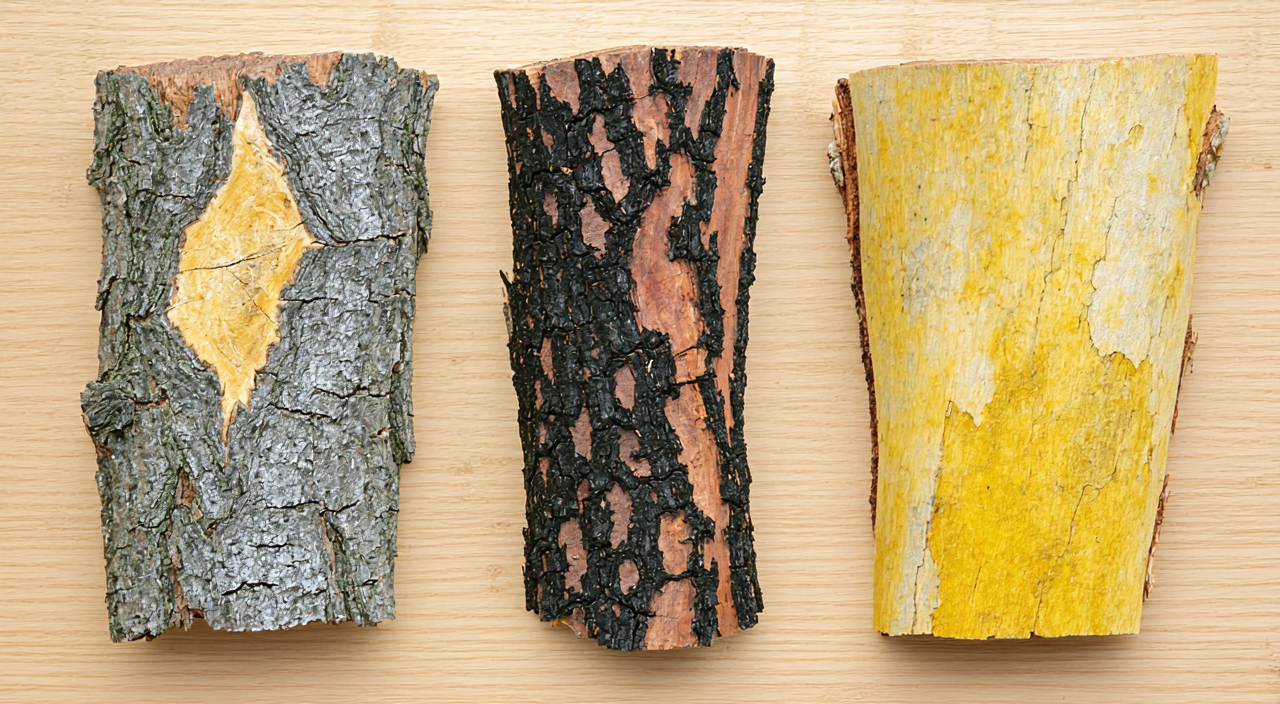
The three have some similarities in the appearance of decoction pieces, but their origins and characteristics are distinctly different. Chun Pi comes from the tree of heaven (Simaroubaceae), Ku Lian Pi from the chinaberry tree (Melia azedarach) or Sichuan chinaberry (Melia toosendan) of the Meliaceae family, and Huang Bai from the Amur cork tree (Phellodendron chinense) of the Rutaceae family. In appearance, Chun Pi has a rough grayish-brown outer surface and a pale yellow inner surface, with a fibrous, layered cross-section. Ku Lian Pi has a grayish-brown to purplish-black outer surface with a thicker cork layer; its cross-section is reddish-brown or purplish-brown, and the fibers are not easily peeled apart. Huang Bai has a bright yellow cross-section—both inner and outer surfaces are yellow, which is the most intuitive distinguishing point. As for taste, Chun Pi is bitter, astringent, and slightly fishy; Ku Lian Pi is intensely bitter with a characteristic odor; Huang Bai is extremely bitter, and chewing it visibly stains the saliva yellow. In terms of function, Chun Pi excels in astringing and stopping discharge and bleeding; Ku Lian Pi is more focused on expelling parasites and is used externally for ringworm; Huang Bai emphasizes clearing heat, drying dampness, draining fire, and resolving toxins. The three target quite different therapeutic directions and must never be used interchangeably.
Which Classic Formulas Contain Chun Pi?
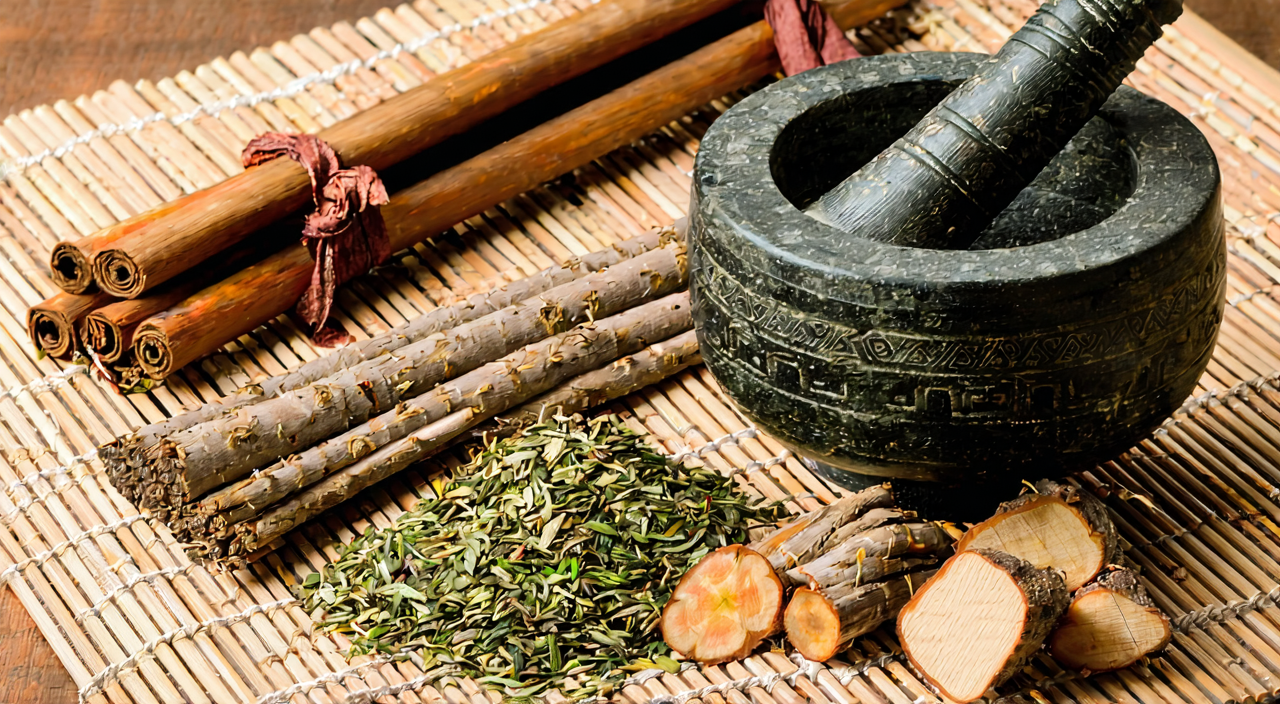
Among traditional gynecological and intestinal formulas, Gu Jing Wan (Menses-Securing Pill) is a relatively well-known one. It combines Chun Pi, Huang Bai, Xiang Fu (Cyperus), and others, often used for heavy menstruation or vaginal discharge due to yin deficiency with blood heat. Chun Pi Wan (Ailanthus Bark Pill) uses Chun Pi as the main ingredient to strengthen consolidation and is mostly employed for chronic, unremitting vaginal discharge. Qing Dai Tang (Discharge-Clearing Decoction) tends to be used with spleen-fortifying herbs like Shan Yao (Chinese yam) and Bai Zhu (Atractylodes) for thin, clear vaginal discharge due to spleen deficiency with dampness. In addition, many basic formulas for stopping vaginal discharge feature combinations of Chun Pi with Fu Ling (Poria), Yi Yi Ren (Coix seed), and Huang Bai, functioning as part of a therapeutic direction. All these formulas have their respective indications and are not meant to be used for “any vaginal discharge.” Whether they are suitable must be determined after a pattern differentiation by a Chinese medicine practitioner; self-medication is not advised.
What Precautions Should Be Taken When Using Chun Pi?
People with spleen-stomach deficiency-cold, those who are usually sensitive to cold, prone to diarrhea, or have poor appetite, should be particularly cautious when using Chun Pi, because its cold nature and astringent property may worsen deficiency-cold manifestations. Pregnant or breastfeeding women and children should be evaluated under professional guidance. In the presence of acute infection or obvious signs of damp-heat accumulation—such as abdominal pain, tenesmus, and a thick, greasy tongue coating—early astringing therapy is not advisable. If discomfort occurs during use, or there is no improvement after one to two weeks of continuous use, the medication should be stopped immediately, and medical attention sought. Especially for long-term or recurrent gynecological and digestive problems, do not rely solely on a single herb; a systematic diagnosis is necessary. Furthermore, be sure to use only authentic tree-of-heaven bark and avoid mistakenly using Chinese toon bark.
Summary
Chun Pi is a Chinese herb that both clears heat, dries dampness, and has astringent effects. When identifying it, one should pay attention to its rough, grayish-brown outer surface, pale yellow inner surface, and markedly fibrous cross-section. It is also important to distinguish it from Ku Lian Pi and Huang Bai to avoid confusion. Traditional formulas like Gu Jing Wan and Chun Pi Wan represent common application directions, but considering that its cold and astringent nature is not suitable for everyone, actual use must follow individualized pattern differentiation. This article is for informational reference only and cannot replace professional diagnosis or treatment plans. Any decision about medicinal use is best made under the guidance of a qualified professional.