
What Is Yan Hu Suo? Medicinal Parts, Identification Methods, and Common Formulas
In traditional Chinese medicine, Yan Hu Suo is an herb frequently used to regulate body pain and disharmony of qi and blood. Many readers outside China who are interested in Chinese medicine come across the name “Yan Hu Suo” or “Yuan Hu” when using certain Chinese patent medicines for pain relief or menstrual regulation. So what exactly is Yan Hu Suo, which part is used medicinally, how can it be initially identified in daily practice, and how does it differ from easily confused herbs? These questions often puzzle those who want to learn more. This article offers a clearer direction from the perspectives of herb characteristics, traditional understanding, common formulas, and precautions for use.
What Does Yan Hu Suo Look Like? How to Identify It?
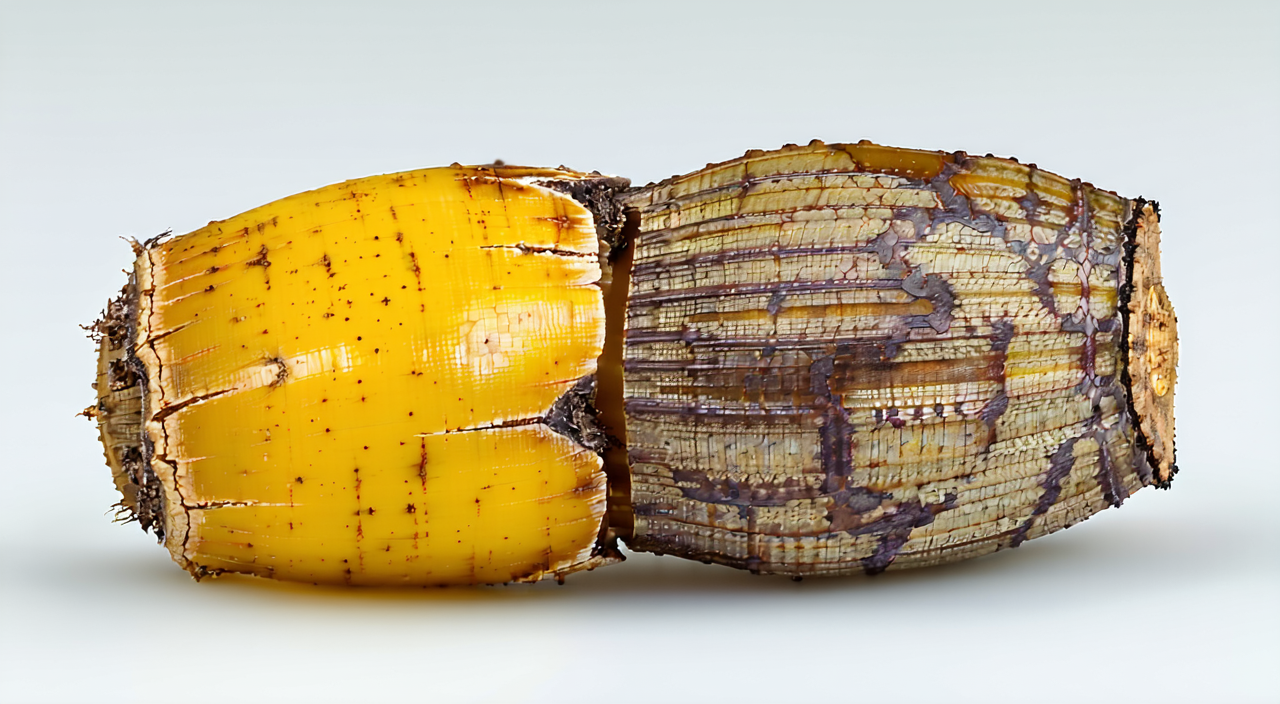
The original plant of Yan Hu Suo is Corydalis yanhusuo in the Papaveraceae family, but the medicinal material we commonly see is not the whole herb or flower; it is the processed underground tuber. Generally, dried Yan Hu Suo tubers are irregularly flattened and spherical, mostly 0.5 to 1.5 cm in diameter, with somewhat uneven size. The surface is usually yellowish-brown or grayish-brown, sometimes with small lenticel-like protrusions.
One of the most obvious identifying features is the reticulated wrinkles often present on the tuber surface. These wrinkles are not smooth but uneven in texture, and become more visible after drying. If you break open a Yan Hu Suo tuber, the cut surface appears yellow or yellowish-brown with a horn-like luster, and sometimes dotted vascular bundle traces can be seen. In terms of smell, Yan Hu Suo has a slight, distinctive odor and a somewhat bitter taste. Processed Yan Hu Suo prepared with vinegar may also be seen on the market; its color is darker and the surface may have slight scorch marks. This processing is done to strengthen its action in a particular direction.
By appearance alone, it is genuinely difficult for ordinary people to accurately distinguish Yan Hu Suo from other similar medicinal materials, especially possible confusion with Xia Tian Wu and Xinjiang Yan Hu Suo. Therefore, if you want to make a preliminary judgment by appearance, it is advisable to observe together with the feel and cut-surface characteristics.
What Is the Medicinal Part of Yan Hu Suo?
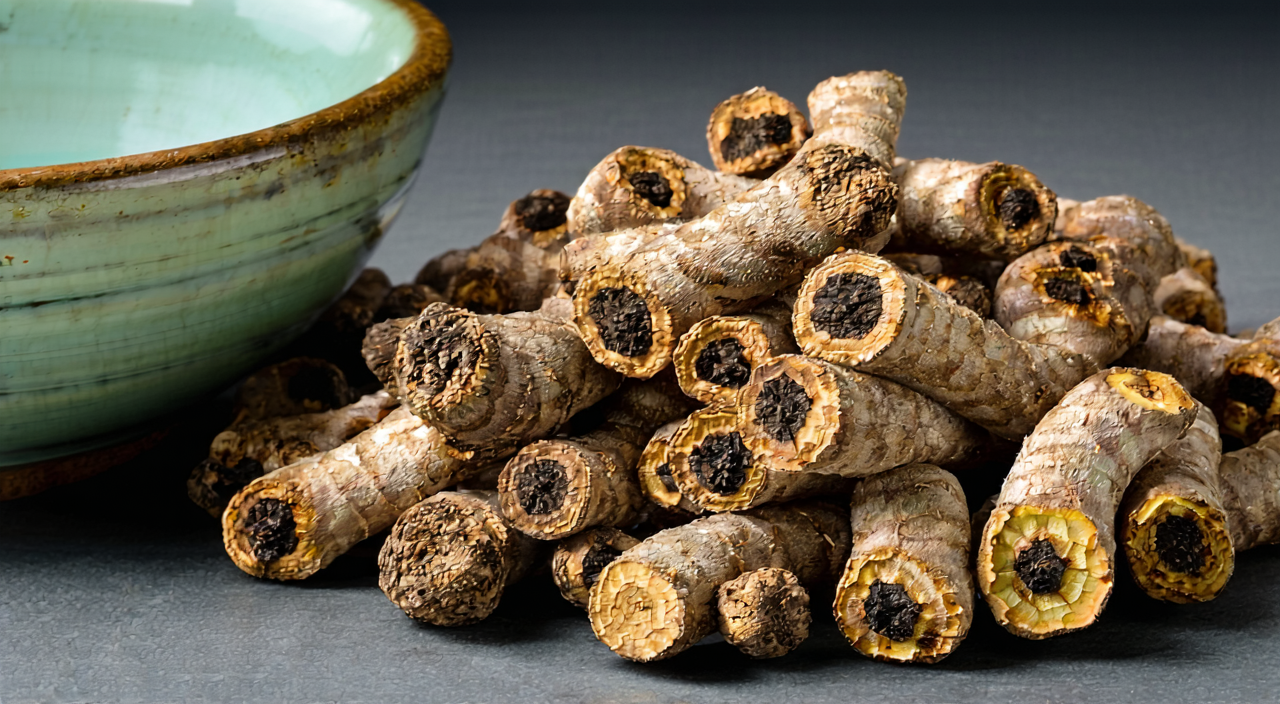
The medicinal part of Yan Hu Suo is its dried tuber. It is usually harvested in early summer when the stems and leaves wither. After removing fibrous roots and sediment, the tubers are boiled in water or steamed until the center no longer has a white core, then taken out and dried. This boiling or steaming step is a relatively key part of traditional processing and helps with later storage and use.
After processed raw Yan Hu Suo is further prepared, there is also the common form “vinegar-processed Yan Hu Suo.” The traditional method is to mix clean Yan Hu Suo slices with edible vinegar, wait until the vinegar is completely absorbed, and then dry-fry over low heat. Vinegar-processed Yan Hu Suo tends to have a darker cut surface, a harder and more brittle texture, and sometimes a faint vinegar aroma when smelled closely. In Chinese medicine theory, vinegar processing can enhance the herb’s action of entering the liver and relieving pain, so in some pain-regulating formulas the Yan Hu Suo used may well be vinegar-processed Yan Hu Suo. It should be noted that both raw and vinegar-processed Yan Hu Suo are medicinal materials in the strict sense and should not be taken casually as a daily health product in large amounts or over a long period.
How Does Traditional Chinese Medicine Understand Yan Hu Suo?
Within the theoretical system of Chinese medicine, Yan Hu Suo is not a drug aimed at a specific modern disease; rather, it is understood from the perspective of regulating the movement of qi and blood in the body. Traditionally, Yan Hu Suo is considered warm in nature, pungent and bitter in flavor, and enters the liver and spleen meridians. Its main actions are to invigorate blood, move qi, and relieve pain.
This understanding comes from long-term practical experience. For certain types of body pain caused by qi stagnation and blood stasis, such as stomach pain, distending pain in the chest and hypochondrium, menstrual abdominal pain, postpartum abdominal pain due to static blood obstruction, and swelling and pain from traumatic injuries, traditional Chinese medicine often regards Yan Hu Suo as one of the important reference medicinal materials. Its action is described as “being able to move qi stagnation within the blood and blood stagnation within qi,” meaning it can both promote the movement of blood and regulate the flow of qi, so it is suitable for conditions in which qi and blood are both not moving smoothly.
However, this is an approach based on Chinese medicine pattern differentiation and does not directly correspond to modern medical diagnosis and treatment, which starts from etiology and pathology. If you experience recurrent pain of unknown cause, especially persistent chest or abdominal pain, pain that worsens at night, or pain accompanied by sweating or blood pressure fluctuations, you should not seek to self-manage with medicinal herbs; instead, the cause should be clarified through professional medical examination first.
What Can Modern Research Tell Us?
With the development of natural product research, modern science has also conducted some component analyses of Yan Hu Suo. Alkaloid constituents isolated from Yan Hu Suo, such as tetrahydropalmatine, have shown certain analgesic and sedative tendencies in laboratory studies, providing some reference for understanding traditional experience. However, most of this research is still at the basic experimental stage and cannot be directly equated with effects in human use, nor can it replace necessary medical diagnosis.
Therefore, it is relatively appropriate to treat these studies merely as a reference for understanding. However, if seeing research conclusions leads you to believe that Yan Hu Suo can replace standard pain treatment, this can easily lead to mistakes. In particular, it may mask important symptoms and create the risk of delaying diagnosis and treatment.
What Are the Differences Between Yan Hu Suo, Yu Jin, and Chuan Xiong?
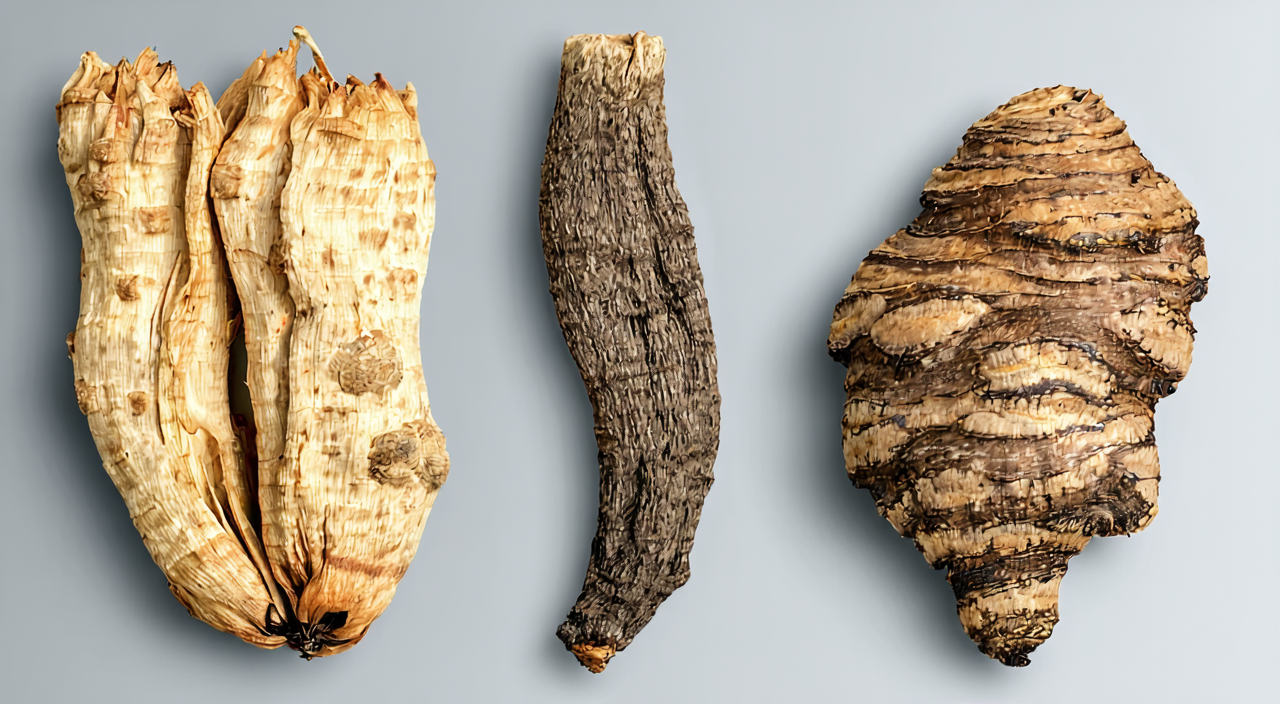
Many people easily confuse Yan Hu Suo with Yu Jin and Chuan Xiong when learning about blood-invigorating and qi-moving medicinal herbs. Although all three are often used for problems related to qi and blood disharmony, their sources and properties are clearly different.
Yan Hu Suo comes from the dried tuber of a Papaveraceae plant, appearing as an irregular flattened sphere with a horn-like cut surface. Yu Jin is the dried root tuber of Zingiberaceae plants such as Curcuma wenyujin, Curcuma longa, Curcuma kwangsiensis, or Curcuma phaeocaulis. It is usually oblong or spindle-shaped, with a grayish-brown or orange-yellow cut surface and a relatively firmer texture. Chuan Xiong is the dried rhizome of the Apiaceae plant Ligusticum chuanxiong, shaped as an irregular nodular, fist-like mass with a rough surface and parallel raised nodes, completely different from the flattened spherical shape of Yan Hu Suo.
In terms of action, Yan Hu Suo leans toward invigorating blood, moving qi, and relieving pain. Yu Jin can also move qi, resolve constraint, cool blood, and break blood stasis. Chuan Xiong is more adept at dispelling wind and relieving pain, and has an upward action toward the head and eyes. These different emphases correspond to different clinical scenarios, so they cannot replace one another. When purchasing herbs or formulas containing these ingredients, it is advisable to carefully verify the product name to avoid confusion.
Which Formulas Use Yan Hu Suo?
Yan Hu Suo often appears in traditional formulas as a relatively targeted ingredient. Below are several representative formulas that can serve as clues for those interested in learning more.
Jin Ling Zi San is a relatively simple formula composed of Jin Ling Zi (Chuan Lian Zi) and Yan Hu Suo. It has traditionally been used for chest, abdominal, and hypochondriac pain caused by liver constraint transforming into fire and qi stagnation with blood stasis. This formula focuses on soothing the liver, draining heat, moving qi, and invigorating blood at the same time. Yan Hu Suo in it mainly plays the role of moving qi, invigorating blood, and relieving pain.
Yan Hu Suo San is a formula in which Yan Hu Suo is the chief ingredient. Its original composition is relatively rich; besides Yan Hu Suo, it often includes Dang Gui, Chi Shao, Pu Huang, Rou Gui, and others. Traditionally it is used for menstrual abdominal pain and pain due to stasis and stagnation in women. Its approach focuses on warming the meridian, invigorating blood, moving qi, and relieving pain.
Yuan Hu Zhi Tong Pian is a relatively common modern Chinese patent medicine, with Yan Hu Suo as one of its main ingredients. Traditionally it is used for stomach pain, hypochondriac pain, headache, and dysmenorrhea caused by qi stagnation and blood stasis. Although it is convenient to purchase, it is still recommended to consult a professional before use, based on your symptoms and the product instructions.
Shao Fu Zhu Yu Tang comes from Yi Lin Gai Cuo. Its composition includes Yan Hu Suo, Xiao Hui Xiang, Gan Jiang, Mo Yao, Pu Huang, Dang Gui, Chuan Xiong, and others. It excels at invigorating blood, dispelling stasis, warming the meridian, and relieving pain. Traditionally it is often used for lower abdominal pain and menstrual irregularities due to cold congealing and blood stasis.
From the formulas above, it can be seen that Yan Hu Suo can show different synergistic effects under different combinations. However, whichever formula is involved, whether it is suitable for you still needs to be judged comprehensively according to your constitution, current specific situation, and the product instructions. It should not be used on your own merely because of its name or someone else’s recommendation.
What Precautions Should Be Taken When Using Yan Hu Suo?
Although Yan Hu Suo is a commonly used medicinal herb, it is necessary to understand some basic precautions before use to avoid mistakes.
First, Yan Hu Suo is generally regarded as unsuitable during pregnancy because its blood-invigorating and qi-moving effects may have inappropriate influences during pregnancy. In both traditional and modern understanding, such herbs tend to be avoided when trying to conceive or during pregnancy.
Second, people with a bleeding tendency or those using anticoagulant drugs also need to be especially cautious. Because Yan Hu Suo has relatively strong blood-invigorating properties, if you have low platelets or an obvious bleeding tendency, a history of cerebral hemorrhage, or frequent subcutaneous bleeding, you should not take it on your own without professional evaluation.
In addition, Yan Hu Suo has a certain sedative and central inhibitory tendency. If you are taking sedatives, sleeping medications, or anti-anxiety drugs, using Yan Hu Suo or products containing it at the same time may strengthen the sedative effect and cause unexpected reactions. Therefore, this must be considered under the guidance of a doctor or pharmacist.
Most importantly, if you have unexplained chest pain or abdominal pain that is severe, persistent, or accompanied by palpitations, difficulty breathing, cold sweating, vomiting, black stools, or other symptoms, these are often warning signs requiring urgent evaluation. They should not be relieved or observed with any medicinal herbs; seek medical attention as soon as possible.
Summary
As a traditional blood-invigorating and qi-moving medicinal herb, Yan Hu Suo has important identifying features including its flattened spherical tuber and yellowish-brown horn-like cut surface. Vinegar-processed Yan Hu Suo is more widely used for pain relief, but all of this is based on Chinese medicine pattern differentiation and individualized judgment. Whether it is Jin Ling Zi San, Yan Hu Suo San, Yuan Hu Zhi Tong Pian, or other traditional formulas, they should be viewed on the premise of understanding your own constitution and symptoms. In particular, be alert to the health risks behind unexplained pain. This article is for general educational reference only and cannot replace professional diagnosis or treatment advice.