
What Is Gadfly (Meng Chong)? Medicinal Part, Identification, and Common Formulas
Gadfly (Meng Chong) is an animal-derived medicinal material with relatively distinctive appearance but a narrow safety margin. Many overseas Chinese readers, when reviewing formulas containing gadfly, can easily confuse it with ground beetle (tu bie chong) or leech (shui zhi), and may not know whether the medicinal part is the entire insect body or only a specific part. This article introduces its insect source, appearance identification, medicinal part, traditional understanding, modern safety concerns, differences from similar medicinal materials, common formulas, and precautions for use.
What Does Gadfly (Meng Chong) Look Like? How to Identify It?
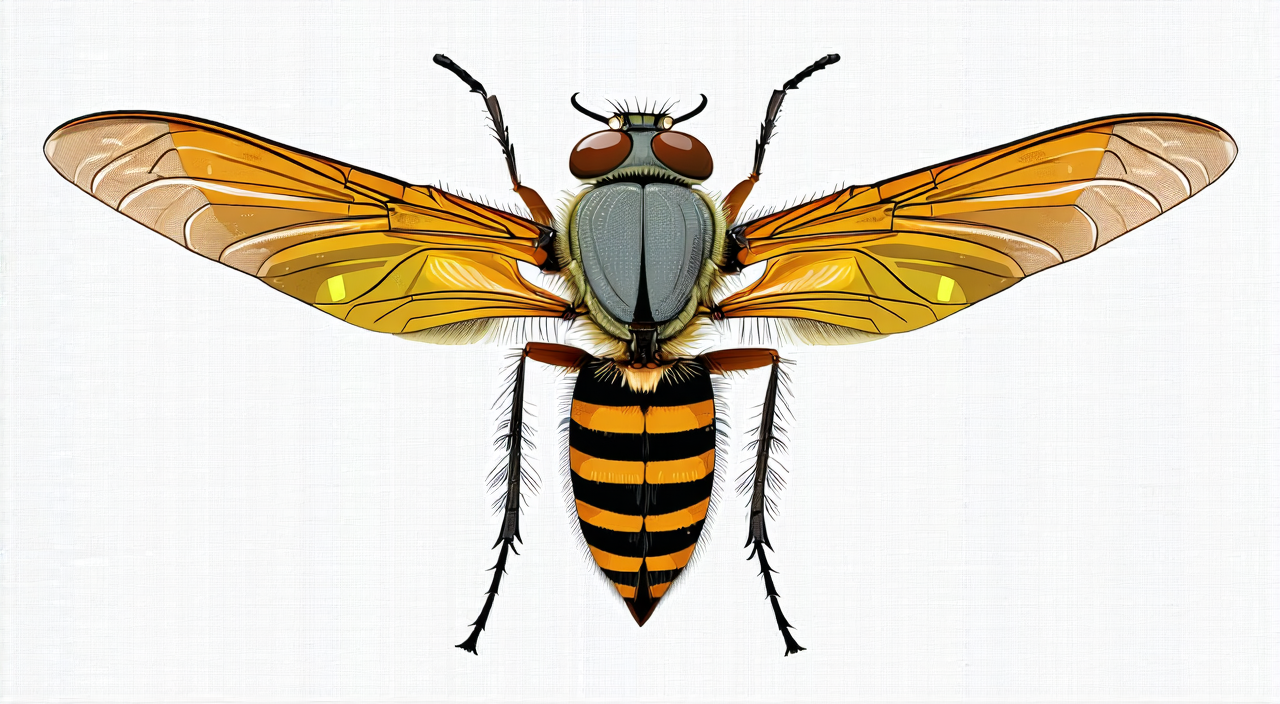
Gadfly is generally derived from insects of the Tabanidae family. Common traditional sources include the dried female bodies of species such as Tabanus bivittatus. In appearance, the body is relatively short and stout, usually grayish-brown, yellowish-brown, or blackish-brown, with some color variation depending on the source.
The most noticeable identification feature is the pair of large, prominent compound eyes on the head, which makes the head appear relatively broad. The thorax is mostly yellowish-brown or grayish-brown, and the dorsal side is often covered with short hairs. Gadfly has only one pair of membranous wings. The wings are transparent or slightly smoky brown and lie flat over the abdomen when at rest. The abdomen is segmented, with relatively clear boundaries between segments, and the female abdomen is often fuller.
Unlike common beetle-derived medicinal materials, gadfly does not have hard elytra, and its overall texture is relatively brittle. After drying, the body breaks easily, especially at the junction between the head and thorax and where the legs attach to the body. According to traditional experience, female insects tend to have a more distended abdomen because they feed on blood, whereas males do not primarily feed on blood and differ in form and abdominal fullness. For this reason, the medicinal source is usually specified as the dried female body.
What Is the Medicinal Part of Gadfly (Meng Chong)?
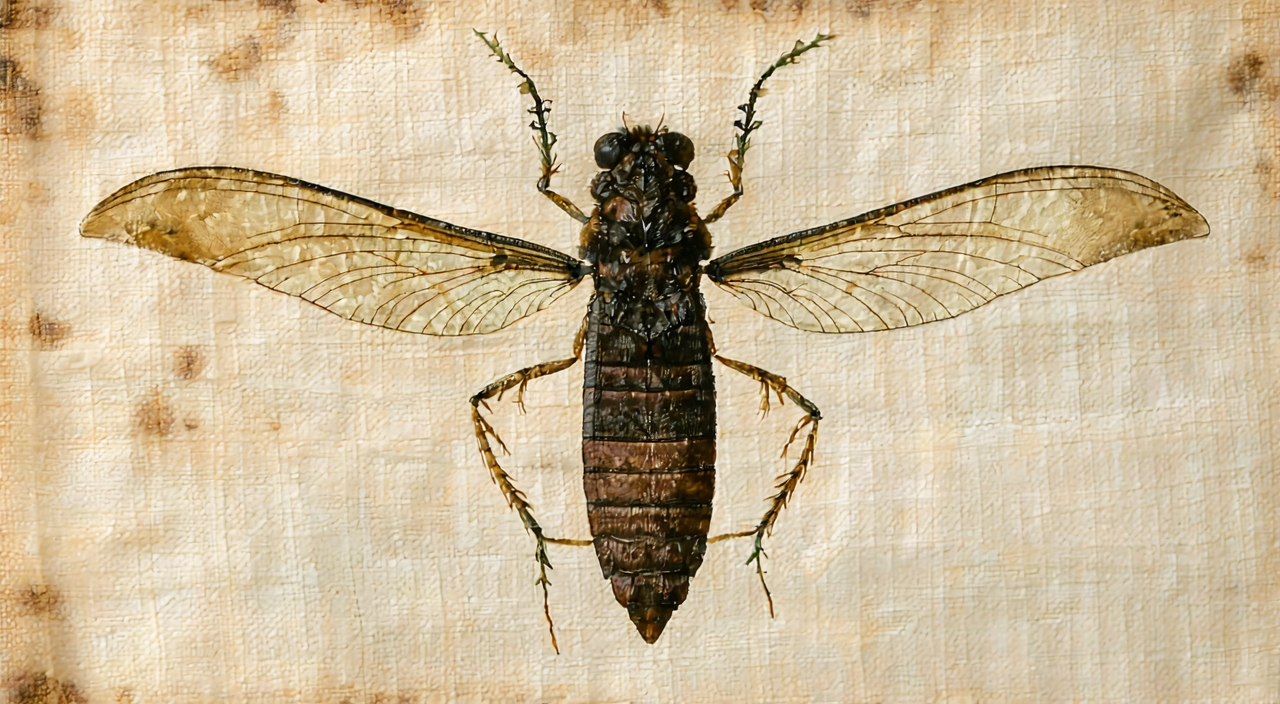
The medicinal part of gadfly is usually the dried whole body of the female insect, rather than separate use of a pair of legs, the head, or the wings. In other words, the medicinal material is generally the complete female insect body as the unit of use. However, in actual commercial products, the head, legs, and wings may partially detach during drying, transportation, and storage, which can also affect the appearance of the material.
Proper collection and drying have a major impact on gadfly quality. Traditionally, female insects are often captured in summer and autumn, cleaned of impurities, and then dried. Drying methods include sun-drying or low-temperature oven-drying, with the goal of reducing moisture while minimizing decay and breakage. Because gadfly is an animal-derived medicine, it is prone to insect damage, mold, or off-odors, so it should be stored in a dry, ventilated place with attention to pest control.
In terms of macroscopic characteristics, a complete dried gadfly should retain the overall body outline as much as possible, with the abdomen, thorax, and head still identifiable. Large amounts of powder, broken pieces, mold spots, or abnormal color may indicate improper storage or poor quality. For overseas users, these appearance features can serve as a basic reference, but specific quality assessment should still be based on source, standards, or professional advice.
How Does Traditional Chinese Medicine Understand Gadfly (Meng Chong)?
In traditional Chinese medicine (TCM) theory, gadfly is commonly classified as an animal-derived medicinal substance that invigorates blood and transforms stasis. Its nature, flavor, and channel tropism vary somewhat in different materia medica texts, but traditionally it is considered to act mainly by breaking blood stasis, expelling stasis, dispersing masses, and unblocking menstruation. The term “breaking blood” does not simply mean promoting blood circulation; it emphasizes possible use when blood stasis is relatively marked, the course of illness is prolonged, and ordinary blood-activating medicinals are insufficient.
Therefore, in traditional formulas, gadfly is often combined with ingredients such as rhubarb (dai huang), peach kernel (tao ren), and leech (shui zhi) to form compound strategies for transforming stasis and unblocking menstruation. Such combinations are not merely additive; they aim to use the synergy of different medicinals to comprehensively address manifestations related to internal blood stasis.
It is important to note that TCM usually emphasizes “using the medicine only when the corresponding pattern is present.” In other words, gadfly may be considered only when the specific symptoms, constitution, and pathomechanism match. Insect-derived medicinals, especially those with strong blood-breaking effects, are not suitable for daily health care or long-term self-use. Whether gadfly is relevant for manifestations such as irregular menstruation, masses, or pain still depends on a complete pattern differentiation and cannot be judged from a single symptom alone.
Modern Research Focus: Toxicity, Allergic Reactions, and Bleeding Risk
Modern pharmacological research on gadfly is not centered on a single active ingredient, but rather on the safety boundaries of animal-derived medicinal materials. As a blood-feeding insect, its dried body may contain various protein substances and carries a potential sensitization risk. People with an allergic constitution may be more likely to develop rash, itching, respiratory discomfort, or other reactions if they handle or take products containing gadfly.
A more important risk is bleeding tendency. Traditionally, gadfly is regarded as having a rather strong blood-breaking action. From a modern perspective, it may have certain effects on coagulation mechanisms, platelet function, or vascular permeability. People who are using anticoagulant or antiplatelet drugs, or who have bleeding disorders, gastric ulcers, recent surgery, or risk of cerebral hemorrhage, are not advised to use gadfly-containing materials or formulas on their own.
In addition, whether the source of gadfly is standardized, whether heavy metals have accumulated, and whether it may carry pathogens are also issues that require special caution in overseas use scenarios. Insect-derived medicinal materials from unregulated sources may pose extra safety risks. Therefore, when learning about formulas containing gadfly, attention should be paid not only to traditional names, but also to the source of raw materials, processing methods, and actual conditions of use.
How Does Gadfly (Meng Chong) Differ from Ground Beetle and Leech?
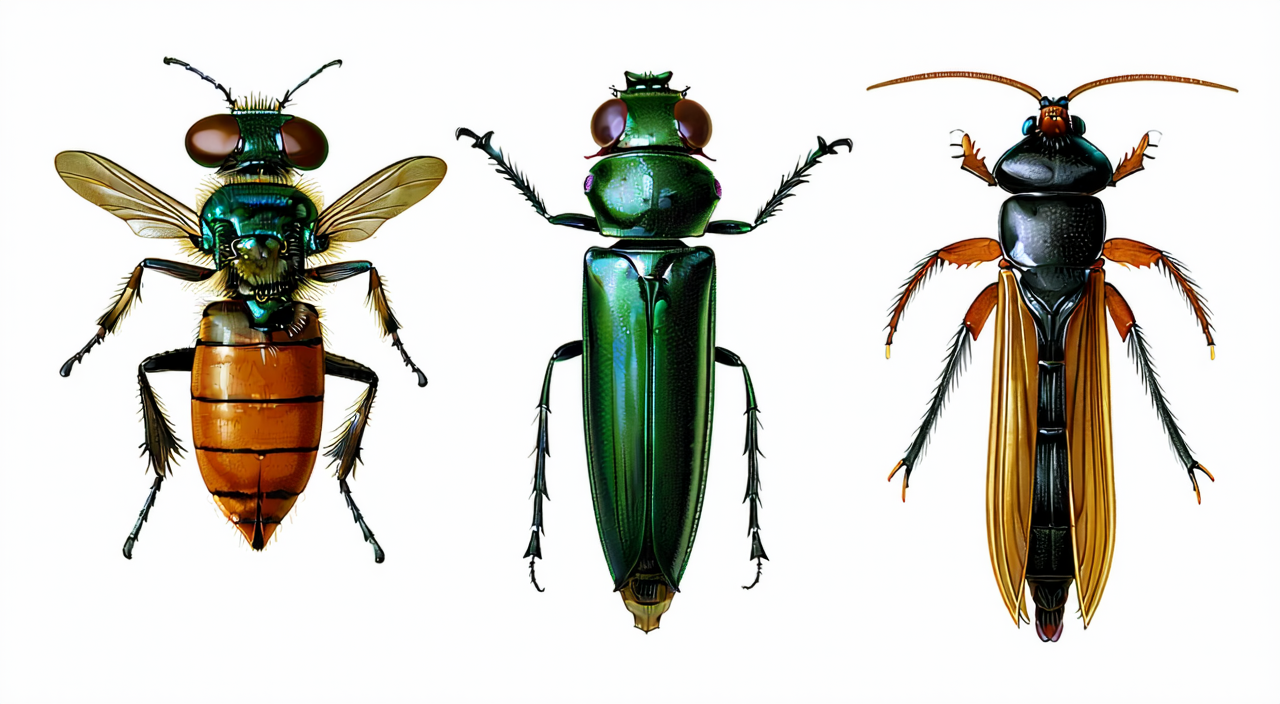
Gadfly, ground beetle (tu bie chong), and leech (shui zhi) are all traditional animal-derived medicinals used for invigorating blood and transforming stasis, but their appearance and sources differ greatly.
Ground beetle is derived from the dried female body of Eupolyphaga sinensis or Steleophaga plancyi in the Corydiidae family. Its body is flattened and oval, with a leathery or semi-leathery shell-like structure on the back, and the legs are mostly on the ventral surface. Overall, it looks more like a flattened beetle. Gadfly, by contrast, has one pair of distinct membranous wings, a relatively broad thorax, and a segmented abdomen, with more prominent characteristics of a flying insect. In simple terms, ground beetle looks more like a “flat, rounded small beetle,” while gadfly looks more like a “short, stout fly or horsefly.”
Leech comes from animals in the Hirudinidae family. Its body is flattened and elongated, without wings or a distinctly segmented insect-like abdomen, and there are often suckers at the front and rear ends. Gadfly has wings, compound eyes, and clearly differentiated thorax and abdomen, so it differs even more from leech. It should be noted that leech and gadfly sometimes appear together in traditional formulas, but their potency and risk profiles should be evaluated separately and they cannot replace each other.
Another easily confused material is blister beetle (ban mao), which belongs to the order Coleoptera. It has hardened elytra and looks more like a beetle, clearly differing from gadfly’s single pair of membranous wings. Although blister beetle also has strong irritant properties, it is not in the category of gadfly discussed in this article.
Which Formulas Contain Gadfly (Meng Chong)?
Among the classic formulas containing gadfly, the most common include Didang Decoction (Didang Tang), Didang Pill (Didang Wan), and Dahuang Zhechong Pill. Didang Decoction and Didang Pill are traditional formulas for transforming stasis and unblocking menstruation. They often combine gadfly, leech, peach kernel, and rhubarb, and are used in traditional pattern differentiation for conditions such as internal accumulation of stasis and heat and blood amassment in the lower burner. Didang Tang is a decoction, while Didang Wan is made into pills. Traditionally, pills are considered relatively milder in action, but both must be used under strict pattern differentiation.
Dahuang Zhechong Pill is also a traditional formula. It uses multiple insect-derived medicinals and blood-activating stasis-transforming herbs, and is often mentioned in traditional approaches for consumptive deficiency complicated by internal blood stasis. Its indications are described specifically in classical texts, but that does not mean modern individuals can use it freely based on self-judgment.
In addition, some formulas for transforming stasis and unblocking menstruation may include gadfly according to the pattern. These formulas are mostly used in gynecology for irregular menstruation, amenorrhea, and pain, or in surgery and internal medicine for conditions involving blood stasis. Because gadfly has a relatively strong blood-breaking action, ancient use often had clear indications and contraindications.
From a modern safety perspective, these formulas should be viewed as an entry point for understanding traditional medicinal thinking, not as general recipes that can be chosen on one’s own. Whether to use them, which formula to use, and how to adjust the dosage must all be determined by a qualified professional based on individual constitution, symptom presentation, product source, and local regulations.
What Precautions Should Be Taken When Using Gadfly (Meng Chong)?
First, pregnant women, breastfeeding women, people trying to conceive, and women who already have heavy menstrual bleeding are not advised to use gadfly or gadfly-containing products on their own. The blood-breaking action of gadfly may pose additional risks.
Second, people with bleeding disorders, gastric ulcers, cerebrovascular disease, recent surgery, or those currently using anticoagulant or antiplatelet drugs should avoid self-use. Even external application or small-dose experimentation may cause adverse consequences because of individual constitution.
Third, the source of the insect must be regulated. Gadfly is not an ordinary food, and it should not be purchased through informal channels and then self-processed. Issues such as unknown sources, unclear processing environments, adulteration, and excessive heavy metals can all significantly increase the risk of use. Overseas users who have doubts about the source should give priority to traceable products that comply with local regulations and consult a professional.
Fourth, just because gadfly appears in traditional formulas does not mean it can be taken long-term or used as a health-maintenance insect-derived medicine. Gadfly is a relatively potent medicinal, and tradition emphasizes stopping once the therapeutic effect is achieved rather than prolonged use. If allergy, rash, nausea, abdominal pain, bleeding tendency, or other discomfort occurs after use, stop using it and consult a physician.
Summary
Gadfly (Meng Chong) comes from the dried body of female Tabanidae insects. It can be preliminarily identified by a pair of large compound eyes at the front, a short and stout body, and a single pair of membranous wings. However, it carries a relatively high safety risk and should not be confused with ground beetle or leech. Formulas containing gadfly, such as Didang Tang, Didang Wan, and Dahuang Zhechong Wan, are mostly used in traditional approaches for transforming and expelling stasis and must be used in accordance with individual constitution and professional judgment. This article is for general educational reference only and cannot replace professional diagnosis or treatment advice. Consult a physician or qualified professional before use.