
What Is Stemonae Radix? Medicinal Part, Identification, and Common Formulas
When exploring traditional Chinese herbal medicine, many people hear the name “Bai Bu” (Stemonae Radix), yet remain unclear about which plant it comes from, what it looks like, and how to identify it. Because its tuberous root shape bears some resemblance to Tian Dong (Asparagi Radix) and Mai Dong (Ophiopogonis Radix), confusion often arises. This article will cover the origin, tuberous root characteristics, harvesting and processing, traditional understanding, and common formulas involving Bai Bu, providing overseas readers with a clearer framework for understanding this herb.
What Does Bai Bu Look Like? How to Identify It
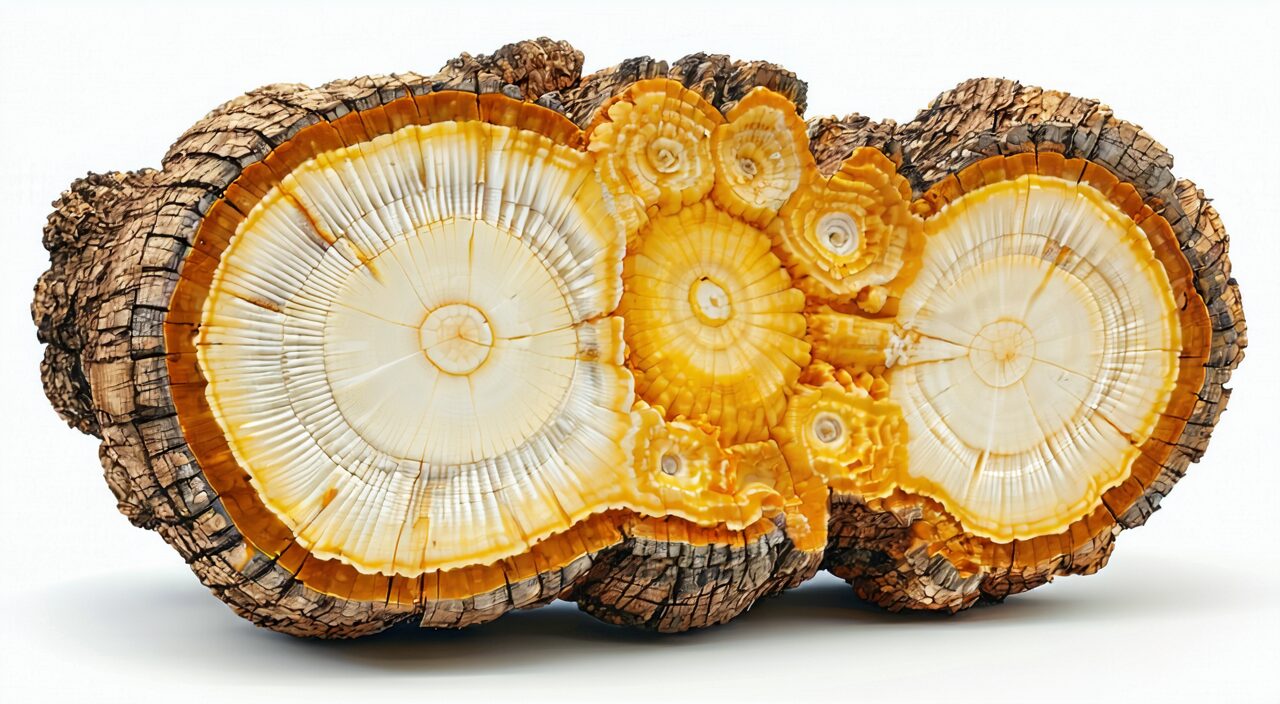
Bai Bu mainly comes from the dried tuberous roots of the Stemonaceae plants Stemona sessilifolia, Stemona japonica, or Stemona tuberosa. The appearance of the crude herb directly reflects its processing state. Several features can be used for basic identification.
The tuberous roots are mostly spindle-shaped or elongated, sometimes with several clustered together, typically ranging from several centimeters to over ten centimeters in length and about 0.5 to 2 centimeters in diameter. The surface color is predominantly yellowish-white or pale brownish-yellow, sometimes with a slight light brown tone. Irregular longitudinal furrows or fine longitudinal wrinkles are usually visible. Although the texture is firm, it snaps easily when force is applied.
The most crucial detail is the cross-section after breaking: the cut surface of Bai Bu often shows a horny, glossy appearance, with a pale yellowish-brown or dark brown color. In the central area, a relatively distinct stele can be seen, which is an important detail for distinguishing it from other herbs that look similar. The odor is quite mild, and tasting reveals a slight sweetness followed by a mild bitterness.
When purchasing or examining dried Bai Bu, if the tuberous roots appear blackened, have a light and spongy texture, show signs of moldy odor, or lack a visible stele structure, the origin and quality should be judged with caution.
What Is the Medicinal Part of Bai Bu?
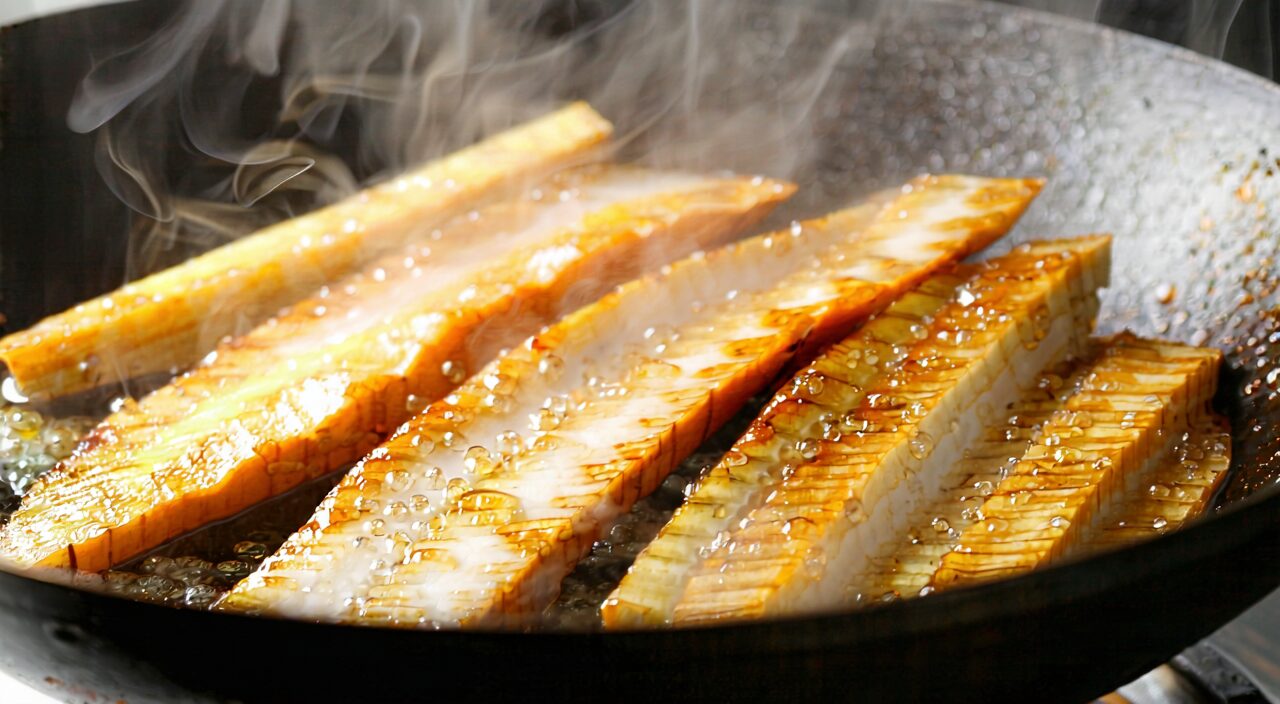
The medicinal part of Bai Bu is precisely its dried tuberous root. Harvesting generally takes place in spring and autumn. After digging, the aerial parts and fibrous roots are removed, the roots are thoroughly washed, then scalded in boiling water or steamed until no white core remains, and finally dried in the sun or at a low temperature. After such processing, the moisture content of Bai Bu is reduced, making storage easier, and the internal active constituents are relatively stabilized.
In clinical and daily health preservation, besides using raw Bai Bu directly, a common processing method exists—honey-fried Bai Bu (Mi Bai Bu). This is made by mixing Bai Bu slices with an appropriate amount of refined honey and stir-frying them over a gentle flame until they no longer stick to the hand. According to traditional understanding, honey-frying can enhance its ability to moisten the lung and direct qi downward, so it is more often used for dry cough, chronic cough, and cough types where “dryness” is the main manifestation. Raw Bai Bu is used more frequently for external applications to kill parasites and lice.
Therefore, knowing the medicinal part of Bai Bu goes beyond simply recognizing “the root is used”; it also involves understanding the broad application emphasis of different processed products, which helps in comprehending its role in various formulas.
How Does Traditional Chinese Medicine Understand Bai Bu?
In traditional Chinese medicine theory, Bai Bu is sweet and bitter in flavor, slightly warm in nature, and enters the Lung meridian. Its actions can be summarized in two main directions: first, moistening the lung, directing qi downward, and stopping cough; second, killing parasites and lice.
The aspect of moistening the lung, directing qi downward, and stopping cough is often applied to conditions related to both new and chronic coughs. Especially when a cough has persisted for a long time, lung qi is rebelling upward, or lung yin deficiency leads to dry cough with little phlegm, Bai Bu is often considered a gentle and moistening option. Traditionally, it has also been used for consumptive cough, whooping cough, and other prolonged cough conditions, playing a supportive and restorative role.
The aspect of killing parasites and lice is relatively specific and is more reflected in external use. Ancient practitioners frequently used decoctions of Bai Bu for bathing or prepared it as a tincture to deal with head lice and body lice; powdered Bai Bu or other preparations were also used to manage pinworm issues. Some modern households occasionally still follow this line of thinking, for example, applying Bai Bu tincture to the hair roots to address head lice.
It must be noted that the above are all traditional understanding perspectives. Whether Bai Bu suits a particular individual must always be determined by combining personal constitution, symptoms, and professional judgment.
What Preliminary Findings Does Modern Research Offer About Bai Bu?
Modern research has conducted some preliminary explorations into the constituents and pharmacological activities of Bai Bu. Bai Bu contains multiple alkaloids, such as stemonine, stemonidine, and protostemonine. These constituents have shown certain antitussive and antiparasitic activities in experimental studies. In addition, some studies have suggested that Bai Bu extracts may have inhibitory effects on certain common respiratory pathogenic bacteria and dermatophytes. However, most of these observations remain at the level of in vitro or animal experiments, and the gap between these findings and actual human application must be viewed with caution.
Such studies provide some reference clues for the traditional use of Bai Bu, but they do not equate to clinical verification. When using Bai Bu in everyday contexts, it is still more valuable to rely on traditional experience and appropriate formula combinations rather than depending solely on any single modern discovery.
What Are the Differences Between Bai Bu, Tian Dong, and Mai Dong?
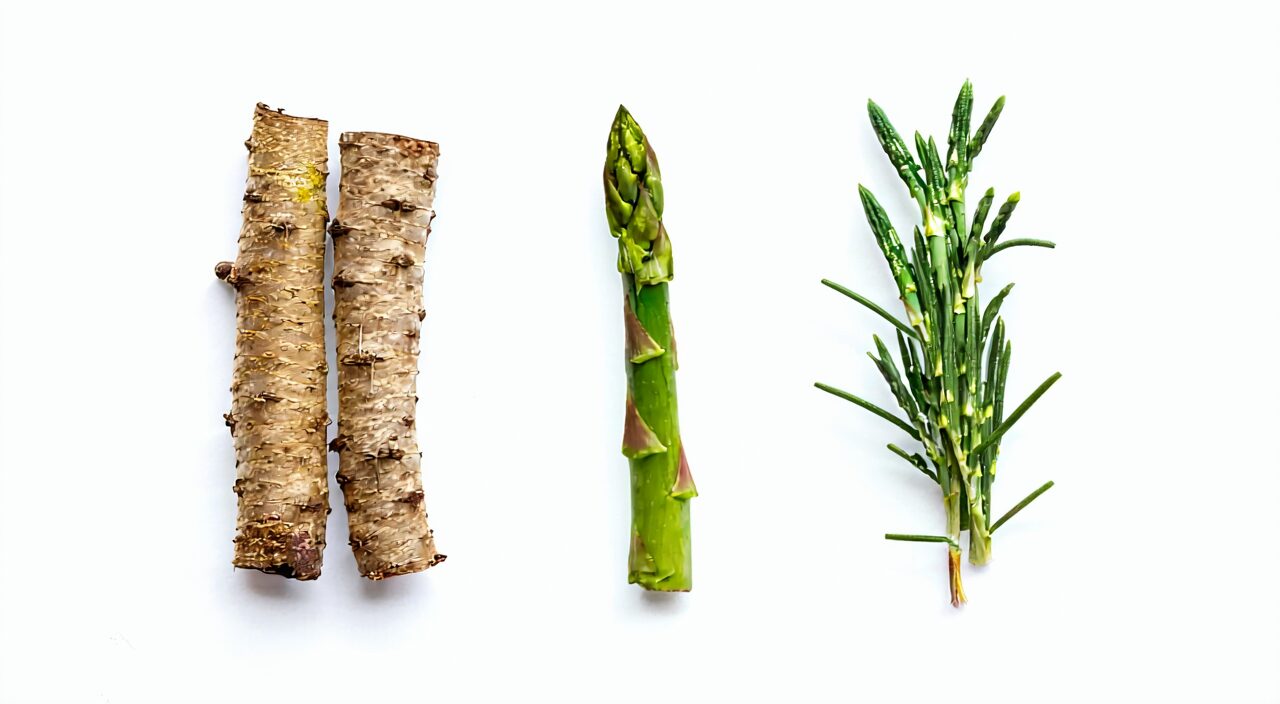
Although the medicinal parts of Bai Bu, Tian Dong (Asparagi Radix), and Mai Dong (Ophiopogonis Radix) are all mainly tuberous roots, their plant sources differ. The tuberous root shape, cross-section characteristics, and texture are quite distinct and can be differentiated in the following ways.
Tian Dong is the dried tuberous root of the Liliaceae plant Asparagus cochinchinensis. It is long spindle-shaped, slightly curved, with a yellowish-white or pale yellowish-brown surface that appears rather translucent. Its texture is somewhat sticky and moist, the fractured surface is horny, and a yellowish-white stele is present in the center. When tasted, Tian Dong is sweet with a slight bitterness and a pronounced sticky sensation.
Mai Dong is the dried tuberous root of the Liliaceae plant Ophiopogon japonicus. It is spindle-shaped with slightly pointed ends, generally smaller than Bai Bu. The surface is pale yellowish-white or yellowish-white with fine longitudinal wrinkles. The texture is pliable and tough, the fractured surface is yellowish-white and semi-transparent, and a tiny woody central core can be seen in the center. The taste is faintly sweet.
By contrast, Bai Bu’s tuberous root tends to be more horny, with a stronger glossy fractured surface, and the stele is usually more prominent and thicker than that of Mai Dong. Its texture is harder and more brittle than Tian Dong’s and lacks Tian Dong’s obvious sticky, moist feeling. Additionally, Bai Bu often appears as multiple tuberous roots clustered together, which is another visually recognizable feature.
Functionally, the three herbs also go in completely different directions. Tian Dong and Mai Dong lean more toward nourishing yin and generating fluids, while Bai Bu is inclined toward moistening the lung, directing qi downward, stopping cough, and killing parasites and lice. If Bai Bu is mistakenly used as Tian Dong or Mai Dong, the therapeutic approach is fundamentally off, so accurate identification is crucial for subsequent use.
Which Formulas Commonly Use Bai Bu?
Although Bai Bu is not always the principal sovereign herb in traditional formulas, it frequently appears in important adjuvant or ministerial roles, helping to moisten the lung, direct qi downward, resolve phlegm, and stop cough. The following formulas are quite representative.
Zhisou San is a very well-known formula in clinical practice, originating from Yi Xue Xin Wu (Insights Gained from Medical Studies). It is composed of Platycodon grandiflorus (Jie Geng), Schizonepeta tenuifolia (Jing Jie), Aster tataricus (Zi Wan), Stemonae Radix (Bai Bu), Cynanchum stauntonii (Bai Qian), Glycyrrhiza uralensis (Gan Cao), and Citrus reticulata (Chen Pi). Traditionally, it is commonly used for lingering cough after an external contraction, an itchy throat that provokes coughing, and difficult expectoration. Within the formula, Bai Bu works together with Zi Wan and Bai Qian to jointly exert the effects of diffusing the lung and relieving cough, making the entire formula more gentle.
Bai Bu Wan, originally from Sheng Ji Zong Lu (Complete Record of Sagely Benevolence), features Bai Bu as the main ingredient, combined with other substances that enrich yin and moisten the lung. Ancient practitioners often used it for chronic cough due to lung deficiency and blood-streaked sputum. In modern times, it is sometimes applied with syndrome-based modifications for some chronic cough regulation approaches.
Yue Hua Wan is another representative formula for moistening lung and stopping cough. It contains Asparagi Radix, Ophiopogonis Radix, Rehmanniae Radix (unprocessed), Rehmanniae Radix Preparata, Dioscoreae Rhizoma, Stemonae Radix, Glehniae Radix, Fritillariae Cirrhosae Bulbus, Poria, and Asini Corii Colla, among others. Traditionally, it targets patterns of lung and kidney yin deficiency with deficiency fire flaring upward, which may cause cough, tidal fever, bloody sputum, dry throat, and mouth. Here, Bai Bu is paired with yin-nourishing medicinals such as Mai Dong, Tian Dong, and Sha Shen to enhance the lung-moistening effect without damaging healthy qi.
The bias of each formula differs: Zhisou San focuses more on residual pathogens not yet cleared after an external contraction, while Bai Bu Wan and Yue Hua Wan target internal damage and insufficiency more. Whether these formulas or their related patent medicines suit an individual requires comprehensive judgment based on constitution, symptoms, product instructions, and professional advice. Blind self-selection should be avoided.
What Precautions Should Be Taken When Using Bai Bu?
Although Bai Bu is regarded as a relatively mild herb in traditional understanding, several situations still require particular attention during use.
People with spleen and stomach weakness or those who are prone to diarrhea are generally not advised to take Bai Bu orally for prolonged periods or in large doses, because its moistening, descending, and cool-warm bias may affect spleen and stomach functions. If signs such as decreased appetite or loose stools appear, the dose should be reduced or stopped promptly, and professional advice should be sought.
The boundary between external and internal use of Bai Bu must also be kept clear. Preparations intended for external use to kill parasites and lice—especially alcohol-containing Bai Bu tinctures or highly concentrated decoctions—should never be casually ingested. When applied externally, avoid contact with the eyes, mouth, and broken skin or mucous membranes.
Special attention must also be paid to the possible discomfort caused by accidental ingestion or overdose. If a large amount is consumed at one time, it may provoke nausea, vomiting, or even more obvious reactions such as a burning sensation in the throat and chest tightness. If there are children at home, Bai Bu should be stored in a safe place to prevent accidental ingestion.
For long-term, recurrent coughing, especially when accompanied by fever, chest pain, breathing difficulty, hemoptysis, or marked weight loss, the condition has already moved beyond the scope of self-care. Medical help must be sought promptly, and one should not rely solely on a single herb like Bai Bu or a certain patent formula to manage it.
Summary
Bai Bu is a traditional medicinal herb that moistens the lung, stops cough, and kills parasites and lice. The dried tuberous root is used medicinally. When identifying it, key attention should be paid to its horny fractured surface and distinct stele, which clearly distinguish it from similar herbs like Tian Dong and Mai Dong in both appearance and function. Formulas such as Zhisou San, Bai Bu Wan, and Yue Hua Wan incorporate it into their compositions from different angles, providing multiple classic ideas for cough regulation. However, Bai Bu has its own biases; those with spleen and stomach weakness should use it with caution. External and internal applications must not be confused, and it is best to evaluate its use based on personal conditions and professional advice. This article serves only as a popular science reference and cannot replace professional diagnosis or treatment advice.