
What Is Bu Gu Zhi? Medicinal Part, Identification, and Common Formulas
Bu Gu Zhi is the ripe fruit of the leguminous plant Psoralea corylifolia, not a rhizome medicinal material. Many people who encounter it for the first time easily confuse Bu Gu Zhi with Gu Sui Bu because the names are similar, but the two have different sources and medicinal parts. Bu Gu Zhi fruit is usually kidney-shaped, flat and oval, with fine reticulations on the surface. In traditional Chinese medicine, it is mainly used to warm the kidney and assist yang, absorb qi, and stop diarrhea. For overseas Chinese-speaking readers, understanding its appearance, medicinal part, common formulas, and risks is more practically helpful than simply remembering ‘what Bu Gu Zhi is.’
What Does Bu Gu Zhi Look Like? How to Identify It?
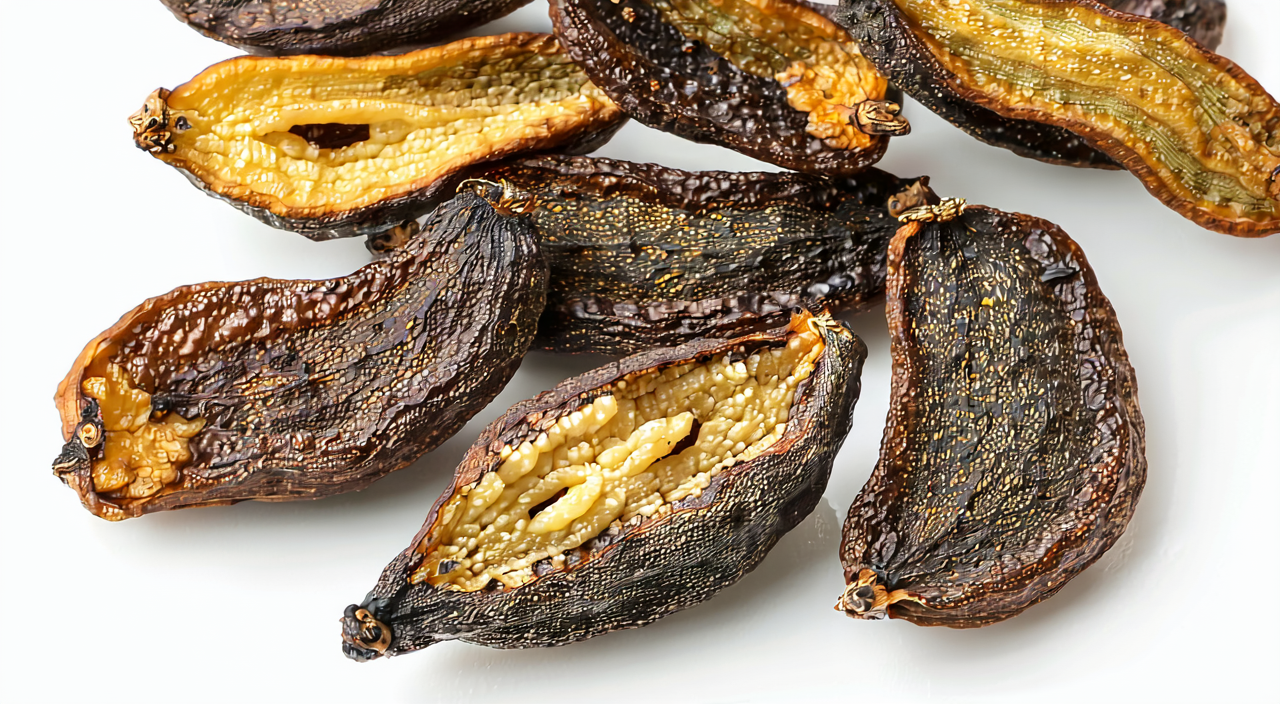
Bu Gu Zhi ripe fruit is generally kidney-shaped and slightly flattened, mostly about 3 to 5 mm long and about 2 to 4 mm wide. The surface is usually blackish brown, yellowish brown, or grayish brown, with irregular fine reticulate wrinkles. One end of the fruit may show a slightly depressed hilum, and the other end may have a small protrusion. The texture is relatively hard. When broken open, yellowish-white or light yellow cotyledons are often visible inside. The odor is weak, and chewing may produce a slight pungent or bitter taste.
When identifying it, pay attention to several features: whether the shape resembles a kidney, whether the surface has fine reticular markings, whether the color is blackish brown or yellowish brown, and whether the hilum is distinct. The similar dodder seed is smaller, usually subspherical or oval, and also has a fine granular surface, but its overall outline is different from Bu Gu Zhi. When buying dried material, if you notice many broken pieces, an overly uniform color, or an abnormal odor, you should judge it with caution.
What Is the Medicinal Part of Bu Gu Zhi?
The medicinal part of Bu Gu Zhi is the plant’s ripe fruit, not the leaves, root, or rhizome. This should be distinguished from Gu Sui Bu: Gu Sui Bu usually uses the rhizome. Although the name also contains ‘Bu,’ the source and medicinal part are clearly different.
Traditional harvesting and processing are usually carried out when the fruit matures in autumn. The infructescences are cut down, dried in the sun, and then the fruit is beaten off and impurities are removed. On the market, the product may be raw Bu Gu Zhi or salt-processed Bu Gu Zhi. Salt-processed Bu Gu Zhi is often prepared by mixing with salt water, moistening, and stir-frying until dry. Traditionally, salt processing is thought to help guide the medicine to the kidney, but in modern use it should still be judged according to the actual product instructions and individual circumstances.
Bu Gu Zhi fruit contains oils, so it should be stored away from moisture and insects. If the fruit shows mold, oil exudation, or an abnormal odor, it is not advisable to continue using it.
How Does Traditional Chinese Medicine Understand Bu Gu Zhi?
Traditional Chinese medicine often understands Bu Gu Zhi from the perspectives of warming the kidney and assisting yang, absorbing qi and stopping diarrhea, and external use to dispel wind and reduce spots. It is not used alone for a single problem, but rather appears in treatment approaches related to kidney yang deficiency and spleen-kidney yang deficiency. For example, in traditional descriptions such as chronic diarrhea and dysentery, soreness and weakness of the waist and knees, frequent urination, impotence, and seminal emission, Bu Gu Zhi may be used as one of the adjunctive herbs. For external use, Bu Gu Zhi also appears in some traditional external formulas for skin depigmentation problems, but such use generally has requirements regarding dosage and light exposure.
It should be made clear that these are traditional uses and are not equivalent to modern medical efficacy conclusions. Whether it is suitable for a particular person needs to be judged comprehensively by combining constitution, symptoms, tongue and pulse findings, and professional advice. It should not be used on one’s own based solely on a single manifestation such as ‘kidney deficiency’ or ‘fear of cold.’
What Ingredients and Risks Do Modern Studies Focus On?
Modern pharmacological research often focuses on furanocoumarin compounds in Bu Gu Zhi, such as psoralen and isopsoralen. These compounds are considered related to photosensitivity and may also be one of the concerns when studying the potential liver injury risk of Bu Gu Zhi. Psoralen may cause skin photosensitivity reactions under ultraviolet irradiation. Therefore, if taken internally or applied topically and then exposed to prolonged sunlight, it may increase the risk of skin redness, itching, or pigmentation.
Regarding liver injury, some studies and case reports have paid attention to the potential effects of Bu Gu Zhi-related preparations on liver function. Although not everyone will experience it, people with existing liver disease, those using drugs that may affect liver function, or those who need long-term or high-dose use should be more cautious. Consult a doctor or pharmacist before use, and watch for fatigue, decreased appetite, darker urine, yellowing of the skin, and other symptoms. If obvious discomfort occurs, stop using it as soon as possible and seek medical attention.
What Are the Differences Between Bu Gu Zhi, Gu Sui Bu, and Tu Si Zi?
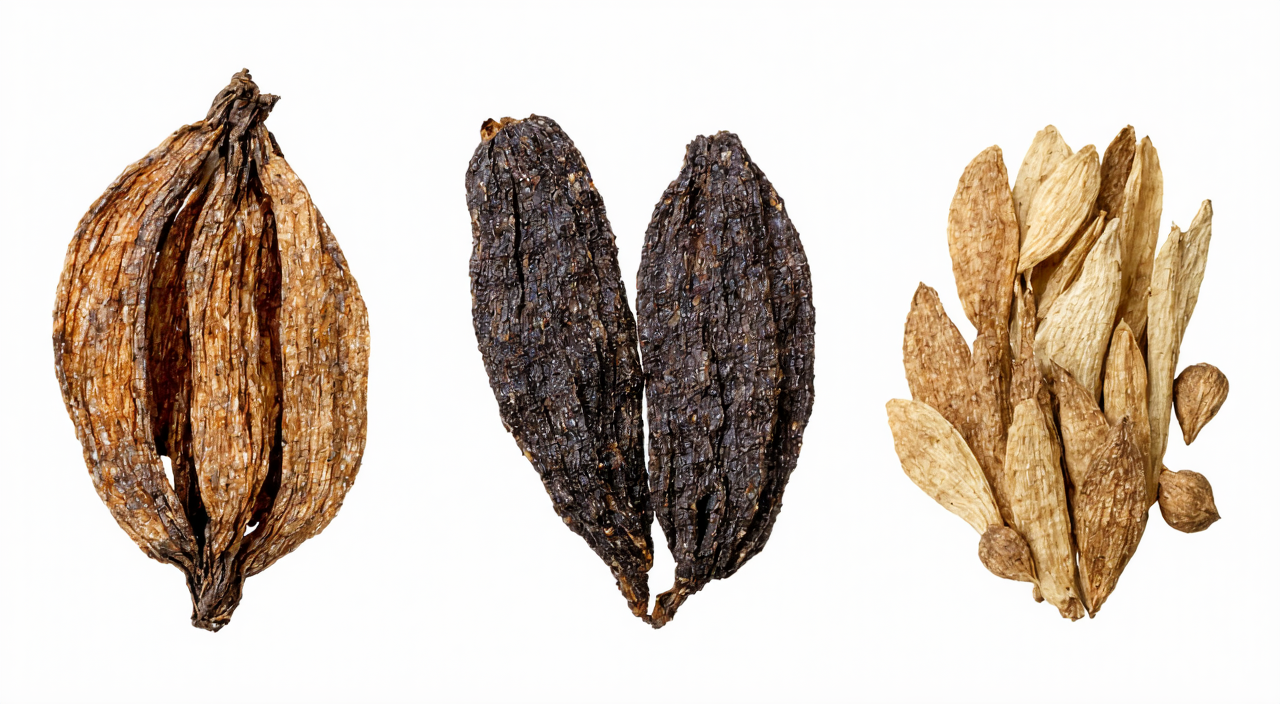
Bu Gu Zhi, Gu Sui Bu, and Tu Si Zi are three Chinese medicinal materials that are easily confused or compared with one another, but their sources and medicinal parts are different.
Bu Gu Zhi comes from the ripe fruit of the leguminous plant Psoralea corylifolia, and is a kidney-shaped flat fruit. Gu Sui Bu mostly comes from the rhizome of Drynaria fortunei and other plants in the polypody family. It is usually a flattened and curved slice densely covered with brown scales, which looks very different from the fruit of Bu Gu Zhi. Tu Si Zi comes from the ripe seed of Cuscuta chinensis in the morning glory family. Its seeds are smaller, mostly subspherical or oval, with a grayish-brown or yellowish-brown surface. After soaking in boiling water, it often shows a ‘silk spitting’ phenomenon, which is clearly different from Bu Gu Zhi.
Judging only by name or appearance can easily lead to misuse. When purchasing or checking a product, it is recommended to verify the Latin name and specific medicinal part to avoid using a rhizome medicinal material as Bu Gu Zhi fruit.
Which Formulas Use Bu Gu Zhi?
Bu Gu Zhi is often used in traditional formulas as one of the ingredients for warming and tonifying the spleen and kidney. Common examples include Si Shen Wan, Qing’e Wan, Bu Gu Zhi Wan, and some waist-strengthening and kidney-invigorating formulas.
Si Shen Wan is often combined with nutmeg, Evodia, and Schisandra, and is traditionally used for manifestations caused by spleen-kidney yang deficiency, such as dawn diarrhea and chronic diarrhea that does not resolve. Qing’e Wan often combines Bu Gu Zhi with Eucommia bark and walnut kernel, and is used for traditional management of kidney deficiency-related low back pain or lumbar soreness. Bu Gu Zhi Wan may be combined with multiple herbs depending on the version, and is mainly used for conditions related to kidney yang deficiency. In waist-strengthening and kidney-invigorating formulas, Bu Gu Zhi may also appear, often combined with Eucommia bark, Achyranthes root, and Sangjisheng.
These formulas are mostly traditional use directions or subjects for further understanding, and are not suitable for everyone. Before use, it is necessary to make a comprehensive judgment based on specific symptoms, constitution, product instructions, and professional opinions. In particular, long-term diarrhea, low back pain, or sexual function problems may have many causes and cannot be explained simply by ‘kidney deficiency.’
What Precautions Should Be Taken When Using Bu Gu Zhi?
The use of Bu Gu Zhi is not without boundaries. People with a history of liver disease, abnormal liver function, or those using drugs that may affect liver function should be especially cautious. Because psoralen-type compounds are photosensitive, after taking or applying Bu Gu Zhi, avoid prolonged sun exposure. It is also not advisable to undergo ultraviolet irradiation or high-intensity outdoor activities during use. If redness, burning, itching, or a sunburn-like reaction occurs after applying a Bu Gu Zhi-related preparation, wash it off promptly and consult a doctor.
Pregnant women, breastfeeding women, children, and people with a constitution tending toward yin deficiency with fire hyperactivity are traditionally not advised to use it on their own. So-called ‘yin deficiency with fire hyperactivity’ may manifest as dry mouth, tidal fever, night sweats, hot palms and soles, and irritability. In such cases, warming and tonifying medicines may not be suitable. If physical discomfort recurs, or if it is accompanied by obvious anxiety, depression, palpitations, chest tightness, pain, abnormal breathing, severe abdominal pain, persistent vomiting, black stools, weight loss, or other symptoms, you should first seek medical attention to find the cause rather than relying on a particular medicinal herb for regulation.
Summary
Bu Gu Zhi can be understood from three levels: source, appearance, and traditional use. It is the ripe fruit of Psoralea corylifolia, usually a kidney-shaped flat fruit. In traditional Chinese medicine, it is commonly used to warm the kidney and assist yang, absorb qi and stop diarrhea, and for external use to dispel wind and reduce spots. When using it, it is necessary to distinguish it clearly from the rhizome of Gu Sui Bu and the seed of Tu Si Zi, and pay attention to photosensitivity reactions and potential liver injury risk. This article is for informational reference only and cannot replace professional diagnosis or treatment advice.