
What Is Cicada Slough? Medicinal Part, Identification, and Common Formulas
Cicada slough is distinctive among Chinese medicinal materials: it is neither a root, stem, or leaf, nor a fruit or seed, but the outer shell left behind after cicada nymphs emerge. Many people are interested in cicada slough because it frequently appears in formulas that dispel wind, relieve sore throat, and promote rash eruption, but they may not clearly understand its source and identification. This article explains what cicada slough is, what it looks like, its medicinal part, how it differs from stiff silkworm and snake slough, and summarizes the directions and precautions for the use of common formulas.
What Does Cicada Slough Look Like? How to Identify It
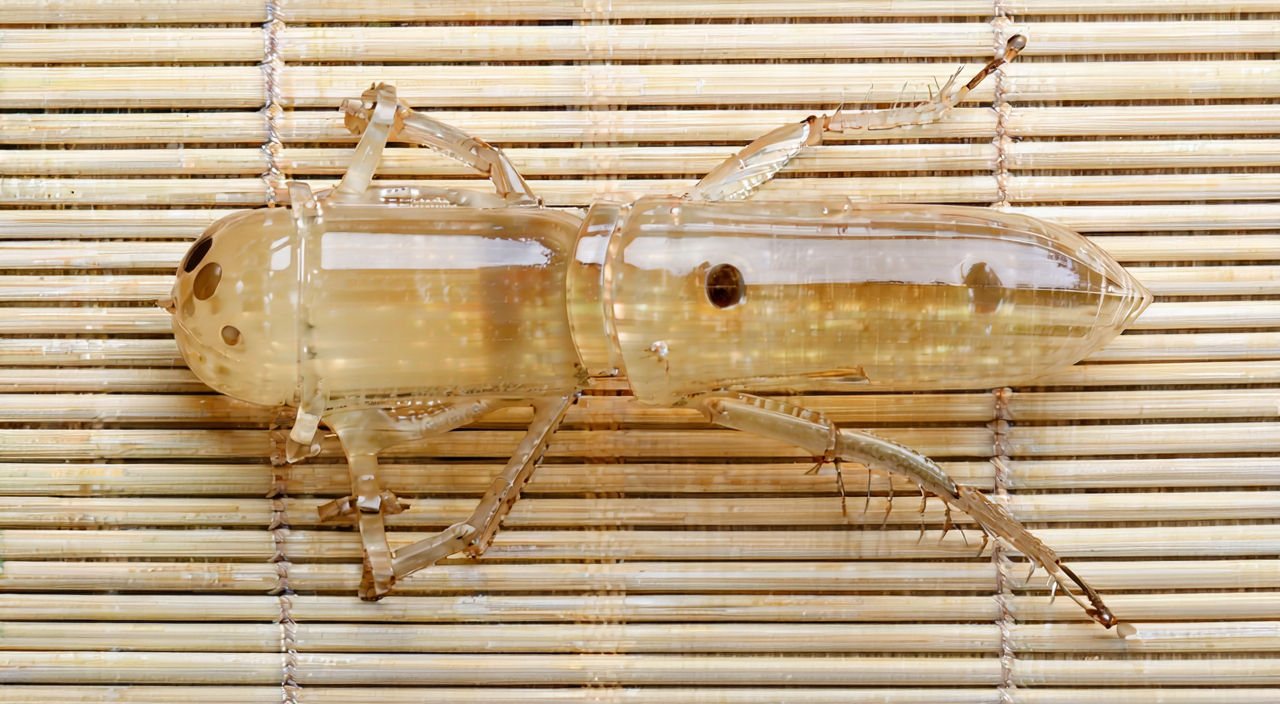
The appearance of cicada slough can be identified from several features. The whole shell is yellowish-brown or brown, mostly semi-transparent, hollow, and very light, and it crumbles easily when pressed between the fingers. A complete cicada slough is about 3 to 4 cm long, wider at the front and slightly pointed at the rear. There is often a longitudinal or nearly longitudinal split on the back, which is the opening left when the cicada broke through the dorsal side during emergence.
Viewed from the head, the compound eyes are protruding and usually grayish-brown or blackish-brown, and the antennae are relatively short and small. On the dorsal surface of the thorax there are three pairs of legs. The leg segments are distinct but often broken due to drying; in complete specimens, slender femora and tibiae can be seen. The abdomen usually has multiple segments with relatively clear boundaries, and on the ventral surface some fine textures or residual membranous structures may be visible. The entire specimen contains no insect body and is only an empty shell, so it is light, airy, and fragile.
When identifying cicada slough, pay special attention to these features: a hollow shell-like shape, a split on the back, protruding compound eyes, multiple abdominal segments, and a light, fragile texture. If the material is too broken or mixed with a large amount of soil and sediment, it is harder to judge completeness. In that case, choose samples that are relatively intact, clean, and less fragmented.
What Is the Medicinal Part of Cicada Slough?
The medicinal part of cicada slough is clear: it is the dried slough shed during the emergence of cicada insects such as Cryptotympana atrata. It is neither the living cicada nor the body of the insect. In other words, when a cicada nymph crawls out of the soil, attaches to a tree trunk or branch, and emerges as an adult, it splits open along the back and sheds an outer shell. After collection, removal of sediment and impurities, and drying, this shell becomes the medicinal material cicada slough.
Collection usually takes place in summer and autumn, especially during the peak emergence period. In processing, the head and legs are generally removed, or the complete shell may be retained; the specific processing requirements can vary according to regional medication habits and commercial specifications. In everyday understanding, it can be regarded as an insect molting product, similar to the shed skin, horns, or shells of certain animals, but its source and nature are different.
How Does Traditional Chinese Medicine Understand Cicada Slough?
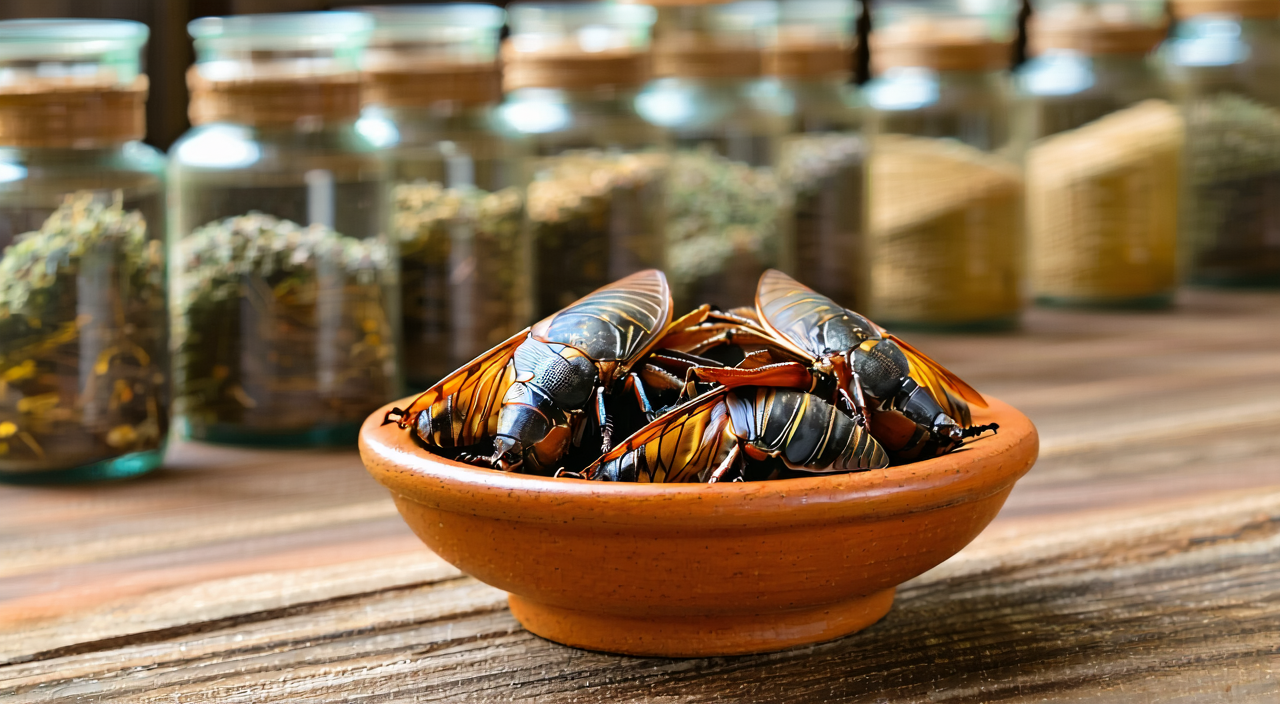
Traditional Chinese medicine does not view cicada slough merely as an insect molt, but often understands it through its nature and flavor, channel tropism, and directional actions. Cicada slough is generally considered sweet in flavor and cold in nature, and it enters the Lung and Liver channels. Its light and clearing quality is used in directions such as dispersing and outthrusting, relieving sore throat, improving vision, and extinguishing wind. These are traditional theoretical orientations and do not mean that it has a definite therapeutic effect on modern diseases.
For dispersing wind-heat, cicada slough is often used with herbs such as mint, burdock seed, and mulberry leaf, and is directed at throat discomfort, hoarseness, and similar issues caused by wind-heat disturbing the upper body. Its use to relieve sore throat and restore voice is mostly considered on the basis of wind-heat or Lung heat, rather than being applicable to all voice problems.
For promoting rash eruption, it is traditionally used for conditions such as measles and rubella when the rash does not surface smoothly, and is often combined with kudzu root, purple gromwell root, and cimicifuga rhizome. Note that modern infectious eruptive diseases should first be treated with standard medical care, and should not be managed only with a single herb or by self-prescribing formulas.
For improving vision and resolving eye opacity, cicada slough is traditionally used for patterns described as wind-heat red eyes and ocular membranes, and is often combined with chrysanthemum flower, cassia seed, and horsetail. If eye symptoms persist or worsen, seek medical attention promptly.
For extinguishing wind and stopping spasms, cicada slough has traditionally been used for infantile convulsions, twitching, and night crying, and is often combined with stiff silkworm, gambir vine, and scorpion. These conditions have complex causes. In particular, convulsions, seizures, persistent crying, or abnormal consciousness must be evaluated by a physician.
What Does Modern Research Say About Cicada Slough?
Modern research on cicada slough focuses mainly on its constituents and preliminary activities. Cicada slough contains chitin, proteins, amino acids, and elements such as calcium and magnesium. Some experimental studies suggest that cicada slough extracts may have anti-inflammatory, sedative, and anticonvulsant activities. However, these studies are mostly animal experiments or in vitro experiments with limited sample sizes and limited depth, so they cannot be directly extrapolated to confirmed efficacy in humans. The value of this information is to help readers understand why cicada slough has attracted research interest, not to serve as a basis for self-medication.
What Are the Differences Between Cicada Slough, Stiff Silkworm, and Snake Slough?
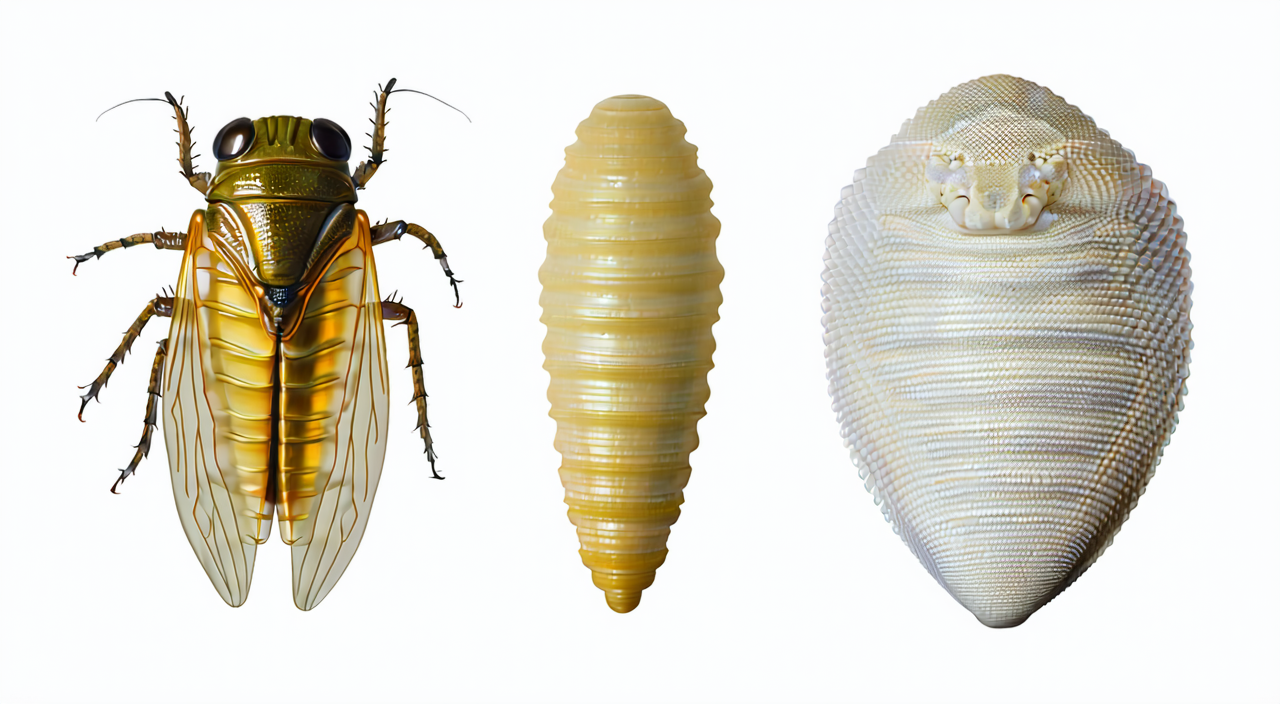
Cicada slough, stiff silkworm, and snake slough all have an animal-derived character, but they differ greatly in nature. Cicada slough is the outer shell shed by cicada insects during emergence and belongs to insect molting products. Stiff silkworm is the dried body of silkworm larvae infected with the fungus Beauveria bassiana, and is a fungus-insect complex. Snake slough is the dried epidermal membrane shed by snakes such as those in the Colubridae family, and belongs to reptilian molts. The three have different sources and also differ in traditional uses.
In appearance, cicada slough is a hollow, semi-transparent shell with a split on the back and is light and fragile. Stiff silkworm is somewhat cylindrical, often covered with a white powdery frost on the surface, and is hard with a non-hollow cross-section. Snake slough is mostly a long tubular or semi-transparent membrane, on which traces of shed scales can be seen. When encountering similar names or shapes, distinguish them by source, appearance, and texture. If you cannot be certain, do not use one as a substitute for another.
Which Formulas Use Cicada Slough?
Cicada slough appears in many traditional formulas, but the rationale for its combination differs. The formulas below are provided only for educational understanding and do not constitute medical advice.
Xiao Feng San is a traditional formula commonly used for skin itching, wind rash, eczema, and similar directions. The role of cicada slough in this formula is mostly related to dispelling wind, venting pathogenic influences, and relieving itching. Whether it is suitable depends on the form of the rash, body constitution, and course of the condition.
Chan Hua San is traditionally used for blurred vision, eye opacity, and similar directions, and is often combined with herbs that brighten the eyes and resolve opacity. It is less commonly used in modern practice. If you experience eye discomfort, still seek medical care first.
Sheng Jiang San is one of the more representative formulas. Cicada slough is combined with stiff silkworm, turmeric rhizome, and rhubarb root, and is traditionally used to regulate the ascending and descending of qi and to clear and outthrust stagnated heat. Its rationale is complex and it is not suitable for self-experimentation.
Sang Ju Yin is a common formula for wind-heat exterior patterns. When sore throat and cough are prominent, a physician may add cicada slough, burdock seed, and other herbs according to the situation. This is a modification rather than a fixed usage. Whether such modifications are needed should be judged by a professional.
The value of a formula lies in the relationships among its ingredients and the rhythm of dosages. Using cicada slough alone is not the same as using it in a compound formula. If you are interested in a particular formula, make a comprehensive judgment based on your body constitution, symptoms, product information, and professional advice. Do not prepare formulas on your own.
What Precautions Should Be Taken When Using Cicada Slough?
Although cicada slough is a common medicinal material, it is not suitable for everyone. Pregnant women should be especially cautious before use. Because cicada slough is cold in nature and is traditionally said to have a slippery, downward-moving quality, and because modern safety data are limited, it should not be self-administered. People with a deficient constitution and profuse sweating should also avoid using it alone or for a long time, because its dispersing nature may aggravate the dissipation of qi and yin. People who are allergic to insect proteins, shrimp, crab, dust mites, and the like should be alert to the possibility of allergy before using cicada slough. If rash, itching, breathing discomfort, or other symptoms occur, stop use immediately and consult a physician.
In addition, cicada slough is a naturally shed shell. Wild-collected material may be contaminated by soil, pesticides, microorganisms, and other pollutants. If the source is unknown or storage is improper, there are hygiene risks. It is recommended to obtain or purchase it through proper channels. Children, older adults, and people with chronic diseases should use it under professional guidance. If symptoms such as skin itching, hoarseness, eye discomfort, twitching, or seizures are prolonged, recurrent, or severe, seek medical care early and do not rely solely on a single medicinal material.
Summary
Cicada slough is the shell shed during cicada emergence. Its key identification features are its hollow form, light weight, split on the back, and multiple abdominal segments. Traditional Chinese medicine often understands it through the directions of dispersing wind-heat, relieving sore throat and promoting rash eruption, improving vision, and extinguishing wind, and it is often used in corresponding formulas. Before use, pay special attention to pregnancy, deficient constitution with profuse sweating, insect protein allergy, and contamination of the source. This article is for educational reference only and cannot replace professional diagnosis or treatment advice.