
What Is Red Halloysite? Medicinal Parts, Identification, and Common Formulas
Many overseas users of Chinese medicine have noticed a special red medicinal substance—it is not a plant but a mineral. With its distinct pink or reddish-brown lumpy appearance and astringent properties, red halloysite (Chishizhi) holds an important place in traditional formulas. Understanding what red halloysite is, how to identify it, its differences from similar mineral drugs, and the related formulas helps in taking a more rational view of such natural products. This article is for informational purposes only and does not constitute medical advice.
What Does Red Halloysite Look Like? How to Identify It?
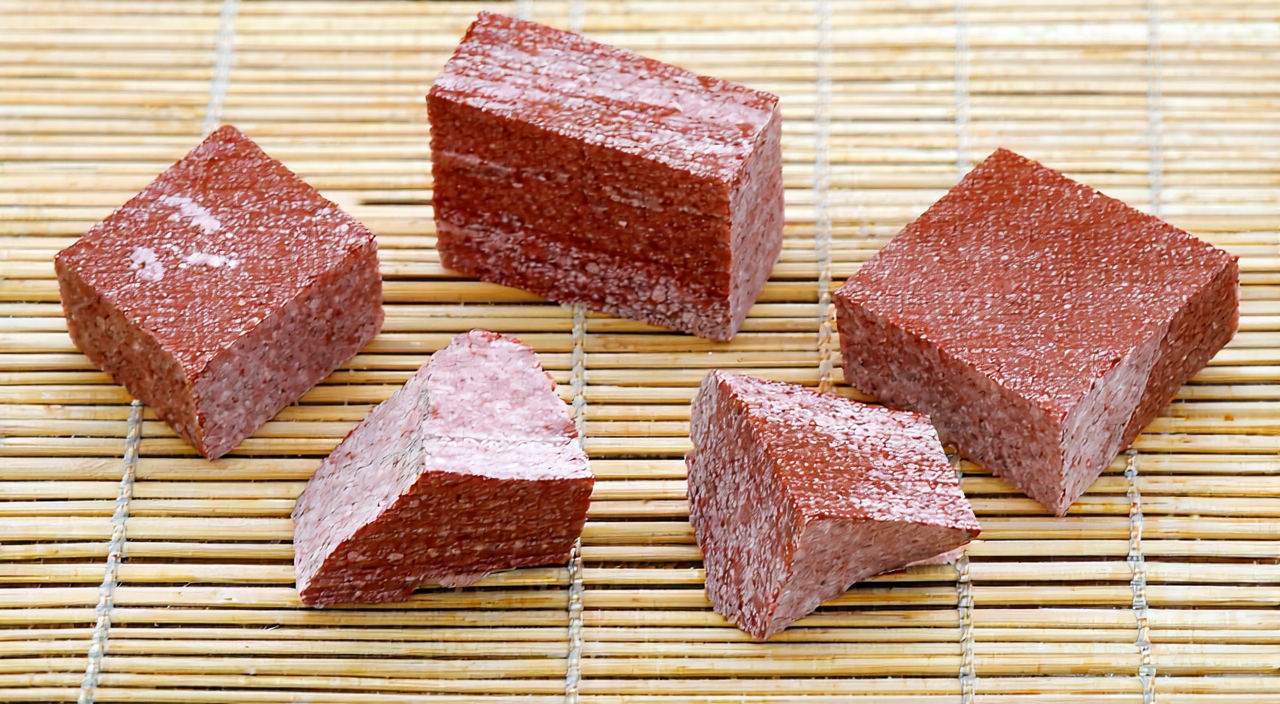
Red halloysite is a relatively easy-to-identify mineral medicine based on appearance, with quite distinctive features. Its typical form consists of irregular lumps of varying sizes, with uneven surfaces and fissures. Colors range from pink and brownish red to reddish brown, but delicate light pink or reddish brown are most commonly seen.
In traditional identification, the waxy luster on the broken surface of red halloysite is an important reference point. Its texture is relatively soft and fine; scratching with a fingernail may leave a mark, which clearly distinguishes it from many hard minerals. Another key feature is its strong water absorption—dry red halloysite produces a sticky, tongue-adhering sensation when touched lightly to the tongue, a traditional empirical test. Some pieces can even draw fine lines, like a red crayon, on paper.
In practice, high-quality red halloysite should be clean, reddish, and free of excessive sand or stone impurities. However, it is difficult to fully assess the quality of mineral drugs by the naked eye alone, so it is advisable to obtain them from reputable sources and pay attention to relevant quality information.
What Is the Medicinal Part of Red Halloysite?
The medicinal part of red halloysite is the mineral itself. It is a natural mineral of the halloysite group, primarily composed of hydrated aluminum silicate. In traditional Chinese medicine, it is classified as a mineral drug, rather than a plant- or animal-derived remedy.
After collection, the raw mineral must be cleaned to remove surface impurities and adhered stones, then crushed or ground into a fine powder. Sometimes it is also calcined—heated at high temperatures to partially alter its structure—and the resulting product is called calcined red halloysite. Raw and calcined red halloysite may have slightly different clinical focuses; traditionally, calcined red halloysite is considered more astringent, while the raw form is used more for clearing heat and astringing the intestines.
Understanding the nature of the medicinal part helps users distinguish red halloysite from other similar-looking minerals or industrial clays, thus avoiding misuse.
How Does Traditional Chinese Medicine View Red Halloysite?
Traditional Chinese medicine typically interprets red halloysite through its nature, taste, meridian tropism, and functional characteristics. It is generally considered sweet, sour, and astringent in taste, warm in nature, and mainly enters the Large Intestine and Stomach meridians. Based on these properties, ancient practitioners summarized its main actions as astringing the intestines to stop diarrhea, astringing to stop bleeding, and promoting the healing of sores and tissue regeneration.
For astringing the intestines to stop diarrhea, red halloysite is often used in patterns of chronic diarrhea, dysentery, or fecal incontinence, especially when diarrhea persists for a long time and is accompanied by weakness and cold limbs; in such cases, it may be combined with herbs that warm the middle and dispel cold. As an astringent to stop bleeding, it is applied to some chronic bleeding tendencies, such as hematochezia or metrorrhagia, often as an auxiliary astringent strategy. For skin and mucosal problems like non-healing sores and weeping eczema, the traditional method is to apply fine red halloysite powder externally, relying on its astringent, moisture-absorbing properties to reduce exudation and aid wound healing.
These are descriptions based on traditional understanding; suitability still depends on individual constitution, symptoms, and professional advice.
What Does Modern Research Focus on Regarding Red Halloysite?
Modern research on red halloysite focuses mainly on three aspects: mineral composition, exploration of pharmacological activity, and quality control of heavy metals. Its main chemical constituent is hydrated aluminum silicate, along with small amounts of iron, calcium, magnesium, and other elements. This composition gives red halloysite a certain adsorptive capacity, which may physically adsorb some harmful substances or excessive secretions in the intestines, thereby helping to relieve diarrhea. However, this remains at the research stage and should not be equated with a guaranteed therapeutic effect.
Even more noteworthy is the issue of heavy metal quality control. As a natural mineral, samples from different regions may contain elevated levels of heavy metals such as lead, arsenic, and cadmium. Modern quality control for Chinese medicine requires rigorous testing of mineral drugs to ensure that toxic elements remain within safe limits. Therefore, in practical use, selecting red halloysite products that have undergone proper testing is particularly important. Industrial clay or raw ore often carries a risk of excessive contaminants and must never be used as a substitute.
What Are the Differences Between Red Halloysite, Limonite, and Hematite?
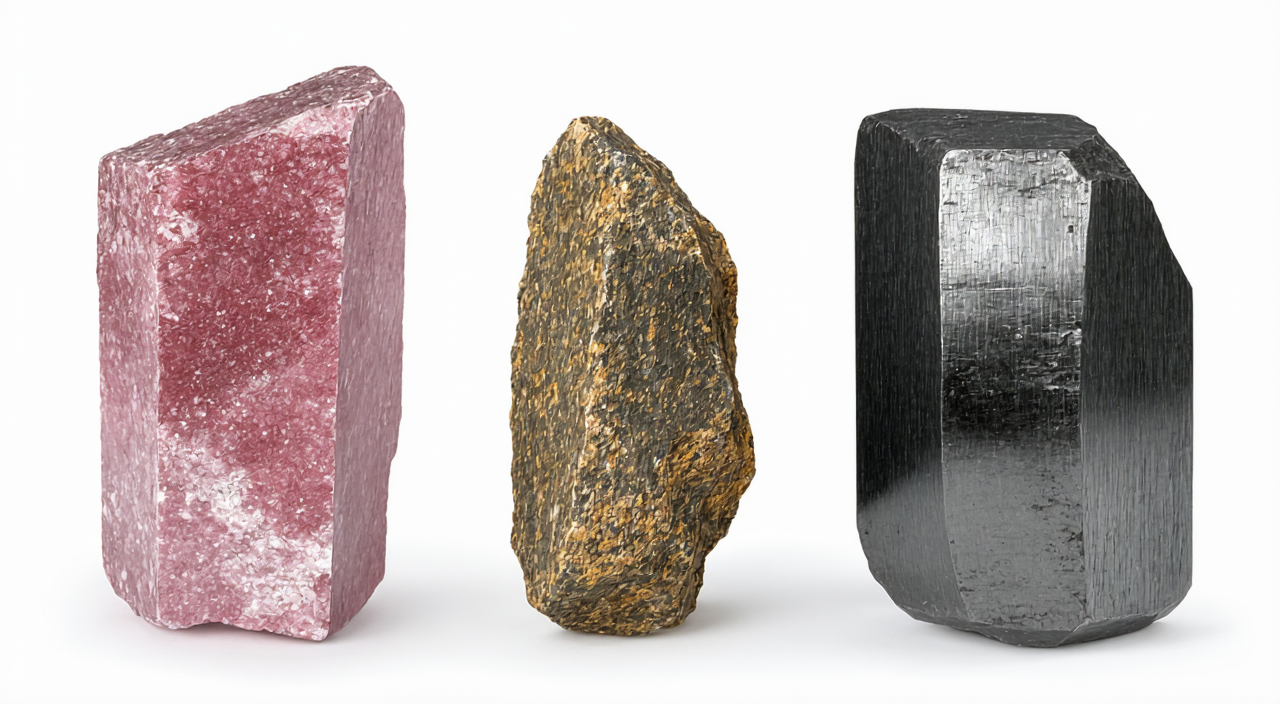
Red halloysite, limonite, and hematite are all brownish-red mineral drugs and are easily confused in traditional use, but they differ clearly in origin, appearance, and application.
In terms of color and texture, red halloysite is mostly pink to reddish brown, with a waxy luster, soft and fine texture that can be scratched with a fingernail, and strong water absorption. Limonite is usually brown or yellowish brown, sometimes occurring as kidney-shaped or nodular aggregates; it is harder than red halloysite, with an earthy or semi-metallic luster. Traditional identification notes that limonite often shows a layered structure on its broken surface. Hematite appears dark brownish red or iron black, with a metallic luster; it is very hard and heavy, cannot be scratched by a fingernail, gives a clear ringing sound when struck, and its fracture often has a conchoidal pattern.
In terms of traditional function, red halloysite excels at astringing the intestines to stop diarrhea and astringing to stop bleeding. Limonite also has an intestine-astringing, anti-diarrheal effect, but is often combined with tonifying and astringing remedies and is also used for managing leukorrhea. Hematite is different: its core uses are calming the liver and subduing yang, directing rebellious qi downward to stop vomiting, and cooling the blood to stop bleeding; it is commonly used for patterns such as ascendant liver yang, dizziness, vomiting, and epistaxis. Knowing these differences helps avoid misinterpretation when selecting related traditional formulas.
Which Formulas Use Red Halloysite?
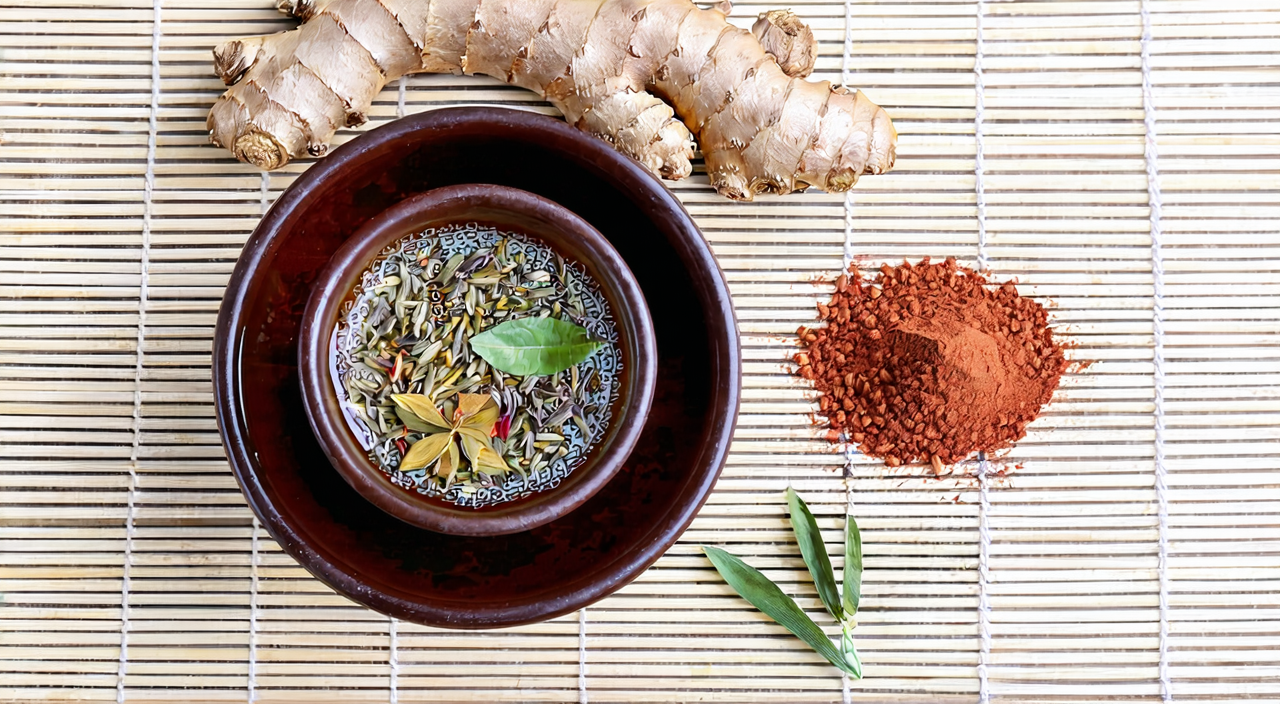
Red halloysite appears in several classical formulas, where it usually acts to astringe the intestines, secure the lower jiao, or stop bleeding. Knowing these formulas helps to understand its traditional scope of use, but they should never be self-prescribed.
Peach Blossom Decoction (Tao Hua Tang) is a famous formula from the Treatise on Cold Damage (Shang Han Lun), composed of red halloysite, dried ginger, and polished round-grained rice. It is traditionally used for patterns of spleen-stomach yang deficiency and cold, with unremitting diarrhea and bloody purulent stools, combining warming the middle to dispel cold with astringing the intestines to secure the lower jiao. Red Halloysite and Limonite Decoction (Chi Shi Zhi Yu Yu Liang Tang), also from the Shang Han Lun, pairs red halloysite with limonite to synergistically strengthen the intestine-astringing and anti-diarrheal effect, often for chronic, uncontrollable diarrhea without damp-heat accumulations. Solidify the Chong Decoction (Gu Chong Tang) is a later classical formula in which red halloysite is combined with dragon bone, oyster shell, and astragalus to astringe and secure, boost qi, and control bleeding, mostly used for excessive menstruation or metrorrhagia due to instability of the Chong meridian. Red Halloysite Pill (also called Aconite and Red Halloysite Pill, Chi Shi Zhi Wan or Wu Tou Chi Shi Zhi Wan), from the Essential Prescriptions from the Golden Cabinet (Jin Gui Yao Lue), contains red halloysite together with aconite, prepared aconite (fuzi), and other acrid-hot herbs; it is traditionally used for chest pain due to cold congealing, angina radiating to the back, and similar patterns. Such formulas are very strong and should only be considered under rigorous syndrome differentiation.
These formulas each have their own focus, and their practical application requires comprehensive consideration of constitution, symptom changes, and modern clinical context; one must not self-select a formula based on a single presentation.
What Precautions Should Be Taken When Using Red Halloysite?
Although red halloysite is a mineral drug, there are still many situations requiring caution. Traditional experience indicates that when diarrhea is caused by damp-heat accumulation—marked by tenesmus, sticky and unrefreshing stools, and a yellow greasy tongue coating—astringent intestine-binding drugs are unsuitable, as they may trap the pathogen inside. People with constipation should also avoid it, because its astringent nature may worsen bowel difficulties.
The quality of the mineral drug is another crucial point. Red halloysite may contain heavy metals such as lead and arsenic; long-term or large-dose use without standardized processing and testing may pose health risks. Therefore, raw ore of unknown origin should not be used, and industrial clay or red building soil must never be substituted for red halloysite, as their compositions and safety standards are completely different. Pregnant women and individuals with special constitutions need to be especially cautious; any decision to use it should be made under professional guidance.
If symptoms persist for a long time, recur frequently, or are accompanied by obvious abdominal pain, black stools, weight loss, or vomiting, consult a doctor or qualified Chinese medicine practitioner first rather than relying on mineral drug self-treatment.
Summary
As a unique mineral-based drug, red halloysite is primarily used in traditional Chinese medicine for astringing the intestines to stop diarrhea, astringing to stop bleeding, and promoting tissue healing. Its identifying features, differences from limonite and hematite, and combination principles in common formulas are all factors to consider when understanding and using this type of medicine. At the same time, the heavy metal risks and contraindications of mineral drugs remind us that the use of any traditional remedy must be based on standardized sources and individualized syndrome differentiation. This article is for informational purposes only and cannot replace professional diagnosis or treatment advice.