
What Is Chuanxiong? Medicinal Parts, Identification Methods, and Common Formulas
Chuanxiong is the dried rhizome of the plant Ligusticum chuanxiong of the Apiaceae family. In the long-standing practice of traditional Chinese medicine, it has often been used to assist in regulating conditions related to blood stasis, qi stagnation, wind, and pain. Many people have heard the name “Chuanxiong,” but they still have questions about what it actually looks like, which part is used medicinally, how it differs from herbs like Dang Gui (Angelica sinensis), and how it is combined in traditional formulas. This article provides objective scientific information addressing these core questions.
What does Chuanxiong look like? How to identify it?
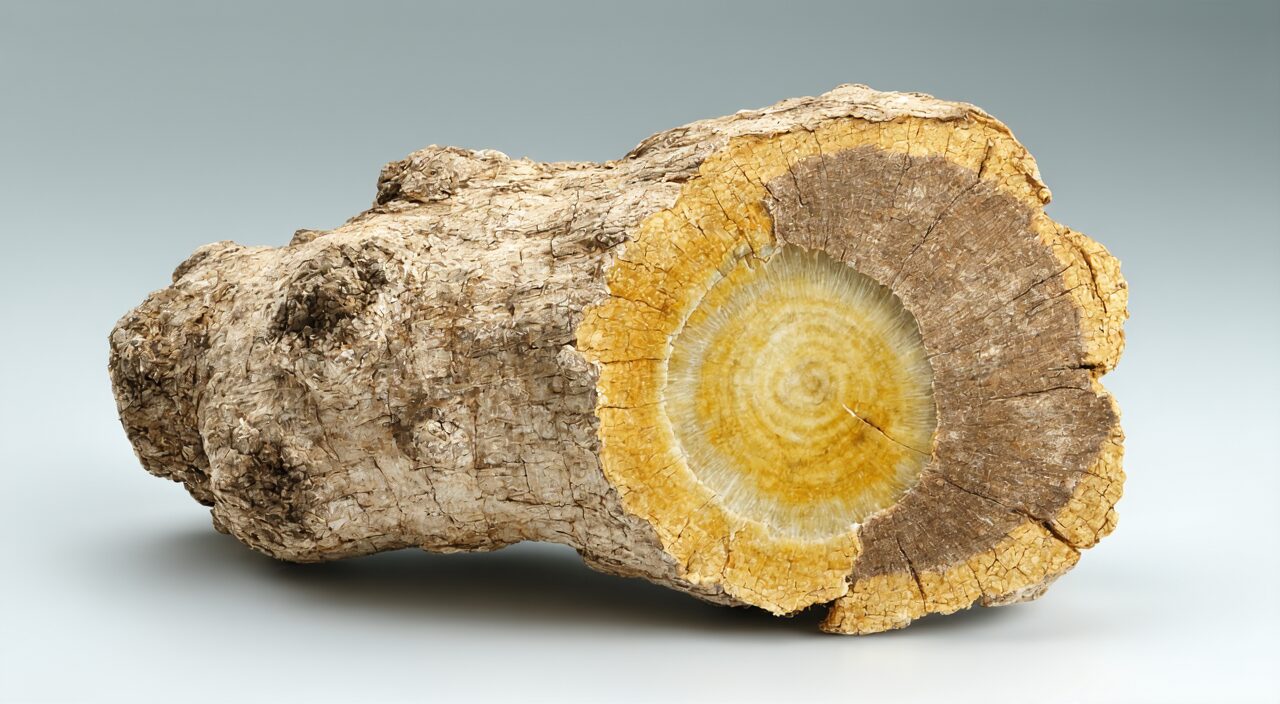
The typical appearance of Chuanxiong is an irregular, knotty, fist-like mass. The surface is yellowish-brown or brownish-brown, rough and wrinkled, often with multiple parallel, raised ring-like nodes. The top generally shows a depressed, roundish stem scar, while the lower side and nodes are scattered with small, wart-like root trace scars. These features make Chuanxiong look less like a regular slice or strip and more like an uneven, lumpy little fist.
The texture is firm but relatively easy to break. When assessing quality, the fractured surface is a key observation point:
- Higher-quality Chuanxiong often has a yellowish-white or grayish-yellow fractured surface with a wavy ring pattern visible.
- The fractured surface is scattered with yellowish-brown oil spots, which are the main source of its strong aroma.
- The odor is pungently fragrant and intense, with a slightly bitter aftertaste, a hint of sweetness, and a mild numbing sensation on the tongue.
Traditional empirical wisdom considers larger, plump, firm pieces with dense oil spots on the fractured surface and a strong aroma as superior. If the herb appears shriveled, has sparse oil spots, or a faint aroma, it often indicates suboptimal quality or improper storage.
The Chuanxiong slices commonly encountered in daily use are mostly irregular, butterfly-shaped thick slices; the cross-section also clearly shows the ring pattern and oil cavities. These visual details can serve as references for identification.
What is the medicinal part of Chuanxiong?
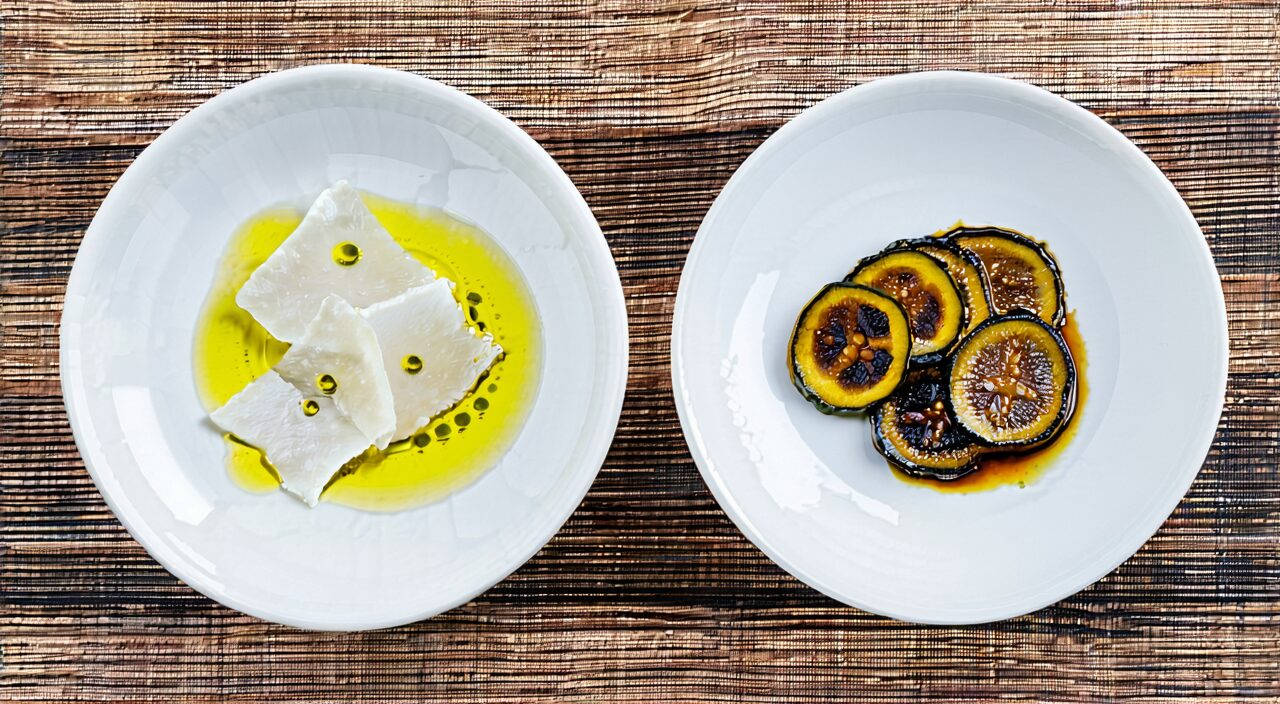
The medicinal part of Chuanxiong is the dried rhizome of the plant. Harvesting typically occurs in summer when the nodes on the stem are notably prominent and slightly purplish. After digging, the sediment and impurities are removed, and it is dried in the sun or at a low temperature. Traditionally, avoiding direct fire is emphasized to prevent the dissipation of its aromatic oils, which would affect quality. The dried rhizome is the common raw Chuanxiong material seen on the market.
Depending on the intended use, Chuanxiong can be further processed into different decoction piece forms:
- Raw Chuanxiong (Sheng Chuanxiong): Mostly irregular thin slices, with a yellowish-white cut surface and clearly visible oil spots.
- Wine-processed Chuanxiong (Jiu Chuanxiong): Made by moistening with yellow rice wine (huangjiu) and then stir-frying. The surface color is slightly darker, and it carries a wine aroma. Traditionally, wine processing is believed to enhance its blood-invigorating and qi-moving effects.
Regardless of the form, the original source is the rhizome of Chuanxiong, not the aerial parts or seeds of the plant. For users overseas, understanding this point helps in more accurate identification when encountering Chinese medicinal materials. However, the specific choice of which prepared form to use still needs to be guided by a professional based on individual constitution and actual needs.
How does Chinese medicine understand Chuanxiong?
In traditional Chinese medicine theory, Chuanxiong is warm in nature, acrid in flavor, and enters the Liver, Gallbladder, and Pericardium meridians. Its actions primarily revolve around “invigorating blood, moving qi, dispelling wind, and relieving pain.” Ancient texts often call it a “qi-moving medicine within the blood aspect,” meaning that while addressing issues in the blood system, it also promotes the movement of qi, making it particularly common in various conditions involving qi stagnation and blood stasis.
When the circulation of qi and blood is not smooth, leading to fixed-location pain, a dull and uncomfortable sensation, or numbness of the limbs with difficulty in movement, Chuanxiong is often used as one of the combined herbs to help restore the flow of qi and blood. In directions such as headaches, wind-dampness painful obstruction, and menstrual irregularities related to poor blood circulation, Chuanxiong also frequently appears in traditional regulating combinations.
These understandings stem from the accumulation of clinical experience over generations and do not mean that Chuanxiong can simply resolve a specific disease. Whether it is suitable for use and which other herbs should be combined usually require a comprehensive syndrome differentiation based on individual presentations such as tongue and pulse diagnosis. Self-diagnosis and self-use are not recommended.
What components and actions of Chuanxiong are of interest in modern research?
Modern research primarily focuses on the volatile oils, alkaloids (such as tetramethylpyrazine, also known as ligustrazine), and lactone compounds (such as ligustilide) contained in Chuanxiong. In laboratory and animal studies, ligustrazine has shown activities like inhibiting platelet aggregation, dilating blood vessels, and improving microcirculation, while ligustilide has been observed to have certain anti-inflammatory and neuroprotective potential.
It is important to note that most of these studies are still in the experimental research stage, with conclusions mainly derived from in vitro experiments or animal models. These conclusions cannot be directly equated to clinical effects in humans. Such information can help us understand the potential value of Chuanxiong from a modern scientific perspective, but it cannot be taken as a basis for self-use or as a substitute for professional medical treatment. Any health concerns should first be consulted with a doctor or qualified professional, rather than making decisions based solely on research information.
How does Chuanxiong differ from similar medicinal herbs?
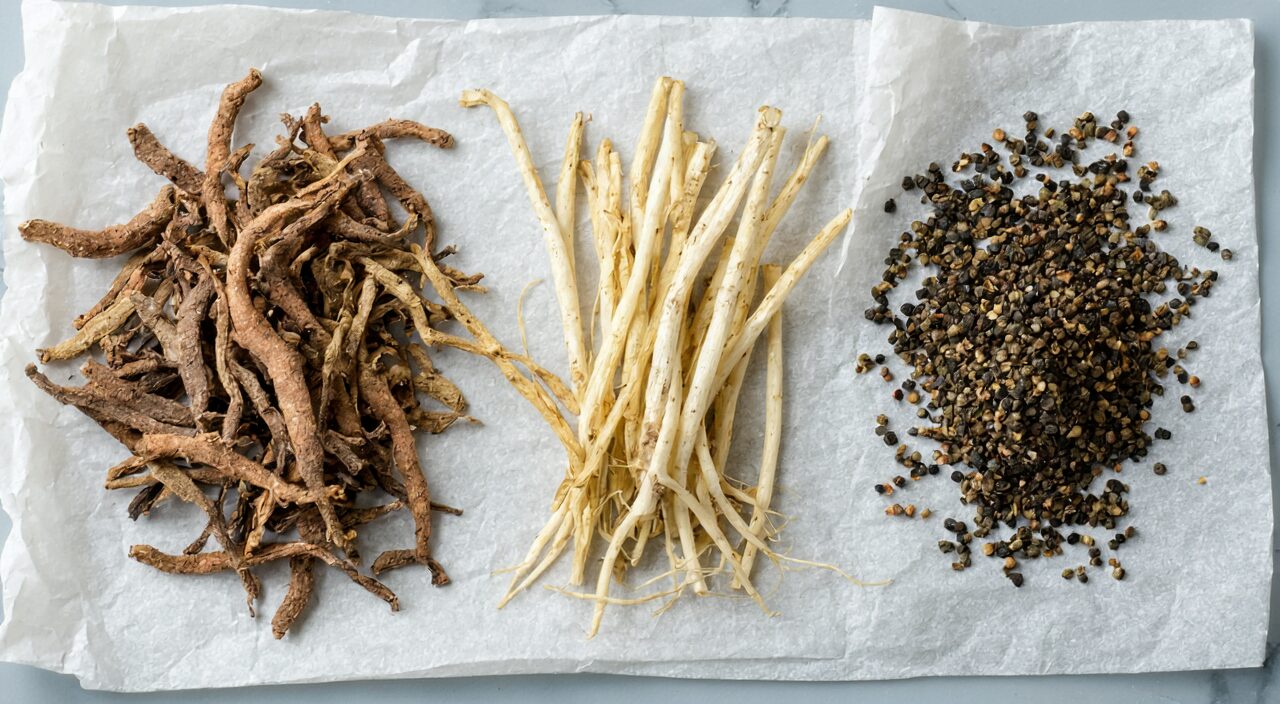
Chuanxiong, Dang Gui (Angelica sinensis), and Gao Ben (Ligusticum sinense) are sometimes confused by those unfamiliar with Chinese herbal medicine. Although all three belong to the Apiaceae family in terms of plant origin, they differ in the medicinal part used, appearance, and traditional application emphasis. They can be compared using the following table:
| Comparison Item | Chuanxiong | Dang Gui (Angelica sinensis) | Gao Ben (Ligusticum sinense/Ligusticum jeholense) |
|---|---|---|---|
| Plant Source | Ligusticum chuanxiong | Angelica sinensis | Ligusticum sinense or Ligusticum jeholense |
| Medicinal Part | Dried rhizome | Dried root | Rhizome and root |
| Appearance Features | Irregular knotty, fist-like masses; yellowish-brown surface with raised ring-like nodes and small, wart-like root trace scars | Yellowish-brown to brownish-brown surface with longitudinal wrinkles and transverse elongated lenticels; pliable texture | Irregular knotty cylindrical shape; brownish-brown or dark brown surface |
| Fractured Surface | Yellowish-white or grayish-yellow with wavy ring pattern and dense oil spots | Yellowish-white, oily | Relatively fibrous |
| Odor and Taste | Intensely pungent and fragrant, slightly bitter with sweet aftertaste, tongue-numbing sensation | Aromatic, sweet, and acrid | Aromatic odor, acrid and bitter taste |
| Traditional Application Focus | Invigorates blood, moves qi, dispels wind, relieves pain; qi-moving action is particularly prominent | Tonifies and invigorates blood, regulates menstruation, relieves pain | Dispels wind, dissipates cold, overcomes dampness, relieves pain; often used for vertex headache |
Although Chuanxiong and Dang Gui are often used together in formulas, their emphasis on invigorating blood versus tonifying blood differs, and they are generally not arbitrarily substituted for one another. While Gao Ben can also dispel wind and relieve pain, Chuanxiong has a stronger action in invigorating blood and moving qi, with a broader range of applications. Understanding these distinctions helps avoid confusion in practical application, but the final choice and identification still rely on professionals.
Which formulas commonly use Chuanxiong?
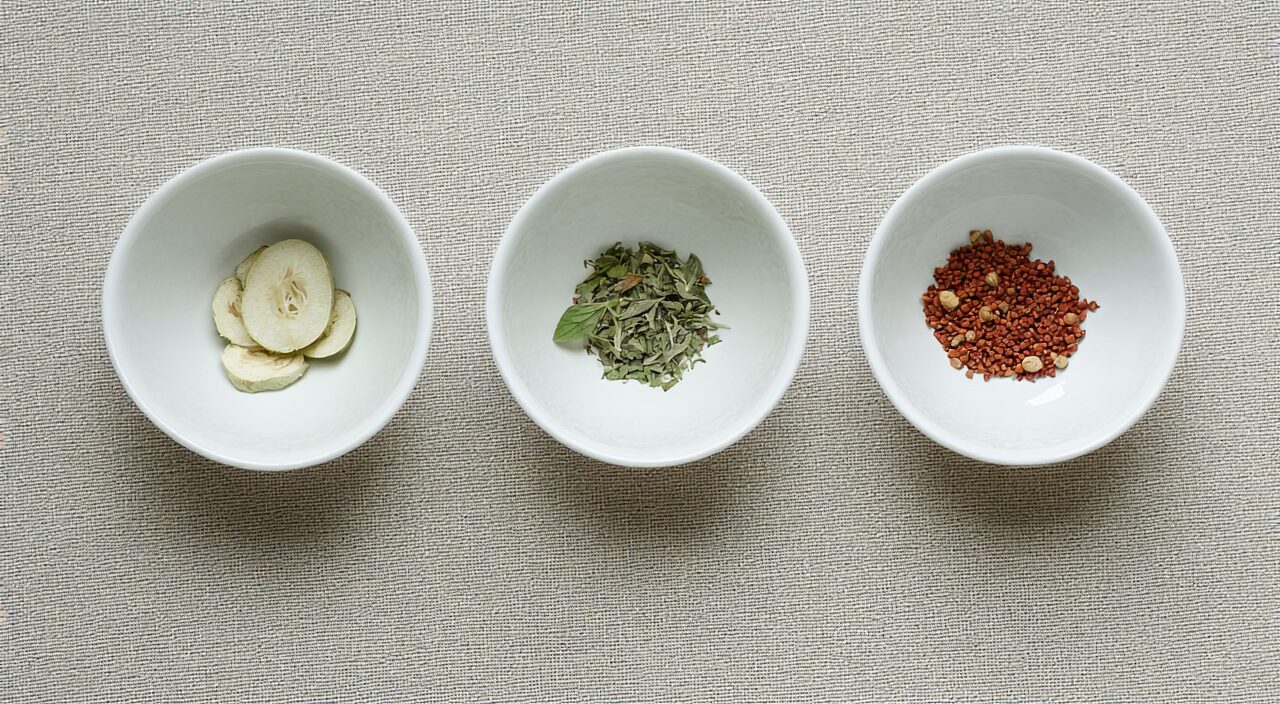
Chuanxiong plays the role of invigorating blood, moving qi, unblocking collaterals, and relieving pain in many traditional formulas. The following lists several common and representative formulas, serving only as an illustration of traditional combination principles and not constituting any usage recommendation.
Si Wu Tang (Four-Substance Decoction) consists of Dang Gui (Angelica sinensis), Chuanxiong, Bai Shao (Paeonia lactiflora), and Shu Di Huang (Rehmannia glutinosa). In this formula, Chuanxiong assists Dang Gui in invigorating blood, making the whole formula tonify without causing stagnation. It is commonly used for regulating conditions involving blood deficiency accompanied by poor blood circulation. If the primary goal is blood supplementation, the dosage of Chuanxiong is usually light, emphasizing its auxiliary role in moving qi.
Chuan Xiong Cha Tiao San (Ligusticum Tea-Mix Powder) has Chuanxiong as the sovereign herb, combined with Bo He (Mentha haplocalyx), Jing Jie (Schizonepeta tenuifolia), Bai Zhi (Angelica dahurica), etc., and is taken with clear tea. Traditionally, it is mainly used for headaches caused by externally contracted wind pathogens. In the formula, Chuanxiong ascends to the head and eyes, addressing both wind-dispelling and blood-invigorating, and is an important component for relieving headaches. However, its use still requires syndrome differentiation and modification based on specific patterns.
Xue Fu Zhu Yu Tang (Blood Mansion Stasis-Expelling Decoction) includes Tao Ren (Prunus persica), Hong Hua (Carthamus tinctorius), Chuanxiong, Dang Gui, Chai Hu (Bupleurum chinense), etc. It is a representative formula for moving qi and invigorating blood. Within it, Chuanxiong mainly exerts the effects of invigorating blood, moving qi, unblocking collaterals, and relieving pain, often associated with directions like chest pain and stubborn headache related to traditional blood stasis. Because its blood-invigorating strength is relatively strong, it is not suitable for individuals without signs of blood stasis or with qi and blood deficiency.
Tong Qiao Huo Xue Tang (Orifice-Unblocking Blood-Invigorating Decoction) contains Chi Shao (Paeonia veitchii), Chuanxiong, Tao Ren, Hong Hua, etc. Traditionally, it is mostly used for problems caused by blood stasis obstructing the head and facial collaterals. Chuanxiong helps resolve stasis and unblock orifices in the formula, but because the formula also involves orifice-opening substances like She Xiang (Moschus), the indications for use are quite strict. Suitability must be determined under professional guidance; self-selection is absolutely not advised.
The above formulas are often modified and adjusted based on individual circumstances in practice. Their traditional applications are not rigid and should certainly not be viewed as fixed templates that can be applied indiscriminately.
What should be noted when using Chuanxiong?
When using Chuanxiong, special attention is needed for the following situations:
- Those with heavy menstrual bleeding (menorrhagia): Chuanxiong has a relatively strong blood-invigorating action and may aggravate bleeding, so self-use is generally not recommended.
- Those with bleeding tendencies or currently using anticoagulant medications: A doctor should be consulted before use to avoid affecting normal blood coagulation function.
- Those with a constitution of Yin deficiency with effulgent fire: For example, individuals who frequently experience dry mouth and throat, facial flushing, and hot sensation in the palms, soles, and chest. The warm and acrid-dispersing nature of Chuanxiong may aggravate internal heat and generally needs to be avoided or combined cautiously.
- During pregnancy: Chuanxiong is generally contraindicated, as its blood-invigorating and qi-moving power may affect the fetus.
- Individuals allergic to plants of the Apiaceae family: They should also exercise caution to avoid it.
Furthermore, the specific dosage and duration of Chuanxiong use should be determined by a professional based on a comprehensive assessment. Long-term self-administration is not advised. If any discomfort is felt during use, it is recommended to discontinue promptly and seek professional help.
Summary
Chuanxiong is a traditional medicinal material with relatively high identifiability. Its irregular knotty rhizome, intense aroma, and the obvious oil spots on the fractured surface form the core identification points. The medicinal part used is the dried rhizome of the plant. Traditional Chinese medicine primarily understands it from the perspectives of invigorating blood, moving qi, dispelling wind, and relieving pain. While modern research pays attention to components like ligustrazine, experimental findings cannot be directly equated with clinical efficacy. There are differences in appearance, origin, and traditional application emphasis between Chuanxiong and similar herbs like Dang Gui and Gao Ben, requiring careful differentiation. This article serves only as an objective scientific reference. The use of specific formulas and herbs should be evaluated under the guidance of a professional based on individual actual conditions. Self-application is not recommended.