
What Is Da Fu Pi? Its Medicinal Part, Identification, and Common Formulas
When learning about Chinese medicinal herbs, many people wonder about Da Fu Pi because it comes from the same fruit as areca nut: What exactly is Da Fu Pi? Is it the same as areca nut itself? The two differ in appearance, medicinal part, and traditional applications. Da Fu Pi comes from the peel of the areca nut fruit, whereas areca nut generally refers to the seed. The following overview explains its appearance, source, traditional Chinese medicine concepts, and common formulas to help overseas Chinese readers develop a clearer basic understanding.
What Does Da Fu Pi Look Like? How Can It Be Identified?
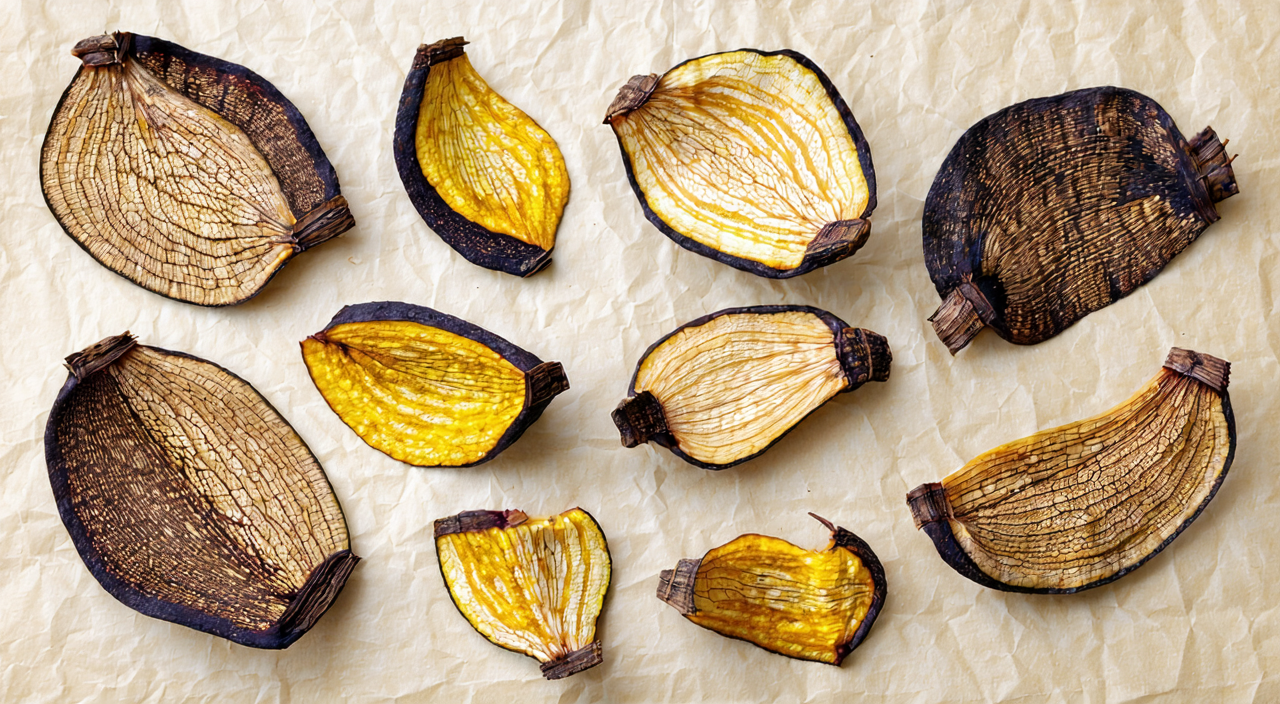
Appearance and Texture
Da Fu Pi usually appears as oval or oblong-oval pieces of fruit peel, sometimes with a gourd-like or semi-sliced shape. The size of the herb is not completely uniform. After drying, it is generally yellowish-brown to dark brown, and its surface may show uneven spots, shrinkage, or longitudinal lines. Because it comes from the outer layer of the areca nut fruit, its final appearance can be affected by how intact it is, how it was processed, and its state of dryness.
The outer surface of Da Fu Pi is relatively smooth or slightly curved, while the inner surface often appears rough and shows clearly visible fibrous structures. Some pieces naturally split lengthwise, forming strips or flat fibers, and may not break cleanly. The aroma is usually mild, although its fibrous texture may become more apparent after soaking. Identification should not rely on color alone; source, shape, degree of dryness, and proper labeling should also be considered.
Distinguishing It from Confusable Materials
Da Fu Pi that has been sliced, flattened, or broken may look similar to other fruit-peel herbs on the market. When only scattered fragments are available, it is often difficult to confirm the identity by sight alone. When selecting or using it, check for standardized Chinese or Latin botanical names, information about the medicinal part, origin, and batch details. Herbs with an unclear source, abnormal color, mold, or an unusual odor should not be used based on personal judgment.
What Is the Medicinal Part of Da Fu Pi?
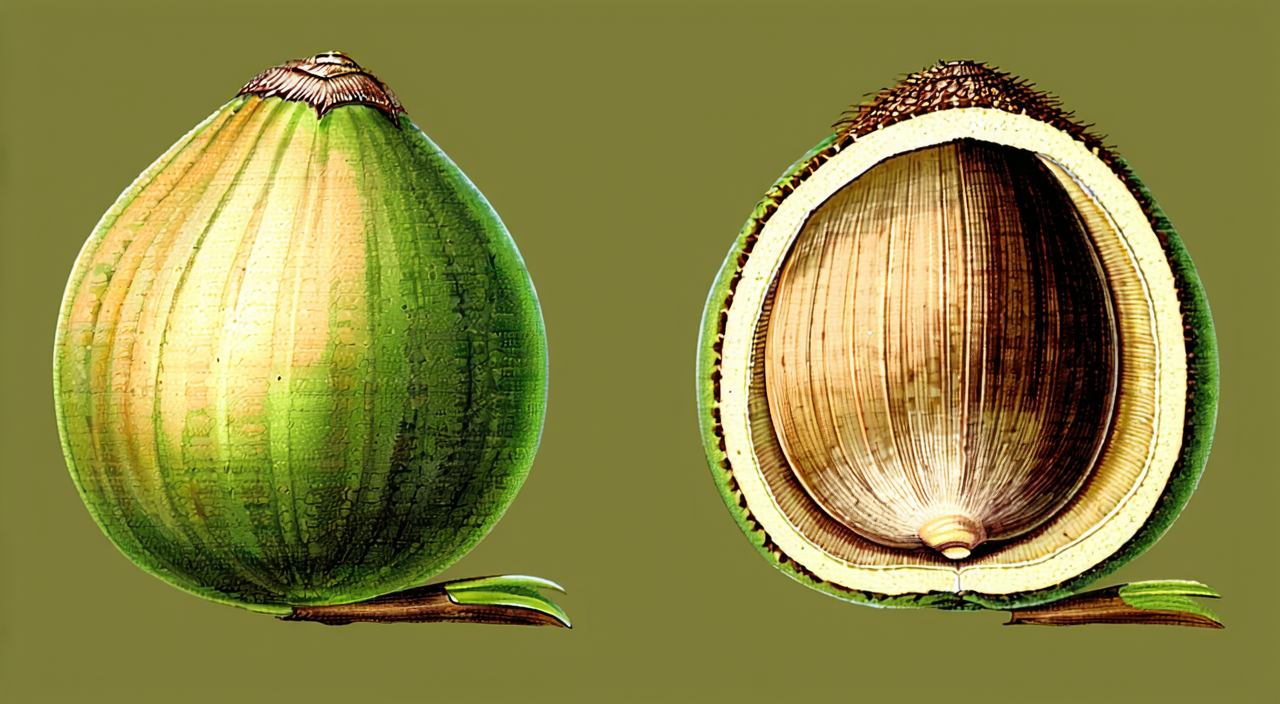
The medicinal part of Da Fu Pi is the peel of the mature areca nut fruit. After the fruit matures, the outer peel is usually removed and then dried or otherwise processed. This peel is not the hard inner portion or kernel of the areca nut. Therefore, although Da Fu Pi and areca nut come from the same plant, they are different medicinal parts.
From a botanical perspective, the areca nut fruit consists of an outer peel and inner seed, among other parts. Da Fu Pi mainly refers to the processed peel, whereas areca nut in traditional herbal medicine generally refers to the seed. Because the medicinal parts differ, their traditional properties, functions, and formulation approaches may also differ. They should not be directly substituted for one another simply because their names are related.
In commercial products, Da Fu Pi may appear as whole peel pieces, longitudinal splits, short sections, or fragments. The degree of dryness affects its color and brittleness, and some prepared slices may also have been cut into smaller pieces. When purchasing herbs online or across borders, carefully check the herb name and medicinal-part information on the packaging to avoid confusing fruit-peel products with areca nut seeds.
How Is Da Fu Pi Understood in Traditional Chinese Medicine?
Traditional Chinese medicine commonly understands Da Fu Pi from the perspectives of promoting qi movement, relieving middle-jiao stagnation, promoting urination, and reducing swelling. In TCM theory, promoting qi movement and relieving the middle generally refers to formulation approaches for manifestations associated with impaired qi movement, such as epigastric or abdominal fullness and distension. Promoting urination and reducing swelling is traditionally considered in patterns involving retained fluids or dampness, including swelling and distension in the limbs or abdomen. These descriptions are functional summaries within TCM theory and do not constitute a diagnosis or treatment promise for a specific disease.
Da Fu Pi is often combined with other herbs that regulate qi, transform dampness, or promote urination. Depending on the formulation approach, it may be used with herbs such as Hou Po, Mu Xiang, Fu Ling, Ze Xie, Sheng Jiang, or other ingredients to address different pattern combinations. The specific combination depends on constitution, symptoms, tongue and pulse findings, and the version of the formula. It should not be selected solely on the basis of one symptom.
If you experience edema, abdominal distension, abnormal urination, or persistent digestive discomfort, first consider whether there may be an underlying issue involving the heart, kidneys, liver, endocrine system, or digestive system. When symptoms are severe, persistent, or recurrent, consult a doctor or qualified TCM practitioner promptly instead of relying only on a single herb.
What Areas Are Being Explored in Modern Research?
Modern research on Da Fu Pi commonly examines its volatile constituents, phenolic acids, and other phytochemicals, as well as findings from in vitro and animal studies. Some studies observe its effects on gastrointestinal motility, indicators related to fluid metabolism, or inflammatory responses. However, laboratory and animal findings may differ from actual use in humans. They cannot be used to directly infer a specific effect or replace clinical evaluation.
The source, maturity at harvest, processing method, and storage conditions can all affect the constituents of the herb. Even products with the same name may differ in specifications and quality. Modern research is therefore best viewed as one way to learn about Da Fu Pi, rather than the sole basis for independently determining dosage, treatment duration, or a usage plan. If you are taking prescription medication or have a chronic condition, inform your doctor, pharmacist, or TCM practitioner first.
How Does Da Fu Pi Differ from Areca Nut and Chen Pi?
Da Fu Pi and Areca Nut
Da Fu Pi is taken from the peel of the areca nut fruit. It commonly appears as flat pieces with relatively coarse fibers and a more noticeable inner surface. Areca nut in traditional herbal medicine mainly refers to the seed inside the fruit, which has a harder texture and may show a denser cut surface or pattern when sliced. Although they come from the same source, their medicinal parts differ, so their traditional functions and formulation directions should not be treated as equivalent.
It is also important to note that public discussions about areca nut chewing and related health risks mainly concern areca nut seeds, processed products, and the act of chewing. These risk descriptions should not be mechanically applied to the peel of Da Fu Pi. However, this does not mean that Da Fu Pi from every source can be used casually. The herb should still come from a reputable source, and its processing and storage should meet appropriate requirements. Professional advice should be followed.
Da Fu Pi and Chen Pi
Chen Pi is the dried peel of mature citrus fruits from the Rutaceae family. It is often curled or irregularly shaped, with colors ranging from orange-red and yellowish-brown to dark brown. Its inner surface usually contains fine citrus fibers and visible oil cavities. Da Fu Pi, by contrast, comes from areca nut peel and has more prominent fibrous and longitudinally split features. The botanical sources are also different.
In traditional Chinese medicine, Chen Pi is commonly understood from the perspectives of regulating qi, strengthening the spleen, drying dampness, and transforming phlegm. Da Fu Pi is more often considered for promoting qi movement, relieving middle-jiao stagnation, promoting urination, and reducing swelling. Both may be associated with regulating qi, but this does not mean they can replace each other. Identification should take botanical source and medicinal part into account rather than relying only on color or the fact that both resemble fruit peel.
Which Formulas Contain Da Fu Pi?
Huo Xiang Zheng Qi San
Huo Xiang Zheng Qi San is a traditional formula commonly considered in approaches addressing external wind-cold with internal dampness accumulation. Some versions of the formula include Da Fu Pi. Its overall formulation generally focuses on releasing the exterior, transforming dampness, regulating qi, and harmonizing the stomach. Different manufacturers or classical sources may use different ingredients, so the formula name alone cannot confirm the contents of a particular product. It should not be treated as a fixed solution for every case of abdominal distension, nausea, or diarrhea.
Wu Pi Yin
Wu Pi Yin is named for its combination of several herbs derived from different types of peels. Traditionally, it is understood from the perspectives of promoting urination, reducing swelling, regulating qi, and strengthening the spleen. Da Fu Pi may be one of its ingredients. The traditional patterns associated with this formula have a specific scope. If swelling is accompanied by shortness of breath, chest tightness, significant changes in urine output, or rapid worsening, seek medical evaluation first.
Fen Xiao Tang
In traditional formula use, Fen Xiao Tang is commonly considered for approaches related to damp-heat, qi stagnation, and accumulation of water-dampness. Some versions use Da Fu Pi to support the actions of promoting qi movement and urination. Because formulas may be modified and versions may differ between historical and modern sources, suitability should be assessed according to individual constitution, symptoms, tongue and pulse findings, and other medications being used.
Shi Pi San
Shi Pi San is traditionally used for patterns involving spleen yang deficiency and internal retention of water-dampness. Some versions include Da Fu Pi. Symptoms such as sensitivity to cold, fatigue, appetite changes, or swelling of the lower limbs may have different underlying causes, so a formula should not be selected solely on the basis of one symptom. The formulas above can be viewed as examples for understanding TCM formulation principles. Actual use should be guided by the product instructions and professional advice.
What Precautions Should Be Taken When Using Da Fu Pi?
Da Fu Pi is a traditional Chinese medicinal herb. Whether it is appropriate depends on constitution, symptoms, dosage, source, and the overall combination of herbs. In TCM theory, people tending toward qi deficiency, weaker digestive function, fatigue, poor appetite, or loose stools should not independently use qi-regulating or fluid-promoting herbs for an extended period based only on general information. People who are pregnant or breastfeeding, children, older adults, and those with chronic conditions should consult a doctor or qualified professional first.
If you are taking diuretics, blood pressure medication, or medicines that affect electrolytes, or if you have a history of low potassium, dehydration, or impaired kidney function, inform your doctor or pharmacist before use. Da Fu Pi is not the same as a potent diuretic, but when it is used in a traditional approach involving fluid metabolism, individual differences and possible medication interactions should not be overlooked.
Herbs with an unknown source, signs of moisture damage or mold, artificial coloring, or incomplete labeling should not be used. Seek medical attention promptly if you experience marked abdominal pain, persistent vomiting, black stools, unexplained weight loss, abnormal breathing, chest tightness, palpitations, or edema that persists, recurs, or worsens rapidly. This article is provided for general educational reference about Chinese medicinal herbs and cannot replace a doctor’s diagnosis, prescription, or treatment advice.
Summary
Da Fu Pi is the dried peel of the mature areca nut fruit. It commonly appears as yellowish-brown to dark brown oval or gourd-shaped fibrous pieces and is not the same medicinal part as areca nut seed or Chen Pi. Traditional Chinese medicine generally considers it from the perspectives of promoting qi movement, relieving middle-jiao stagnation, promoting urination, and reducing swelling, and it appears in some related formulas. Actual use requires checking the source, considering individual constitution and medications, and consulting a qualified professional when necessary.