
What Is Dang Gui? Medicinal Parts, Identification, and Common Formulas
Dang Gui is the dried root of Angelica sinensis, a widely used blood-nourishing and blood-moving herb in clinical Chinese medicine. Its name is traditionally explained by the belief that it “guides the blood back to its rightful place” (dang gui means “return to the proper state”). For Chinese-speaking users living abroad, Dang Gui is often mentioned in the context of Chinese herbal medicine and traditional wellness practices, but many have limited understanding of its origin, appearance, and uses. This article systematically introduces how to identify Dang Gui, its medicinal parts, traditional Chinese medicine understanding, modern research, differences from similar herbs, common formulas, and important precautions, helping you gain an objective understanding of this herb.
What Does Dang Gui Look Like? How to Identify It
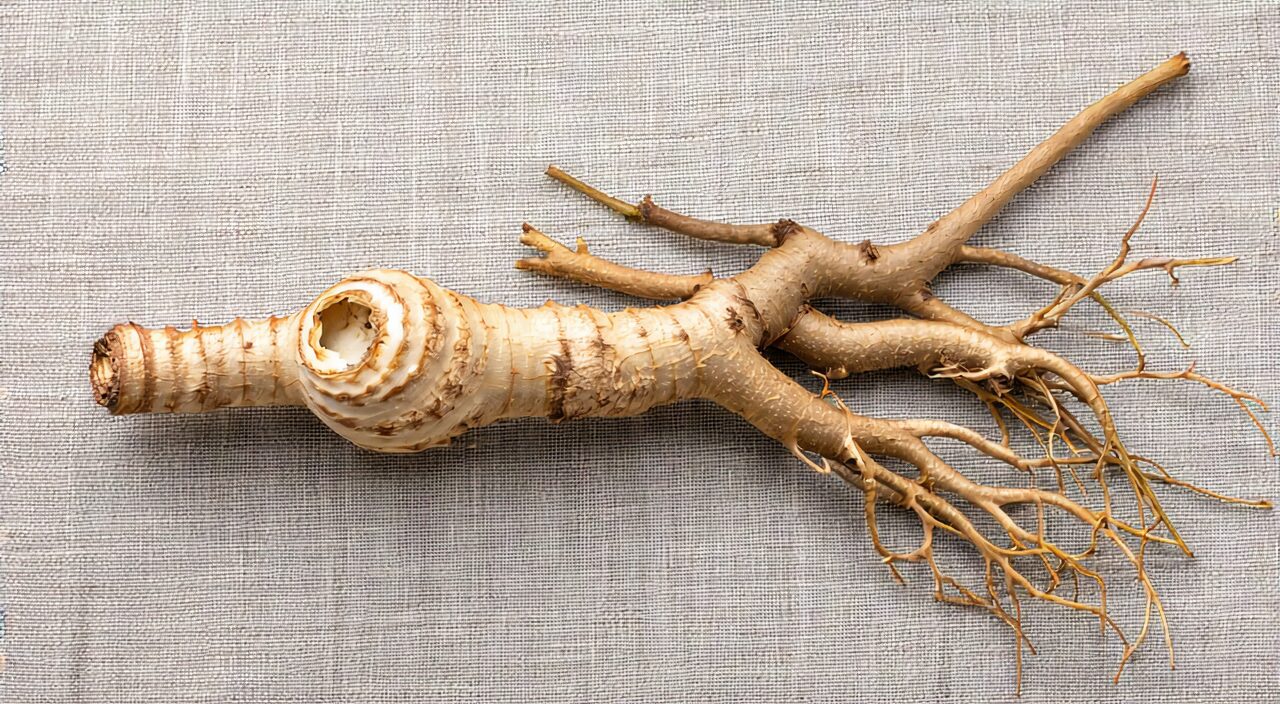
In terms of crude drug morphology, Dang Gui is somewhat cylindrical with several relatively thick branch roots below, measuring 15–25 cm in overall length. The surface is yellowish-brown to brownish, with longitudinal wrinkles and transverse elongated lenticels.
When examining by section, note the following features:
- Root head (Gui Tou): 1.5–4 cm in diameter, with circular rings, a blunt upper end, and remnants of purple or yellowish-green stem and leaf sheaths.
- Main root (Gui Shen): The surface is uneven.
- Branch roots (Gui Wei): Thicker at the top and tapering downwards, often twisted, with a few rootlet scars.
The entire root is flexible and tough. The fractured surface is yellowish-white or pale yellowish-brown; the bark is thick, with cracks and numerous brown dot-like secretory cavities, the wood is paler, and the cambium ring is yellowish-brown. The odor is intensely aromatic and distinctive, and the taste is sweet, acrid, and slightly bitter.
Whenever these characteristics are present together—a stocky main root, multiple branch roots, a yellowish-brown exterior, an oily fracture surface, and a strong fragrance—Dang Gui can generally be identified.
What Is the Medicinal Part of Dang Gui?
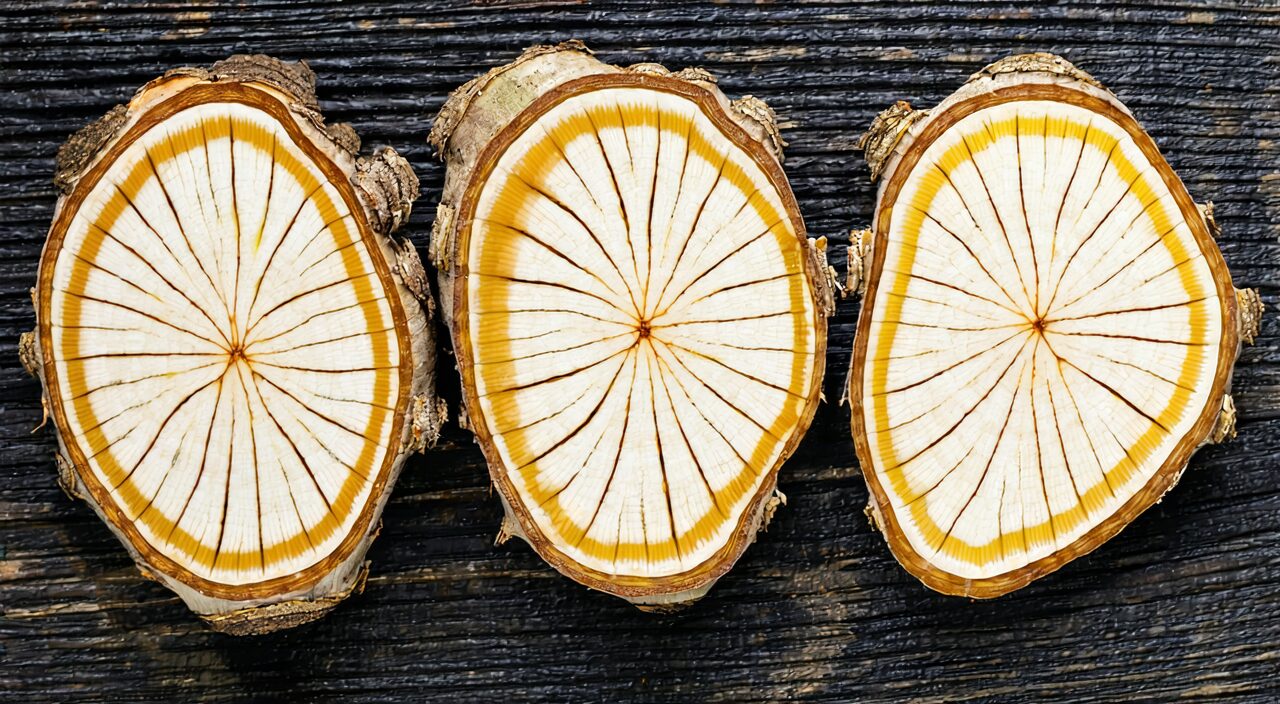
The medicinal part is the dried root of Angelica sinensis (Umbelliferae).
It is usually dug up in late autumn, cleaned of rootlets and soil, and after partial moisture evaporation, tied into small bundles, placed on a rack, and slowly dried over a smoldering fire to produce “whole Dang Gui.” Sometimes the root is sectioned for different uses: the head (Gui Tou) is more inclined to stop bleeding, the body (Gui Shen) to nourish blood, and the tail (Gui Wei) to invigorate blood. However, such distinctions need not be overemphasized in home use.
Common prepared slices are thin transverse cuts; the cut surface is yellowish-white with a clearly visible cambium ring, and the bark contains scattered brown oil spots. The texture is soft and tough. Understanding the medicinal part and processing form provides a basis for selecting or identifying the herb.
How Does Traditional Chinese Medicine Understand Dang Gui?
Traditional Chinese medicine understands Dang Gui from the perspective of nature, taste, and channel tropism: it is warm in nature, sweet and acrid in taste, and enters the Liver, Heart, and Spleen channels. Its core actions are nourishing blood, invigorating blood, regulating menstruation and alleviating pain, as well as moistening the intestines.
- For conditions attributed to blood deficiency—such as a sallow complexion, dizziness, palpitations, and scanty, pale menstruation—Dang Gui is often one of the therapeutic directions.
- Because it is acrid, dispersing, warm, and unblocking, it both nourishes and invigorates blood. In patterns of blood stasis complicated by blood deficiency—such as irregular menstruation, amenorrhea, or dysmenorrhea—it may be used on the basis of pattern differentiation.
- Dang Gui is moistening and can lubricate the intestines to promote bowel movements. It can help with dry, hard stools caused by blood deficiency and intestinal dryness.
However, all such approaches must still be combined with individual constitution and assessed by a professional Chinese medicine practitioner to determine suitability.
What Components and Effects Does Modern Research Focus On?
Modern Chinese herbal research has found that Dang Gui mainly contains volatile oil (primarily ligustilide), ferulic acid, Dang Gui polysaccharides, and other organic acids.
In cell and animal experiments, some of these components have shown the following activities:
- Dang Gui polysaccharides: may promote the proliferation of hematopoietic stem cells and regulate immune function.
- Ferulic acid: exhibits antioxidant and platelet aggregation–inhibiting activities.
- Volatile oil: may have a bidirectional regulatory effect on uterine smooth muscle.
It is important to clearly distinguish that these studies are mostly in vitro or animal experiments; human clinical evidence is limited, and laboratory findings cannot be directly equated with treatment conclusions for certain diseases. Therefore, for overseas users, this compositional information should only serve as a reference for understanding the scientific background of Dang Gui and should not be used to independently judge efficacy or dosage.
How Does Dang Gui Differ from Similar Herbs?
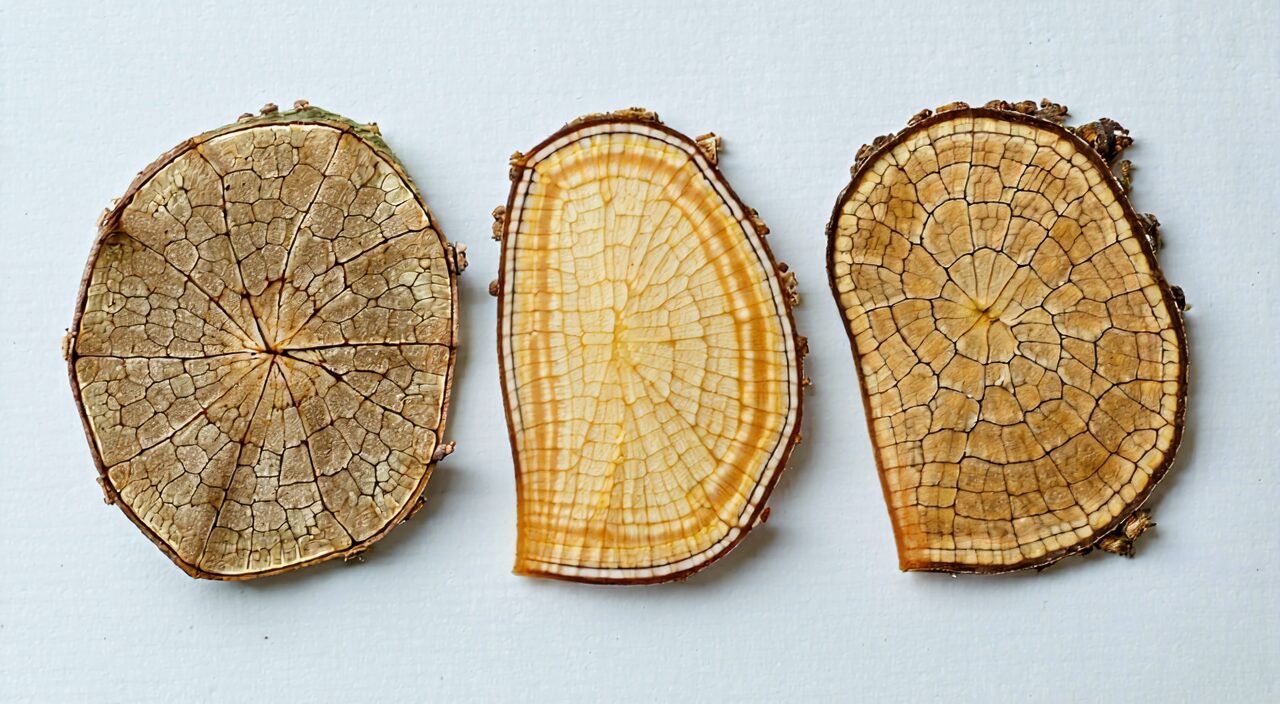
Herbs easily confused with Dang Gui by appearance or action are mainly Chuanxiong and Baishao. The table below lists the key differences:
| Comparison item | Dang Gui | Chuanxiong | Baishao |
|---|---|---|---|
| Source | Dried root of Angelica sinensis | Dried rhizome of Ligusticum chuanxiong | Dried root of Paeonia lactiflora |
| Appearance | Somewhat cylindrical with branch roots below; surface yellowish-brown to brownish; fracture yellowish-white, oily | Irregular nodular fist-like mass; surface yellowish-brown, rough, with parallel raised annular nodes; fracture yellowish-white or grayish-yellow, with wavy ring | Cylindrical; surface whitish or pale reddish-brown, smooth with longitudinal wrinkles; hard, not easily broken |
| Odor & taste | Intensely aromatic, distinctive; taste sweet, acrid, slightly bitter | Strongly aromatic, taste bitter and acrid | Taste bitter, sour |
| Nature, taste & channel tropism | Warm; sweet, acrid; Liver, Heart, Spleen | Warm; acrid; Liver, Gallbladder, Pericardium | Slightly cold; bitter, sour; Liver, Spleen |
| Traditional action emphasis | Nourishes and invigorates blood, regulates menstruation and relieves pain, moistens the intestines; tonifies without causing stagnation | Invigorates blood and moves qi, dispels wind and relieves pain; considered a “qi-in-blood herb” | Nourishes blood and regulates menstruation, softens the liver and relieves pain; emphasizes softening the liver and moderating urgency |
By comparing the source, medicinal part (root vs. rhizome), fracture surface features, and traditional action emphasis, these three herbs can be well differentiated. Furthermore, although Dang Gui and Baishao both regulate menstruation, Dang Gui is warm and tends to warmly nourish and harmonize the blood, while Baishao is cold and tends to soften the liver and moderate urgency. The two are often used together in formulas to synergistically regulate these functions.
Which Formulas Commonly Include Dang Gui?
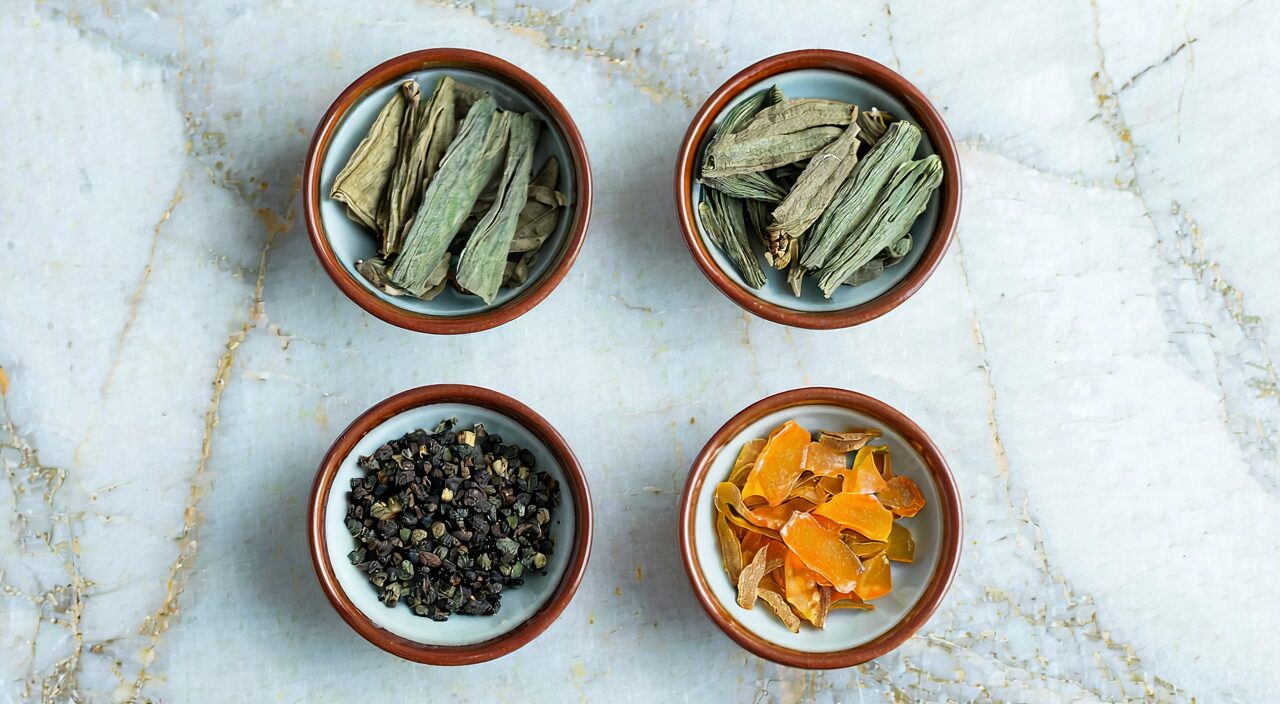
In classical Chinese herbal formulas, Dang Gui often plays an important role as a key ingredient. Several common formulas are listed below to illustrate its traditional usage directions:
- Si Wu Tang (Four Substance Decoction): Composed of Dang Gui, Chuanxiong, Baishao, and Shu Di Huang (cooked Rehmannia), it is a foundational formula for nourishing blood and regulating menstruation. In this formula, Dang Gui is the chief herb, nourishing and harmonizing the blood, assisted by Chuanxiong which invigorates blood and moves qi to prevent stagnation. It is commonly used for menstrual irregularity and dysmenorrhea related to blood deficiency with blood stasis.
- Dang Gui Bu Xue Tang (Dang Gui Blood-Tonifying Decoction): Contains only Huang Qi (Astragalus) and Dang Gui. Huang Qi strongly supplements the spleen and lung qi, while Dang Gui nourishes the blood and harmonizes the nutritive level, allowing vigorous qi to generate blood. Traditionally used for symptoms such as low-grade fever, flushed face, thirst, and a weak pulse due to overexertion and internal injury with qi and blood deficiency.
- Xiao Yao San (Free and Easy Wanderer Powder): Contains Dang Gui, Baishao, Chai Hu (Bupleurum), Fu Ling (Poria), and others. Its main actions are to soothe the liver and resolve depression, nourish blood, and strengthen the spleen. Dang Gui nourishes and harmonizes the blood, together with Baishao softens the liver, assisting Chai Hu in soothing the liver without damaging yin and blood. It is often used for emotional distress manifesting as chest and flank distension and pain, dizziness, blurred vision, fatigue, and poor appetite.
- Dang Gui Si Ni Tang (Dang Gui Four Counterflow Decoction): Composed of Dang Gui, Gui Zhi (Cinnamon twig), Baishao, Xi Xin (Asarum), Tong Cao (Tetrapanax), Gan Cao (Licorice), and Da Zao (Jujube). Dang Gui serves as the chief herb to nourish blood and unblock the vessels, warm the channels and dispel cold. It is traditionally used for cold extremities with a faint pulse due to blood deficiency and congealing cold.
Each of these formulas has its corresponding pattern indications and combination principles. In practice, their use must be judged by a Chinese medicine practitioner based on specific symptoms; do not self-prescribe.
What Should You Pay Attention to When Using Dang Gui?
Although Dang Gui is very common in daily health preservation, it is not suitable for everyone. Special caution is needed in the following situations:
- People with a tendency to bleed: such as heavy menstruation, hemophilia, or other bleeding disorders. Dang Gui’s blood-invigorating action may increase the risk of bleeding.
- Those with diarrhea or loose stools: Dang Gui is moistening and oily, which may worsen gastrointestinal discomfort.
- Those taking anticoagulants or antiplatelet drugs: such as warfarin, aspirin, clopidogrel, etc. Dang Gui may potentiate their effects and should be used under medical supervision to avoid increased bleeding risk.
- Pregnant women: Traditionally considered to have a stimulating effect on the uterus, it must be used with caution and only as directed by a physician.
For routine dosage, it is generally advised to follow the pharmacopoeia range or a doctor’s instructions; long-term, high-dose decoctions are not recommended. If uncertain about your constitution, it is best to consult a Chinese medicine practitioner or pharmacist before deciding to use it.
Summary
As a widely used blood-nourishing and blood-moving herb, Dang Gui can be identified by its unique morphological features, oily fracture surface, and intense aroma. Its medicinal part is the root, which after processing may be subdivided into different sections. Traditional Chinese medicine considers it warm and adept at nourishing blood, invigorating blood, and regulating menstruation, but its action emphasis must be distinguished from herbs like Chuanxiong and Baishao. Modern component research has revealed certain pharmacological activities, but this cannot replace clinical judgment. Classic formulas containing Dang Gui, such as Si Wu Tang, Dang Gui Bu Xue Tang, Xiao Yao San, and Dang Gui Si Ni Tang, are all examples of formulation based on pattern differentiation and treatment determination. When using Dang Gui, sufficient attention should be paid to risks such as bleeding tendency, diarrhea, and drug interactions.
This article is for informational purposes only and cannot replace professional diagnosis or treatment advice.