
What Is Hai Feng Teng? Medicinal Parts, Identification, and Common Formulas
Hai Feng Teng is one of the more common vine-type medicinal materials in traditional Chinese medicine, but many people only know it as a name that contains “Feng Teng.” Understanding what Hai Feng Teng is requires looking at its plant source, the appearance of the dried vine stem, common lookalikes, and its traditional uses. This article covers identification of the medicinal material, medicinal parts, formula applications, and precautions to help readers build a basic understanding.
What Does Hai Feng Teng Look Like? How Is It Identified?
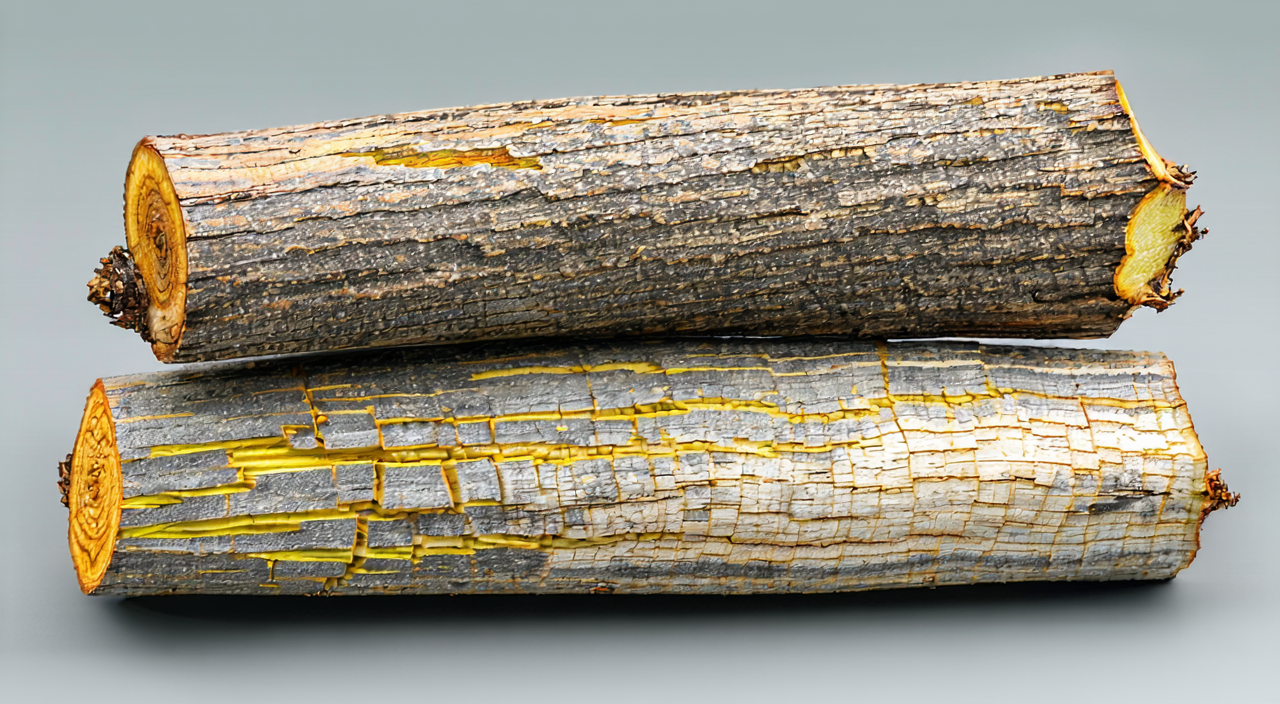
Hai Feng Teng comes from the dried vine stems of Feng Teng (Piper kadsura), a plant in the pepper family. The medicinal material is mostly flattened-cylindrical or curved long sections, with a grayish-brown or gray-brown surface, fine longitudinal ridges, and relatively distinct nodes. The nodes are often slightly swollen, and residual adventitious roots or root scars may sometimes be seen. It is brittle and breaks easily, with an uneven fracture surface. The bark is relatively narrow, while the wood is broad and mostly yellowish-white. The rays are grayish-white and arranged radially, and the pith is grayish-white or hollow. The odor is relatively fragrant, and the taste is slightly bitter and slightly pungent.
Quick Identification Points
For everyday identification, first check whether the vine stem tends to be flattened-cylindrical and whether the surface has grayish-brown longitudinal ridges. Then observe whether the nodes are swollen and whether the cross-section shows a yellowish-white wood portion. A fragrant odor is also one of Hai Feng Teng’s important characteristics. Compared with Qing Feng Teng, Hai Feng Teng is more flattened-cylindrical and has a more distinctive aroma.
What Is the Medicinal Part of Hai Feng Teng?
The medicinal part of Hai Feng Teng is the dried vine stem of Feng Teng, not the root, leaves, or whole herb. Traditionally, after harvesting, the twigs, leaves, and impurities are removed, and the stems are cut into sections or thick slices, then dried in the sun or at low temperature. Commercial products are commonly seen as cut sections or long segments. The surface, nodes, and cross-section can all be used as reference points for checking. Because the sources of vine-type Chinese medicines are easily confused, it is recommended to confirm the source through reliable channels when purchasing or using them, rather than judging solely by the name.
How Does Traditional Chinese Medicine Understand Hai Feng Teng?
Traditional Chinese medicine generally understands Hai Feng Teng from the perspective of dispelling wind-dampness, freeing the channels, and relieving impediment pain. Its nature and flavor are usually summarized as pungent and bitter, slightly warm, entering the liver and spleen meridians. It is commonly used for states such as joint pain, heaviness, difficulty bending and stretching, and limb numbness caused by wind-cold-dampness pathogens. In Chinese medicine, “bi” (impediment) refers more to a category of soreness and sluggish movement in the limbs and channels, and is not equivalent to any modern disease name. In compound formulas, Hai Feng Teng is often combined with herbs that dispel wind, scatter cold, resolve dampness, and free the channels. For example, for joint discomfort leaning toward cold-dampness, traditional thinking may include Hai Feng Teng as an auxiliary. Whether it is suitable for specific use still needs to be judged comprehensively based on individual constitution, cold-heat presentation, and current symptoms.
What Does Modern Research Know About Hai Feng Teng?
Modern research mainly observes Hai Feng Teng from the perspective of its components and pharmacological activities. It has been found to contain volatile oils, lignans, alkaloids, and other constituents. Some studies focus on its anti-inflammatory, antioxidant, or neuroprotective directions. This information is only a clue at the research level and cannot be directly inferred as clinical efficacy or therapeutic conclusions. For general readers, modern research can serve as background understanding and cannot replace TCM pattern differentiation or professional medical advice.
What Are the Differences Between Hai Feng Teng, Qing Feng Teng, and Luo Shi Teng?
Different Sources Determine Basic Differences in the Medicinal Materials
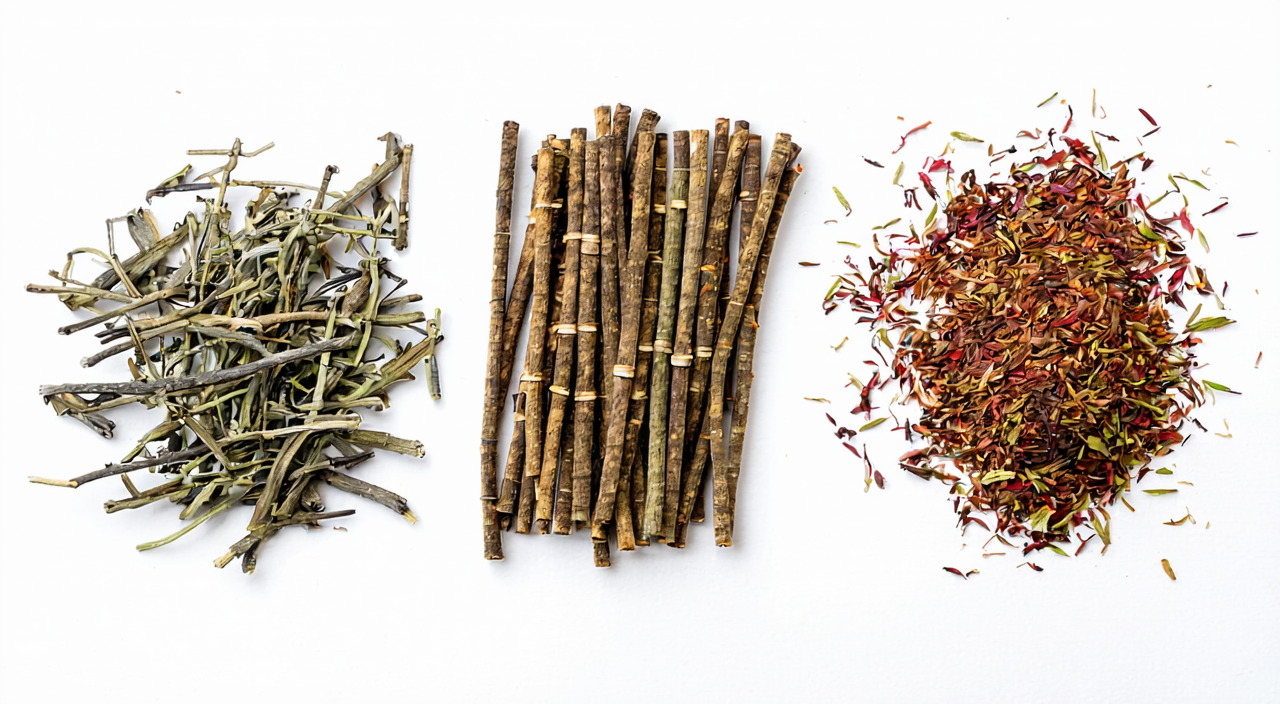
Hai Feng Teng is the dried vine stem of Piper kadsura in the pepper family; Qing Feng Teng is the dried vine stem of Sinomenium acutum or Sinomenium acutum var. cinereum in the moonseed family; Luo Shi Teng is the dried leafy vine stem of Trachelospermum jasminoides in the dogbane family. Although all three are vine-type medicinal materials, their plant sources are different, so they must not be used interchangeably.
Differences in Appearance, Odor, and Traditional Use
In appearance, Hai Feng Teng is mostly flattened-cylindrical and curved, with a grayish-brown surface, swollen nodes, a yellowish-white wood portion on the cut surface, a fragrant odor, and a slightly bitter and pungent taste. Qing Feng Teng is mostly cylindrical, with a grayish-brown to brownish-gray surface, a yellowish-white cut surface, and a more obvious bitter taste. Luo Shi Teng often has leaves; its stems are reddish-brown or grayish-brown, and the leaves are mostly opposite. Traditional uses also have different emphases: Hai Feng Teng leans toward dispelling wind-dampness, freeing the channels, and relieving impediment pain; Qing Feng Teng leans toward freeing the channels and benefiting the joints; Luo Shi Teng leans toward dispelling wind, freeing the channels, cooling the blood, and reducing swelling. When using them, the choice should be made after confirming the source and characteristics and in combination with professional advice.
Which Formulas Use Hai Feng Teng?
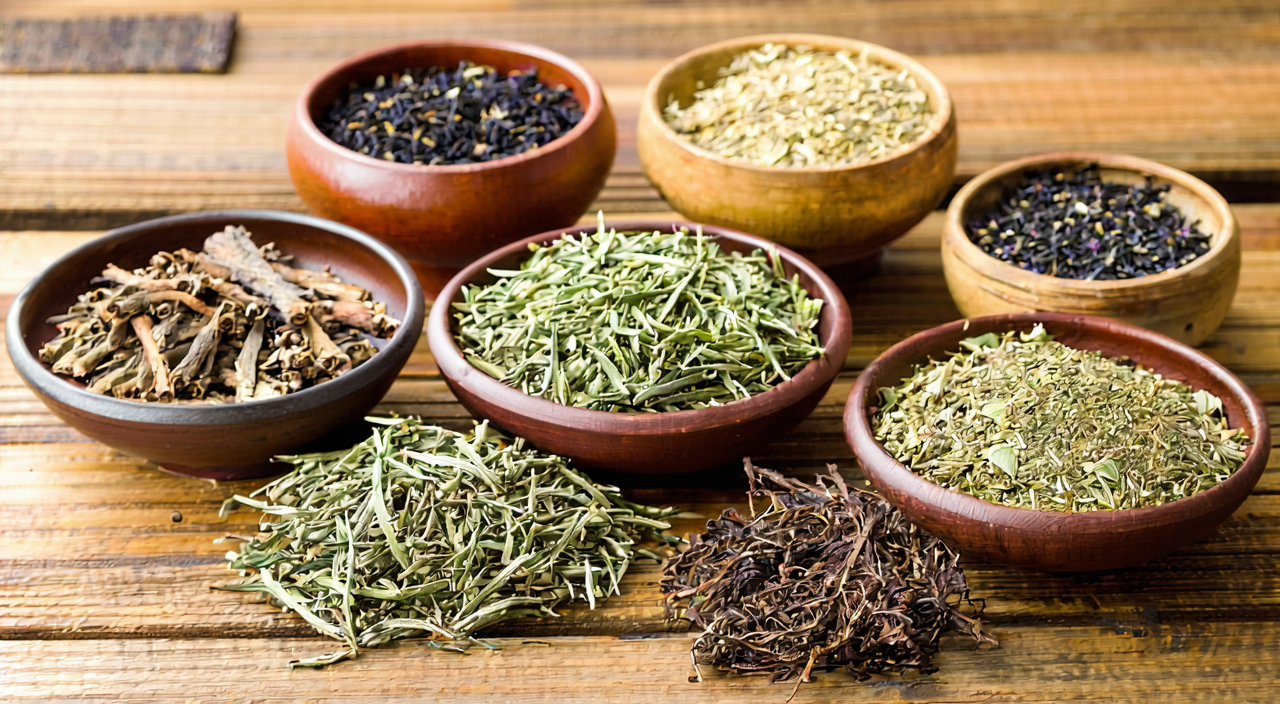
Hai Feng Teng San is a representative traditional formula directly related to Hai Feng Teng and is often used in approaches for wind-damp impediment pain. Modified Juan Bi Tang also often includes Hai Feng Teng as one of the modified herbs. When the pattern leans toward wind-cold-damp impediment and limited joint movement, it may traditionally be combined with Qiang Huo, Du Huo, Qin Jiao, Dang Gui, Chuan Xiong, and others. In wind-damp-dispelling and channel-freeing formulas, Hai Feng Teng is mostly used as an auxiliary herb to help strengthen the direction of freeing the channels and relieving pain. The specific composition and modifications of different formulas need to be determined by a professional Chinese medicine practitioner; self-prescribing according to a formula is not recommended. Whether it is suitable should be judged comprehensively based on product instructions, individual circumstances, and professional advice.
What Precautions Should Be Taken When Using Hai Feng Teng?
Before using Hai Feng Teng, confirm the species and source to avoid mistakenly using Qing Feng Teng, Luo Shi Teng, or other similar vines. People with a history of allergy to plants in the pepper family or vine-type medicinal materials should exercise caution. If discomfort such as rash, itching, or nausea occurs, stop using it promptly and consult a professional. Pregnant women, breastfeeding women, children, and people with abnormal liver or kidney function are generally not advised to use it on their own. If joint pain recurs, with obvious swelling and fever, or is accompanied by palpitations, chest tightness, severe abdominal pain, black stools, or weight loss, seek medical care first. In traditional use, Hai Feng Teng is mostly used in compound formulas and should not be taken alone for a long time or in large doses.
Summary
Hai Feng Teng is the dried vine stem of Feng Teng. Its main identification points are the flattened-cylindrical shape, grayish-brown surface, swollen nodes, and yellowish-white wood portion on the cut surface. It is commonly understood within the traditional approach of dispelling wind-dampness, freeing the channels, and relieving impediment pain, and it differs from Qing Feng Teng and Luo Shi Teng in source and characteristics. Formulas containing Hai Feng Teng are mostly used in traditional regulation approaches, and actual use should be judged according to individual circumstances. This article is for educational reference only and cannot replace professional diagnosis or treatment advice. # What Is Hai Feng Teng? Medicinal Parts, Identification, and Common Formulas
Hai Feng Teng is one of the more common vine-type medicinal materials in traditional Chinese medicine, but many people only know it as a name that contains “Feng Teng.” Understanding what Hai Feng Teng is requires looking at its plant source, the appearance of the dried vine stem, common lookalikes, and its traditional uses. This article covers identification of the medicinal material, medicinal parts, formula applications, and precautions to help readers build a basic understanding.
What Does Hai Feng Teng Look Like? How Is It Identified?
Hai Feng Teng comes from the dried vine stems of Feng Teng (Piper kadsura), a plant in the pepper family. The medicinal material is mostly flattened-cylindrical or curved long sections, with a grayish-brown or gray-brown surface, fine longitudinal ridges, and relatively distinct nodes. The nodes are often slightly swollen, and residual adventitious roots or root scars may sometimes be seen. It is brittle and breaks easily, with an uneven fracture surface. The bark is relatively narrow, while the wood is broad and mostly yellowish-white. The rays are grayish-white and arranged radially, and the pith is grayish-white or hollow. The odor is relatively fragrant, and the taste is slightly bitter and slightly pungent.
Quick Identification Points
For everyday identification, first check whether the vine stem tends to be flattened-cylindrical and whether the surface has grayish-brown longitudinal ridges. Then observe whether the nodes are swollen and whether the cross-section shows a yellowish-white wood portion. A fragrant odor is also one of Hai Feng Teng’s important characteristics. Compared with Qing Feng Teng, Hai Feng Teng is more flattened-cylindrical and has a more distinctive aroma.
What Is the Medicinal Part of Hai Feng Teng?
The medicinal part of Hai Feng Teng is the dried vine stem of Feng Teng, not the root, leaves, or whole herb. Traditionally, after harvesting, the twigs, leaves, and impurities are removed, and the stems are cut into sections or thick slices, then dried in the sun or at low temperature. Commercial products are commonly seen as cut sections or long segments. The surface, nodes, and cross-section can all be used as reference points for checking. Because the sources of vine-type Chinese medicines are easily confused, it is recommended to confirm the source through reliable channels when purchasing or using them, rather than judging solely by the name.
How Does Traditional Chinese Medicine Understand Hai Feng Teng?
Traditional Chinese medicine generally understands Hai Feng Teng from the perspective of dispelling wind-dampness, freeing the channels, and relieving impediment pain. Its nature and flavor are usually summarized as pungent and bitter, slightly warm, entering the liver and spleen meridians. It is commonly used for states such as joint pain, heaviness, difficulty bending and stretching, and limb numbness caused by wind-cold-dampness pathogens. In Chinese medicine, “bi” (impediment) refers more to a category of soreness and sluggish movement in the limbs and channels, and is not equivalent to any modern disease name. In compound formulas, Hai Feng Teng is often combined with herbs that dispel wind, scatter cold, resolve dampness, and free the channels. For example, for joint discomfort leaning toward cold-dampness, traditional thinking may include Hai Feng Teng as an auxiliary. Whether it is suitable for specific use still needs to be judged comprehensively based on individual constitution, cold-heat presentation, and current symptoms.
What Does Modern Research Know About Hai Feng Teng?
Modern research mainly observes Hai Feng Teng from the perspective of its components and pharmacological activities. It has been found to contain volatile oils, lignans, alkaloids, and other constituents. Some studies focus on its anti-inflammatory, antioxidant, or neuroprotective directions. This information is only a clue at the research level and cannot be directly inferred as clinical efficacy or therapeutic conclusions. For general readers, modern research can serve as background understanding and cannot replace TCM pattern differentiation or professional medical advice.
What Are the Differences Between Hai Feng Teng, Qing Feng Teng, and Luo Shi Teng?
Different Sources Determine Basic Differences in the Medicinal Materials
Hai Feng Teng is the dried vine stem of Piper kadsura in the pepper family; Qing Feng Teng is the dried vine stem of Sinomenium acutum or Sinomenium acutum var. cinereum in the moonseed family; Luo Shi Teng is the dried leafy vine stem of Trachelospermum jasminoides in the dogbane family. Although all three are vine-type medicinal materials, their plant sources are different, so they must not be used interchangeably.
Differences in Appearance, Odor, and Traditional Use
In appearance, Hai Feng Teng is mostly flattened-cylindrical and curved, with a grayish-brown surface, swollen nodes, a yellowish-white wood portion on the cut surface, a fragrant odor, and a slightly bitter and pungent taste. Qing Feng Teng is mostly cylindrical, with a grayish-brown to brownish-gray surface, a yellowish-white cut surface, and a more obvious bitter taste. Luo Shi Teng often has leaves; its stems are reddish-brown or grayish-brown, and the leaves are mostly opposite. Traditional uses also have different emphases: Hai Feng Teng leans toward dispelling wind-dampness, freeing the channels, and relieving impediment pain; Qing Feng Teng leans toward freeing the channels and benefiting the joints; Luo Shi Teng leans toward dispelling wind, freeing the channels, cooling the blood, and reducing swelling. When using them, the choice should be made after confirming the source and characteristics and in combination with professional advice.
Which Formulas Use Hai Feng Teng?
Hai Feng Teng San is a representative traditional formula directly related to Hai Feng Teng and is often used in approaches for wind-damp impediment pain. Modified Juan Bi Tang also often includes Hai Feng Teng as one of the modified herbs. When the pattern leans toward wind-cold-damp impediment and limited joint movement, it may traditionally be combined with Qiang Huo, Du Huo, Qin Jiao, Dang Gui, Chuan Xiong, and others. In wind-damp-dispelling and channel-freeing formulas, Hai Feng Teng is mostly used as an auxiliary herb to help strengthen the direction of freeing the channels and relieving pain. The specific composition and modifications of different formulas need to be determined by a professional Chinese medicine practitioner; self-prescribing according to a formula is not recommended. Whether it is suitable should be judged comprehensively based on product instructions, individual circumstances, and professional advice.
What Precautions Should Be Taken When Using Hai Feng Teng?
Before using Hai Feng Teng, confirm the species and source to avoid mistakenly using Qing Feng Teng, Luo Shi Teng, or other similar vines. People with a history of allergy to plants in the pepper family or vine-type medicinal materials should exercise caution. If discomfort such as rash, itching, or nausea occurs, stop using it promptly and consult a professional. Pregnant women, breastfeeding women, children, and people with abnormal liver or kidney function are generally not advised to use it on their own. If joint pain recurs, with obvious swelling and fever, or is accompanied by palpitations, chest tightness, severe abdominal pain, black stools, or weight loss, seek medical care first. In traditional use, Hai Feng Teng is mostly used in compound formulas and should not be taken alone for a long time or in large doses.
Summary
Hai Feng Teng is the dried vine stem of Feng Teng. Its main identification points are the flattened-cylindrical shape, grayish-brown surface, swollen nodes, and yellowish-white wood portion on the cut surface. It is commonly understood within the traditional approach of dispelling wind-dampness, freeing the channels, and relieving impediment pain, and it differs from Qing Feng Teng and Luo Shi Teng in source and characteristics. Formulas containing Hai Feng Teng are mostly used in traditional regulation approaches, and actual use should be judged according to individual circumstances. This article is for educational reference only and cannot replace professional diagnosis or treatment advice.