
What Is Huaihua? Medicinal Parts, Identification Tips, and Common Formulas
Many overseas friends interested in TCM may wonder: What exactly is Huaihua? Is it the string of white flowers on the tree? Why is the term “Huaimi” sometimes mentioned? In fact, Huaihua commonly used in TCM comes from the flowers and flower buds of Sophora japonica (Chinese scholar tree). After harvesting in summer, the opened flowers are called Huaihua, while the unopened buds, which resemble rice grains in shape, are usually called “Huaimi” in the trade. Although both come from the same tree, there are slight differences in harvest timing and usage habits. This article will objectively guide you through the external identification, medicinal parts, TCM understanding, modern research, differentiation from other species, common formulas, and precautions for use of this traditional herb.
What Does Huaihua Look Like? How to Identify It?
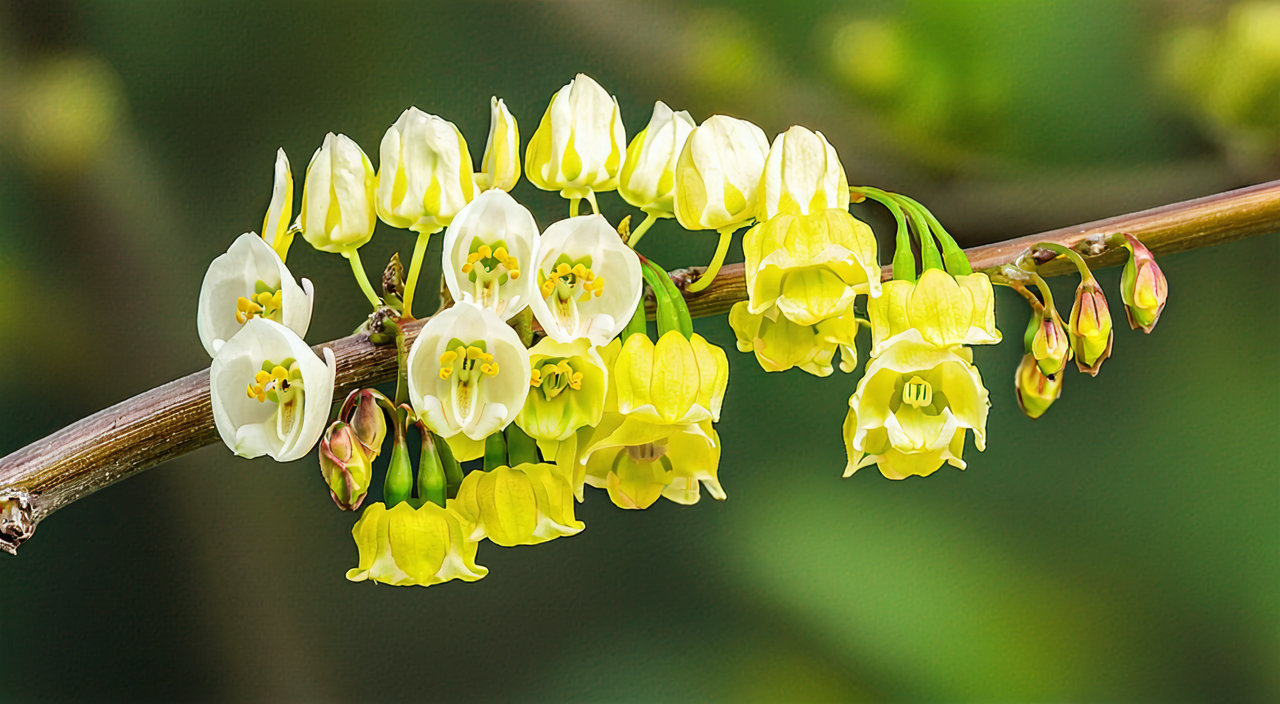
Huaihua is the butterfly-shaped flower of the Chinese scholar tree, blooming in summer. Individual flowers are not large, and they usually form terminal panicles with many blossoms. The corolla is papilionaceous: the standard petal is broadly heart-shaped, the wing petals and keel petals are slightly different, and the color is mostly yellowish-white or light yellowish-green. The calyx is bell-shaped, with five shallow teeth at the apex. The whole flower is light in texture and shrinks easily after drying. When the flower opens, the slender stamens and pistil protrude from the corolla, which is a small detail helpful for identification.
The bud stage, known as Huaimi, is easier to recognize: it is ovoid or elliptical, 2–6 mm long, resembling small grains of rice, with a yellowish-brown or yellowish-green surface, slightly smooth. The unopened calyx tightly encloses the petal parts, and the texture is loose and brittle. It has a faint, delicate fragrance and a slightly bitter taste. If you see open, small papilionaceous flowers and ovoid, grain-like unopened buds on the same branch, it is very likely the flower of the Chinese scholar tree. When identifying, pay special attention to distinguishing it from black locust (Robinia pseudoacacia) flowers. Black locust flowers have larger corollas, are pure white, and have a strong fragrance, while Chinese scholar tree flowers are more yellowish-white or yellowish-green overall.
What Are the Medicinal Parts of Huaihua?
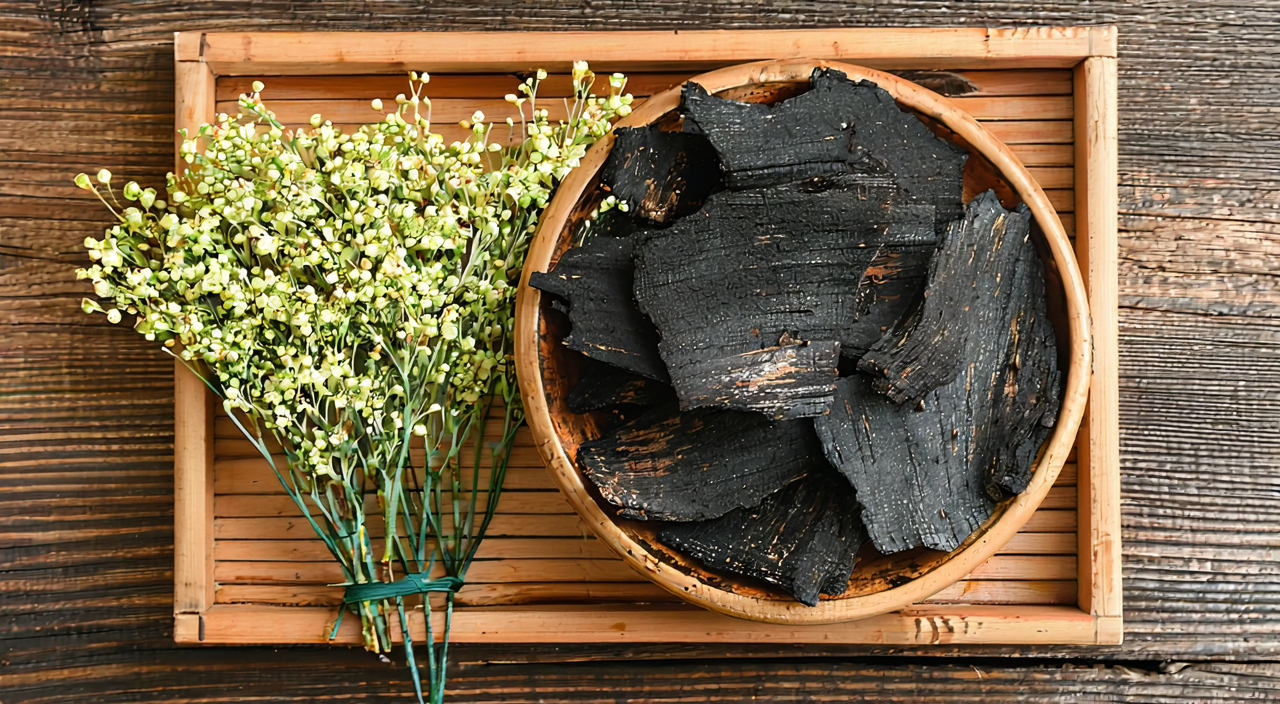
The medicinal part of Huaihua is the flower or flower bud; both are recorded in the current pharmacopoeia. They are harvested when flowers open or buds form in summer, with branches, stalks, and impurities removed, then promptly dried. Sun-drying or low-temperature drying is usually employed to maintain color and constituent stability. The raw product is often used to cool blood and stop bleeding while also clearing liver fire, while the stir-fried Huaihua charcoal is more focused on stopping bleeding. To prepare Huaihua charcoal, clean Huaihua is heated over a mild fire, stir-fried until the surface becomes charred black and the interior turns old yellow, then a little water is sprayed on, and it is taken out to cool. This processing method is traditionally believed to moderate its cold nature and enhance its astringent and hemostatic effects. It is often chosen when the therapeutic direction emphasizes stopping bleeding, but it still needs to be judged based on the specific situation; it does not mean that the charcoal can casually replace the raw product or be used long-term.
How Does TCM Understand Huaihua?
Traditional Chinese medicine mainly understands Huaihua from the perspectives of cooling blood to stop bleeding and clearing liver fire. It is slightly cold in nature and bitter in taste, and it enters the Liver and Large Intestine meridians. In ancient herbal works, Huaihua was often used for various bleeding tendencies caused by reckless movement of hot blood, such as bloody stools, bleeding hemorrhoids, dysentery with blood, and uterine bleeding, especially bleeding from the lower body. For symptoms like head distension, headache, red eyes, dizziness, irritability, and anger caused by liver fire flaring upward, Huaihua’s liver-clearing direction is also often used as one of the formulation strategies. However, these approaches need to be understood within the structure of the entire formula and the specific constitution. Often, multiple herbs work synergistically, and the significance of a single herb varies greatly depending on individual conditions; one should not simply apply it based on a single symptom.
What Does Modern Research Say?
Modern phytochemical studies indicate that Huaihua contains rutin (rutoside), quercetin, tannins, and other constituents. Among them, rutin has been studied in basic research for improving capillary fragility and reducing vascular permeability. Some in vitro and in vivo studies also suggest that Huaihua extracts may have certain antioxidant and anti-inflammatory activities. However, most of this research is still in the exploratory stage and differs from the truly complex environment inside the human body; therefore, it should not be directly interpreted as having equivalent medical efficacy. These findings can serve as one aspect of understanding Huaihua, helping to recognize correspondences between its traditional use and modern research, but they should not become the basis for self-medication.
What Are the Differences Between Huaihua, Huaimi, and Black Locust Flowers?
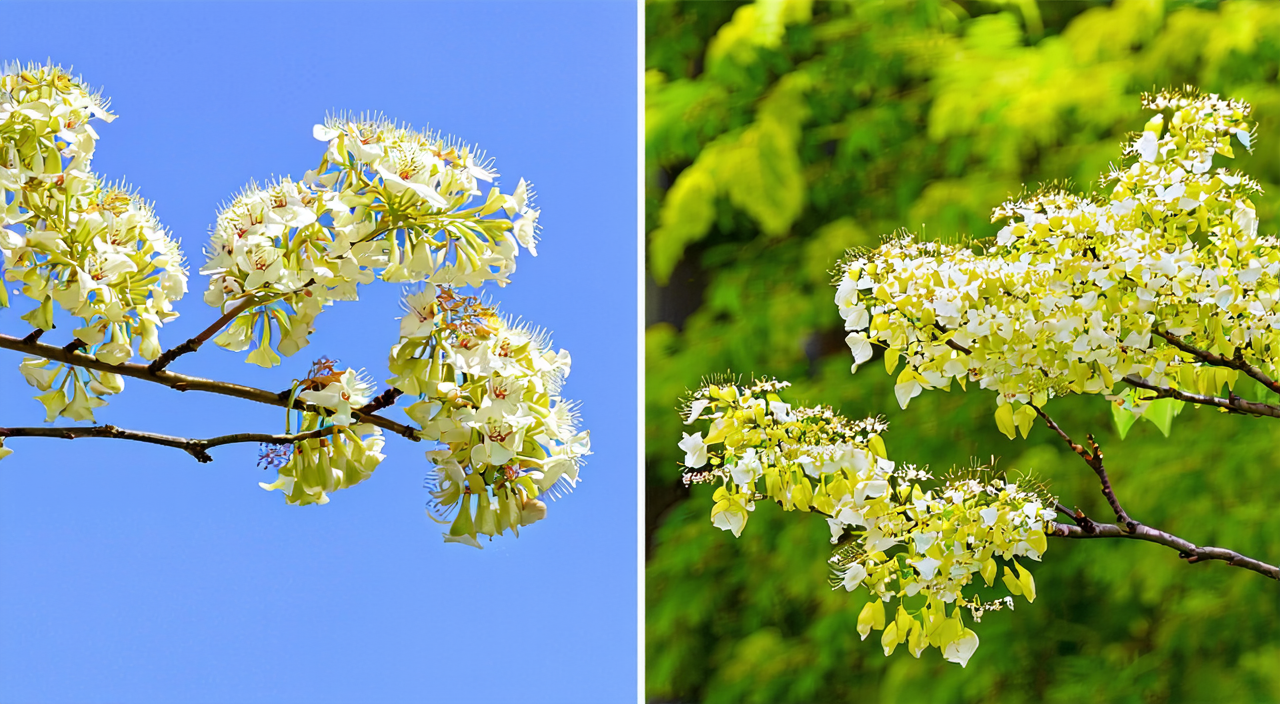
Huaihua and Huaimi are essentially two harvest forms of the same medicinal substance. Whether opened flowers or buds, they both come from the Chinese scholar tree and are jointly recorded in the pharmacopoeia, differing only in commercial specifications. Black locust flowers, on the other hand, are completely different. Black locust (Robinia pseudoacacia) is a plant in the genus Robinia of the Fabaceae family, native to North America. Its flowers are pure white with a strong fragrance and are often used as a nectar source or edible flower, such as in steamed black locust flowers or scrambled eggs with black locust flowers. In the TCM system, authentic Huaihua and Huaimi refer exclusively to the flowers and buds of the Chinese scholar tree; black locust flowers are not included in the same medicinal standards. The two differ in plant origin, chemical composition, and traditional application background, and they should not be used as substitutes for each other. Some people may mistakenly collect or purchase black locust flowers as Huaihua. This not only fails to achieve the intended therapeutic purpose but may also cause unnecessary discomfort due to compositional differences. Therefore, strict distinction is essential.
Which Formulas Use Huaihua?
In TCM formulas, Huaihua is often combined with other herbs to address conditions such as bleeding due to blood heat or intestinal wind bleeding. Among the more classic ones is Huaihua San (Sophora Flower Powder), composed of Huaihua, Cacumen Platycladi, Schizonepeta spike, and Fructus Aurantii, traditionally used to clear the intestines, cool blood, dispel wind, and regulate qi, often seen in patterns of intestinal wind with bloody stools or bleeding hemorrhoids. Huai Jiao Wan (Sophora Fruit Pill) mainly uses Huai Jiao (Sophora fruit), combined with Sanguisorba root, Scutellaria root, etc., and is commonly used to clear the intestines, dispel wind, cool blood, and stop bleeding, often for swollen, painful, and bleeding hemorrhoids. Huaihua decoction and some blood-cooling, hemostatic formulas also often use Huaihua as an ingredient. Each of these formulas has its own indications. Whether they suit an individual requires comprehensive analysis based on specific constitution characteristics, symptom presentation, and professional judgment; one should not self-prescribe and use these formulas directly.
What Precautions Should Be Taken When Using Huaihua?
Although Huaihua is widely used in traditional contexts, several key points need attention when using it. Huaihua is cold in nature; those with spleen and stomach deficiency-cold, who easily experience cold abdominal pain, loose stools, or frequent diarrhea, should use it cautiously to avoid aggravating gastrointestinal discomfort. Individuals allergic to Fabaceae plant pollen should also exercise caution when handling Huaihua or taking related products. Additionally, it must be emphasized again that black locust flowers should not be used as a substitute for medicinal Huaihua for “medicinal purposes” or taken internally in the same way. More importantly, if symptoms such as bloody stools, bleeding hemorrhoids, excessive menstrual bleeding, or other abnormal bleeding occur—especially if they are long-term, recurrent, or accompanied by weight loss, abdominal pain, anemia, chest tightness, etc.—it is essential to consult a doctor promptly to identify the cause, rather than relying solely on Huaihua or related products for self-treatment.
Summary
Huaihua is a traditional Chinese herb characterized by cooling blood to stop bleeding and clearing liver fire. Both its flowers and buds can be used medicinally, though they differ slightly in morphology and harvest timing. The key to identifying Huaihua is to distinguish it from black locust flowers to avoid miscollection and misuse. Formulas such as Huaihua San provide traditional formulation approaches. Whether they are suitable for an individual still requires judgment based on an understanding of the constitution and symptoms, combined with professional advice. For long-term or unexplained bleeding problems, it is even more important to seek timely medical care rather than self-managing.