
What Is Kombu? Medicinal Parts, Identification, and Common Formulas
Many people’s first impression of kombu is the thick kelp used in Japanese dashi, but in traditional Chinese medicine, kombu plays a completely different role. It is not an ordinary kitchen ingredient readily available, but a medicinal material that needs to be harvested, cleaned, and dried. Understanding what kombu is, how to identify it, which part of the algae is used, and how it differs from seaweed and kelp is a very practical starting point for overseas readers who wish to understand this medicinal material from a traditional perspective.
What Does Kombu Look Like? How to Identify It?
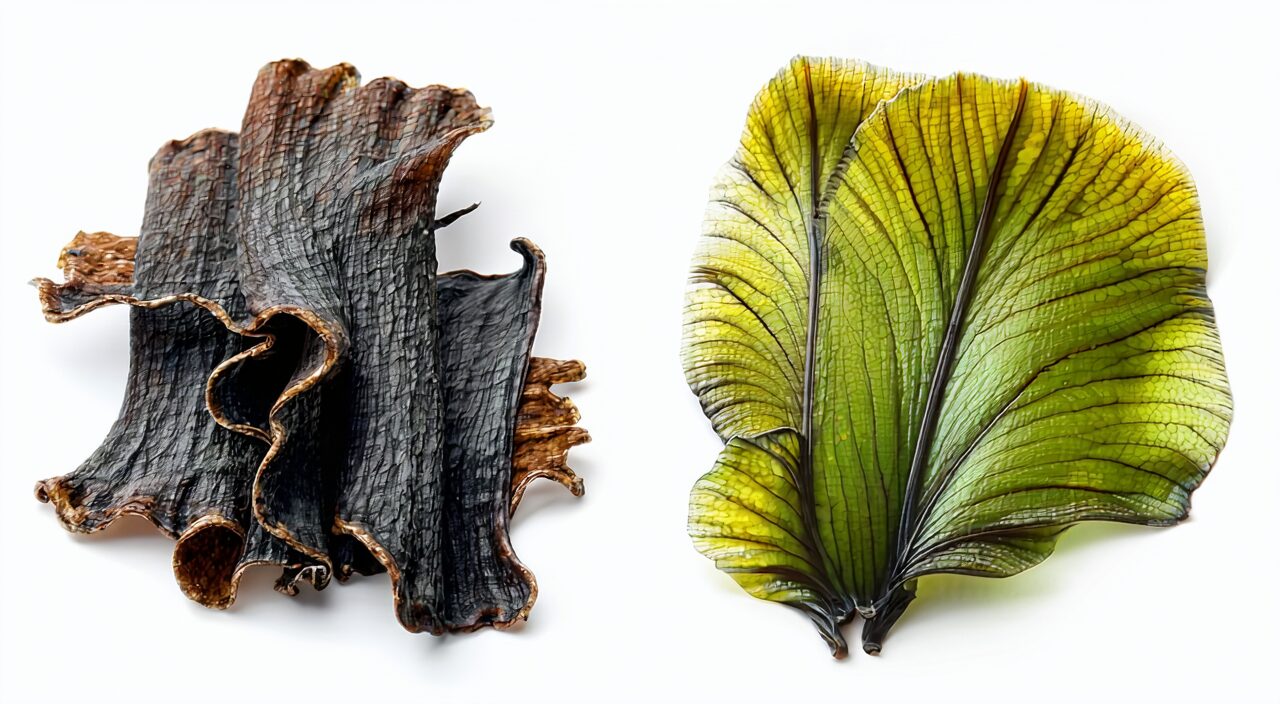
Medicinal kombu typically appears as a flat ribbon-like or curled, shrunken thallus, with a blackish-brown or greenish-brown surface. Its texture is leathery and tough, making it difficult to break. The margin of an intact kombu thallus is sometimes slightly wavy, and the base often bears a short stipe with remnants of the holdfast. When smelled up close, it has a distinct sea-fishy odor, which becomes stronger when damp; this is an important characteristic for identifying kombu.
On the market, medicinal kombu is mostly in dried form, often pressed into bundles or cut into segments, deep in color, and the surface may be covered with a layer of white powdery bloom. This is crystallized mannitol and other substances, not mold. If you see a product that is overly bright green, soft and mushy, or almost lacking the sea-fishy smell, it may differ in processing or variety and requires extra attention.
Compared with everyday edible kelp, medicinal kombu is generally thicker, with broader fronds, harder texture after drying, and weaker viscosity when chewed. From a traditional usage perspective, such morphological differences are also regarded as reflecting differences in the intensity of action between a medicinal material and a food.
Which Part of Kombu Is Used Medicinally?
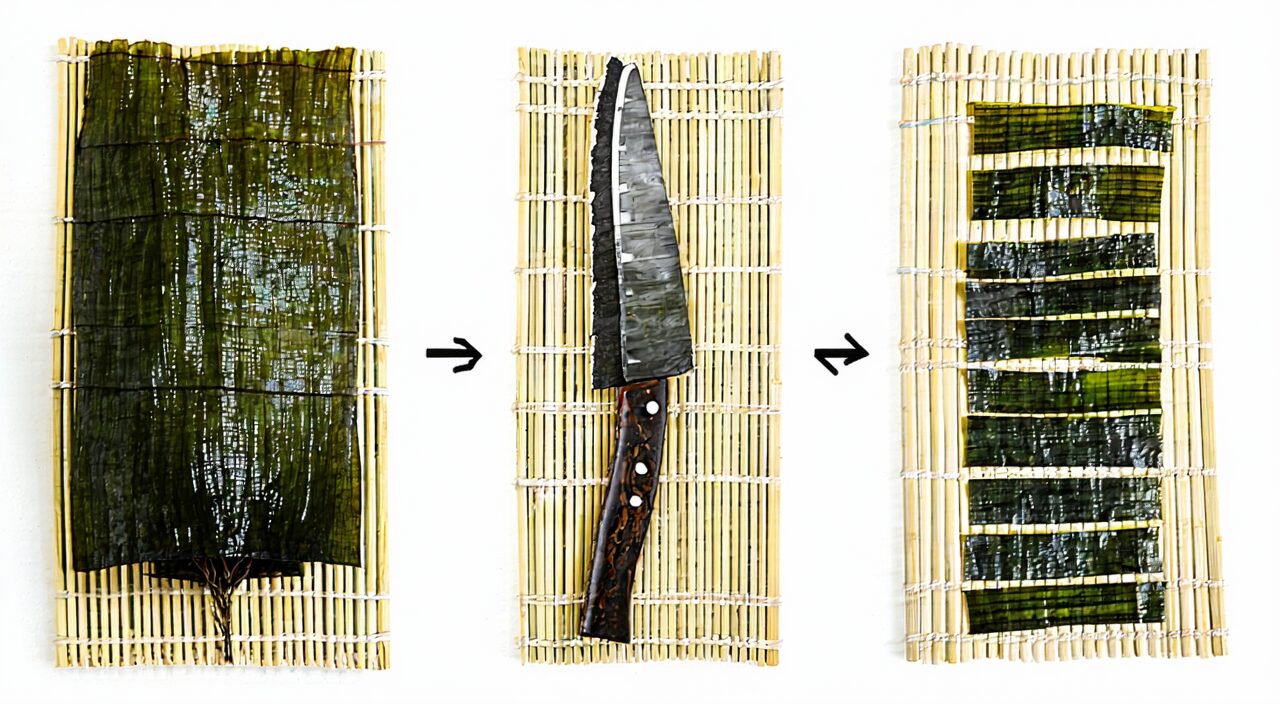
The medicinal part of kombu is its dried thallus. Harvesting usually takes place in summer and autumn. The algae are gathered from the sea, impurities are removed, they are rinsed clean with fresh water, and then sun-dried or dried at low temperature. The processing seems simple, but the degree of drying and cleanliness directly determines whether the material can be preserved for a long time.
In practice, medicinal kombu is often shredded or cut into segments before being used as medicine, and it can also be ground into a fine powder. Traditionally, kombu is mostly decocted with other ingredients in a formula, though it is sometimes used externally. Whichever method is used, the entire thallus is employed, not just the holdfast or stipe alone. Therefore, clarifying the medicinal part helps make a more accurate judgment when selecting the material.
How Does Traditional Chinese Medicine Understand Kombu?
Traditional Chinese medicine often understands kombu through concepts such as dispelling phlegm, softening hardness and dispersing masses, and promoting urination to reduce edema. In simple terms, ancient practitioners discovered that kombu could have a certain regulating value for conditions marked by lumps, swellings, or accumulations of phlegm-dampness, so over a long period, kombu was used in approaches for regulating goiter, scrofula, and similar conditions.
“Softening hardness and dispersing masses” means using its salty and cold nature to help soften hard lumps so that they gradually dissipate; “promoting urination to reduce edema” refers to its ability to promote the excretion of fluids and alleviate certain types of swelling. Kombu is salty in flavor and cold in nature, and it enters the Liver, Stomach, and Kidney meridians. This salty-cold nature is considered one of the reasons it can act in these directions.
However, this understanding is a summary based on traditional experience. Whether it suits a specific individual’s situation still needs to be judged in combination with constitution, symptoms, and other comprehensive factors. Especially when thyroid-related manifestations are involved, one should not simply and directly apply traditional thinking, but should conduct an overall assessment combined with modern diagnostic methods.
What Have Modern Studies Discovered About Kombu?
Modern research mainly focuses on the components rich in kombu, such as iodine, algin, fucoidan, and mannitol. Among them, iodine is an important raw material for thyroid hormone synthesis, so the iodine content of kombu has always attracted considerable attention. In addition, some experimental studies have also found that kombu polysaccharides may have certain effects on blood lipids, immunity, and other aspects under specific conditions.
It must be emphasized that most of these studies are at the laboratory or preliminary observation stage and cannot be directly extrapolated to mean that daily consumption of kombu will achieve the same effects. In particular, research on iodine can never substitute for the diagnosis and standardized treatment of thyroid diseases. Conditions such as hyperthyroidism and Hashimoto’s thyroiditis differ significantly in their iodine requirements and restrictions. Blindly consuming large amounts of iodine through kombu may disrupt the original balance and even aggravate certain problems. Therefore, understanding modern research is more suitable as background knowledge and should not be taken as a direct basis for using kombu.
What Are the Differences Between Kombu, Seaweed, and Kelp?
Many people easily confuse kombu, seaweed, and kelp. These three indeed overlap in origin, morphology, and food-medicine contexts, but they are not entirely identical upon closer examination.
In terms of origin, kombu is mostly the dried thallus of Alariaceae plants such as Ecklonia or Undaria pinnatifida (wakame). In some regions, Laminaria (kelp) from the Laminariaceae family is also used as kombu. Seaweed generally refers to the dried algae body of Sargassum species such as Hizikia fusiforme or Sargassum pallidum. The kelp commonly referred to in daily life usually specifically denotes Laminaria from the Laminariaceae family and is mainly eaten as a vegetable. Medicinal kombu and edible kelp differ in processing methods, degree of drying, and variety definition.
In appearance, the thallus of medicinal kombu is wider and thicker, darker in color tending towards blackish-brown, and tough in texture. Seaweed, by contrast, mostly consists of small leafy or filamentous structures, lighter in color, and brittle and easily broken. Edible kelp is relatively thin and tender, with a more inky green hue. In terms of odor, all three have a sea-fishy smell, but kombu’s odor is more intense.
In the context of traditional application, kombu leans more towards “softening hardness and dispersing masses,” and seaweed is also commonly used in similar directions, while kelp remains more within the realm of daily diet. Understanding these distinctions helps make clearer choices when needed and avoids directly transferring dietary experience into medicinal scenarios.
Which Classic Formulas Use Kombu?
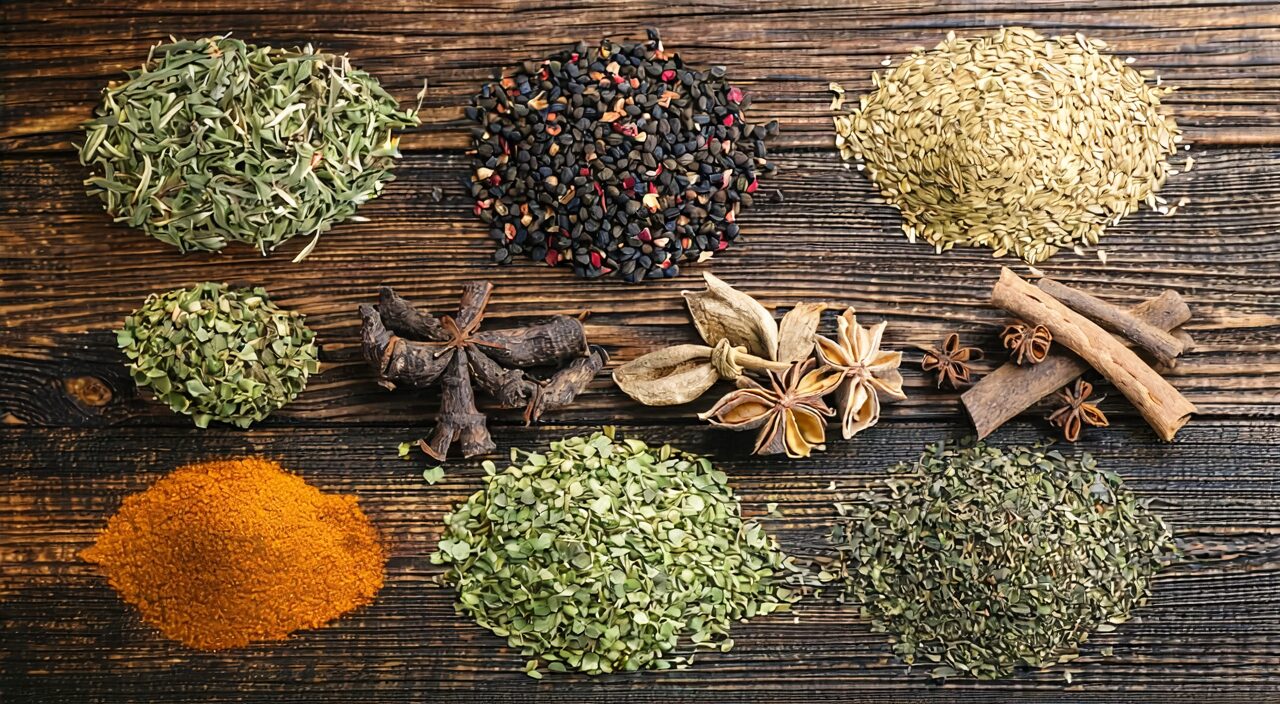
Kombu is often combined in traditional formulas with other herbs that resolve phlegm and disperse masses, or soften hardness and reduce swelling. Below are a few common examples.
Hai Zao Yu Hu Tang (Sargassum and Yam Decoction) is a classic formula for softening hardness and dispersing masses. Besides kombu, it includes seaweed, fritillaria, pinellia, and green tangerine peel. Traditionally, it is often used for early-stage goiter where lumps in the front of the neck are relatively hard but have not yet ulcerated, approaching the condition from the perspective of regulating phlegm-dampness and qi stagnation. The combination of kombu and seaweed in this formula emphasizes the salty-cold softening of hardness, accompanied by qi-moving and phlegm-resolving ingredients, representing a relatively classic pairing structure.
Kun Bu Wan (Kombu Pill) uses kombu as the main ingredient, combined with tetrapanax, clamshell, and seaweed. Traditionally, it is used for chronic goiter with diffuse swelling and lumps in the neck, taking into account both promoting urination and dispersing masses. The formula is prepared as pills, making its action relatively mild, and it is often referenced as a direction for long-term regulation.
Kun Bu Hai Zao Tang (Kombu and Seaweed Decoction) is relatively simple, mainly consisting of kombu and seaweed, sometimes with small amounts of herbs that promote urination or regulate qi. It is mainly used for manifestations such as edema and scrofula, reflecting the dual approach of kombu in promoting urination to reduce edema and softening hardness to disperse masses.
The above formulas represent directions of traditional usage from different periods and are not universal protocols that can be directly self-prescribed. With different constitutions and different combinations of symptoms, suitable pairings may differ completely. It is advisable to make a comprehensive judgment based on product instructions, individual circumstances, and professional advice.
What Precautions Should Be Taken When Using Kombu?
Although kombu is a dual-use food and medicine variety, several types of situations require special caution when using it. First, those with abnormal thyroid function need to be particularly careful. People with hyperthyroidism or those who need to restrict iodine intake may, if they consume kombu in large amounts or for a long time, affect their thyroid status due to excessive iodine intake. Certain autoimmune thyroid conditions may also be sensitive to iodine. Therefore, in such situations, one should not decide to use kombu on their own and must consult a doctor or professional.
Second, as a marine algae, kombu may absorb heavy metals or other contaminants from seawater. Choosing products with clear origins and controllable quality is an important way to reduce such risks. Additionally, due to its cold nature, people with deficient-cold spleen and stomach, prone to diarrhea or indigestion, may experience abdominal discomfort after large amounts of kombu. Traditionally, it is often combined with warming herbs to moderate its cold nature.
Furthermore, certain components in kombu may interact with medications, for example, affecting anticoagulants or thyroid medications. If you are taking any medications, you should seek a doctor’s or pharmacist’s advice before considering the use of kombu. If abnormal symptoms such as chest tightness, palpitations, persistent abdominal pain, black stools, or significant weight changes occur after consumption, discontinue use promptly and seek medical attention.
Summary
As a traditional marine medicinal material, kombu’s core value lies in its traditional application concepts of softening hardness and dispersing masses, and promoting urination to reduce edema. Learning about kombu can begin with its visual identification, medicinal parts, and how it differs from seaweed and kelp. In practical use, special attention should be paid to thyroid-related issues, iodine intake, and the match with individual constitution. It is not advisable to blindly apply traditional experience directly to the management of modern diseases. When specific health issues are involved, a professional diagnosis and advice should be sought first.