
What Are Lotus Seeds? Medicinal Parts, Identification, and Common Formulas
In many discussions among overseas users about food and medicine homology ingredients, lotus seed is a frequently mentioned name. Some confuse it with the fresh seeds taken from lotus pods, while others cannot tell the difference between a lotus seed without the plumule and the lotus plumule itself. With these questions in mind, this article organizes the appearance characteristics, medicinal parts, traditional understanding, and directions of use in common formulas, helping everyone build a relatively clear foundational understanding.
What Does a Dried Lotus Seed Actually Look Like?
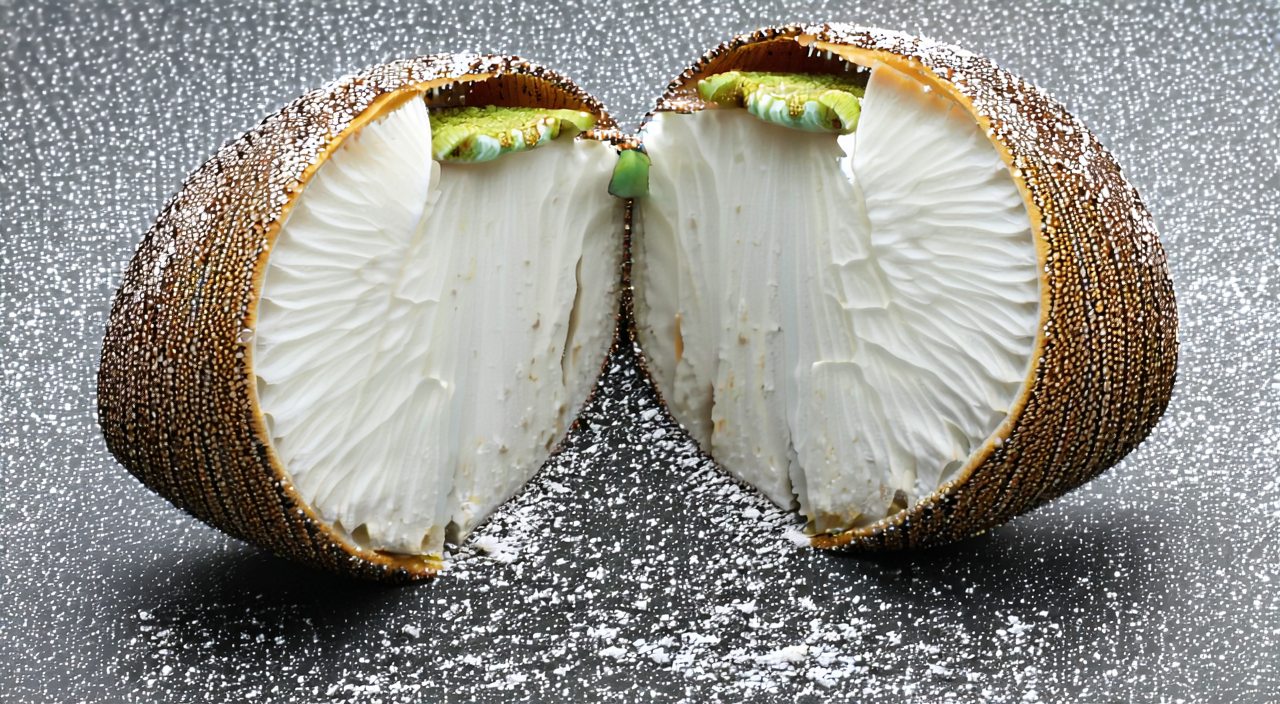
Before answering “what does a lotus seed look like,” we need to distinguish fresh lotus seeds from the dried medicinal material. Tender seeds peeled from fresh lotus pods have a light green to whitish seed coat and a crisp texture, and are typically used as food. In contrast, those used as medicinal herbs and stored long-term are mostly mature seeds that have been dried.
Dried lotus seeds are mostly oval or nearly spherical, about 1.2 to 1.8 cm long, with a yellowish-brown or light brown seed coat, often showing fine longitudinal lines and broader veins. After removing the seed coat, inside are two thick white cotyledons, firm in texture, with a starchy cross-section that reveals a fine powdery sensation when scratched with a fingernail. At the center of the kernel is a green embryo, which is commonly called the lotus plumule (seed heart). If you buy a lotus seed with the plumule removed, a slender hollow groove will be left in the middle.
By keeping these key points in mind—yellowish-brown seed coat, white kernel, central green embryo, and starchy cross-section—you can make a fairly accurate visual judgment of a whole medicinal lotus seed.
Medicinal Part of Lotus Seed: Processed Mature Seeds
From the botanical origin, lotus seeds come from the mature seeds of the lotus plant (Nelumbo nucifera) in the Nymphaeaceae family. After harvesting the lotus pods in autumn, the fruits are taken out, the hard shells are removed, and then further processing is carried out according to different needs.
Common forms of medicinal lotus seeds include: first, whole lotus seeds with seed coat and embryo intact; second, lotus seed meat obtained by removing the seed coat; third, lotus seed without the plumule; and fourth, the lotus plumule taken separately. When referring to the “medicinal part of lotus seed,” it usually means the mature seed itself, while the lotus plumule is often treated as a relatively independent medicinal part in herbal medicine.
These processed products differ greatly in their directions of use and should not be casually interchanged. Lotus seed without plumule tends more toward tonifying and replenishing, while the lotus plumule is more focused on clearing heart fire and calming the mind. Therefore, it is very important to be clear about which specific variety you have before purchasing or using.
How Does Traditional Chinese Medicine Understand the Actions of Lotus Seeds?
From the perspective of traditional Chinese medicine, lotus seed is sweet and astringent in flavor, neutral in nature, and enters the spleen, kidney, and heart meridians. It is most commonly understood in three directions—tonifying the spleen to stop diarrhea, benefiting the kidney to astringe essence, and nourishing the heart to calm the mind.
First, regarding the spleen and stomach. Spleen deficiency often leads to poor appetite, loose stools, or chronically unformed stools. Lotus seed, being sweet and neutral with astringency, can both tonify the spleen and astringe the intestines. For groups with spleen deficiency and dampness, it is often used as an auxiliary dietary ingredient or medicinal herb in relevant formulas. Second, in cases of insecure kidney qi, lotus seed can benefit the kidney and astringe essence. Traditional approaches often use it for conditions related to kidney deficiency failing to store, such as seminal emission, spermatorrhea, and excessive vaginal discharge. Third, for restlessness caused by deficiency of both heart and spleen, lotus seed, by nourishing the heart and benefiting the kidney and facilitating communication between the heart and kidney, may provide some help for people with difficulty falling asleep, excessive dreaming, or easy waking. However, it is not aimed at all types of sleep issues and cannot replace professional intervention.
These understandings are empirical summaries based on traditional theories and are not equivalent to pharmacological effects in modern medicine. Whether they are suitable for an individual’s situation needs to be comprehensively considered based on constitution, specific manifestations, and other factors.
Modern Research Focus on Lotus Seeds
In recent years, some studies have analyzed the chemical composition of lotus seeds, finding that mature lotus seeds contain starch, protein, various amino acids, as well as flavonoids, alkaloids, and other substances. Some in vitro experiments and animal studies suggest that certain components in lotus seeds may have potential in antioxidant effects, blood sugar regulation, and improving gut microbiota.
However, these findings are still mostly laboratory-level observations and cannot be directly extrapolated to mean that daily consumption of lotus seeds will necessarily yield the same health benefits. For those interested in a modern scientific perspective, these can be taken as clues for further understanding, not as promises of efficacy.
Lotus Seed, Lotus Plumule, and Gordon Euryale Seed: Three Easily Confused Items
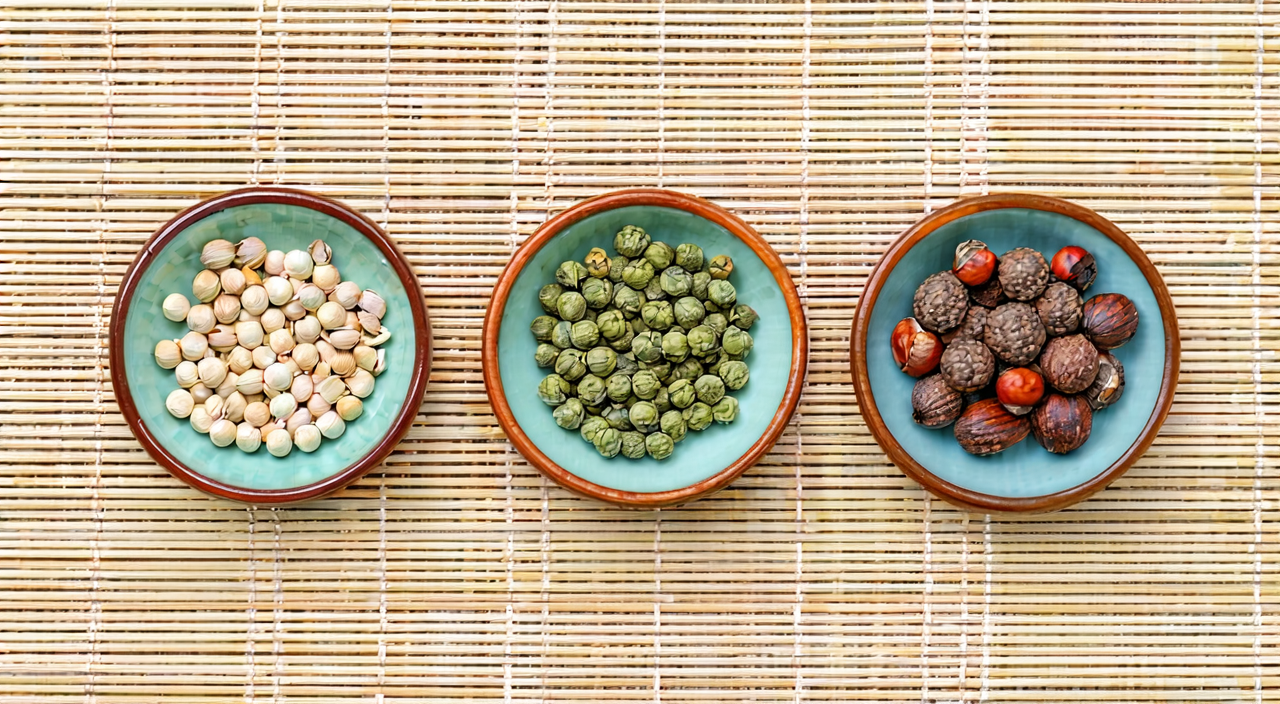
Many overseas users confuse lotus seeds with gordon euryale seeds, or treat lotus plumule and lotus seed as the same thing. In fact, there are quite obvious differences among the three.
The difference between lotus seed and lotus plumule is mainly in the medicinal part and direction of use. Lotus seed is the mature kernel (or seed with coat), whose traditional use leans toward tonifying and replenishing, being sweet, astringent, and neutral. Lotus plumule is the green embryo at the center of the seed, bitter in taste and cold in nature, mainly used to clear heart fire, relieve restlessness, and facilitate communication between the heart and kidney. It may be considered in cases of irritability, insomnia, or mouth and tongue sores. Therefore, lotus seed and lotus plumule cannot be arbitrarily substituted.
Although gordon euryale seed (qian shi) is similar to lotus seed and often classified as a food-medicine homology item for tonifying spleen and stopping diarrhea, its plant source is completely different. Gordon euryale seed is the mature kernel of Euryale ferox in the Nymphaeaceae family. It is round or hemispherical in shape, with a reddish-brown or yellowish-brown hard shell and white interior. Gordon euryale seed leans more toward astringing and securing, with more prominent features in eliminating dampness, stopping vaginal discharge, and astringing essence to arrest emissions. Compared with lotus seed, its tonifying strength is slightly weaker while its astringing strength is stronger. Whether to use lotus seed or gordon euryale seed is traditionally considered based on whether the constitution tends to be more deficient or more damp, and whether there is a need to also nourish the heart, among other directions.
Common Formulas Containing Lotus Seeds and Their Directions
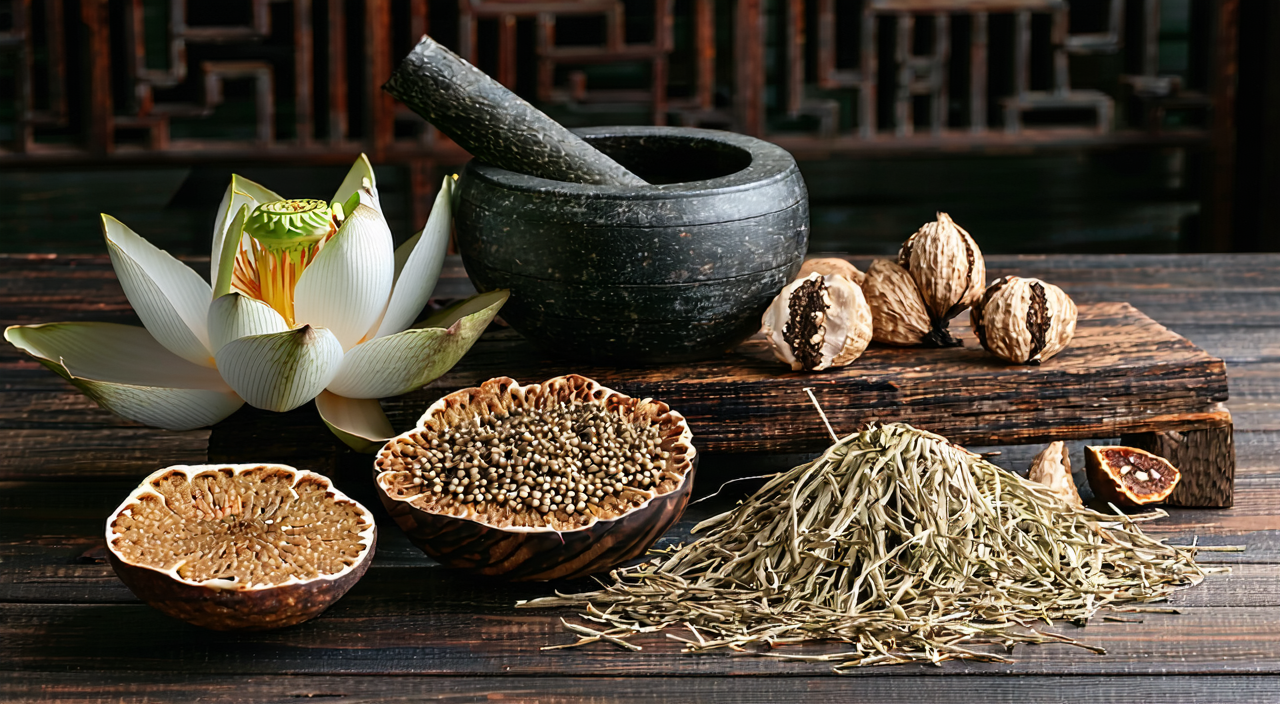
Lotus seed is rarely used alone; more often it appears in traditional compound formulas or pill and powder formulas. Here are a few common formulas containing lotus seeds, listed for directional understanding.
Shen Ling Bai Zhu San This is a traditional formula mainly consisting of ginseng, poria, atractylodes, Chinese yam, lotus seed, and others. It is commonly used for spleen deficiency with dampness, poor digestion, and loose stools. Lotus seed plays a role in tonifying the spleen and stopping diarrhea, working together with coix seed and lablab bean to achieve the effect of strengthening the spleen and draining dampness.
Si Shen Wan Si Shen Wan commonly uses psoralea, evodia, nutmeg, and schisandra. Some versions also add lotus seed or gordon euryale seed. It is used for spleen-kidney yang deficiency patterns causing early morning diarrhea, loose stools, sore lower back, and aversion to cold. Lotus seed strengthens the astringing action in such formulas.
Qing Xin Lian Zi Yin This is a formula combining clearing and tonifying, often containing lotus seed, scutellaria, ophiopogon, lycium bark, and others. Traditionally it is used for patterns of excess heart fire and qi-yin deficiency leading to scanty dark urine, irritability, dry mouth, and insomnia. Lotus seed and lotus plumule sometimes appear together in this formula, but their proportions must be strictly controlled.
Lian Zi Wan Lian Zi Wan has varied compositions. A common version uses lotus seed, dragon bone, oyster shell, Chinese yam, gordon euryale seed, and others, mainly for insecure kidney qi patterns causing seminal emission, spermatorrhea, and thin vaginal discharge.
The above formulas are only examples within the scope of traditional usage and are not guidance for individual cases. Whether and how to use them should consider multiple factors such as constitution, symptom characteristics, and availability of herbs, and priority should be given to the advice of professionals.
Precautions When Using Lotus Seeds
Lotus seed is neutral in nature and generally mild, but there are still some precautions worth noting; it should not be treated entirely like an ordinary snack.
First, people with significant constipation and abdominal bloating should be cautious. Lotus seed has an astringent nature, and lotus seed without the plumule possesses both tonifying and astringing effects, which can easily aggravate sluggish intestinal qi movement. Those with dry, hard stools or frequent bloating should reduce the dosage or consider combining it with moistening and qi-moving foods under professional guidance.
Second, those who need to pay attention to sugar metabolism should not overlook its carbohydrate content. Lotus seed has a high proportion of starch and will affect blood sugar levels after consumption. Whether dried or fresh, it should be counted as part of the day’s staple food replacement and calculated comprehensively, and should not be consumed casually in large amounts.
Third, the dosages of fresh lotus seeds and dried lotus seeds should not be confused. Fresh lotus seeds have high water content and a crisp, tender texture, and are usually eaten as a vegetable or snack. For medicinal use or in soups, dried products are generally the main form. There is no standard conversion between their dry and fresh weights, so they should not be casually interchanged.
Fourth, for infants, young children, and women during pregnancy and lactation, any medicinal-grade intake requires extra caution and should not be added on one’s own without fully understanding safety aspects.
Furthermore, if symptoms such as persistent severe diarrhea, bloody stools, black stools, recurrent abdominal pain, or significant weight loss occur, one should seek medical attention promptly to identify the cause, rather than relying on a single medicinal food material to address the root problem.
Summary
As a mature seed from the food-medicine homology tradition, lotus seed has clear visual identification features, and the distinctions between its medicinal parts, with or without plumule, and the lotus plumule are relatively well-defined. Traditional Chinese medicine mainly understands it from the angles of tonifying the spleen to stop diarrhea, benefiting the kidney to astringe essence, and nourishing the heart to calm the mind. Formulas containing lotus seed, such as Shen Ling Bai Zhu San and Si Shen Wan, mostly rely on overall synergy to exert their directional effects. In daily use, careful selection should be made based on constitution and specific conditions. Groups with constipation and bloating, those who need to manage blood sugar, and people in different physiological stages should especially avoid casual mixing or substitution. The content of this article is for informational and educational purposes only and cannot replace professional diagnosis or treatment advice.