
What Is Niu Xi (Achyranthes Root)? Medicinal Part, Identification, and Common Formulas
Among traditional Chinese medicinal materials, Niu Xi is a relatively common botanical drug. In everyday use, “Niu Xi” usually refers to Huai Niu Xi, the dried root of the amaranth family plant Achyranthes bidentata, not Cyathula root (Chuan Niu Xi). Although Huai Niu Xi and Chuan Niu Xi have similar names, they differ in origin, macroscopic characteristics, and traditional uses. This article provides overseas readers interested in Niu Xi with a clear reference from the perspectives of external appearance, medicinal part, traditional Chinese medicine understanding, modern research directions, differences between the two, and common formulas.
What does Niu Xi look like? How to identify it?
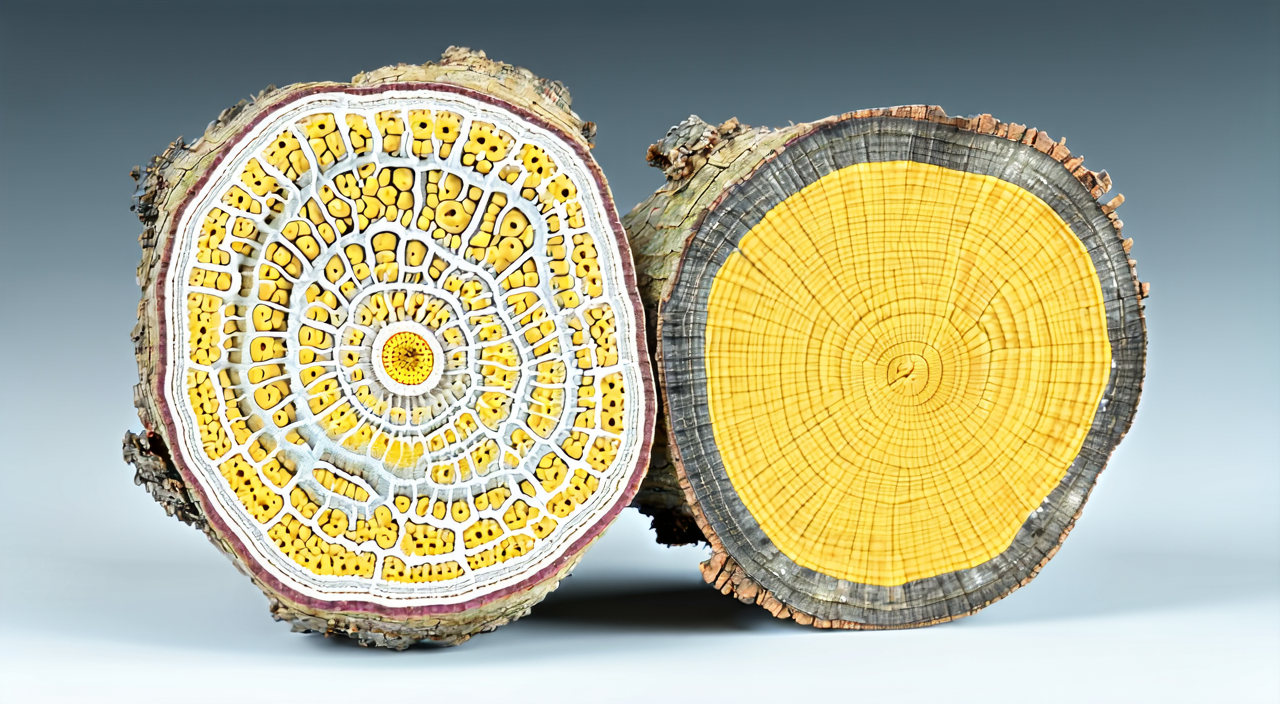
The medicinal material of Niu Xi is slender and cylindrical, sometimes slightly curved, thicker at the upper end and gradually tapering downward, generally 15–50 cm long and 0.4–1 cm in diameter. The surface is grayish-yellow or pale brown, with slightly twisted fine longitudinal wrinkles, transverse elongated lenticels, and sparse fine root scars; sometimes small pits or residual branch root scars may be seen. The upper end often retains traces of the stem base. The texture is hard and brittle, becoming somewhat tougher after absorbing moisture but still easy to break. The fractured surface is flat, yellowish-white to pale brown, showing yellowish-white punctate vascular bundles, traditionally called “tendon and vessel points,” arranged intermittently in 2–4 rings. The odor is faint, and the taste is slightly sweet and somewhat bitter-astringent. When identifying, focus on the uniformity of root thickness, longitudinal wrinkles on the surface, fracture surface color, and punctate markings. These features can provide a preliminary distinction from the similar-looking Chuan Niu Xi. By observing, touching, breaking, and tasting, one can quickly develop a basic impression of Huai Niu Xi decoction pieces.
What is the medicinal part of Niu Xi?
The medicinal part of Niu Xi is the dried root of the plant. It is harvested in autumn when the stems and leaves wither, after removing the aerial parts, fibrous roots, and silt; it is washed clean and then dried in the sun or at low temperature, yielding raw Niu Xi. In some regions, it is also processed by stir-frying with rice wine: Niu Xi segments are mixed evenly with yellow rice wine, covered and moistened, then stir-fried over gentle heat until dry to obtain “wine-processed Niu Xi.” Traditionally, wine processing is thought to enhance the action of invigorating blood and freeing the channels, while reducing irritation to the stomach and intestines. The Niu Xi decoction pieces seen in pharmacies are mostly transversely or obliquely cut, roughly round thick slices, and the cut surface likewise shows punctate tendon and vessel points. When selecting and using Niu Xi products overseas, it is advisable to confirm the source and processing of the medicinal material and to take personal constitution and professional judgment into account, rather than deciding solely on the basis of appearance.
How Traditional Chinese Medicine Understands Niu Xi
Traditional Chinese medicine often understands Niu Xi through the perspectives of “dispelling stasis and freeing menstruation, supplementing the liver and kidneys, strengthening sinews and bones, promoting urination and relieving strangury, and guiding blood downward.” For dispelling stasis and freeing menstruation, Niu Xi may be considered in approaches to regulating irregular menstruation and postpartum stasis-related abdominal pain caused by blood stasis. For supplementing the liver and kidneys and strengthening sinews and bones, it mainly addresses aching and weakness of the lower back and knees and lower-limb weakness due to liver-kidney insufficiency, and is often combined with herbs such as Eucommia bark and mistletoe to reinforce its tonifying effect on the lower burner. For promoting urination and relieving strangury, it may serve as an adjunct when damp-heat pouring downward causes dribbling, difficult, and painful urination, especially in strangury accompanied by blood stasis. Guiding blood downward is a distinctive understanding of Niu Xi: for headache, dizziness, and swollen painful gums caused by blood heat rushing upward or liver yang rising, ancient physicians often used Niu Xi together with agents such as ochre, fossilized bone, and oyster shell, hoping to guide the surging qi and blood downward. These understandings come from long-term practical experience, but each direction of use requires comprehensive judgment based on specific constitution and symptoms and should not be applied mechanically.
What Are the Modern Research Interests in Niu Xi?
Modern research on Niu Xi has mainly focused on constituents such as ecdysterone, Achyranthes polysaccharides, and oleanolic acid-type compounds. In vitro experiments and some animal studies suggest that these constituents may affect inflammatory responses, bone metabolism, and immune regulation; some studies have also explored the protective effects of Niu Xi extracts on articular cartilage in arthritis models. However, most of this evidence currently remains at the laboratory or small-sample observation stage and cannot be equated with the same effects in daily use. Therefore, this information is best regarded as background knowledge for further understanding, not as a promise of specific health outcomes. If one wishes to use Niu Xi for daily wellness, it is still necessary to seek advice from professionals based on a good understanding of one’s own condition.
Differences Between Huai Niu Xi and Chuan Niu Xi
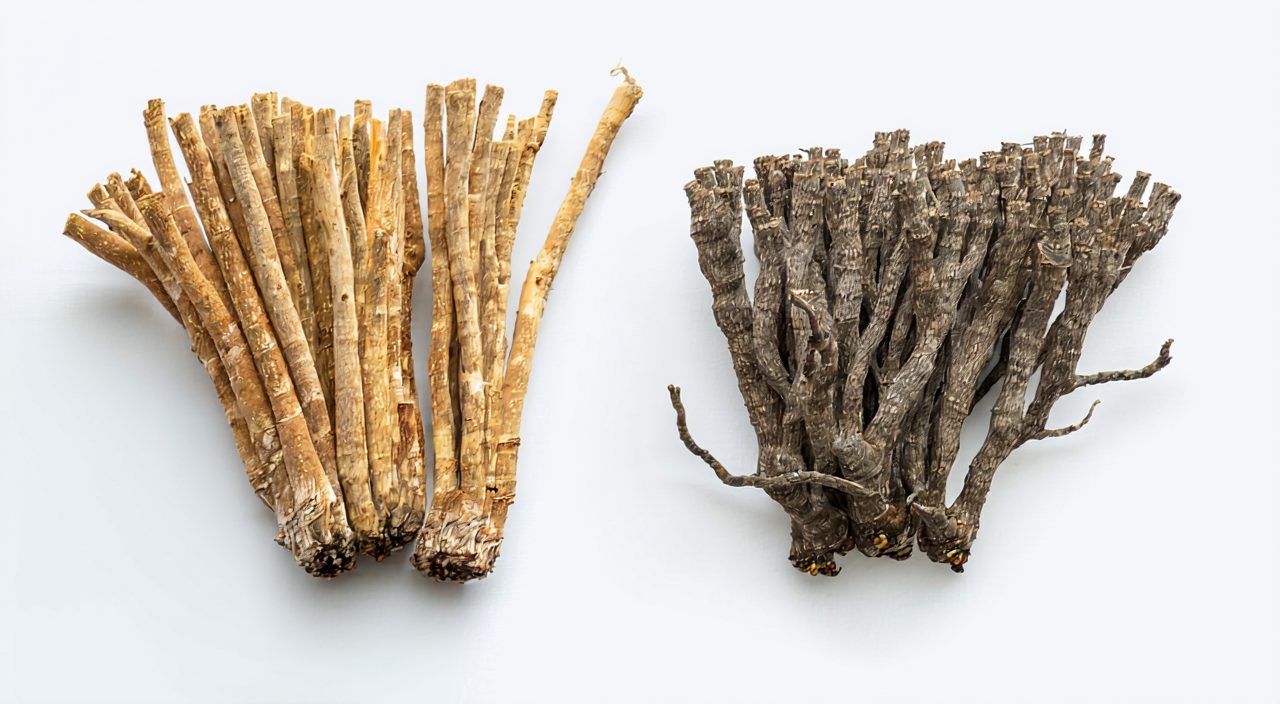
Although both Huai Niu Xi and Chuan Niu Xi share the name “Niu Xi,” their original plants are different: Huai Niu Xi comes from the amaranth family plant Achyranthes bidentata, while Chuan Niu Xi comes from the dried root of Cyathula officinalis, a plant in the same family. In appearance, Huai Niu Xi is generally more slender, with a grayish-yellow surface, a hard and brittle texture, a yellowish-white fractured surface, and vascular bundles arranged as dots; Chuan Niu Xi is often nearly cylindrical and slightly twisted, with a brownish-yellow or grayish-brown surface, a tough and pliable texture that is not easily broken, several rings of concentric lines on the fractured surface, and larger, more distinct tendon and vessel points. In traditional applications, Huai Niu Xi leans toward supplementing the liver and kidneys and strengthening sinews and bones, while Chuan Niu Xi leans toward invigorating blood and dispelling stasis, dispelling wind and removing dampness, and is more often used for lower-limb joint dysfunction and painful obstruction. Although the two may be interchangeable in certain formulas, the choice should still be based on constitution and therapeutic direction, and it is advisable to use them under the guidance of someone familiar with the characteristics of these medicinal materials.
Common Formulas That Contain Niu Xi
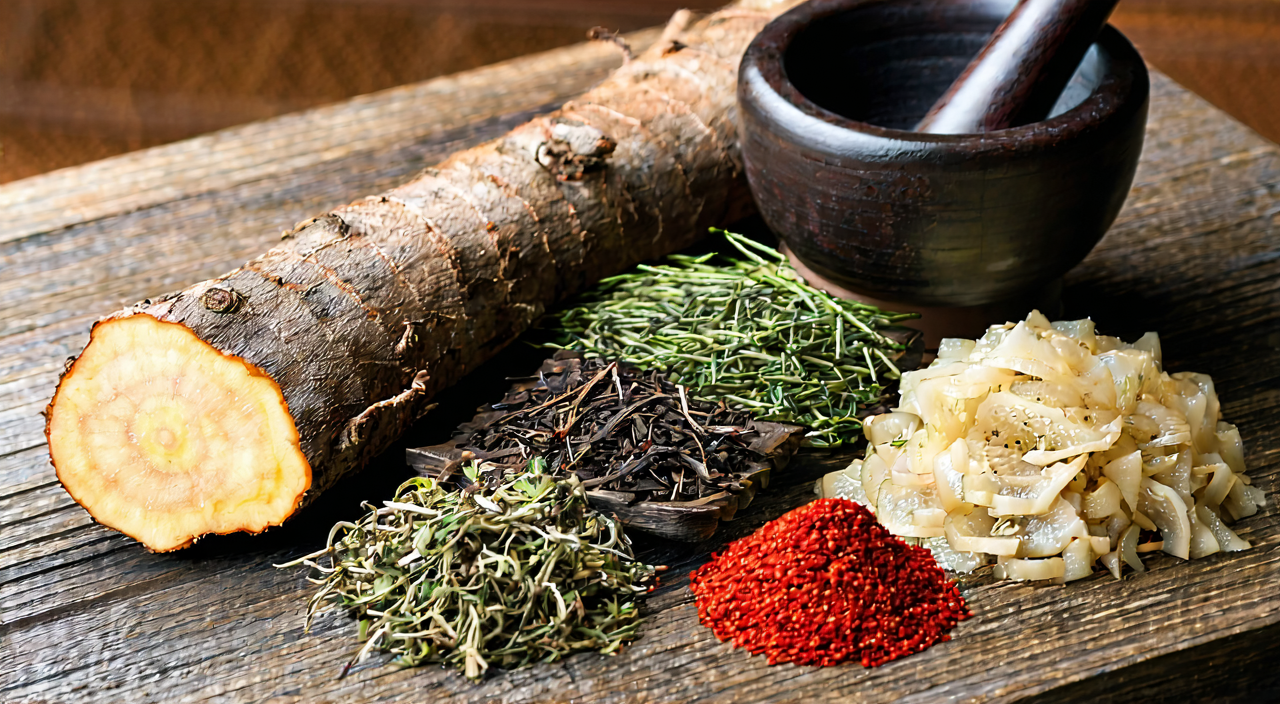
Formulas containing Niu Xi are not uncommon. The following are several common traditional formulas, provided only for educational understanding and not as treatment recommendations.
Du Huo Ji Sheng Tang (Angelica Pubescens and Mistletoe Decoction): From “Important Formulas Worth a Thousand Gold Pieces for Emergencies” (Bei Ji Qian Jin Yao Fang), it is often used for lower back and knee cold pain and limited joint flexion-extension caused by liver-kidney depletion and wind-cold-damp painful obstruction. In this formula, Niu Xi is combined with Eucommia bark and mistletoe, mainly playing an auxiliary role in supplementing the liver and kidneys, strengthening sinews and bones, and guiding blood downward. The overall formula intent is to support the upright and dispel pathogenic factors.
Xue Fu Zhu Yu Tang (Blood Stasis Expelling Decoction): Recorded in “Corrections on Errors in Medical Works” (Yi Lin Gai Cuo), it is a representative formula for invigorating blood and dispelling stasis. It consists of peach kernel, safflower, Chinese angelica root, raw rehmannia root, Niu Xi, and other herbs. Niu Xi is used to guide stagnant blood downward. Traditionally, this formula is often considered for chest oppression, chest pain, or stubborn headache caused by blood stasis in the chest and impeded qi movement. However, because its blood-invigorating action is relatively strong, bleeding tendency should be carefully evaluated before use.
Zhen Gan Xi Feng Tang (Liver-Settling and Wind-Extinguishing Decoction): From “Records of Chinese Medicine with Reference to Western Medicine” (Yi Xue Zhong Zhong Can Xi Lu), it belongs to formulas that settle the liver, subdue yang, extinguish wind, and direct rebellious qi downward. In this formula, Niu Xi guides blood downward, combined with ochre, fossilized bone, oyster shell, and others. It is traditionally considered suitable for dizziness, hot pain in the brain, and a flushed complexion caused by liver yang rising and qi and blood rushing upward. Those with low blood pressure or qi deficiency sinking should exercise particular caution.
Yu Nu Jian (Jade Woman Decoction): Included in “Jingyue’s Complete Works” (Jing Yue Quan Shu), it clears stomach fire and nourishes kidney yin, and is often used for toothache, bleeding gums, feverish restlessness, and thirst caused by stomach heat with yin deficiency. In this formula, Niu Xi mainly guides heat downward, so that fire flaring upward can be directed downward. However, it is generally unsuitable if the spleen and stomach are deficient-cold or if stools are loose.
The above formulas each have their own appropriate directions. Actual application requires consideration of individual differences, specific presentations, and combinations, and must be determined by qualified professionals. Do not self-prescribe or use these formulas on your own. If you need further understanding of these formulas, refer to the corresponding detailed explanations.
Precautions for Using Niu Xi
Although Niu Xi is a common medicinal herb, it is not suitable for everyone. Particular attention is needed in the following situations: during pregnancy, because Niu Xi has blood-invigorating properties, it is traditionally believed to possibly excite the uterus and should be avoided; in heavy menstrual bleeding or when menstrual flow is excessive, blood-invigorating substances may worsen bleeding, so use should be paused or done with caution; those with bleeding tendencies (such as thrombocytopenia or coagulation abnormalities) or those taking anticoagulant medications should also avoid it. In addition, in what traditional Chinese medicine calls “sinking of middle qi,” such as chronic diarrhea, rectal prolapse, uterine prolapse, or gastroptosis, the downward-moving medicinal tendency of Niu Xi may aggravate the sinking. If you are considering using Niu Xi for wellness and any of the above conditions apply, or if you have serious cardiovascular or cerebrovascular disease or liver or kidney dysfunction, consult a physician or TCM professional first. If discomfort occurs after use, discontinue promptly and seek medical attention.
Summary
Niu Xi is a commonly used root-class medicinal material in traditional Chinese medicine, usually referring to the dried root of Huai Niu Xi. Its slender cylindrical shape, grayish-yellow fractured surface, and punctate tendon and vessel points are typical identification features. Huai Niu Xi and Chuan Niu Xi have different origins, traditionally leaning toward supplementing the liver and kidneys and strengthening sinews and bones, and invigorating blood and freeing menstruation, respectively. In formulas, Niu Xi is often used as part of guiding blood downward or as an auxiliary tonic, but because its medicinal tendency is downward, pregnancy, heavy menstruation, and sinking of middle qi require particular caution. The content of this article is for educational reference only; any use should be carried out on the premise of understanding one’s own constitution and receiving professional guidance.