
What Is San Qi? Medicinal Parts, Identification, and Common Formulas
Many people interested in traditional Chinese herbal medicine search “what is San Qi” not just for a definition, but to understand its actual appearance, which part is used, how to distinguish it from similar herbs, and how it appears in common formulas. San Qi (Panax notoginseng) is a plant in the Araliaceae family, with its root and rhizome used medicinally, primarily produced in Yunnan, Guangxi, and other regions. One common explanation for the name “San Qi” is that it requires three to seven years of growth before harvesting; another says its leaves typically number three to seven. This article addresses these common questions and provides an objective, balanced overview.
What Does San Qi Look Like? How to Identify It?
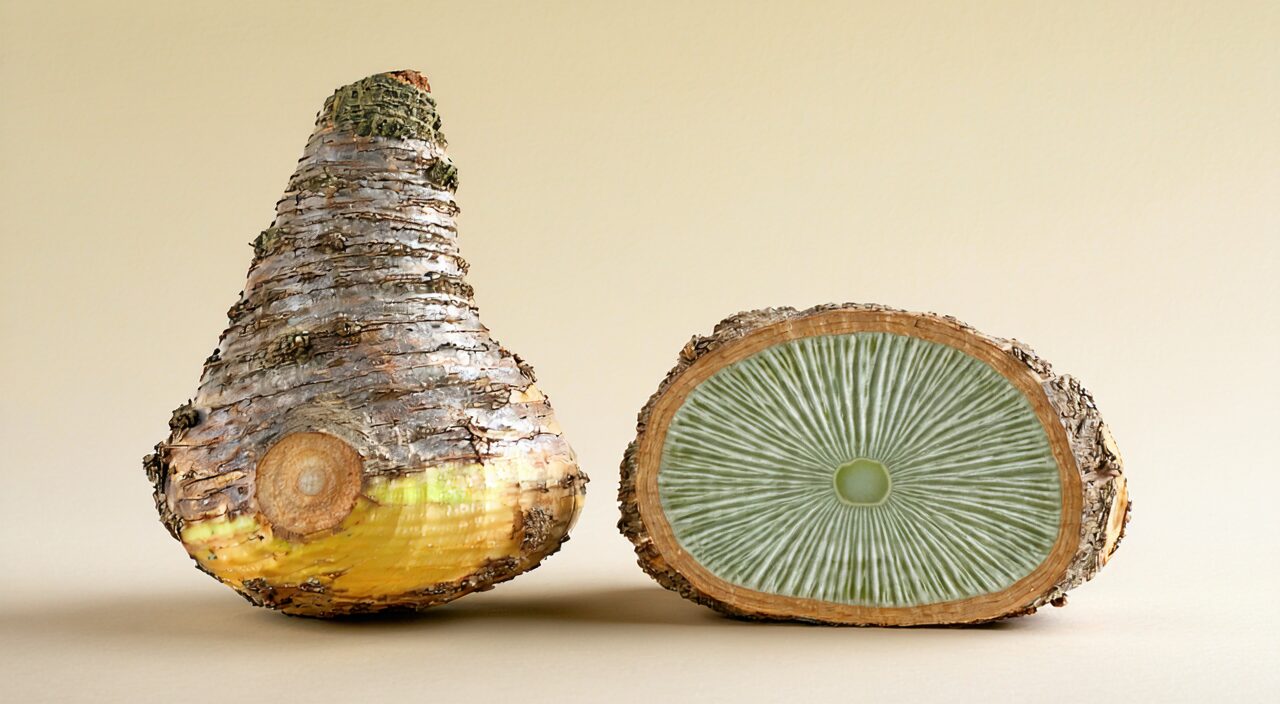
Understanding the appearance of San Qi is the first step in safely handling this herb. You can make a preliminary judgment based on the following aspects:
- Shape and Size: Quality San Qi is typically conical or cylindrical, 1–6 cm long, 1–4 cm in diameter.
- Surface Characteristics: The surface is mostly grayish-yellow or grayish-brown, with bumpy protrusions and intermittent longitudinal wrinkles. Around the stem scar at the top there are often distinct wart-like bumps, traditionally called “lion’s head.”
- Texture: San Qi is heavy, firm, and difficult to break by hand. It was traditionally described as “copper skin, iron bones,” meaning a coppery surface and iron-like hardness.
- Cross Section: When cut, the cross section of genuine San Qi is grayish-green, yellowish-green, or grayish-yellow. The bark and wood portions can usually be separated; the wood is lighter in color and shows radial striations. If the cross section appears white, mealy, or horny, be cautious—it may be an adulterant made from Madeira vine (Anredera cordifolia) or zedoary (Curcuma species).
- Taste: Place a small piece in your mouth and chew slowly. Genuine San Qi tastes slightly bitter at first with a sweet aftertaste, while counterfeit products often cause numbness or are bland.
These straightforward identification points can help you make a preliminary judgment without professional equipment.
What Is the Medicinal Part of San Qi?
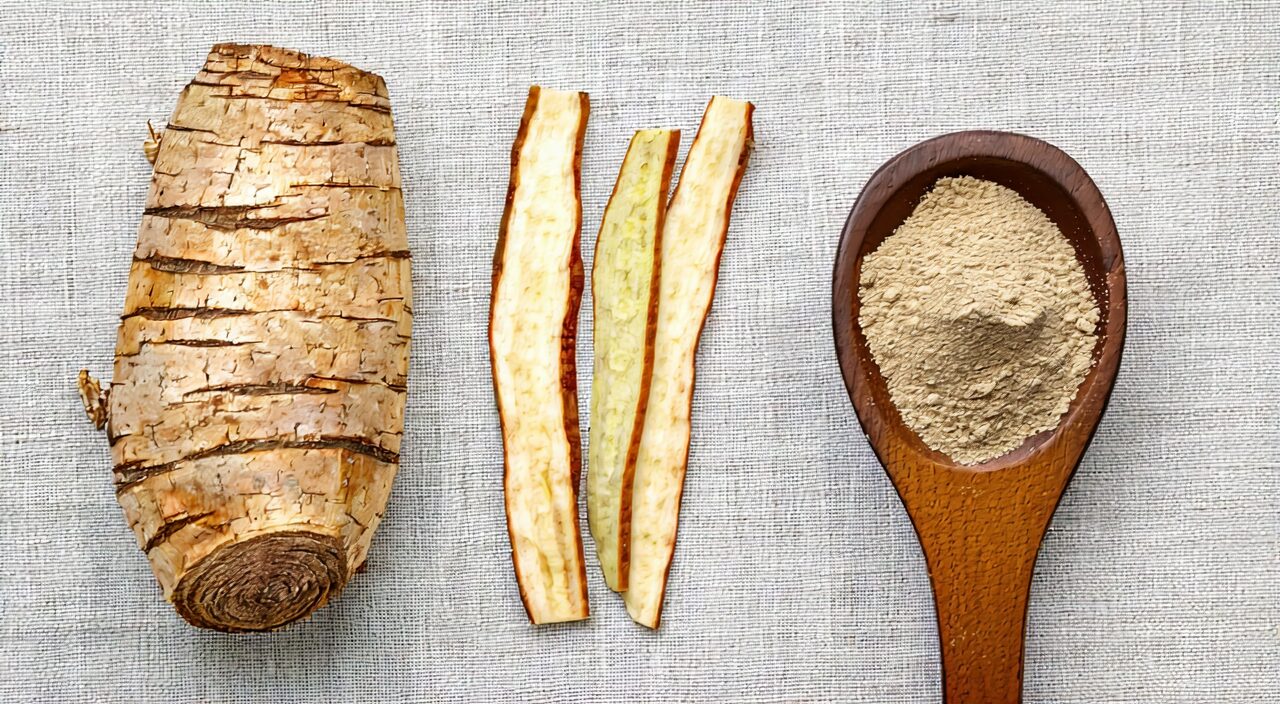
The medicinal part of San Qi is clearly defined as the dried root and rhizome of Panax notoginseng, not the aerial stems, leaves, or flowers.
Harvest time directly affects quality. “Spring San Qi” (Chun Qi), dug before flowering in autumn, is generally of better quality because nutrients accumulate in the root. “Winter San Qi” (Dong Qi), harvested in winter, is considered inferior. After harvest, the fibrous roots, stem bases, and soil are removed, and the roots are repeatedly sun-dried or dried at low temperature to become what is commonly sold as “San Qi heads” (San Qi Tou).
The main forms available on the market are three:
- Whole San Qi: Graded by head count—e.g., 20-head, 30-head—the smaller the number, the larger the individual root, and usually the higher the price.
- Sliced San Qi: Cut pieces prepared from cleaned San Qi, convenient for decoction or steeping in water.
- San Qi Powder: Made by grinding cleaned San Qi into a fine powder. It can be used externally as a paste or taken internally as a supplement under the guidance of a TCM practitioner.
It is important to note that regardless of the form you choose, you should decide if it is suitable based on your individual circumstances.
How Does Traditional Chinese Medicine Understand San Qi?
Traditional Chinese medicine (TCM) understands San Qi mainly through its nature, taste, meridian tropism, and actions. According to textbooks, it is warm in nature, sweet and slightly bitter in taste, and enters the liver and stomach meridians. Its two core functions are to disperse stasis and stop bleeding, and to reduce swelling and relieve pain.
In ancient herbal texts, San Qi was commonly used for conditions such as coughing up blood, vomiting blood, nosebleeds, blood in the stool, and uterine bleeding, as well as traumatic injuries and stabbing chest or abdominal pain.
What is particularly unique is that TCM traditionally considers San Qi capable of both stopping bleeding and invigorating blood to disperse stasis, hence the saying “it stops bleeding without causing blood stasis.” However, this does not mean San Qi is suitable for all types of bleeding. If bleeding is due to reckless movement of hot blood or yin deficiency causing fire hyperactivity without significant stasis, caution is needed. Therefore, clinical use of San Qi still emphasizes differentiating the constitution and pathogenesis; it should not be taken casually as a universal remedy.
What Components and Effects of San Qi Are Studied in Modern Research?
Modern phytochemical research has isolated multiple active constituents from San Qi, most notably Panax notoginseng saponins (PNS). It also contains dencichine, flavonoids, polysaccharides, and other substances.
Under laboratory conditions, studies have observed that PNS may have a regulatory tendency on platelet aggregation. Some animal experiments have shown signs of improving local microcirculation and reducing swelling, which provides indirect references for the traditional stasis-dispersing uses.
However, it must be clearly distinguished that these findings are mostly at the cellular or animal experimental stage, with small sample sizes, and are still far from mature clinical treatment protocols. Therefore, experimental data should not be directly interpreted as therapeutic conclusions for the human body, nor does it mean that taking San Qi products will definitely produce corresponding effects. Current research serves more as a basis for further exploration rather than sufficient grounds for self-medication.
How Does San Qi Differ from Similar Herbs?
San Qi is most easily confused with Dan Shen (Salvia miltiorrhiza) and Tu San Qi. But their origins, traditional uses, and safety profiles differ greatly. First, clarify that “Tian Qi” is simply an alias for San Qi—there is no substantive difference. The table below summarizes the main differences among San Qi, Dan Shen, and Tu San Qi for easy comparison.
| Herb | Source | Characteristics | Traditional Focus | Safety Note |
|---|---|---|---|---|
| San Qi | Panax notoginseng root and rhizome (Araliaceae) | Conical, grayish-yellow or grayish-brown surface, heavy and firm, cross section grayish-green with radial striations | Warm; disperses stasis and stops bleeding, reduces swelling and relieves pain | Beware of confusion with Tu San Qi |
| Dan Shen | Salvia miltiorrhiza dried root and rhizome (Lamiaceae) | Surface brownish-red or dark brownish-red, loose texture, cross section shows cracks | Slightly cold; focuses on invigorating blood and regulating menstruation, dispelling stasis and relieving pain, clearing the heart and calming the mind | Use with other blood-activating herbs requires professional assessment |
| Tu San Qi | Various species such as Gynura japonica (Asteraceae) or Sedum aizoon (Crassulaceae) | Leaves broad with obvious serrated edges, flowers often yellow or white, root shape varies widely | Used in some regional folk practices, but not the same species as San Qi | Some species contain pyrrolizidine alkaloids; misuse can cause hepatic sinusoidal obstruction syndrome. Strictly forbidden as a substitute for San Qi |
Whether from the perspective of visual identification or safe use, San Qi and Tu San Qi must be strictly separated and never treated as interchangeable.
Which Formulas Use San Qi?
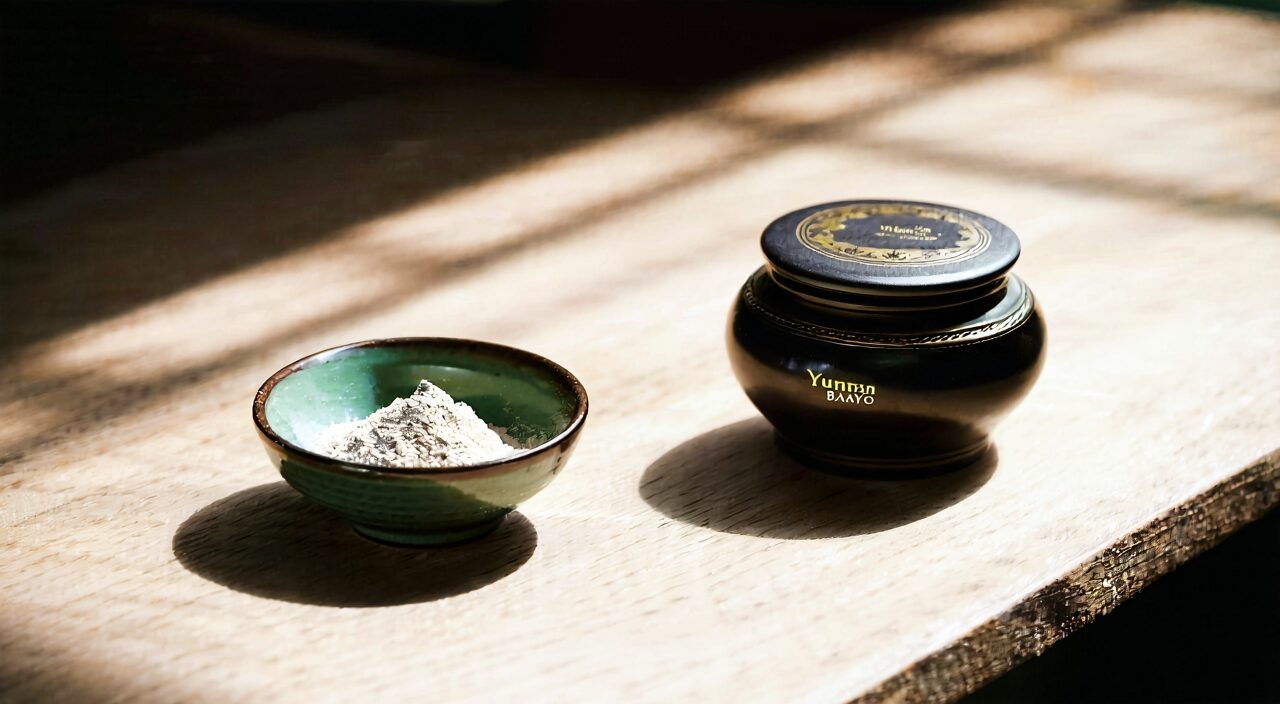
San Qi can be taken alone as a powder or used as an important ingredient in various traditional patent medicines. Below are a few common forms, accompanied by necessary risk warnings.
- San Qi Powder / San Qi Tablets: The most basic forms, traditionally used for traumatic injuries and bleeding. The specific dosage and administration should be determined by a professional based on the condition; long-term self-administration is not recommended.
- San Qi Shang Yao Pian (San Qi Trauma Tablets): Contains San Qi, Caowu (Aconitum kusnezoffii), Xueshangyizhihao (Aconitum brachypodum), and other herbs. Traditionally used to alleviate acute sprains, contusions, and joint pain. Because the formula includes toxic ingredients, it must be used strictly according to the instructions and under the guidance of a physician or pharmacist; never increase the dose on your own.
- Yunnan Baiyao: A classic empirical formula with San Qi as a key ingredient, commonly used externally or internally for bleeding, blood stasis, swelling, and pain. However, Yunnan Baiyao is not suitable for everyone; it still requires comprehensive judgment based on specific symptoms, constitution, product instructions, and professional advice.
This means that even widely known formulas cannot be directly applied to every individual.
What Precautions Should Be Taken When Using San Qi?
- Never use Tu San Qi as a substitute for San Qi. If you encounter products of unknown origin or suspicious appearance, it’s better to avoid them than risk irreversible liver damage caused by Tu San Qi.
- Caution is needed if you are taking anticoagulant or antiplatelet drugs. If you are using warfarin, aspirin, clopidogrel, or similar medications, or if you have a bleeding tendency such as thrombocytopenia or hemophilia, you must consult a physician before using San Qi to assess bleeding risk.
- Pregnant women and those with heavy menstrual bleeding without signs of stasis should generally avoid internal use of San Qi.
- Pay attention to skin reactions even with external use. Even when applying San Qi powder externally as a paste, limit the duration and frequency, and stop immediately if skin discomfort occurs.
- Follow professional advice. San Qi is not an ordinary food. Even for common products like San Qi powder or tablets, it is recommended to read the instructions first and seek a TCM practitioner’s or pharmacist’s professional advice before deciding whether and how to use it in a way that suits you.
Summary
For overseas Chinese readers, understanding “what is San Qi” involves more than just a name—it means knowing its real appearance, the correct medicinal part, and common misconceptions. San Qi holds a unique place among traditional stasis-dispersing and hemostatic herbs, but extra caution is needed to avoid confusion with Tu San Qi, and to watch for bleeding risks and drug interactions. This article serves only as a TCM informational reference and cannot replace personalized professional judgment. If you have long-term or complex health concerns, please seek help from a licensed healthcare provider.