
What Is Chinese Yam? Medicinal Parts, Identification, and Common Formulas
Many people have heard of Chinese yam. It appears in vegetable markets and is frequently written into herbal prescriptions. In traditional Chinese medicine (TCM), Chinese yam is a genuine, gentle tonic. For those who want to understand it, the first steps are to know what it looks like, which part is used medicinally, and how it differs from the “edible Chinese yam” we often talk about.
What does Chinese yam look like? How to identify it?
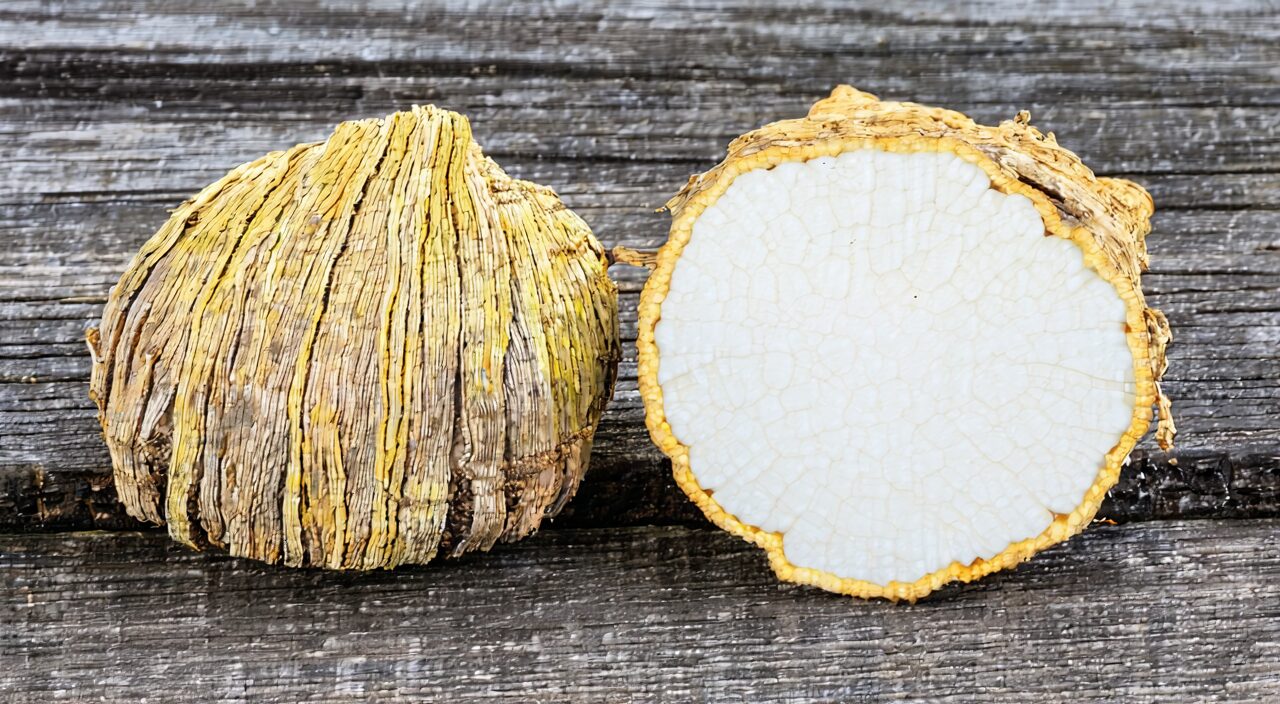
Medicinal Chinese yam usually refers to the dried tuber of the Dioscorea opposita plant. In herb markets, it commonly appears as cylindrical strips, sometimes slightly flattened or curved, generally 15–30 cm long and about 1.5–6 cm in diameter.
Based on processing, two main forms are seen: “unprocessed Chinese yam” (mao shan yao) has a yellowish-white or pale yellow surface with fine longitudinal wrinkles and sometimes residual rootlet marks; it is relatively hard. “Polished Chinese yam” (guang shan yao) undergoes further rounding and trimming, resulting in a smoother surface, cylindrical shape, flat ends, and a whiter appearance.
When broken or cut, the cross-section is white or pale yellowish-white and rich in starch. Touching the cut surface gives a fine, powdery feel, and tiny shiny granules may be visible. Fresh Chinese yam exudes obvious mucilage; dried slices become less sticky but still produce a slippery liquid when boiled or soaked in water.
What is the medicinal part of Chinese yam?
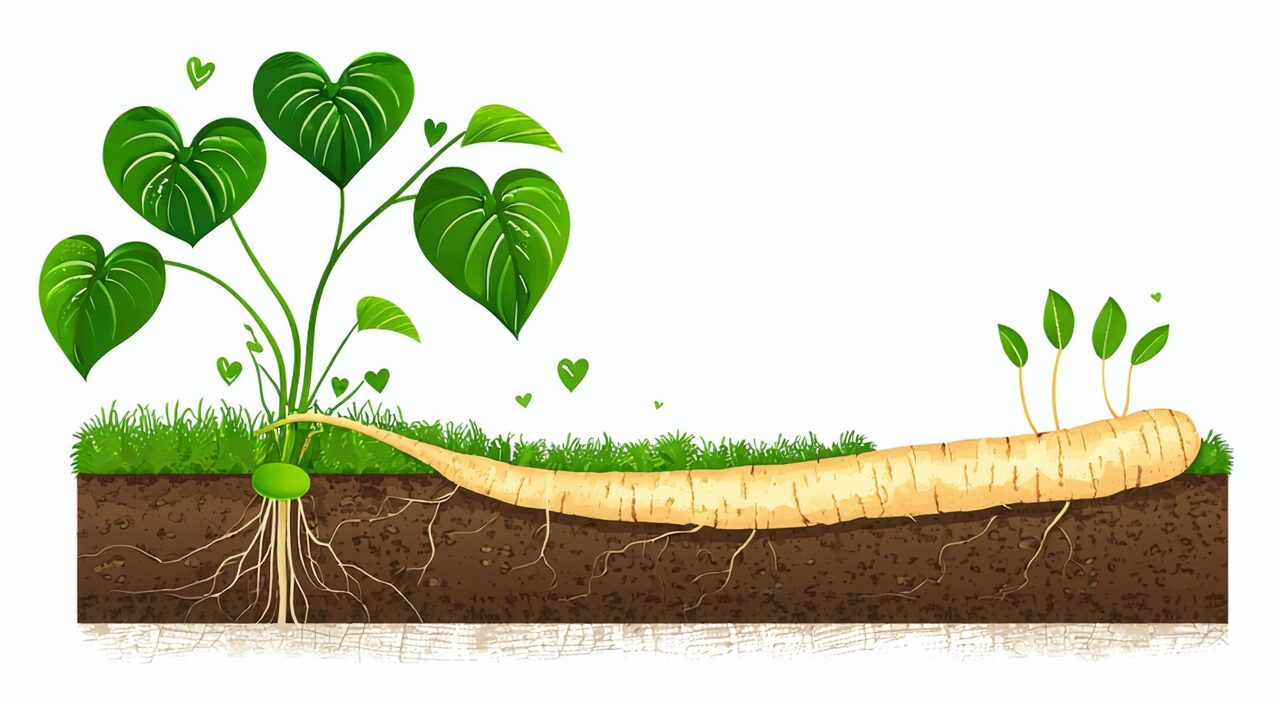
The medicinal part is its underground tuber. After the stems and leaves wither in autumn or winter, the tubers are harvested, the root heads and outer skin are removed, and they are dried. Depending on the processing refinement, they become the aforementioned unprocessed or polished Chinese yam. In prepared slices, Chinese yam is often cut into round or oblique slices of even thickness; the cut surface also displays white, starchy characteristics.
Note that pharmacy-dispensed slices and everyday fresh Chinese yam are not identical. Edible fresh yam has a higher water content and emphasizes flavor and texture, while medicinal yam is valued for dry storage and processing that preserves its inherent medicinal properties. Traditionally, Huai yam from regions like Henan is preferred as a genuine medicinal material.
How does TCM view Chinese yam?
In TCM theory, Chinese yam is classified as neutral in nature and sweet in flavor, mainly associated with the spleen, lung, and kidney meridians. Traditional physicians did not assess it from a nutritional perspective but recognized its “tonifying and astringent” properties.
On one hand, it is considered helpful for tonifying the spleen and stomach. For presentations such as spleen-stomach weakness, poor appetite, and easy fatigue, Chinese yam is often included to restore transformation and transportation functions. On the other hand, it generates fluids and benefits the lungs, frequently used as supportive care for lung qi deficiency, tendency for dry cough, or weak voice. It also has a traditional application of tonifying the kidney and binding essence, commonly appearing in formulas addressing kidney-deficiency conditions like soreness of the lower back and knees, seminal emission, or frequent urination.
Because Chinese yam is mild, not warming or drying, and easy to tonify without causing stagnation, practitioners throughout history often used it when a slow, gentle supplementation was needed.
What components and effects do modern studies focus on?
Modern compositional studies show that Chinese yam contains abundant mucoprotein, dioscin, mannan, starch, amino acids, and various trace elements. These constitute the material basis for its starchy texture and smooth mouthfeel.
In experimental research, some scholars observed that Chinese yam polysaccharides may have a protective tendency on the digestive tract mucosa and can regulate gut microbiota to a certain degree. Some animal experiments also found that yam components may assist in blood sugar regulation, but this is distinct from direct hypoglycemic treatment in humans. Most current studies remain at the laboratory or animal stage, and there is still a gap between such findings and everyday human consumption effects. Therefore, experimental conclusions should not be directly equated with clinical therapeutic claims.
How is Chinese yam different from similar medicinal herbs?
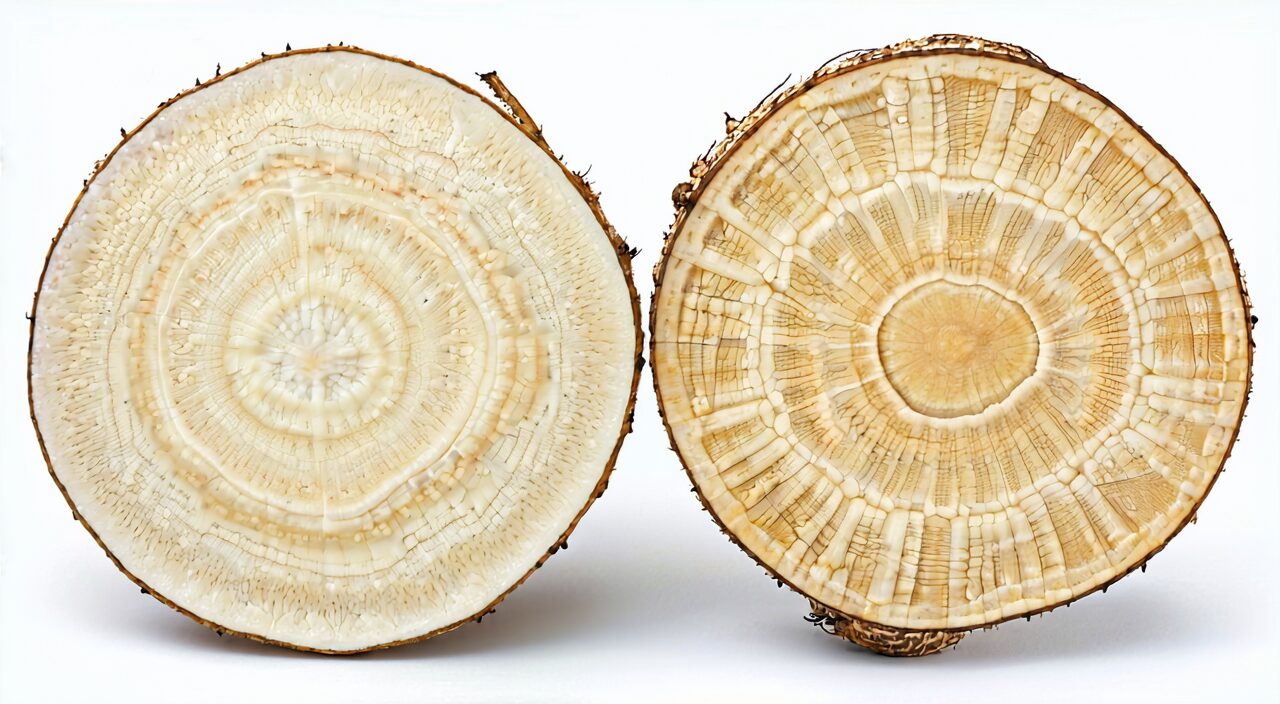
Chinese yam looks somewhat similar to another commonly used herb, Tianhuafen (Trichosanthes root), which can easily cause confusion, especially for those unfamiliar with medicinal materials. However, their origins, medicinal parts, and applications clearly differ.
Tianhuafen is not pollen; it is the dried root of Trichosanthes kirilowii or Trichosanthes rosthornii. Although also roughly cylindrical, its surface is mostly yellowish-white or pale brownish-yellow. The cross-section is starchy but often more fibrous, and a transverse cut reveals small brownish-yellow holes arranged in a radial pattern—a feature generally absent in Chinese yam.
In traditional use, Tianhuafen leans toward clearing heat and generating fluids, reducing swelling and expelling pus, commonly used for febrile diseases with thirst, lung-heat dry cough, and sores. Its overall direction is clearing and draining. Chinese yam, in contrast, is primarily tonifying, focusing on supplementing qi and yin of the spleen, lung, and kidney. Therefore, despite a similar shape, they cannot substitute for each other. When purchasing or using, if in doubt, it is best to combine professional advice and careful identification.
Which formulas contain Chinese yam?
In TCM formulas, Chinese yam often appears as an adjunct or assistant herb, gently supporting the entire prescription. Several classic formulas containing Chinese yam can help us understand its role.
Liu Wei Di Huang Wan (Six-Ingredient Rehmannia Pill) is a widely known basic yin-tonifying formula composed of prepared rehmannia, cornus, Chinese yam, moutan, poria, and alisma. Cornus and Chinese yam assist rehmannia in the “triple tonification” of liver, spleen, and kidney; here, Chinese yam mainly cares for the intersection of spleen yin and kidney yin, enabling tonification without stagnation. However, this formula is not suitable for everyone. It is usually used for liver-kidney yin deficiency patterns such as sore lower back and knees, dizziness, tinnitus, or night sweats. Those with obvious damp-heat or spleen-stomach deficiency cold should be cautious.
Shen Ling Bai Zhu San (Ginseng, Poria, and Atractylodes Powder) is a common formula for spleen deficiency with dampness. It includes ginseng, poria, atractylodes, Chinese yam, and others. Chinese yam works with poria and atractylodes to tonify spleen qi while draining dampness, so the supplementing effect does not exacerbate dampness. For long-term tasteless appetite, loose stools, and bodily fatigue with lack of motivation due to spleen deficiency, this formula direction is traditionally considered.
Wan Dai Tang (Ending Vaginal Discharge Decoction), from Fu Qing Zhu Nü Ke (Fu Qingzhu’s Gynecology), is a famous formula for women’s leukorrhea disorders. It consists of atractylodes, Chinese yam, ginseng, white peony, and others. Chinese yam tonifies the spleen and stabilizes the dai meridian, assisting atractylodes in building spleen earth to transform turbid dampness. Importantly, this formula is specifically for spleen deficiency with dampness-type leukorrhea and is not suitable for all discharge problems; appropriateness requires comprehensive evaluation of constitution and symptoms.
Jin Gui Shen Qi Wan (Golden Cabinet Kidney Qi Pill) adds aconite and cinnamon twig to the Liu Wei Di Huang Wan base, often used for kidney yang deficiency. Here, Chinese yam still plays the role of tonifying kidney and spleen and stabilizing acquired foundation, together with rehmannia and cornus laying the tonifying groundwork. Because the formula contains aconite, extra caution is needed regarding constitutional suitability, and self-medication should be avoided.
Most of these formulas have corresponding patent medicine products, but manufacturing techniques and ratios may vary between manufacturers. When selecting, carefully read product instructions and make judgments based on personal condition and professional advice.
What precautions should be taken when using Chinese yam?
First, distinguish between culinary and medicinal contexts. Fresh yam used in daily stir-fries, porridges, or soups is generally treated as a regular food with a wide safety margin. Medicinal slices undergo specific processing, and their concentration and usage differ markedly from cooking. Dosages should not be directly transposed from food to medicine.
Second, although Chinese yam is gentle in nature, it is not suitable for heavy use in every situation. Traditionally, if there is retained excess evil in the body—such as severe abdominal distension, fullness, constipation, or thick greasy tongue coating indicating obvious dampness—heavy use of Chinese yam alone is not recommended, as it may promote dampness and worsen distension.
Finally, for people with chronic digestive problems, long-term discomfort, or recurrent symptoms, it is more prudent to consult a TCM practitioner or physician before considering yam-related formulas or health products, to rule out other potential issues.
Summary
The core value of Chinese yam lies in its gentle tonic properties. From identification and medicinal parts to its differences from Tianhuafen and contributions to classic formulas, we gain a clearer understanding of this common herb’s place in the TCM system. It is important to emphasize that the use and selection of Chinese yam should always be based on distinguishing between food and medicine and paying attention to one’s own condition. Blind, heavy consumption is unsuitable, especially for those with a tendency toward distension and excessive dampness. This article is for informational reference only and cannot replace professional diagnosis or treatment advice.