
What Is Shi Jue Ming? Medicinal Parts, Identification, and Common Formulas
When hearing the name “Shi Jue Ming,” many who are new to Chinese herbal medicine easily confuse it with another seed-based herb, “Jue Ming Zi” (Cassia Seed). In reality, Shi Jue Ming is not a plant seed; it comes from the shells of various abalone species found in the ocean. In traditional Chinese medicine, it is often used in approaches related to liver yang rising, red eyes, and dizziness, making it a distinctive shell-type medicinal. This article will guide you through its appearance, medicinal parts, traditional understanding, common formulas, and precautions, helping you build a clear picture of Shi Jue Ming.
What Does Shi Jue Ming Look Like? How to Identify It
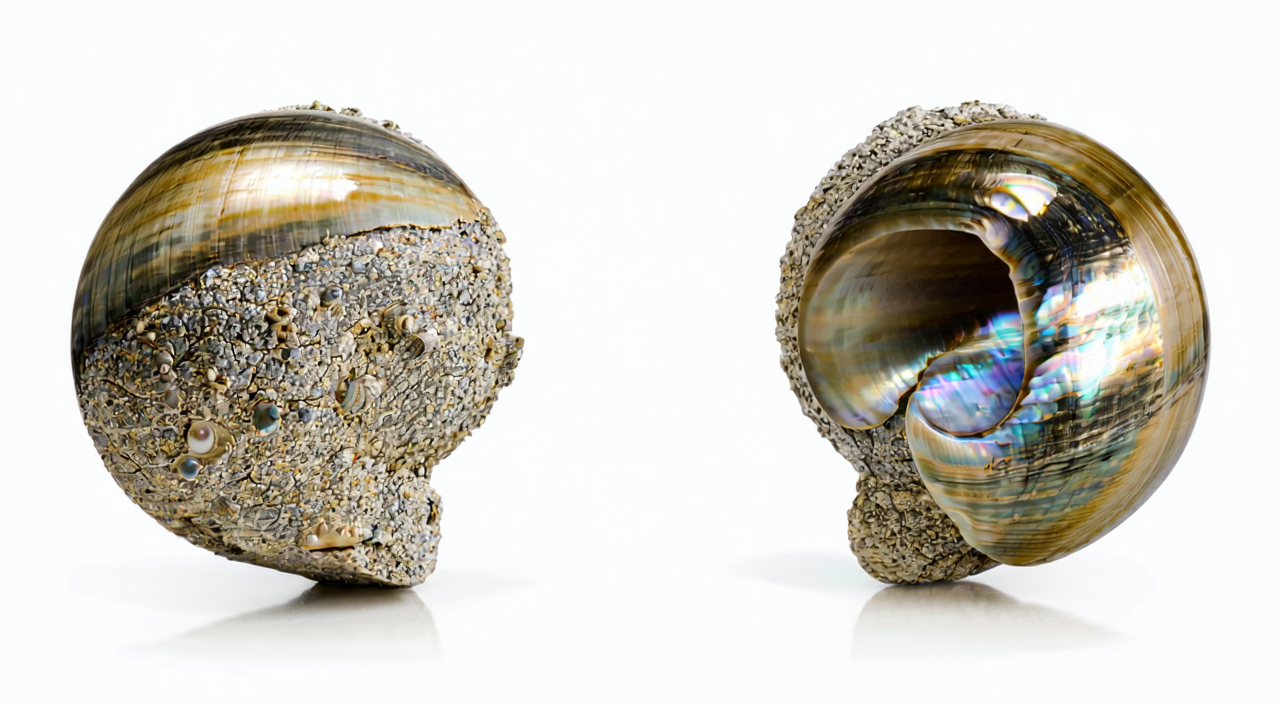
To the untrained eye, Shi Jue Ming may at first seem like just a thick shell, but paying attention to a few key features makes it easier to recognize.
Shi Jue Ming is typically ear-shaped or flattened oval, with a raised back. The shell is hard, thick, and heavy, noticeably more solid than ordinary seashells. Its outer surface is often rough, commonly grayish-brown, grayish-green, or dark red, marked with irregular patterns and traces of attached organisms like barnacles. A highly distinctive feature is a row of gradually enlarging small holes along the shell’s edge, usually numbering seven to nine. These holes open outward like a row of tiny breathing pores, serving as the abalone’s respiratory and excretory passages.
Turning the shell over reveals a completely different smooth texture with a strong pearl-like luster. The inner surface is mostly silvery white, light blue, or tinged with purple-red hues, and some varieties are even quite splendid inside. Shi Jue Ming from different sources can vary slightly in appearance: the shell of the variegated abalone tends to be smaller and more mixed in color; the shell of the disk abalone is large and thick, often with obvious wrinkles; and the inner pearl luster of the white abalone shell is particularly prominent. Through these characteristics, one can roughly determine the original species of Shi Jue Ming, though pinpointing the exact abalone species is generally not required in use.
What Is the Medicinal Part of Shi Jue Ming?
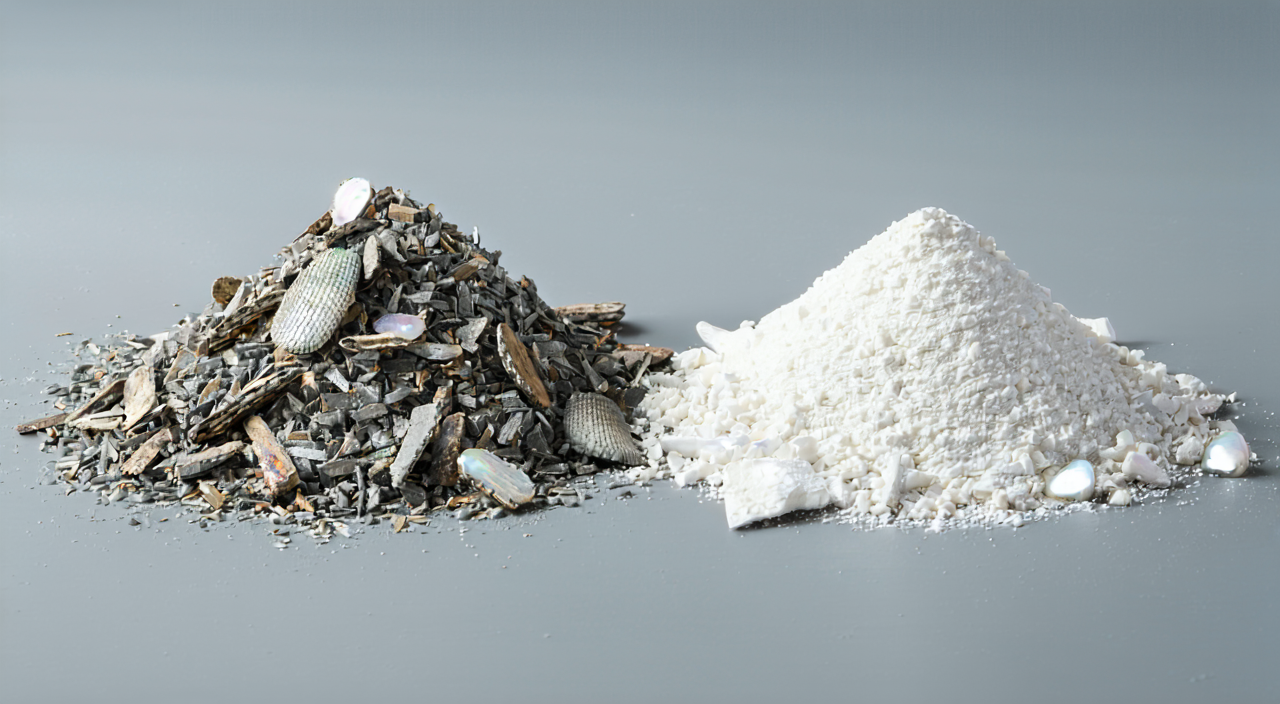
The medicinal part of Shi Jue Ming is the abalone shell. After removing the meat from the fresh abalone, the shell is washed, stripped of attached impurities and mud, and dried, becoming raw Shi Jue Ming. In practice, it is sometimes further broken into pieces or ground into a coarse powder to better release its constituents during decoction.
There is also a processed product called calcined Shi Jue Ming: the clean shell is heated at high temperature until red-hot, then taken out, cooled, and crushed for use. The calcined form becomes porous and is easier to grind. Traditionally, its settling and subduing actions are considered milder, and it leans more toward astringency. Depending on the emphasis, raw Shi Jue Ming or calcined Shi Jue Ming may be selected in different formulas.
How Does Traditional Chinese Medicine View Shi Jue Ming?
From the perspective of traditional Chinese medicine, Shi Jue Ming mainly acts through the liver meridian and is generally categorized among herbs that calm the liver, subdue yang, clear the liver, and improve vision.
The term “calm the liver and subdue yang” can be roughly understood as follows: when liver yang is hyperactive and disturbs the qi and blood of the head, a person may easily experience dizziness, a feeling of distension in the head, heaviness, and even irritability. In such cases, Shi Jue Ming is often paired with other liver-calming herbs as a regulating approach. “Clear the liver and improve vision” is mostly referenced for conditions such as red eyes, blurred vision, and dry eyes caused by liver heat attacking upward, and is especially common in approaches for middle-aged and elderly individuals whose eye discomfort stems from liver yin deficiency and liver yang hyperactivity.
Additionally, Shi Jue Ming is occasionally used in traditional formulas addressing excessive stomach acid and heartburn; its shell texture provides a physical basis for antacid effects, but this is more based on the concept of calcined Shi Jue Ming’s astringent and antacid properties. Whether it is suitable for an individual must be judged in light of specific symptoms and professional advice.
What Has Modern Research Revealed?
Modern compositional analysis shows that the main component of Shi Jue Ming is calcium carbonate, along with small amounts of calcium phosphate, amino acids, conchiolin, and trace elements such as iron, zinc, and selenium. These substances are closely related to the shell’s hard structure and pearly luster. Some basic studies indicate that Shi Jue Ming hydrolysates or extracts may exhibit mild antihypertensive, sedative, or antibacterial tendencies under experimental conditions, but these observations remain largely at the laboratory level. Regarding the eye health and blood pressure stability concerns that attract public attention, high-quality human studies are still lacking. Therefore, Shi Jue Ming is better understood as an object of knowledge within traditional Chinese medicine’s regulating approaches rather than being viewed as a stand-alone solution.
How Do Shi Jue Ming, Jue Ming Zi, and Zhen Zhu Mu Differ?
Shi Jue Ming and Jue Ming Zi have similar names but completely different origins. Jue Ming Zi is the dried ripe seed of the leguminous plant Cassia obtusifolia or Cassia tora, appearing as small rhombic granules, yellowish-brown to greenish-brown in color, and is mainly used for clearing liver heat, improving vision, and moistening the intestines to relieve constipation. The two intersect in the area of calming the liver and improving vision, but Jue Ming Zi leans more toward patterns of liver heat with red eyes accompanied by dry stools, whereas Shi Jue Ming emphasizes issues of the head and eyes caused by liver yang rising.
Zhen Zhu Mu (Mother of Pearl) is likewise a shell-type medicinal, processed from the nacreous layer of shells of freshwater mussels and other mollusks. Its inner surface also has a pearl-like luster, but the shells are generally thinner, mostly nearly round or orbicular, with a strong layered feel; it is the nacreous layer, not the entire thick shell, that is used. Both belong to the category of heavy settling and liver-calming substances, but Zhen Zhu Mu more commonly enters the heart and liver meridians and appears more frequently in approaches related to palpitations and insomnia. Shi Jue Ming focuses more on liver yang and eye disorders, so they must be distinguished in use.
Which Herbal Formulas Use Shi Jue Ming?
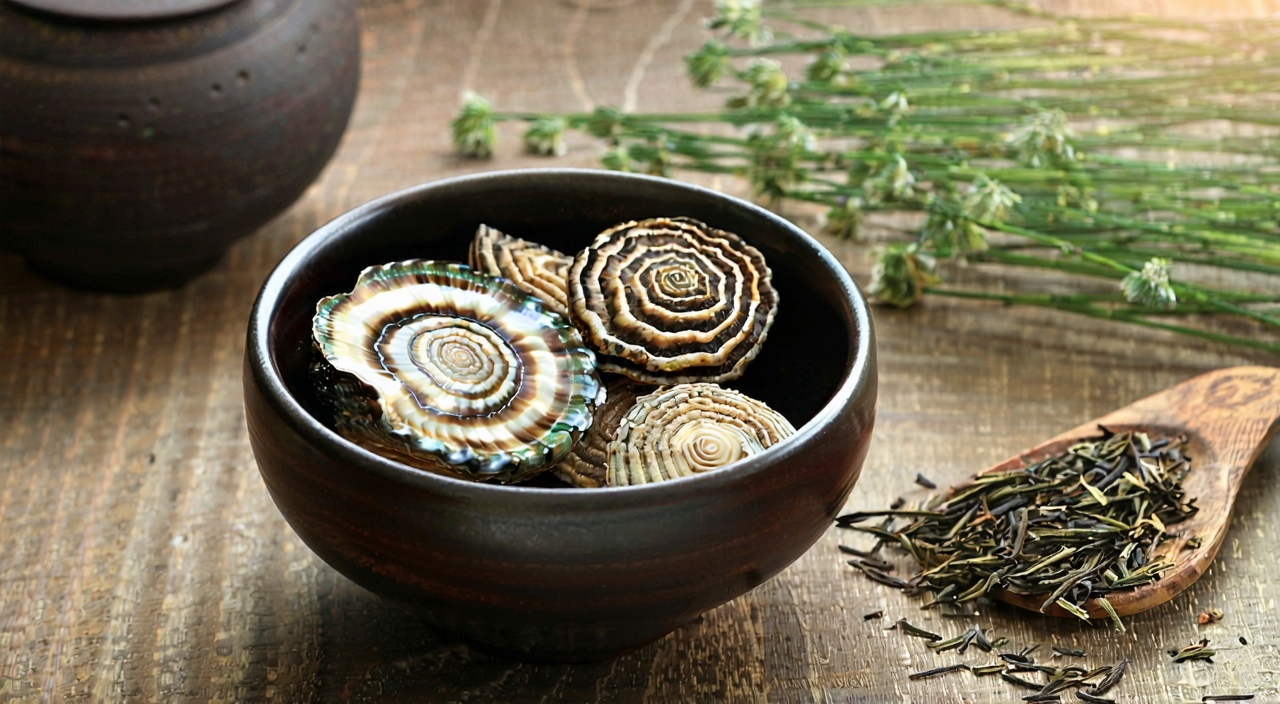
In Chinese herbal formulas, Shi Jue Ming mainly appears in traditional compositions addressing dizziness, vertigo, red and swollen eyes, and other conditions related to liver yang rising. The following are among the more well-known:
Tian Ma Gou Teng Yin (Gastrodia and Uncaria Decoction): It brings together herbs such as Gastrodia, Uncaria, Shi Jue Ming, Gardenia, and Scutellaria. It is often referenced for patterns of liver yang rising with wind-yang disturbance upwards, and is frequently mentioned in traditional case records for dizziness, tinnitus, and distending headaches.
Shi Jue Ming San (Abalone Shell Powder): Composed of Shi Jue Ming, Cao Jue Ming (Cassia Seed), Notopterygium, Chrysanthemum, Equisetum, and others, this formula is traditionally used for wind-heat attacking upwards, red and swollen painful eyes, photophobia, and excessive tearing, essentially giving equal weight to calming the liver and dispersing wind-heat.
Shi Jue Ming Tang (Abalone Shell Decoction): This formula has a relatively simplified composition, with Shi Jue Ming as the main herb, combined with Bupleurum, White Peony, Chrysanthemum, and others. It is often employed for individuals experiencing liver constraint transforming into heat, with red eyes, dry mouth, and accompanying rib-side discomfort.
It must be noted that the above formulas require modifications based on specific symptoms and constitution. Even if individuals present similarly, the dosages and combinations used may differ. This article serves only as a directional introduction to the formulas; specific selection should still rely on professional pattern differentiation, and self-prescribing should be avoided.
What Precautions Should Be Taken When Using Shi Jue Ming?
As a shell-type medicinal, Shi Jue Ming is cool in nature, and there are some aspects that require attention when using it.
People with a tendency toward spleen and stomach deficiency cold, who are prone to cold abdominal pain, loose stools, or poor appetite, should exercise particular caution when using Shi Jue Ming. Its cool nature may further impair the spleen and stomach’s transformative functions and worsen discomfort. If stools are dry and difficult to pass, and the condition is not heat-type constipation, the pattern should be clearly differentiated before considering its use.
When acute severe eye redness, intense pain, a sudden decline in vision, or prominent headaches and nausea occur, one should not merely rely on formulas containing Shi Jue Ming for self-regulation. It is advisable to seek medical attention promptly to rule out ophthalmic emergencies such as glaucoma or iritis.
Furthermore, since Shi Jue Ming is a marine-derived Chinese herb, people with shellfish allergies should avoid using it. When purchasing, products sourced from clean sea areas offer greater safety assurance. Before taking, it generally needs to be crushed and decocted first to facilitate the extraction of its constituents.
Summary
Shi Jue Ming is a Chinese medicinal derived from abalone shells. Identification can start from the ear-shaped thick shell, the row of small holes, and the pearly inner surface. It is clearly distinct from the plant seed Jue Ming Zi and another shell-based herb, Zhen Zhu Mu. In traditional Chinese medicine, Shi Jue Ming is primarily used for calming the liver, subduing yang, and clearing the liver to improve vision, and commonly appears in formulas such as Tian Ma Gou Teng Yin. However, due to its cooling nature, attention should be paid to spleen and stomach function and individual constitution when using it. The content of this article is for informational reference only. For specific health concerns, it is recommended to seek targeted advice from a professional.