
What Is Prepared Rehmannia Root? Medicinal Parts, Identification, and Common Formulas
Many people who are new to Chinese medicinal herbs often confuse raw Rehmannia (Sheng Di Huang) with prepared Rehmannia (Shu Di Huang). Although they come from the same source, their appearance, nature, and application directions are distinctly different. For those learning about yin-nourishing and blood-tonifying herbs, and for readers who wish to understand traditional regulating concepts through formula logic, clarifying “what prepared Rehmannia is” is a very practical starting point. This article organizes a relatively clear reference around its processing origin, visual identification, medicinal part, differences from raw Rehmannia, and representative formulas that contain it.
What does prepared Rehmannia look like? How to identify it?
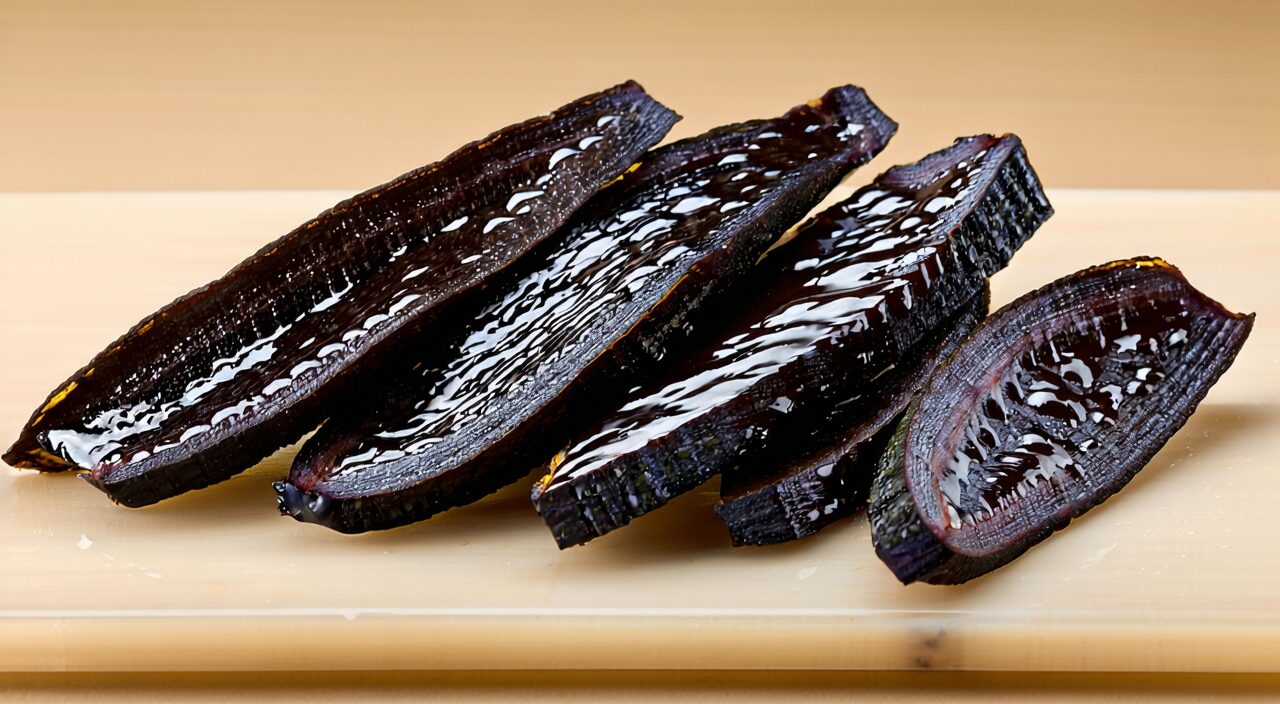
The appearance of prepared Rehmannia is very distinctive; mastering a few key points makes it hard to mistake.
Common prepared Rehmannia slices are mostly irregular thick pieces or chunks. The surface is jet-black and shiny, with a noticeable gloss. To the touch, the texture is soft and sticky. Gently pressing it with fingers reveals a slightly moist, adhesive feel, unlike ordinary dry, brittle roots. The smell is relatively mild, but chewing reveals a faint sweetness.
When selecting, the following features are traditionally regarded as reference standards:
- Plump root tuber
- Outer skin jet-black, glossy, and moist
- Cut surface shiny
- Rich in stickiness and sweet in taste
If prepared Rehmannia looks dull, dried out, lacks luster, or feels hard to the touch, that often indicates inadequate processing or excessively long storage. Traditionally, high-quality prepared Rehmannia is described as “black as lacquer, shiny as oil, and sweet as malt sugar.” While empirical, this vividly points out its key identification features.
This soft, sticky, and moist appearance and mouthfeel are not the original state of Rehmannia; they are formed during repeated steaming and drying. Precisely because this processing is so crucial, the name “prepared” (Shu) Rehmannia is used to distinguish it from the raw form.
What is the medicinal part of prepared Rehmannia?
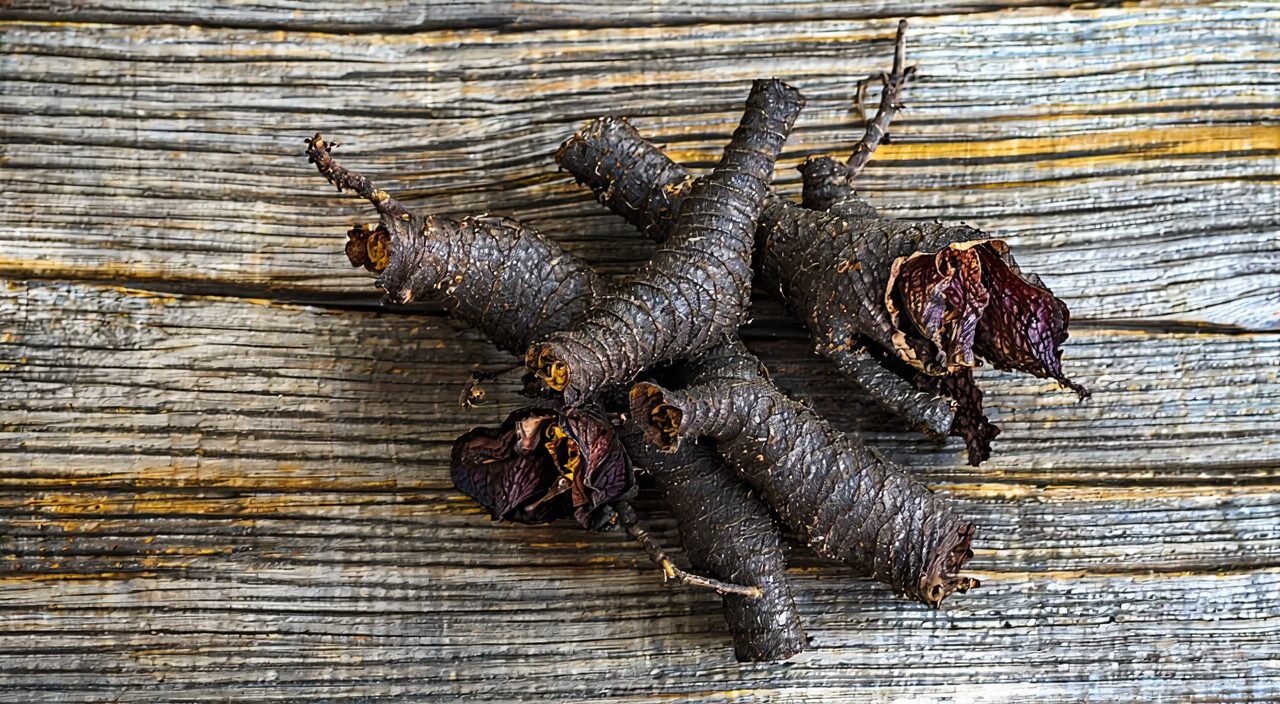
The raw material for prepared Rehmannia is also the tuberous root of Rehmannia glutinosa, a plant in the Scrophulariaceae family.
The overall processing pathway is roughly as follows:
- Freshly dug roots are called “fresh Rehmannia” (Xian Di Huang)
- After drying, they become “raw Rehmannia” (Sheng Di Huang)
- Then raw Rehmannia undergoes multiple rounds of steaming and drying, or other complex processes, ultimately becoming “prepared Rehmannia” (Shu Di Huang)
Therefore, the medicinal part of prepared Rehmannia remains the same—the dried tuberous root—but the processing changes the herb’s nature and traditional application direction. Traditional processing often involves steaming with yellow rice wine, or using methods such as plain steaming or wine stewing, further softening the texture, darkening the color, and creating its characteristic sticky, moist feel.
One could say that prepared Rehmannia is another specification formed through deliberate processing on the basis of raw Rehmannia. This “raw versus prepared, different uses” concept is not uncommon in Chinese medicine. Understanding the processing logic behind it helps explain why herbs from the same botanical source can have such vastly different traditional uses.
How does Chinese medicine understand prepared Rehmannia?
In traditional Chinese medicine theory, prepared Rehmannia is an herb that leans toward warm supplementation, with its core directions concentrated on tonifying blood and nourishing yin.
Classic herbal literature mostly assigns prepared Rehmannia to the liver and kidney meridians. The liver stores blood, and the kidneys store essence, so prepared Rehmannia is frequently used in conditioning approaches centered on blood deficiency and essence depletion.
- Blood deficiency: may manifest as a sallow complexion, dizziness, palpitations, scanty menstruation, etc.
- Kidney essence insufficiency: may manifest as soreness and weakness of the lower back and knees, tinnitus, premature graying of hair and beard, fragile bones, etc.
Prepared Rehmannia is traditionally considered able to tonify blood and nourish yin, boost essence, and replenish marrow, precisely corresponding to these directions.
It is important to note that the supplementing effect of prepared Rehmannia tends toward “quiet guarding”; its nature is rather cloying and rich, and it does not possess the mobile, dispersing nature that Dang Gui (Angelica sinensis) has. Ancient physicians clearly recognized this and often combined it with qi-moving or spleen-fortifying herbs to reduce the discomfort of cloying richness that can impede digestion. This combination logic still deeply influences the composition of formulas containing prepared Rehmannia today.
What components and effects of prepared Rehmannia are of interest in modern research?
Modern research has also explored the constituents of prepared Rehmannia quite extensively, with main focus points including:
- Iridoid glycosides
- Saccharides
- Amino acids
- Trace elements
During the processing of Rehmannia, iridoid glycosides such as catalpol undergo transformation, partially converting into more bioactive substances, while polysaccharide content tends to increase—this may be one material basis for the stickier texture and sweeter taste after processing.
Experimental studies have observed that prepared Rehmannia extracts show certain potential in regulating immune function, promoting hematopoiesis, delaying aging, and protecting the liver, but most of these remain at the stage of animal experiments or in vitro studies, with a considerable gap from clinical application in humans.
These preliminary findings provide some modern perspectives, from a compositional level, for the traditional applications of prepared Rehmannia in “tonifying blood” and “boosting essence,” and can serve as a direction of understanding for those interested in natural product research. However, they do not mean that direct therapeutic conclusions can be derived. This article offers only objective information and does not constitute any medical advice.
What is the difference between prepared Rehmannia and raw Rehmannia?
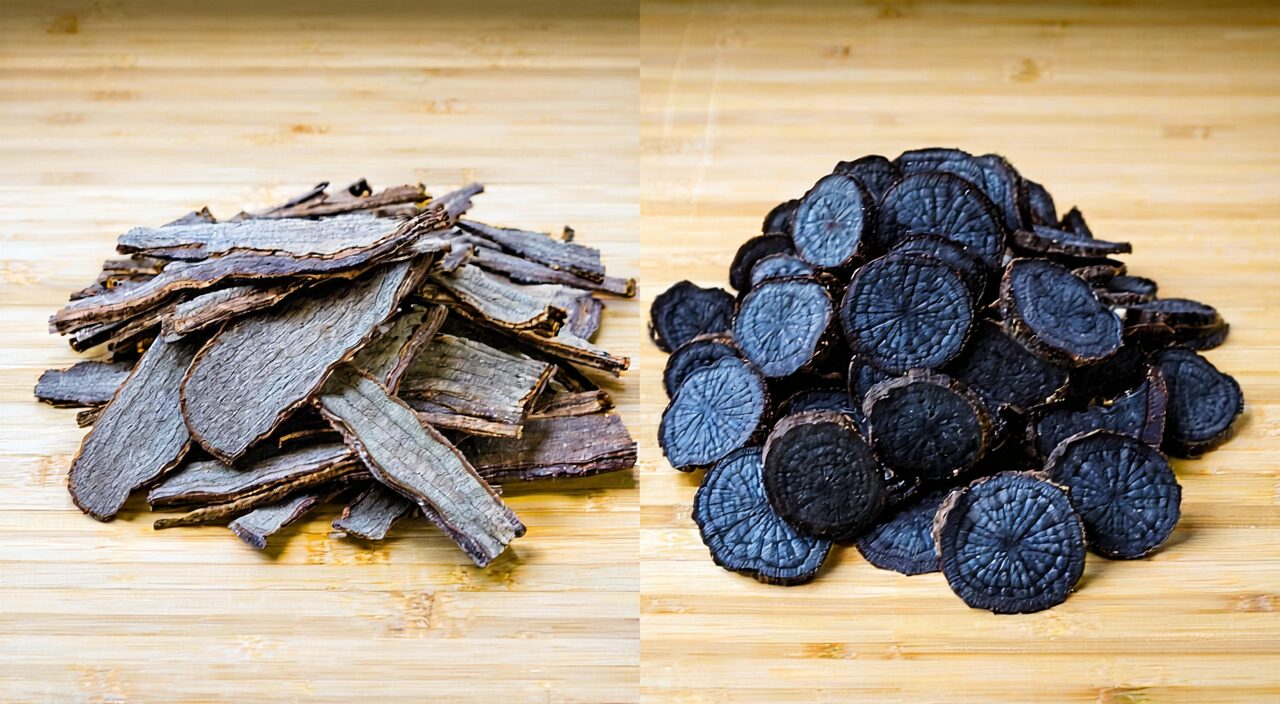
The difference between prepared Rehmannia and raw Rehmannia is key to understanding prepared Rehmannia’s actions, and can be compared across several dimensions.
| Comparison dimension | Raw Rehmannia (Sheng Di Huang) | Prepared Rehmannia (Shu Di Huang) |
|---|---|---|
| Processing | Directly dried from fresh Rehmannia; relatively simple process | Requires repeated steaming and drying (commonly nine cycles), or steaming with yellow wine; complex process |
| Appearance and texture | Rather hard texture; surface brownish-black or greyish-brown; cut surface relatively flat | Jet-black, glossy, and moist; soft texture; highly sticky |
| Nature | Cold | Slightly warm |
| Main direction | Inclines toward clearing heat and cooling blood, nourishing yin and generating fluids | Inclines toward tonifying blood and nourishing yin, boosting essence and replenishing marrow |
| Applicable reference | Warm-heat diseases entering nutrient-blood level, yin deficiency with internal heat, dry mouth and tongue, etc. | Directions involving blood deficiency and kidney essence insufficiency |
One leans cool and draining, the other leans warm and supplementing—their natures are completely opposite.
The main distinction in use is: when excess heat or yin deficiency with pronounced fire is evident, tradition leans more toward raw Rehmannia; when there is a need to warmly supplement essence and blood, prepared Rehmannia is more often considered. The two cannot be casually interchanged, otherwise not only will the goal not be achieved, but the result may be diametrically opposed. Such differentiation needs to take into account specific constitution and manifestations, and should be judged by experienced Chinese medicine practitioners. Self-substitution is not recommended.
Which formulas use prepared Rehmannia?
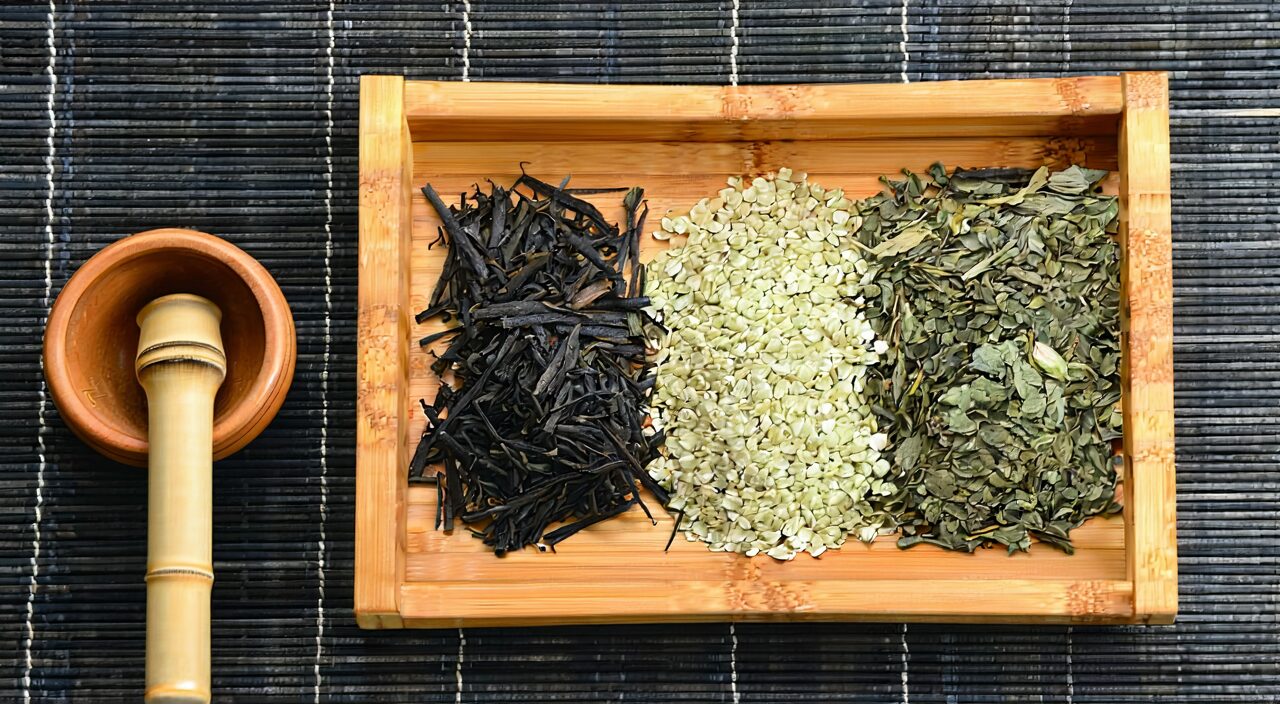
Prepared Rehmannia occupies a core position in many classical formulas, especially in compositions for tonifying blood, nourishing yin, and warmly reinforcing kidney yang. Below are four representative directions.
- Liu Wei Di Huang Wan (Six-Ingredient Rehmannia Pill): Uses prepared Rehmannia as the sovereign herb, combined with Cornus (Shan Zhu Yu), Chinese yam (Shan Yao), etc., forming a base formula for enriching kidney yin. This formula is commonly used around the direction of kidney yin insufficiency, such as soreness and weakness of the lower back and knees, dizziness and tinnitus, night sweats, hot sensation in the palms and soles, and is a typical example of classical composition.
- Si Wu Tang (Four-Substance Decoction): A foundational formula for tonifying and harmonizing blood, consisting of four herbs: prepared Rehmannia, Dang Gui (Angelica sinensis), Bai Shao (white peony root), and Chuan Xiong (Sichuan lovage rhizome). Prepared Rehmannia plays the role of nourishing yin and tonifying blood within it, and is often used in the direction of blood deficiency combined with blood stasis, particularly with many associations to discomfort related to gynecology and obstetrics.
- Zuo Gui Wan (Left-Restoring Pill): Adds ingredients such as Tu Si Zi (Cuscuta seed), Gou Qi Zi (goji berry), and Gui Ban Jiao (tortoise plastron glue) on the basis of prepared Rehmannia, focusing on replenishing true yin and nourishing essence. Traditionally used for deeper-level yin-essence depletion, symptoms may involve soreness and limpness of the waist and legs, spontaneous sweating and night sweats, developmental delay, and so on.
- You Gui Wan (Right-Restoring Pill): Counterpart to Zuo Gui Wan, it also heavily uses prepared Rehmannia but combines it with warming yang herbs such as Rou Gui (cinnamon bark), Fu Zi (prepared aconite), and Du Zhong (Eucommia bark). Its direction shifts toward warmly reinforcing kidney yang, boosting essence, and stopping seminal discharge. It is more suitable for populations with kidney yang insufficiency and decline of life gate fire, manifesting as aversion to cold with cold limbs, impotence and seminal emission, frequent and clear urination, etc.
These formulas each have distinct targets and emphasis: some lean toward enriching, some toward warming, and some additionally harmonize the blood. Whether they suit an individual’s situation must be judged only after a comprehensive assessment of constitution and symptoms. Even if ready-made remedies are relatively convenient, it is recommended to understand the basic direction of the formula and comprehensively consider the product instructions and professional advice, rather than applying based on a single symptom alone.
What precautions should be taken when using prepared Rehmannia?
Prepared Rehmannia’s nature is rich and cloying; this is the most important point to note in its use.
For people with weaker spleen and stomach transportation and transformation ability, taking a large amount alone may easily cause discomfort such as abdominal bloating, loss of appetite, and loose stools. Therefore, in traditional usage, prepared Rehmannia is often combined with qi-regulating and dampness-transforming herbs such as Sha Ren (Amomum villosum) and Chen Pi (tangerine peel) to alleviate the stomach-impeding effect of its cloying richness.
The following situations are generally not suitable for casually taking prepared Rehmannia or tonic formulas dominated by it:
- Constitution with predominant dampness, profuse phlegm, chest oppression, and abdominal distension
- During a cold or acute diarrhea
Whether these conditions are suitable for use and how to combine herbs still depend on a comprehensive professional assessment.
Additionally, it must be re-emphasized: prepared Rehmannia is prepared Rehmannia, and raw Rehmannia is raw Rehmannia. The nature difference between processed product and raw product is enormous, and one must never self-substitute just because the names are similar. For situations where one purchases herbs or selects formula products independently, this point requires particular caution.
If related manifestations persist for a long time, are relatively severe, or are accompanied by obvious palpitations, chest tightness, persistent abdominal bloating, unexplained weight loss, etc., a doctor or qualified Chinese medicine professional should be consulted promptly rather than relying solely on self-researched information or using a single herb to resolve the issue.
Summary
Prepared Rehmannia is made from the tuberous root of Rehmannia glutinosa through complex processing such as steaming or wine stewing. Its texture, color, and taste are clearly different from raw Rehmannia, making it highly identifiable. Traditional Chinese medicine chiefly understands it from the angle of tonifying blood, nourishing yin, boosting essence, and replenishing marrow. It is commonly used in formulas such as Liu Wei Di Huang Wan and Si Wu Tang, each having its own strengths compared to raw Rehmannia. Because its texture is rich and cloying, its use demands considerable attention to spleen-stomach state and constitutional differences. In actual application, judgment should integrate personal circumstances and professional advice; blind self-selection or substitution is not advisable.