
What Is Asparagus Root (Tian Dong)? Medicinal Parts, Identification, and Common Formulas
Among the many herbs used to nourish yin and moisten dryness, Tian Dong (Asparagus root) is frequently mentioned. It comes from the dried tuberous root of the lily family plant Asparagus cochinchinensis, traditionally used for patterns such as dry cough due to lung dryness and dry throat with thirst. For those new to Chinese medicine, understanding what Tian Dong looks like, which part is used medicinally, and how it differs from Mai Dong (Ophiopogon root) often represents a key learning step. This article will address these common concerns by integrating traditional understanding and modern research to present fundamental information about Tian Dong.
What Does Tian Dong Look Like? How to Identify It?
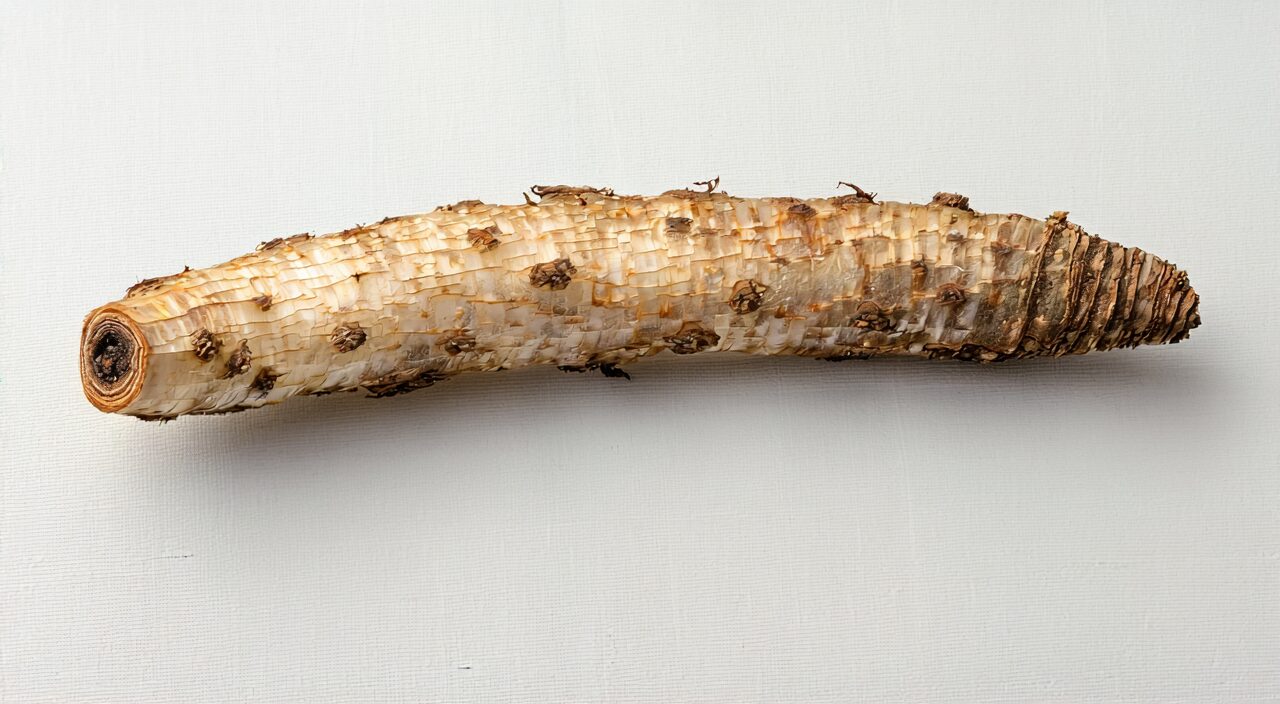
The medicinal part of Tian Dong is its tuberous root. The dried root is mostly long and spindle-shaped, slightly curved, generally about 5–18 cm long and 0.5–2 cm in diameter. The surface is yellowish-white to pale yellowish-brown and semi-translucent; upon close inspection, shallow longitudinal wrinkles or furrows of varying depth can be seen, sometimes with remnants of grayish-brown outer bark. The texture is relatively pliable and tough, not easily snapped. The fracture surface is even, horny and yellowish-white, with a fine yellowish-white central stele at the center—this is one of the relatively distinct identifying features of Tian Dong. It has little odor, and when chewed, there is an initial slightly sweet taste followed by a bitter note.
In the market, it is often differentiated by origin names such as “Chuan Tian Dong” or “Zhe Tian Dong,” but regardless of source, the best quality is considered to be plump, semi-translucent, with a distinctly horny fracture surface and yellowish-white in color. Tian Dong that has been stored too long or improperly processed will darken and lose translucency, with corresponding decline in quality.
What Is the Medicinal Part of Tian Dong?
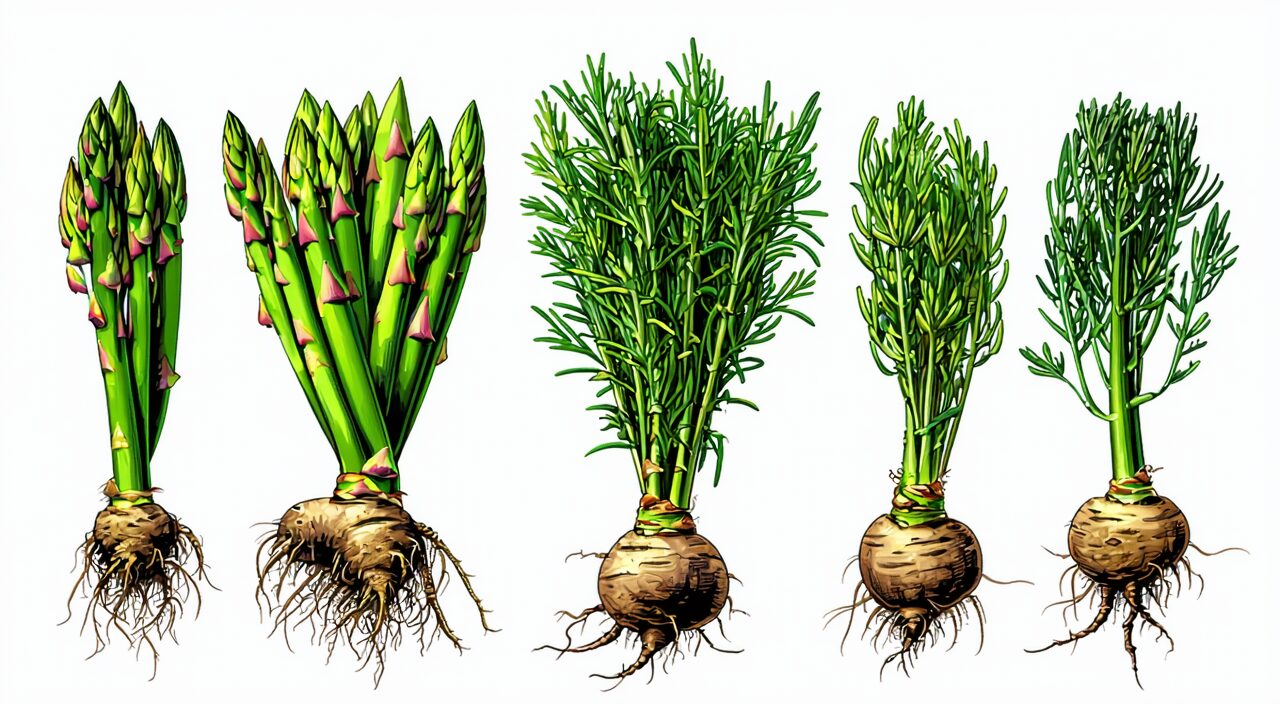
The medicinal part of Tian Dong is exclusively its tuberous root. Harvesting generally takes place in autumn and winter, when the root has accumulated relatively sufficient nutrients. The traditional regional processing method is quite meticulous: after digging, the stem base, fibrous roots, and sand are removed; the root is placed in boiling water, boiled or steamed until the centre is fully cooked; while still hot, the outer bark is peeled off; then it is rinsed thoroughly in clean water and finally dried in the sun or by baking. This treatment not only preserves the herb’s colour and horny texture but also facilitates drying and storage.
In prepared Tian Dong slices, commonly seen forms include roundish thin slices or small segments. The cut surface retains the horny, yellowish-white appearance, sometimes with visible ring-like textures. In some regions, Tian Dong is sliced while fresh and then dried, giving a more regular shape. Regardless of the form, qualified prepared slices should have a mild smell, be sticky when chewed, and be free of any noticeable musty or sour odour.
How Does Chinese Medicine Understand Tian Dong?
In traditional Chinese medical theory, Tian Dong is classified as sweet and bitter in flavour, and greatly cold in nature, entering mainly the Lung and Kidney meridians. It is categorized this way because, on one hand, its sweetness enters the Lung to moisten dryness and generate fluids and clear Lung heat; on the other hand, its bitter-cold and descending nature allows it to enter the Kidney to nourish Kidney yin and subdue deficiency fire.
The Lung is a delicate organ that prefers moisture and detests dryness. When dryness-heat damages the Lung or deficiency fire scorches the fluids, manifestations such as dry cough, scanty sticky sputum, dry sore throat, and hoarseness easily appear. In such cases, using Tian Dong to nourish Lung yin and clear Lung heat is often considered a regulating approach. Since Kidney yin is the foundation of all yin fluids in the body, deficiency of Kidney yin often leads to deficiency fire flaring upward, presenting symptoms like soreness and weakness of the lower back and knees, malar flushing, night sweats, dry mouth and tongue. Tian Dong, by nourishing Kidney yin and thereby guiding fire back to its source, is also frequently used in regulating such states. Classical medical texts also mention Tian Dong can be used for wasting-thirst (Xiao Ke) and intestinal dryness constipation pertaining to yin deficiency and fluid depletion, reflecting the principle of “increasing water to float the boat.”
What Components and Effects of Tian Dong Are Studied in Modern Research?
Modern research on Tian Dong’s constituents mainly focuses on steroidal saponins (such as Asparagus saponins, diosgenin, etc.), polysaccharides, amino acids, and flavonoids. Laboratory studies have found that Tian Dong extracts demonstrate certain antitussive, expectorant, anti-inflammatory, and immunomodulatory activities in in vitro models and animal experiments. Its polysaccharides have also shown the potential for antioxidant and anti-aging effects.
However, it is worth noting that most of these studies remain at the cellular and animal level, and human research evidence is relatively insufficient. Therefore, these findings are more of a discussion at the component and mechanism level and cannot be directly equated to therapeutic conclusions for humans. The value of Tian Dong in traditional Chinese medicine application can be referenced but should not replace clinical judgment.
How Does Tian Dong Differ from Similar Herbs?
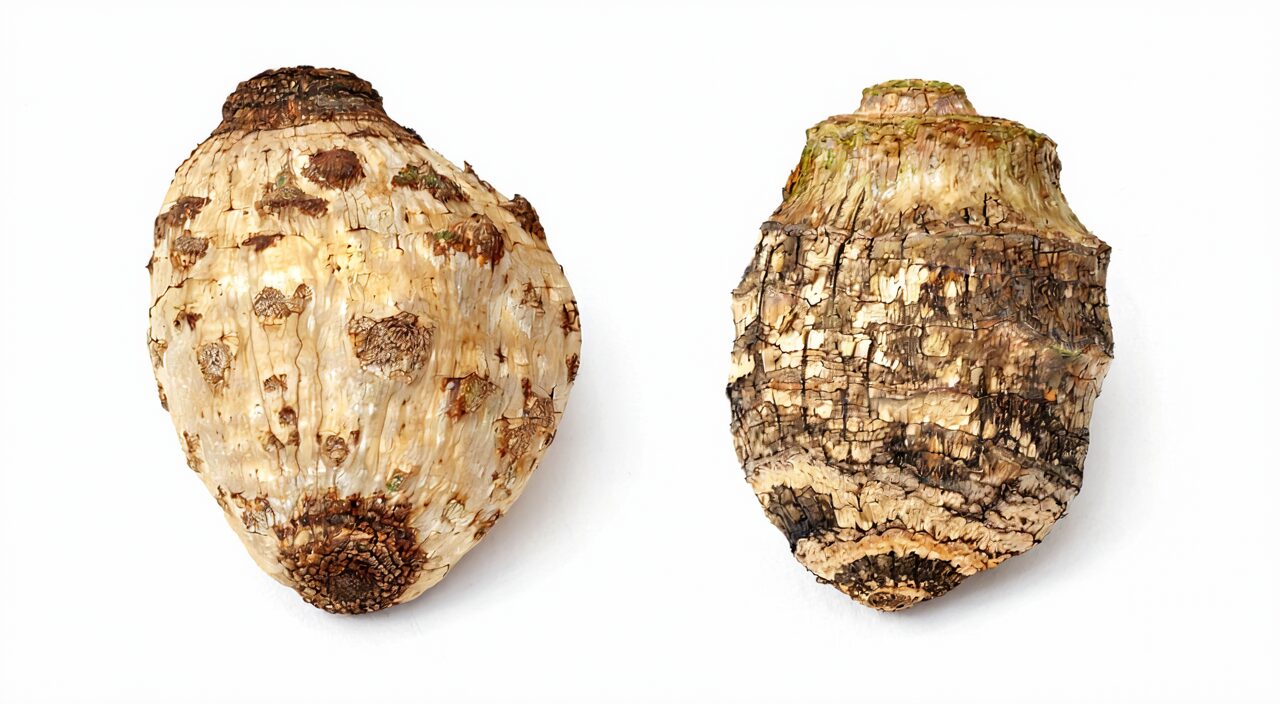
Tian Dong is most easily confused with Mai Dong. Both are plants from the lily family and both are commonly used yin-nourishing and fluid-generating herbs, but the differences are relatively distinct.
In terms of source: Tian Dong comes from the plant Asparagus cochinchinensis of the Asparagus genus, while Mai Dong comes from Ophiopogon japonicus of the Ophiopogon genus (or species like Liriope spicata from the Liriope genus). The medicinal part is the tuberous root in both cases, but the morphological differences are significant. Tian Dong’s tuberous root is long and spindle-shaped, larger in size, 5–18 cm long, yellowish-white to pale yellowish-brown on the surface, markedly semi-translucent and horny, with the central stele clearly visible. Mai Dong’s tuberous root is spindle-shaped but short and small, typically 1.5–3 cm long, pointed at both ends, with a pale yellow or grayish-yellow surface, irregular longitudinal wrinkles, less translucency, an off-white fracture surface, and a fine, less distinct central stele.
In traditional application, Tian Dong is colder in nature, with a stronger effect of moistening the Lung, nourishing the Kidney, and subduing fire, and is more focused on conditions where Lung and Kidney yin deficiency and deficiency fire flare upward cause dry cough, dry throat, etc. Mai Dong is slightly cold and is particularly good at nourishing Stomach yin, generating fluids to relieve thirst, and clearing the Heart to ease irritability, used more for Stomach yin deficiency, dry mouth and tongue, and vexation with insomnia. The two are sometimes used together in formulas, but each has its own emphasis.
Which Formulas Use Tian Dong?
Tian Dong appears in many classic formulas; below are several relatively representative ones.
Tian Wang Bu Xin Dan (Heavenly King Heart-Supplementing Elixir): Tian Dong is combined with Mai Dong, Sheng Di Huang (Rehmannia), Xuan Shen (Scrophularia), etc., to nourish yin, clear heat, calm the mind, and tranquilize the spirit. In traditional theory, it targets states of yin deficiency with blood insufficiency, deficiency vexation and insomnia, and palpitations with fearful throbbing. Here, Tian Dong primarily assists Sheng Di Huang and Mai Dong in nourishing the yin of the Heart and Kidney, allowing the spirit (Shen) to be nourished.
San Cai Feng Sui Dan (Three-Treasure Marrow-Sealing Elixir): The “San Cai” (Three Treasures) in the name refers to Tian Dong, Shu Di Huang (prepared Rehmannia), and Ren Shen (ginseng), symbolizing Heaven, Earth, and Humanity. Tian Dong moistens the Lung and nourishes the Kidney, generating water and subduing fire; Shu Di Huang replenishes essence and enriches blood; Ren Shen boosts qi and generates fluids. Combined with Huang Bai (Phellodendron) to drain fire and consolidate yin, and Sha Ren (Amomum) to move stagnation and harmonize the Stomach, the entire formula is commonly used in traditional contexts for yin deficiency with effulgent fire, seminal emission and slippery discharge, oral sores, and sore throat.
Tian Dong Gao (Asparagus Paste): This is a type of traditional paste formula prepared with Tian Dong as the main ingredient. Tian Dong is soaked, then decocted in water; the liquid is collected and concentrated, and finally honey or maltose is added to form a paste. The finished product is sweetly moistening with a slight bitterness, often used for regulating chronic cough, dry cough, dry throat, and loss of voice pertaining to yin deficiency. However, during preparation and use, attention must be paid to concentration and dosage; those with spleen and stomach deficiency should not take this single ingredient for prolonged periods.
Furthermore, Tian Dong is commonly used in combinations that moisten the Lung to stop cough and nourish yin to subdue fire (such as Er Dong Gao, Bu Fei E Jiao Tang, etc.), with the application mostly revolving around Lung and Kidney yin deficiency.
What Precautions Should Be Taken When Using Tian Dong?
Tian Dong is greatly cold in nature, and its texture is soft and moistening with a laxative effect. For people with spleen and stomach deficiency-cold, who tend to have diarrhea, poor appetite, or a sensation of cold in the abdomen, using Tian Dong may induce or worsen loose stools and abdominal pain. At the same time, those with profuse internal cold-damp phlegm-rheum, manifested by copious thin sputum, chest tightness, and a tongue coating that is white and greasy, are also not suitable for single or large-dose use of such a cloying and greasy substance like Tian Dong.
If a cough persists without improvement, or is accompanied by hemoptysis, difficulty breathing, chest pain, persistent fever, etc., one should not solely rely on a specific herb or paste but should seek medical evaluation promptly. In any situation where one is unclear about their own constitution and herb selection, it is advisable to first consult the professional opinion of a Chinese medicine practitioner or pharmacist and not self-determine the dosage and course of treatment.
Summary
Tian Dong is a yin-nourishing and dryness-moistening herb with a long history of use in traditional Chinese medicine. From its long spindle-shaped tuberous root and yellowish-white semi-translucent appearance to its traditional role of clearing the Lung to generate fluids and nourishing the Kidney to subdue fire, it forms a clear distinction from similar herbs like Mai Dong. Its presence can be seen in formulas such as Tian Wang Bu Xin Dan and San Cai Feng Sui Dan. However, Tian Dong is cold in nature and is more suitable for yin deficiency with dryness-heat constitutions; those with spleen and stomach deficiency-cold need to be particularly cautious. This article is for educational reference only and cannot replace professional diagnosis or treatment advice. If you have relevant health concerns, please consult a qualified professional.