
What Is Ejiao? Medicinal Parts, Identification, and Common Formulas
For many people, the impression of Ejiao comes from traditional nourishing habits in autumn and winter, or from encountering a black gelatin block in herbal formulas. What exactly is Ejiao? Where does it come from, how should it be identified, and which common formulas use it? This article will sort out the basic understanding of Ejiao from these perspectives, helping readers form a clearer framework when they come across related products.
What Does Ejiao Look Like? How to Identify It
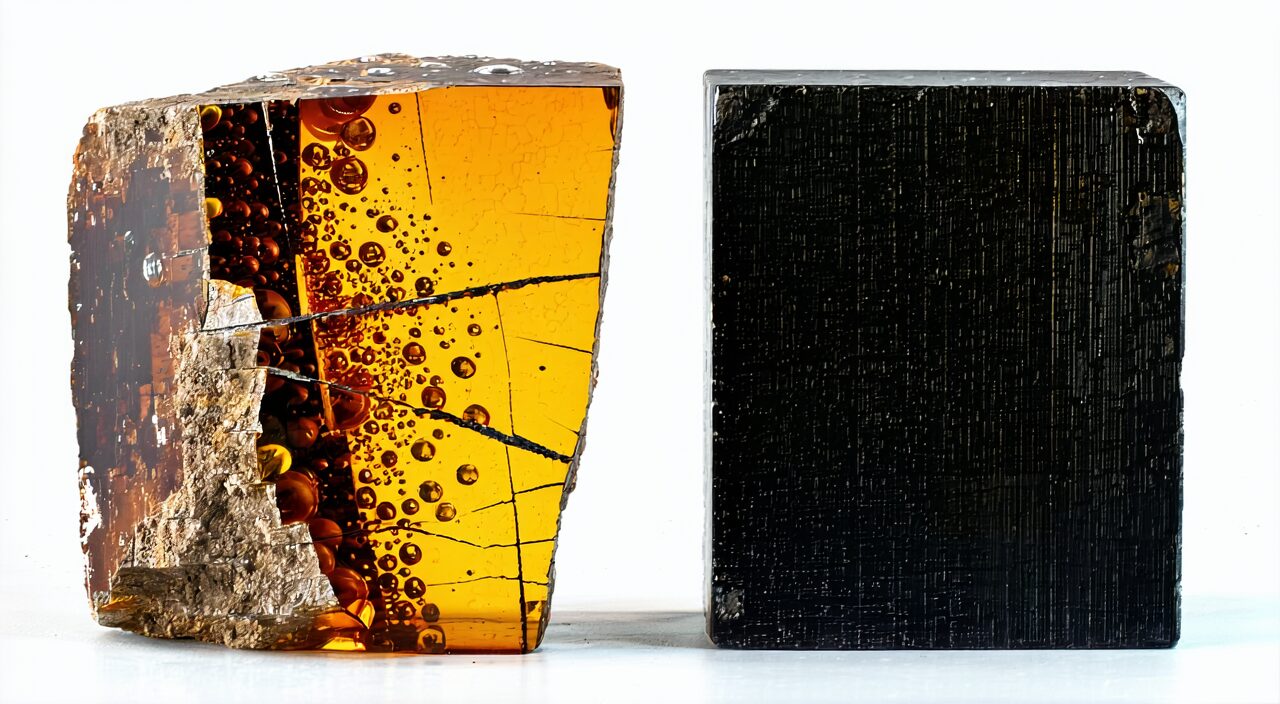
Traditional Ejiao is mostly formed into rectangular blocks. It is also commonly seen as small granules after grinding or compressed into tablet forms. An intact piece of Ejiao usually shows the following characteristics:
- Appears as a neat rectangular gelatin block with even thickness. The surface is brownish-black or jet-black with a certain luster visible under light.
- The texture is hard and brittle. It breaks easily when bent by hand and cracks into small pieces when struck.
- The fractured surface is relatively shiny and slightly lighter in color than the outer surface, showing a brownish amber-like semi-transparent quality. Sometimes fine traces of small air bubbles can be seen.
- When smelled, it carries a faint gelatinous aroma without any stench or rotten odor.
Processed Ejiao pearls or Ejiao powder are also available on the market, and their appearance differs greatly from whole Ejiao blocks. Identification in these cases relies more on the source and label information. Traditional experience holds that high-quality Ejiao blocks should remain hard even in hot summer weather without noticeably softening or becoming sticky. If the surface shows mold, abnormal odor, or unusual softness and stickiness, it may indicate improper storage or quality issues.
What Is the Medicinal Part of Ejiao?
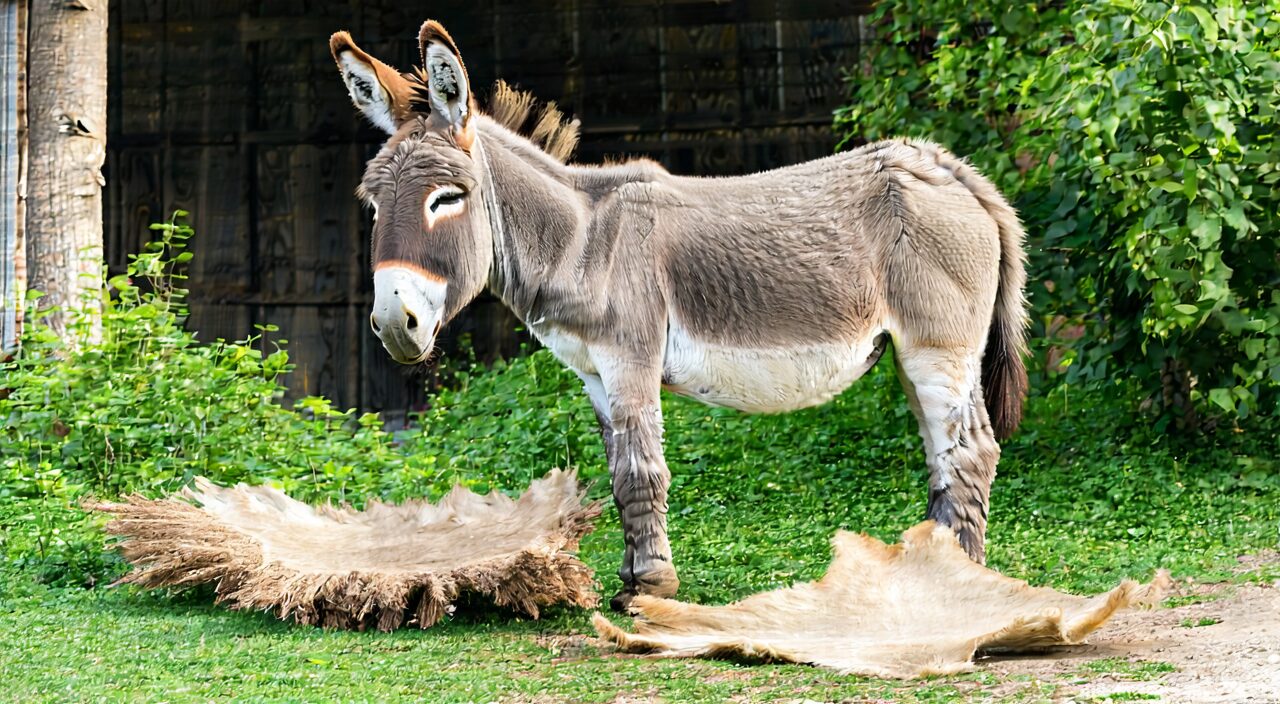
The medicinal part of Ejiao is quite special. It does not come directly from the roots, stems, or leaves of a plant; instead, it is a solid gelatin block made by processing dried donkey hides. Simply put, the donkey hide is dehaired, cleaned, then decocted in water for a long time, concentrated, and finally formed into gelatin blocks.
Regarding harvesting and processing, traditional preparation emphasizes water source and season. Whole hides from healthy donkeys are typically selected as raw material. After soaking and dehairing, cutting into pieces and cleaning, the gelatin liquid is extracted through successive decocting. The combined filtrate is then concentrated over gentle heat until it can form a “flag” when lifted, at which point it is poured into molds, cooled, cut into blocks, and dried in the shade. Modern production builds on this process by strengthening impurity removal, sterilization, and standardized control.
Most of the Ejiao used as medicinal material on the market is in the form of the rectangular blocks described above. Sometimes it is also processed into Ejiao pearls by stir-frying with wheat bran or cattail pollen until they puff up, which reduces its cloying and greasy nature. There is also directly ground fine Ejiao powder, which is convenient for adding to formulas or taking with warm water.
How Does Traditional Chinese Medicine Understand Ejiao?
In traditional Chinese medicine theory, Ejiao is commonly understood around the directions of supplementing blood, nourishing yin, moistening dryness, and stopping bleeding.
From the perspective of nature, flavor, and meridian tropism, Ejiao is generally recorded as neutral or slightly warm in nature and sweet in flavor, entering the Lung, Liver, and Kidney meridians. Its sweet and neutral character allows it to be used for longer-term regulation in traditional practice without being overly warm or drying.
For symptoms such as a sallow complexion, dizziness, and palpitations caused by blood deficiency, Ejiao can traditionally be combined with ingredients like prepared Rehmannia root (Shu Di Huang), Chinese Angelica (Dang Gui), and White Peony root (Bai Shao). For consumptive fatigue, lung dryness with dry cough and scanty sputum, as well as twitching of the hands and feet or tendon and vessel spasms arising from yin deficiency generating wind, it is also considered for inclusion in formulas. In addition, for some bleeding conditions caused by blood deficiency with dryness or yin deficiency with internal heat, such as uterine bleeding, heavy menstruation, or bleeding during pregnancy, Ejiao is often used together with mugwort leaf (Ai Ye) and Rehmannia (Di Huang) to exert its traditional blood-regulating action of “stopping bleeding without leaving stasis.”
It must be stressed that the above is one way traditional Chinese medicine theory understands Ejiao. Whether it is suitable for an individual still needs to be judged comprehensively based on specific constitution, symptoms, and professional advice; self-application is not recommended.
What Components and Effects Does Modern Research Focus on Regarding Ejiao?
Modern research has explored the components and biological activities of Ejiao quite extensively, primarily focusing on its content of collagen, peptides, amino acids, and some trace elements. Laboratory studies have found that after hydrolysis, Ejiao yields a variety of amino acids and active peptide fragments. Some in vitro experiments suggest it may have certain effects in promoting links related to red blood cell generation and improving the hematopoietic microenvironment.
Furthermore, some studies have observed the possible supportive effects of Ejiao on immune regulation, anti-fatigue, and the skin barrier. Most of these studies are still at the stage of component analysis and animal experiments and cannot be directly equated with clinical effects in humans. At present, the scientific understanding of Ejiao is still accumulating, and more high-quality clinical research is needed to verify its actual value in different usage directions.
Therefore, when choosing Ejiao-related products, one can view it as a traditional medicine with a long heritage while also following modern research trends to understand it, rather than simplistically equating it with a single-component preparation with clearly defined therapeutic efficacy.
What Are the Differences Between Ejiao and Similar Medicinal Materials?
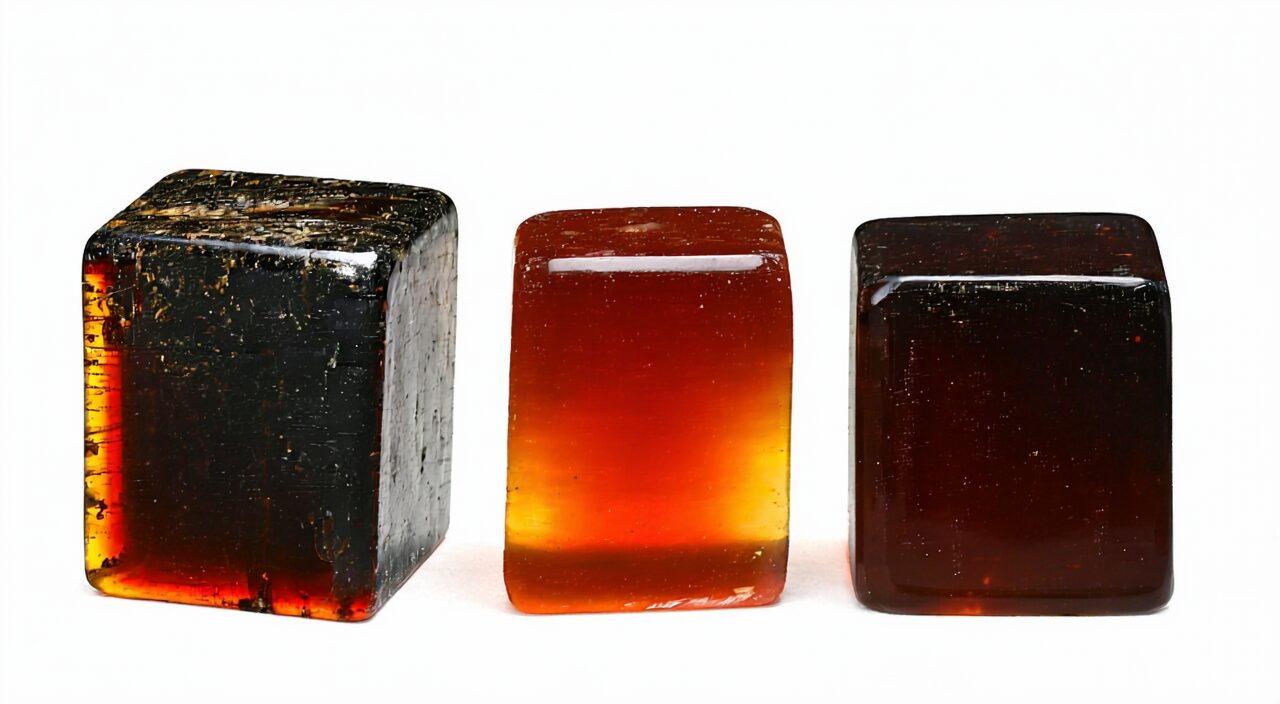
Ejiao, Deer Horn Glue, and Tortoise Shell Glue are all gelatin-type medicinal materials and are easily confused by appearance, but their sources, medicinal parts, and traditional application emphases differ markedly.
- Ejiao: Sourced from donkey hide. Traditionally emphasizes supplementing blood, nourishing yin, moistening dryness, and stopping bleeding, often used for blood deficiency with a sallow complexion, consumptive fatigue with dry cough, and bleeding syndromes. Appearance is a brownish-black rectangular gelatin block, texture is hard and brittle, and the fractured surface is shiny.
- Deer Horn Glue: Made by boiling deer antlers into a solid gelatin. Traditionally emphasizes warmly supplementing the liver and kidney and boosting essence and blood, often used for patterns such as kidney yang insufficiency and essence-blood depletion causing aversion to cold, soreness and weakness of the lower back and knees, impotence, and seminal emission. The gelatin block is generally lighter than Ejiao, presenting a reddish-brown or brownish-red color, with strong semi-transparency. The fractured surface is also lustrous, but the odor is more gamy and warm than Ejiao.
- Tortoise Shell Glue: Made by boiling the carapace and plastron of tortoises. Traditionally emphasizes nourishing yin to suppress yang, boosting the kidneys, and strengthening bones, often used for yin deficiency with tidal fever, night sweating, weakness of sinews and bones, and delayed closure of the fontanel in infants. Its color is usually dark brown or blackish-brown, the texture is relatively hard, and the fracture surface is not as shiny as that of Ejiao.
When holding a black gelatin block, one can make a preliminary distinction based on the features of color, luster, odor, and the fracture surface, but the final judgment still needs to combine packaging labels and source information. The different gelatin types have quite different traditional usage approaches. If similar appearance leads to mistaken use, it may completely deviate from the original direction of regulation and nourishment.
Which Formulas Use Ejiao?
Ejiao often appears in formulas throughout history as an important ingredient for nourishing blood, stopping bleeding, or nourishing yin. Several commonly encountered formulas containing Ejiao are listed below to help understand its traditional pairing roles.
- Xionggui Jiao’ai Decoction: This formula combines Ejiao with Szechuan Lovage (Chuan Xiong), Chinese Angelica (Dang Gui), and Mugwort Leaf (Ai Ye) and is traditionally used for conditions such as uterine bleeding, heavy menstruation, or bleeding during pregnancy caused by blood deficiency with cold. In the formula, Ejiao mainly undertakes the role of nourishing blood and stopping bleeding, as well as nourishing yin and moistening dryness, forming a pairing with Mugwort Leaf’s warming the menses and stopping bleeding, one moistening and one warming.
- Huangtu Decoction: In this formula, furnace earth (oven yellow earth) acts as the sovereign ingredient, and Ejiao is used together with dried Rehmannia (Gan Di Huang), White Atractylodes (Bai Zhu), and Prepared Aconite (Fu Zi), etc. It is traditionally used for conditions such as blood in the stool, vomiting blood, or nosebleed caused by spleen yang deficiency and qi failing to contain blood. Ejiao plays the role of nourishing blood, stopping bleeding, and enriching yin and harmonizing the nutritive level, while also moderating the drying nature of the warm and drying herbs in the formula.
- Bufei Ejiao Decoction: This commonly uses Ejiao together with Dutchmanspipe Fruit (Ma Dou Ling), Great Burdock Fruit (Niu Bang Zi), and Bitter Apricot Kernel (Ku Xing Ren), etc. It is traditionally used for lung deficiency with heat, chronic cough with scanty sputum, or blood-streaked sputum. Here, Ejiao emphasizes nourishing yin and moistening the lung, stopping bleeding and calming coughing, often used during phases of dry cough or deficient cough.
- Shoutai Pill: This formula takes Dodder Seed (Tu Si Zi) as the sovereign ingredient, with Ejiao combined with Teasel Root (Xu Duan) and Chinese Taxillus Herb (Sang Ji Sheng), etc. It is traditionally used for threatened miscarriage or habitual miscarriage tendency caused by kidney deficiency and unstable fetal essence. Ejiao in the formula plays the role of nourishing blood and calming the fetus, regulating and supplementing the Chong and Ren meridians, focusing on replenishing yin and blood to secure the fetal essence.
The above formulas are all derived from classical traditional Chinese medicine texts, representing empirical combinations summarized by generations of physicians for specific patterns. The dosage and combination ratios of Ejiao in these formulas have undergone repeated observation by ancient and modern practitioners. This does not mean individuals can directly copy a formula and self-prescribe. If discomfort similar to the above conditions recurs, persists without improvement for a long time, or is accompanied by noticeable anemia, weight loss, abdominal pain, or abnormal bleeding, priority should be given to consulting a physician rather than blindly applying formulas on one’s own.
What Precautions Should Be Taken When Using Ejiao?
Understanding the precautions for using Ejiao can help reduce problems arising from blind use. The following points are worth noting:
- Rich, cloying nature that may burden the stomach: Ejiao has a relatively rich and cloying texture. Take directly by those with spleen and stomach deficiency, poor appetite, or abdominal bloating and loose stools may aggravate indigestion or epigastric fullness. Traditionally, it is often combined with qi-regulating and spleen-invigorating herbs such as Amomum fruit (Sha Ren) and Tangerine Peel (Chen Pi), or it is stir-fried into Ejiao pearls to moderate its cloying nature.
- Not to be used blindly when the cause of bleeding is unclear: Although some formulas use Ejiao to address bleeding symptoms, the causes of different bleedings vary greatly. If the cause of bleeding has not yet been identified—such as persistent coughing up blood, black stool, abnormal uterine bleeding, etc.—self-administering Ejiao or related formulas rashly may delay critical diagnosis. Professional evaluation by a physician should be sought first.
- Spleen-stomach deficiency and internal exuberant damp-heat: Apart from those with inherently weak spleen and stomach, for people with pronounced internal damp-heat, bitter sticky taste in the mouth, and a thick greasy yellow tongue coating, traditional approaches also tend not to use Ejiao alone, so as to avoid aiding dampness and trapping pathogenic factors.
- Authenticity and source concerns: The market may contain gelatin blocks made from other animal hides passed off as Ejiao, or products that do not meet hygiene standards. When purchasing or using, one should go through proper channels and pay attention to product labeling and origin traceability. If there are abnormal odors, off colors, poor solubility, or unclear packaging, caution should be maintained.
If you plan to include Ejiao in your daily health regimen, it is advisable to first consult a Chinese medicine practitioner or a professional to determine suitability based on tongue and pulse examination, symptoms, and constitution, and to choose rationally by combining product instructions. It should not be treated as an ordinary food suitable for everyone at any time.
Summary
As a traditional medicinal material boiled from donkey hide, Ejiao has a long history of use in supplementing blood, nourishing yin, moistening dryness, and stopping bleeding. Identifying Ejiao can start from key points such as shape, color, brittleness, and the glossy fracture surface. Attention should be paid to its differences from other gelatin materials like Deer Horn Glue and Tortoise Shell Glue in terms of source and traditional usage. Although there are many formulas containing Ejiao, they are all built on specific patterns and the logic of formula combining. The overview in this article is for informational reference only and cannot replace professional diagnosis or individualized medication advice.