
What Is Tian Ma? Medicinal Parts, Identification, and Common Formulas
For many people, hearing the name Tian Ma brings to mind dizziness, headaches, or health maintenance topics for middle-aged and elderly individuals. In traditional Chinese medicine, Tian Ma is indeed a highly regarded medicinal substance, but it is not a “specific cure” that directly corresponds to a single disease. Instead, it has its own unique application logic and boundaries of use. This article will explore the source of Tian Ma, its identification features, its medicinal parts, how it differs from Gou Teng (Uncaria), and the thinking behind several common formulas, helping you build a clearer framework when encountering related information.
What does Tian Ma look like? How to identify it?
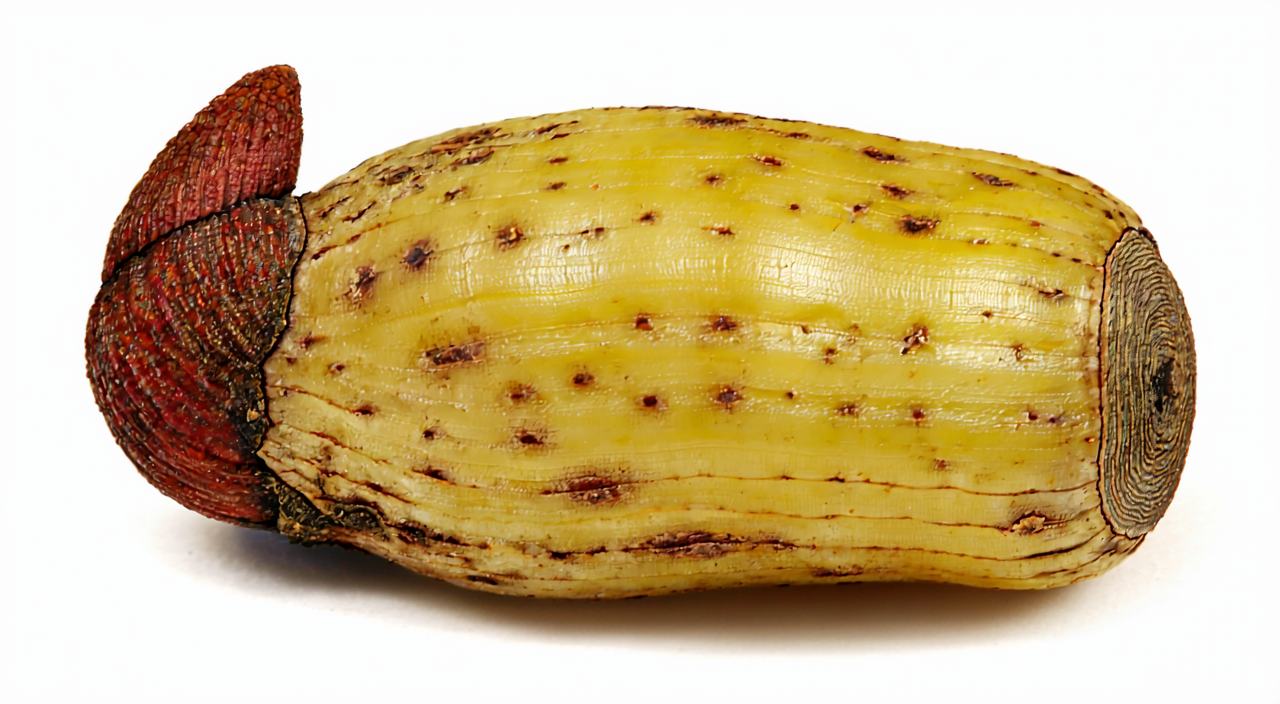
Tian Ma is highly distinctive in its medicinal form. The Tian Ma commonly used in decoctions and formulas is the dried tuber that has been steamed and dried. It is generally oval or elongated, slightly flattened, and sometimes slightly curved, usually measuring between 5 and 15 cm in length.
Its surface is mostly yellowish-white or pale yellowish-brown, with a faint translucent appearance. Traditional and practical identification features include:
- Dotted transverse rings: The surface often displays multiple rings composed of fine dots arranged in horizontal lines, which is a very typical marker of Tian Ma.
- Parrot beak: At one end of the tuber, a reddish-brown to brown withered bud sheath is sometimes visible, resembling a parrot’s beak. This has traditionally been called the “parrot beak.”
- Belly button: At the other end, there is a round, sunken scar resembling a navel, which is the trace where the original plant was connected to the parent tuber.
These combined features often allow for quick differentiation between Tian Ma and other similar-looking root or rhizome herbs. Of course, when purchasing, it is still necessary to consider texture, cross-section, and odor comprehensively. Relying on a single feature alone is not recommended.
What part of Tian Ma is used medicinally?
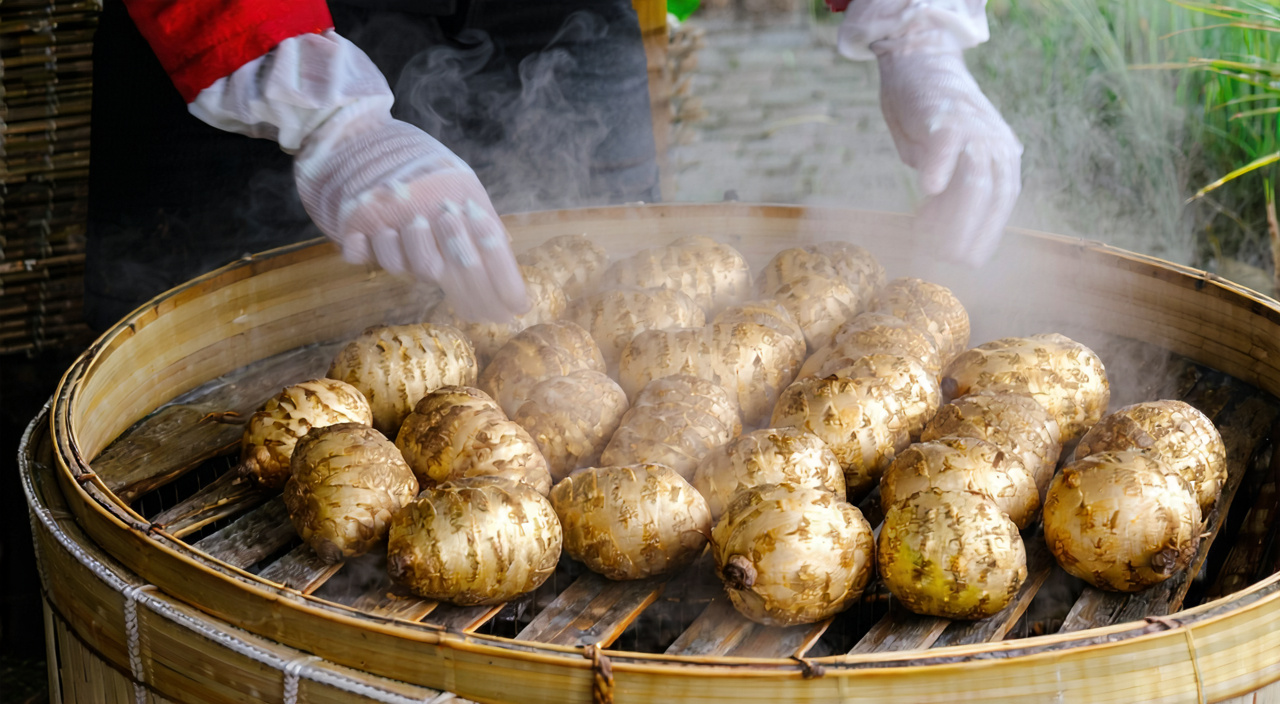
The medicinal part of Tian Ma is its tuber. A tuber is a type of underground stem, different from a root, in this case storing abundant nutrients and making Tian Ma more suitable for medicinal use after traditional processing.
The harvesting season is generally in winter or early spring, when the aerial parts of the plant have withered and nutrients are concentrated in the tuber. After harvesting, the tubers need to be processed as soon as possible. A common approach is to wash them clean, then steam them until thoroughly cooked, followed by low-temperature drying or sun-drying. This steaming step is not merely about dehydration. Traditionally, it is thought to alter the texture and properties of the herb, making Tian Ma more suitable for long-term storage and subsequent use.
Therefore, the Tian Ma circulating in the market is mostly the steamed and dried product. Although some people occasionally use fresh Tian Ma in soups, this does not mean the fresh product can directly replace the dried product in formulas. The distinction must be made when using it.
How does Chinese medicine understand Tian Ma?
Traditional Chinese medicine does not view Tian Ma through a single function but understands it from the perspective of regulating the overall state of the body. In summary, Tian Ma is usually categorized as an herb that calms the liver and extinguishes wind, and it is mainly considered in the following contexts:
- Extinguishing wind and stopping spasms: For limb tremors, convulsions caused by internal movement of liver wind, or infantile convulsions, Tian Ma is sometimes included in traditional formulas as part of a combination.
- Pacifying and subduing liver yang: When there are signs of liver yang rising, such as distending headache, dizziness, irritability, and a quick temper, Tian Ma is often used together with Gou Teng and Shi Jue Ming as part of a regulating approach.
- Dispelling wind and unblocking collaterals: In the context of wind-damp painful obstruction, limb numbness, or difficulty moving the hands and feet, Tian Ma can also appear in combination formulas.
It should be noted that these descriptions are all based on traditional Chinese medicine theories and do not align one-to-one with the disease classification systems of modern medicine. Whether Tian Ma is suitable for use must take into account an individual’s constitution, symptom presentation, and be thoroughly evaluated by a qualified professional. It is not advisable to self-prescribe based solely on a single symptom.
What has modern research discovered about Tian Ma?
Modern research mainly focuses on components such as gastrodin found in Tian Ma. Some experiments suggest that these components may have certain protective effects on nervous system function and show potential research value in areas like improving learning and memory, and alleviating certain types of dizziness. Additionally, some preliminary observations indicate that Tian Ma may influence vasomotor function and microcirculation to some extent.
However, most of these findings are limited to laboratory studies or small-scale observations and cannot yet be directly generalized as applicable to everyone. For those hoping to use Tian Ma for health maintenance, this information can serve as background knowledge, but it should not replace concrete decision-making based on an individual’s specific condition.
How to distinguish Tian Ma, Gou Teng, and Bai Ji?
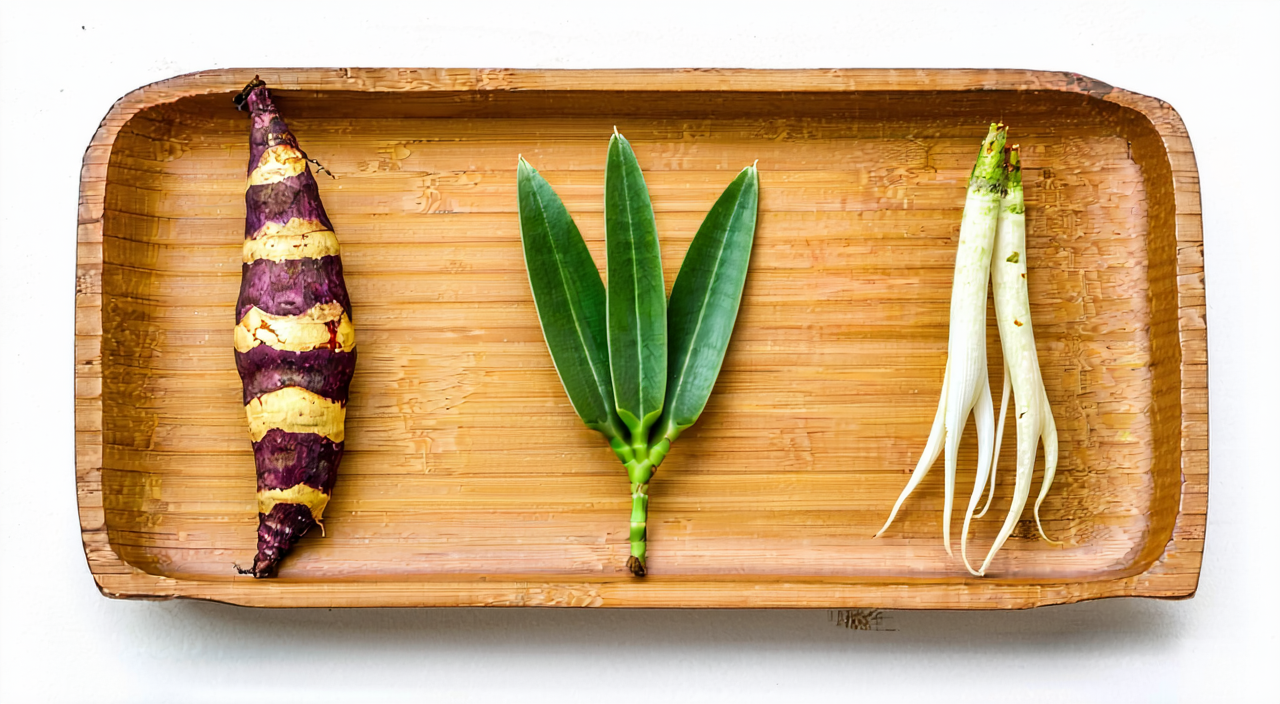
In Chinese materia medica, Tian Ma, Gou Teng, and Bai Ji are three entirely different substances, but their names or contexts of use sometimes lead them to be mentioned together. Here is a brief distinction:
- Different plant sources: Tian Ma is the tuber of Gastrodia elata, an orchid plant that lacks chlorophyll and relies on a symbiotic relationship with Armillaria fungi. Gou Teng is the dried hook-bearing stem and branch of Uncaria species, belonging to the Rubiaceae family. Bai Ji is the dried tuber of Bletilla striata, also an orchid, but from a different genus than Tian Ma.
- Clear differences in appearance: Tian Ma is an oval or elongated tuber with a parrot beak, belly button scar, and dotted transverse rings. Gou Teng consists of short stem-and-branch segments bearing opposite pairs of curved hooks, and is very hard. Bai Ji tubers often have claw-like branching, a yellowish-white surface, and a cross-section that is somewhat horn-like.
- Different traditional application approaches: Tian Ma tends to calm liver wind and subdue liver yang. Gou Teng is commonly used to clear heat and calm the liver, extinguish wind, and settle fright, and it is paired with Tian Ma for dizziness and headaches due to liver yang rising or wind-yang disturbing the upper body. Bai Ji is traditionally used primarily for astringing to stop bleeding and for reducing swelling and generating flesh, a direction quite different from Tian Ma.
Understanding these differences helps avoid confusing the three when reviewing related formulas or products.
Which formulas include Tian Ma?
Tian Ma is rarely used alone. It frequently appears as a component in several classic formulas. Below are a few representative ones, presented solely to illustrate traditional approaches:
- Tian Ma Gou Teng Yin (Gastrodia and Uncaria Decoction): This formula commonly includes Tian Ma, Gou Teng, Shi Jue Ming, and others. It is traditionally used to address patterns of liver yang rising and wind-yang disturbing the upper body, leading to dizziness, headache, and insomnia.
- Ban Xia Bai Zhu Tian Ma Tang (Pinellia, Atractylodes, and Gastrodia Decoction): Composed of Ban Xia, Tian Ma, Bai Zhu, and others, it is often used for dizziness, heavy head, chest tightness, and nausea caused by wind-phlegm disturbing the upper body.
- Tian Ma Wan (Gastrodia Pill): A traditional patent remedy that often pairs Tian Ma with Qiang Huo, Du Huo, and Du Zhong. It is used to address wind-damp painful obstruction, limb numbness, and contracture of the hands and feet.
- Tian Ma Headache Tablets: A modern Chinese patent medicine, usually combining Tian Ma with Bai Zhi and Chuan Xiong. It is commonly used as an auxiliary approach for migraine, tension headache, or menstrual headache.
Each of these formulas or patent medicines has a different emphasis and is not suitable for everyone. The same symptom may correspond to different constitutions and root causes in different individuals. Whether a particular formula can be chosen needs to be evaluated comprehensively, taking into account product instructions, personal symptoms, and a professional’s judgment.
What precautions should be taken when using Tian Ma?
Even though Tian Ma is considered relatively mild in traditional applications, there are still important boundaries to keep in mind when using it:
- Dizziness has complex causes; do not apply formulas blindly: Liver yang rising-type dizziness is only one of many types of vertigo. Low blood pressure, anemia, cervical spine issues, vestibular dysfunction, and other factors can all cause dizziness. Using Tian Ma outside of a pattern differentiation framework may not be appropriate and could even mask the true condition.
- Caution is needed in cases of low blood pressure or when using sedative-type products: Tian Ma may have a certain blood-pressure-lowering effect and central sedating tendency. If you already have low blood pressure or are using antihypertensives, sleeping pills, etc., you need to inform a professional in advance to avoid discomfort from additive effects.
- Not suitable for self-directed use during pregnancy and lactation: Due to the special physiological state during pregnancy, although Tian Ma is not a strongly contraindicated herb, for safety reasons it is recommended not to self-use products containing Tian Ma throughout the entire pregnancy and lactation period.
- Do not treat Tian Ma powder as an everyday universal tonic: Some people grind Tian Ma into powder and take it daily, believing it will enhance health and strengthen the body. In reality, Tian Ma is oriented towards extinguishing wind and calming the liver and is not suitable for everyone to take long-term. Particularly for those with pronounced qi deficiency, blood deficiency, or spleen-stomach deficiency and cold constitutions, long-term use may instead cause discomfort. If symptoms like dizziness or limb numbness persist, recur, or worsen, priority should be given to professional examination, not to self-increase the dosage of Tian Ma.
Summary
As a traditional Chinese medicinal substance, the value of Tian Ma is built upon pattern-appropriate use and rational combination. Understanding its appearance features, medicinal parts, and differences from Gou Teng and Bai Ji can help us be more discerning when encountering related information. However, for discomforts such as dizziness and headaches, it is more important to first clarify the root cause rather than hastily trying any single herb. This article is intended solely for educational purposes on Chinese medicine knowledge and cannot replace professional diagnosis or individualized advice. If symptoms persist, consulting a doctor or qualified professional in a timely manner is still advised.