
What Is Xi Xin? Medicinal Parts, Identification, and Common Formulas
Xi Xin (Asarum) is an herb that many who follow traditional Chinese medicine may have heard of, yet few truly understand it. It appears in classic formulas while often accompanied by cautions about its careful usage. So, what exactly is this medicinal substance? How is it viewed in Chinese medicine? And what about the accounts of Xi Xin poisoning that we sometimes hear about? This article offers a systematic overview of Xi Xin’s identification, medicinal parts, common formulas, and essential safety considerations.
What Does Xi Xin Look Like? How to Identify It
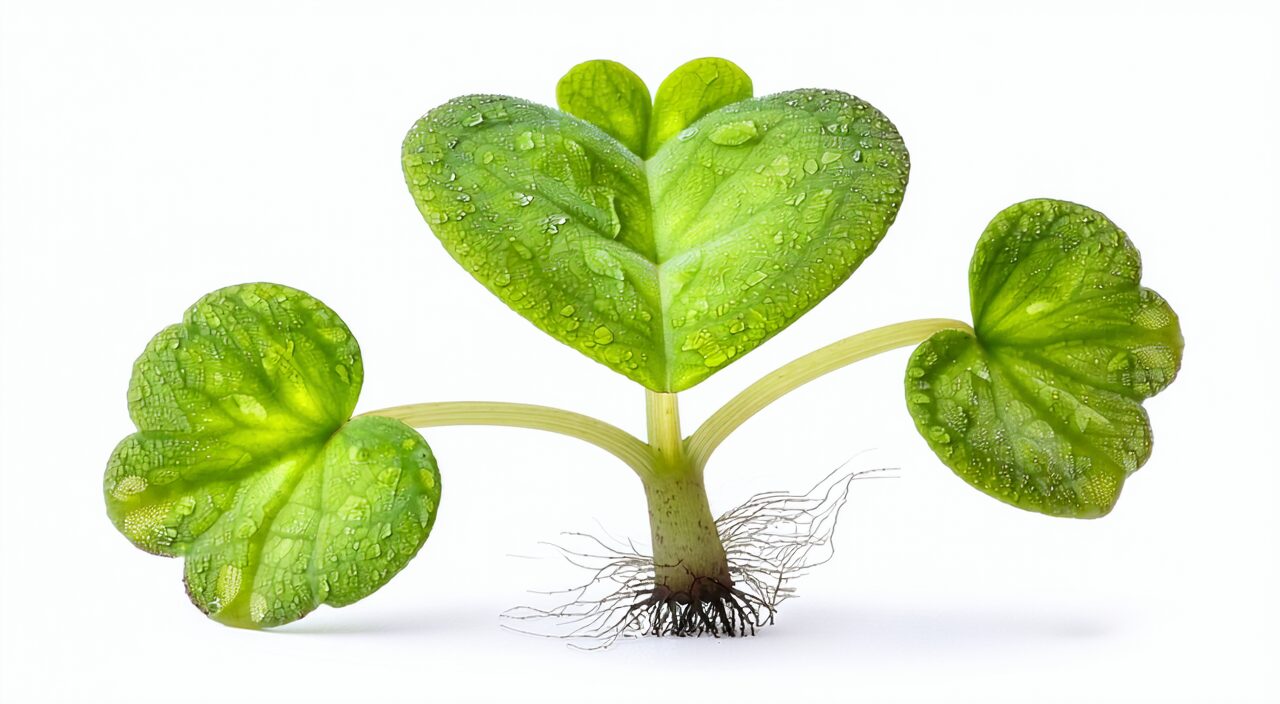
Xi Xin is the dried root and rhizome of plants in the Aristolochiaceae family. Different species vary slightly in appearance, but they share common traits that aid identification. Its rhizome is irregularly cylindrical, often with short branches, greyish-brown on the surface, and marked with annular nodes. The most striking feature is the dense cluster of slender roots, typically 10–20 cm long and only about 0.1 cm in diameter. The root surface is greyish-yellow with longitudinal wrinkles; the texture is brittle, breaks easily, and the fracture surface is flat and powdery. Xi Xin root has a strong, distinctive spicy fragrance and a pungent, slightly numbing taste—an important cue for authentication. The aerial parts consist of leaf stalks and heart-shaped leaves, but the leaves are usually removed when the herb is processed for medicinal use. When identifying Xi Xin, the key is to look for bunches of slender, pale, intensely aromatic root fibers. This is also the most intuitive difference from other root-based herbs.
What Are the Medicinal Parts of Xi Xin?

According to pharmacopoeia standards, the medicinal parts of Xi Xin are the dried root and rhizome. Traditionally, some regions used the whole plant, including the aerial parts. However, based on safety concerns, regulations now clearly restrict the use of the above-ground parts. The aerial parts of Xi Xin contain relatively higher levels of aristolochic acids than the root and rhizome. Aristolochic acids are considered to pose a risk of nephrotoxicity. Therefore, strict processing requires removing the above-ground stems and leaves, retaining only the root and rhizome, and then undergoing cleaning, cutting, and drying procedures. On the market, compliant Xi Xin decoction pieces should consist of a mixture of slender root segments and rhizome pieces, generally with a distinct spicy aroma and a greyish-yellow or light brown color. Overseas users who wish to learn about or purchase Xi Xin-related products can pay attention to their origin and processing standards to ensure the use of properly regulated medicinal parts.
How Does Chinese Medicine Understand Xi Xin?
Traditional Chinese medicine has long recognized Xi Xin, primarily categorizing its actions as releasing the exterior and dispelling cold, dispelling wind and relieving pain, unblocking the orifices, and warming the lung to transform retained fluids.
Releasing the exterior and dispelling cold: Xi Xin is warm in nature and adept at dispersing wind-cold. For common colds with a heavy cold pattern, especially at the early stage when fever is not prominent but chills, headache, and body aches are severe, it has traditionally been combined with herbs like Qiang Huo (Notopterygium) and Fang Feng (Saposhnikovia) to strengthen the sweating and cold-dispersing effect.
Dispelling wind and relieving pain: Xi Xin can search out wind and cold and relieve pain, making it suitable for headaches, toothaches, and general body pain caused by wind-cold-dampness. For example, headaches that worsen with cold or toothaches of a cold nature have been treated with Xi Xin throughout historical formula records.
Unblocking the orifices: Xi Xin ascends to the head and face and can warm and unblock the nasal passages. For cold-type nasal symptoms such as nasal congestion and clear nasal discharge, it is often used together with Xin Yi (Magnolia flower bud) and Bai Zhi (Angelica dahurica) to open the nasal orifices.
Warming the lung to transform retained fluids: Xi Xin is also frequently used for cough, qi counterflow, and copious thin, clear phlegm caused by cold fluid retention in the lung. By warming and dispersing lung cold, it helps to facilitate the smooth flow of qi. Xiao Qing Long Tang (Minor Bluegreen Dragon Decoction) is a representative formula in this regard.
These interpretations are based on traditional Chinese medicine pattern differentiation and are not the same as indications in modern medicine. Whether Xi Xin is suitable for an individual requires comprehensive assessment of their specific constitution.
What Does Modern Research Focus on Regarding Xi Xin?
Modern research on Xi Xin primarily focuses on its volatile oil components and safety profile. Xi Xin contains abundant volatile oils, including methyleugenol and safrole. These constituents are linked to Xi Xin’s characteristic aroma and traditional uses, with safrole being an ingredient that requires close monitoring. In experimental studies, Xi Xin and its extracts have demonstrated a variety of biological activities at specific doses, such as anti-inflammatory and analgesic effects, but such studies mostly remain at the experimental stage and cannot be directly equated to effects in routine human use. In recent years, much of the discussion has centered on how to reduce the content of constituents like safrole through processing and decoction, as well as how to avoid the risks posed by long-term, high-dose misuse, especially renal effects. From a modern perspective, Xi Xin is an herb that simultaneously possesses traditional application value and necessitates strict management.
Key Differences Between Xi Xin and Xin Yi
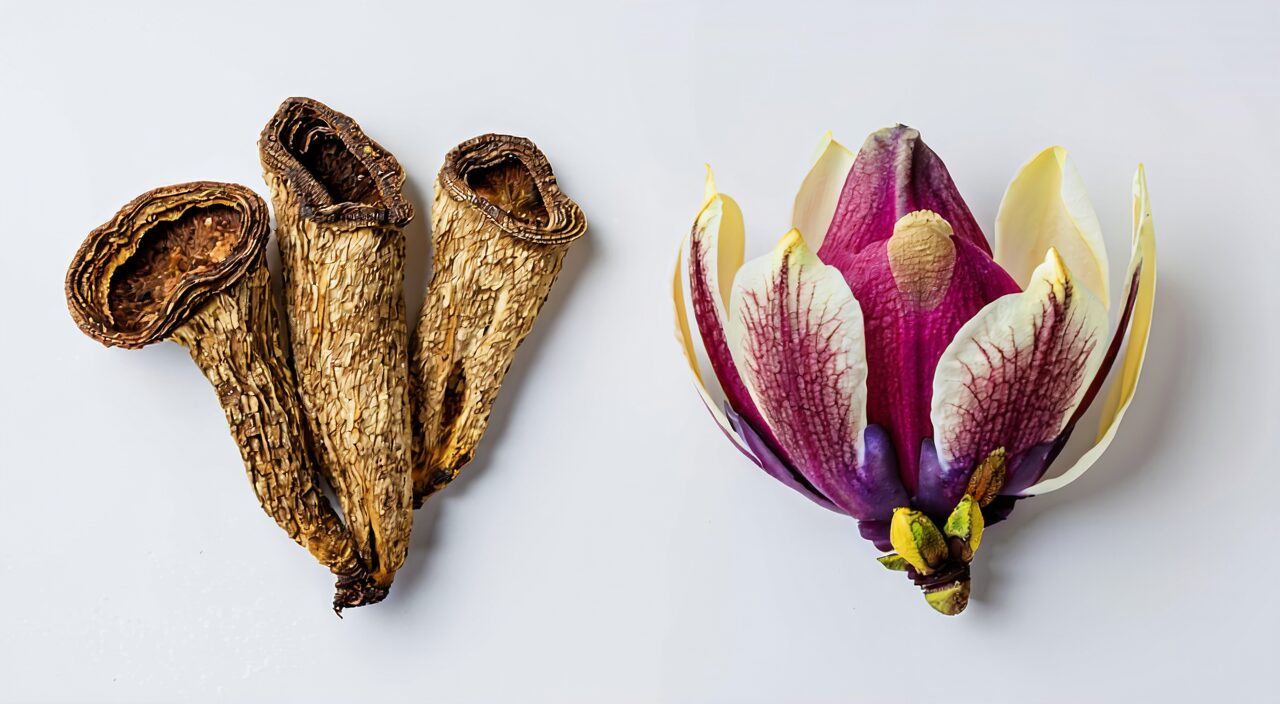
Many people tend to confuse Xi Xin and Xin Yi because they often appear together in formulas for nasal discomfort and both have rather refined names. However, they are two completely different medicinal substances.
Source and appearance: Xi Xin uses the root and rhizome of Asarum plants, appearing as slender, curved, fibrous roots that are greyish-yellow with an intense spicy fragrance. Xin Yi, on the other hand, is the dried flower bud of Magnolia species such as Wang Chun Hua (Magnolia biondii) or Yu Lan (Magnolia denudata). It looks like a writing brush tip, covered with fine hairs, yellowish-green or brownish-yellow in color, with an aromatic odor and a slightly milder nature. One grows underground, the other on branches; they look completely different.
Traditional use emphasis: Xin Yi excels at opening the nasal orifices and is a frequently used herb specifically targeting head and nose disorders, suitable for various types of nasal congestion and sinusitis. Although Xi Xin can also unblock the nasal passages, its scope of action is broader. It can both disperse exterior wind-cold and seek out deeper cold, with a more pronounced pain-relieving effect. It is commonly used for head and body pain, wind-cold cough, phlegm-fluid retention, and other conditions. Therefore, both often appear together in formulas to address nasal congestion and overall cold symptoms in a synergistic manner.
Understanding this difference can help one better appreciate the rationale behind formulas when encountering related traditional preparations.
Examples of Common Formulas Containing Xi Xin
Xi Xin plays an important role in many classic formulas. Here are a few common examples to help orient further understanding.
Xiao Qing Long Tang (Minor Bluegreen Dragon Decoction): Composed of Ma Huang (Ephedra), Shao Yao (Peony), Xi Xin, Gan Jiang (Dried Ginger), Gui Zhi (Cinnamon Twig), Ban Xia (Pinellia), Wu Wei Zi (Schisandra), and Gan Cao (Licorice). Traditionally used for patterns of external cold and internal fluid retention—when cold attacks the body surface while fluid stagnation lingers internally—manifesting as chills, fever, cough, wheezing, and white, thin, clear phlegm. Xi Xin assists in warming the lung and dispersing cold to transform fluid retention.
Jiu Wei Qiang Huo Tang (Nine-Herb Notopterygium Decoction): Contains Qiang Huo (Notopterygium), Fang Feng, Cang Zhu (Atractylodes), Xi Xin, Chuan Xiong (Ligusticum), Bai Zhi, Sheng Di (Raw Rehmannia), Huang Qin (Scutellaria), and Gan Cao. Commonly used for common colds with wind-cold-dampness, presenting as chills, fever, headache, and aching limbs. Here, Xi Xin mainly helps disperse wind-cold and relieve pain.
Dang Gui Si Ni Tang (Tangkuei Decoction for Frigid Extremities): Composed of Dang Gui (Angelica sinensis), Gui Zhi, Shao Yao, Xi Xin, Tong Cao (Tetrapanax), Da Zao (Jujube), and Gan Cao. This formula is often used for conditions of blood deficiency with cold causing cold extremities. Xi Xin works together with Gui Zhi to warm and unblock the channels and vessels, dispelling cold and stopping pain.
Du Huo Ji Sheng Tang (Angelica Pubescens and Loranthus Decoction): A more complex formula including Du Huo (Angelica pubescens), Sang Ji Sheng (Loranthus), Du Zhong (Eucommia), Niu Xi (Achyranthes), Xi Xin, Qin Jiao (Gentiana macrophylla), Fu Ling (Poria), Rou Gui Xin (Cinnamon Bark), Fang Feng, Chuan Xiong, Ren Shen (Ginseng), Dang Gui, Shao Yao, Gan Di Huang (Dried Rehmannia), and Gan Cao. Used for chronic management of lower back and knee pain, and impaired joint mobility due to liver and kidney deficiency with wind-cold-dampness invasion. Xi Xin assists in searching out and dispelling deep-lying cold-dampness.
It should be noted that these formulas each have their own directional suitability and specific constitutional requirements; they are not universal remedies and cannot be simply applied according to a checklist. Whether a formula is suitable must be determined based on individual pulse and symptom presentation and professional advice.
What Precautions Should Be Observed When Using Xi Xin?
The use of Xi Xin is subject to very strict precautions because it is indeed a medicinal herb with inherent risks and must never be treated casually.
Firstly, because Xi Xin contains constituents such as safrole, extra caution is required when using it raw or in powdered form for internal consumption. The traditional saying “Xi Xin should not exceed one qian” (a historical weight unit) persists today largely as a reminder not to exceed the recommended dose or engage in long-term self-medication. Properly processed decoction pieces of Xi Xin are typically subjected to prolonged decoction to reduce the content of volatile toxic constituents. Therefore, decoctions must follow standardized cooking requirements and should not be handled in the same casual manner as other herbs.
Secondly, due to the possible risk of kidney damage from aristolochic acids, Xi Xin is generally considered unsuitable for individuals with impaired renal function. Even though the root and rhizome parts contain relatively low levels of aristolochic acids, this does not equate to absolute safety; long-term, high-dose use still carries hidden dangers. Hence, those with pre-existing kidney conditions or who are using other medications that affect kidney function should avoid self-directed exposure to Xi Xin.
Finally, Xi Xin must never be self-ground into powder for long-term use. Some folk remedies may recommend grinding Xi Xin directly into powder to be taken with water or filled into capsules. Such usage is extremely risky and can easily lead to inadvertent overdose, causing adverse reactions such as nausea, vomiting, and respiratory abnormalities, and may be life-threatening in severe cases.
In summary, Xi Xin is a medicinal herb that must only be used under strict professional evaluation and guidance. Its source, processing, and method of use must all adhere to rigorous standards.
Summary
Xi Xin is a quintessential Chinese herbal medicine that requires thorough understanding and standardized use. Identification centers on its slender, greyish-yellow roots and intense spicy aroma, and the medicinal part is strictly limited to the root and rhizome. While it possesses traditional applications for dispersing wind-cold and unblocking orifices to relieve pain, its inherent constituents impose clear restrictions, and it must never be used raw or taken long-term without supervision. Readers who wish to explore related formulas further should always consider their individual constitution and seek professional guidance to ensure safety above all.