
What Is Xia Ku Cao (Prunella vulgaris)? Medicinal Parts, Identification, and Common Formulas
Xia Ku Cao (Prunella vulgaris) is a very common medicinal herb in traditional materia medica, derived from the dried fruit spike of the lamiaceous plant Prunella vulgaris. Its name bears a distinct seasonal feature — after the summer solstice, the plant’s flower spike gradually withers, hence the name “Xia Ku Cao” (meaning “withered in summer”). Many overseas Chinese readers encounter this herb in Chinese medicine shops or daily conversations but are not entirely clear about what it looks like, which part is used, and how it differs from similar herbs such as dandelion. This article will address these questions one by one.
What Does Xia Ku Cao Look Like? How to Identify It?
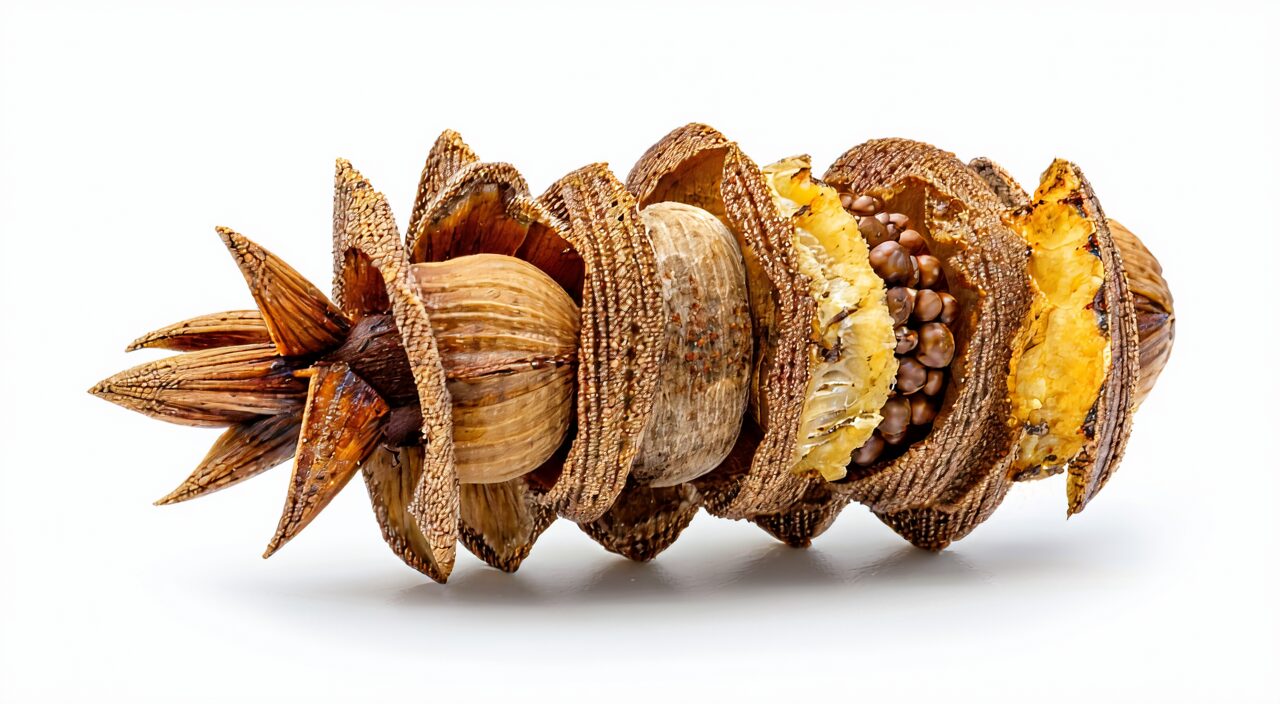
From the perspective of traditional medicinal material identification, the medicinal part of Xia Ku Cao is primarily a dried fruit spike. It is generally cylindrical and slightly flattened, typically 1.5 to 8 cm in length and about 0.8–1.5 cm in diameter. Its surface is mostly light brown to yellowish brown, and the most distinctive feature is the whorls of persistent calyces arranged along the spike, like many layers of small “umbrellas” stacked together, usually consisting of over a dozen whorls of calyces and bracts. Each whorl has two opposite bracts that are fan-shaped with a pointed tail-like apex and prominent veins, and the outer surface bears a thin layer of white fuzz. Each calyx is lipped and contains four tiny nutlets; the nutlets are ovoid, brown, and have a white protrusion at the tip.
When held in hand, it feels very light, with a brittle texture and breaks easily. It has a very faint, fresh aroma and basically no distinct taste when chewed. If a small piece of Xia Ku Cao is dropped into clear water, the persistent calyces will slowly absorb water and unfold, revealing the lipped calyx and the tiny nutlets hidden inside — a characteristic that can serve as a reference for daily identification. Compared with fruit spikes of other plants in the same genus, those of Xia Ku Cao are shorter and thicker, with more compact calyx whorls and more pronounced fuzz on the bracts, all of which help avoid confusion.
What Is the Medicinal Part of Xia Ku Cao?
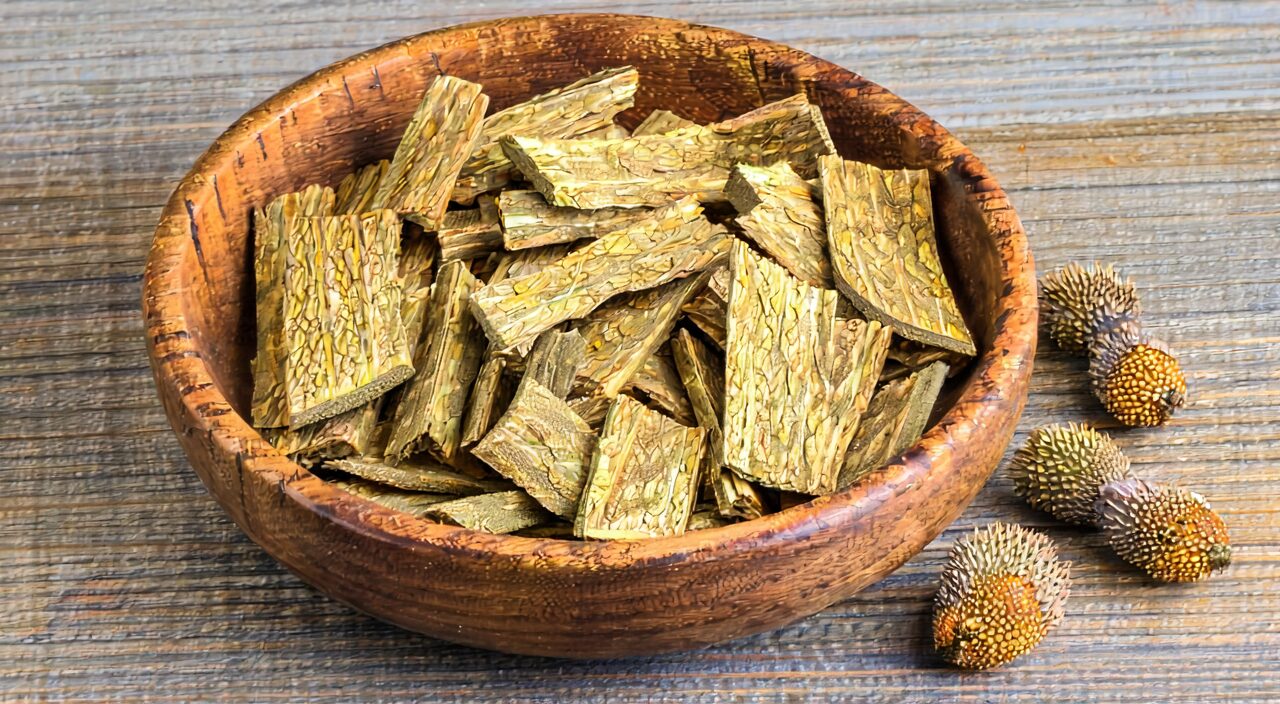
The medicinal part is very clear: it is the dried fruit spike. Harvesting is generally done in summer when the fruit spike is half-withered and turns brownish-red. The entire spike is cut or picked, impurities are removed, and then it is sun-dried. Processed decoction pieces are often cut into segments or irregular pieces, some with a short piece of stem attached, but most are pure fruit-spike segments, still maintaining a light and brittle texture. According to traditional experience, spikes that are long, plump, brownish-red in color, and free of long stems and impurities are considered the best quality. If harvested too late, the overly mature spikes will scatter, affecting appearance and quality; therefore, the timing of harvest is given careful attention. In daily practice, Xia Ku Cao decoction pieces are mostly brownish-yellow or brownish-brown granules or segments, with faint traces of the original calyx arrangement still visible.
How Does Traditional Chinese Medicine Understand Xia Ku Cao?
In traditional Chinese medicine theory, Xia Ku Cao is bitter and acrid in taste and cold in nature, mainly entering the Liver and Gallbladder meridians. Ancient understanding primarily focused on its functions of clearing the liver, draining fire, brightening the eyes, and dissipating masses and reducing swelling. The liver opens into the eyes; if liver fire is excessive, symptoms such as red, swollen, painful eyes, photophobia, and tearing may appear. Traditionally, Xia Ku Cao may be considered to help clear liver fire and thereby relieve these manifestations. In addition, the liver meridian travels along the sides of the head and the neck. For conditions such as scrofula, goiter, or other neck masses caused by liver qi stagnation and phlegm-fire congealing, Xia Ku Cao is often used as a reference for dissipating masses and reducing swelling. Because it is cold and cool in nature, it is generally considered more suitable for constitutions with excess fire and a tendency toward masses, while those with deficient-cold constitutions should avoid it and not use it casually.
How Does Modern Research View Xia Ku Cao?
In modern research, the triterpenoids, flavonoids, phenolic acids, polysaccharides, and other components contained in Xia Ku Cao have drawn some attention. Some in vitro and animal studies suggest that these components may have potential in anti-inflammatory, immunomodulatory, and antioxidant aspects. However, herbal constituents are complex, and these laboratory findings cannot be directly extrapolated to specific effects in the human body, nor do they mean that taking Xia Ku Cao will produce the same effects. Viewing it as a reference from traditional experience while also incorporating modern research developments to more comprehensively understand this herb may be a more rational approach.
What Are the Differences Between Xia Ku Cao, Dandelion, and Wild Chrysanthemum?
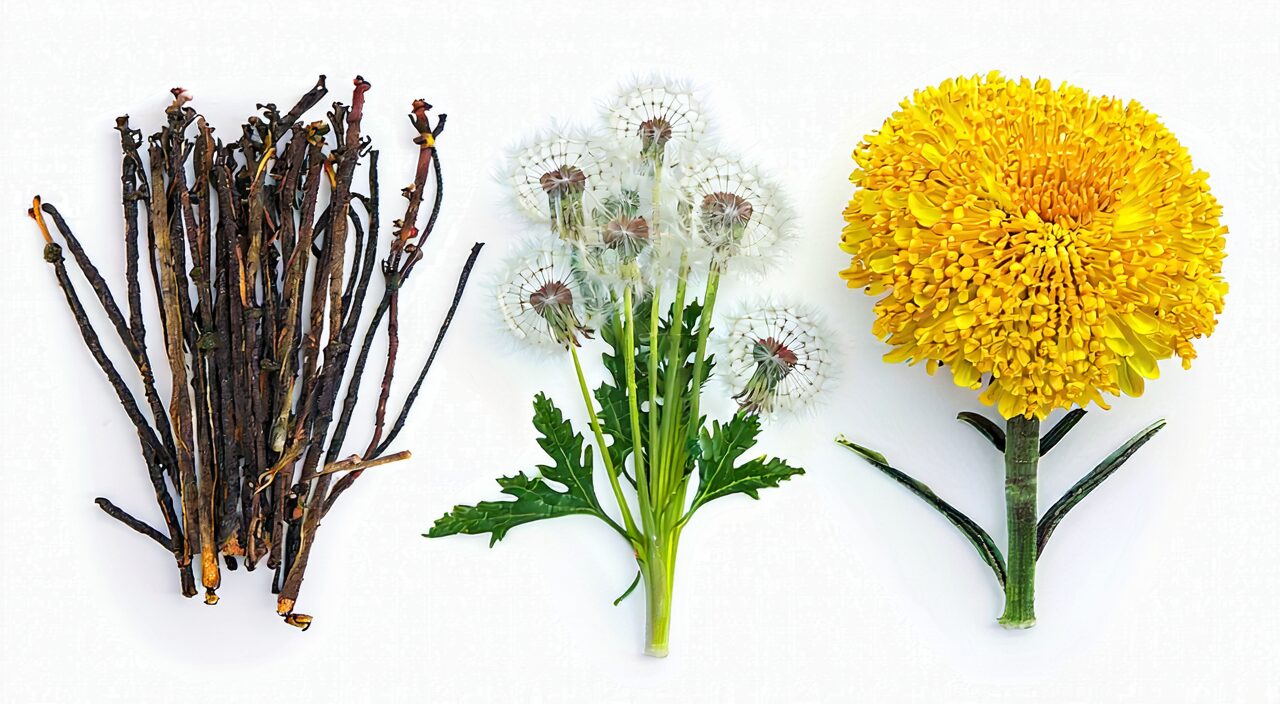
These three herbs are all categorized as heat-clearing herbs, but they differ considerably in origin, appearance, and emphasis in traditional application, so it is necessary to distinguish them clearly.
- Origin and Appearance: Xia Ku Cao uses the fruit spike, which is cylindrical and spike-shaped with layers of persistent calyces, light, brittle, and dry; dandelion uses the whole plant with roots, featuring long, thick taproots and clustered leaves that are oblanceolate with often pinnatifid deep lobes, and exuding white latex when broken; wild chrysanthemum uses the flower head, which is flattened spherical with a ring of ligulate flowers around the outer edge and densely packed tubular flowers in the center, with a bitter and acrid odor. Placed together, the spike form of Xia Ku Cao, the roots and leaves of dandelion, and the flower head of wild chrysanthemum are easy to distinguish.
- Traditional Application Focus: Xia Ku Cao tends to clear liver fire and dissipate masses, commonly used for conditions related to liver fire and lumps; dandelion excels at clearing heat, detoxifying, and resolving abscesses and furuncles, with higher frequency of use especially for breast abscesses and sores; wild chrysanthemum leans toward clearing heat and detoxifying, and dispersing wind-heat, more often used for red, swollen, painful eyes and sore throat caused by external heat toxin. Because of their different emphases, some formulas may combine them based on specific situations, but this does not mean they are interchangeable.
Which Formulas Use Xia Ku Cao?
Xia Ku Cao can be used either as a single herb or frequently appears in compound preparations. The following are some traditionally common formulas or preparations containing Xia Ku Cao, provided only for informational reference.
- Xia Ku Cao Tang (Prunella Decoction): Originating from She Sheng Zhong Miao Fang (Fine Formulas for Preserving Health), with Xia Ku Cao as the sovereign herb, often combined with Dang Gui (Angelica sinensis), Bai Shao (Paeonia lactiflora), Xuan Shen (Scrophularia ningpoensis), etc. Traditionally used in regulating patterns of liver depression transforming into fire and phlegm-fire binding leading to scrofula and similar conditions.
- Nei Xiao Luo Li Wan (Internal Scrofula-Dissolving Pill): This is a type of patent Chinese medicine preparation containing Xia Ku Cao, Xuan Shen, Zhe Bei Mu (Fritillaria thunbergii), Tian Hua Fen (Trichosanthes kirilowii root), and other herbs. It is traditionally used for phlegm-heat binding, goiter, and scrofula. The composition may vary slightly between brands; suitability should be determined based on product instructions and professional judgment.
- Xia Ku Cao Gao (Prunella Syrup/Paste): Made by decocting and concentrating Xia Ku Cao alone and adding honey to form a paste. Traditionally used to clear liver fire, dissipate masses, and brighten the eyes. For red eyes, headache, dizziness, and other signs of liver fire flaring upward, it is often used as a dietary or therapeutic option.
The above traditional formulas and preparations each have their own characteristics and are not suitable for everyone. Whether to choose them and how to use them should be based on individual constitution, specific symptoms, and product instructions, and decisions should be made after consulting relevant professionals—do not make judgments by yourself. The physical conditions of modern people are relatively complex, so one cannot simply apply ancient text records directly.
What Precautions Should Be Taken When Using Xia Ku Cao?
Although Xia Ku Cao is a common medicinal herb, there are still several points to treat with caution when using it.
- Not suitable for prolonged use in those with spleen-stomach deficiency-cold: Because its nature is cold, it may easily damage the yang qi of the spleen and stomach. People who usually have a cold sensation in the stomach, poor appetite, tendency to diarrhea, or loose stools, as well as the elderly and children with weak spleen-stomach function, should not use it long-term or in large amounts to avoid aggravating discomfort.
- Caution for those with low blood pressure or taking antihypertensives: Some studies have shown that Xia Ku Cao has a certain blood-pressure-lowering tendency. If you have low blood pressure or are regularly taking antihypertensive medication, you should consider whether to use it under professional guidance to avoid affecting blood pressure stability due to additive effects.
- Avoid long-term consumption as “cooling tea”: In some regions, there is a habit of boiling Xia Ku Cao in water and drinking it as a cooling tea. However, long-term and large consumption of cold-natured herbs may damage the spleen and stomach and affect the circulation of qi and blood. It is not recommended to use Xia Ku Cao as a daily beverage without a clear need.
- Pay attention to source and safety: When purchasing, choose dried fruit spike decoction pieces from legitimate channels and check whether tests for pesticide residues, heavy metals, etc., are compliant. Self-collection from the wild carries high risks, especially as it is difficult to guarantee no contamination or species confusion; it is best to avoid directly using herbs of unknown origin.
Summary
Xia Ku Cao is a traditional medicinal herb used in its dried fruit spike form. The key to identification lies in its cylindrical spike-shaped infructescence and the unique structure of layers of persistent calyces. Traditionally, it is understood mainly in terms of clearing the liver, draining fire, brightening the eyes, and dissipating masses. It differs from dandelion and wild chrysanthemum in both appearance and application focus, so care should be taken to distinguish them. Common preparations containing Xia Ku Cao, such as Xia Ku Cao Tang, Nei Xiao Luo Li Wan, and Xia Ku Cao Gao, merely reflect traditional experience; whether they are suitable for an individual requires consideration of constitution and professional judgment. This article is for objective popular science only and cannot replace professional diagnosis or treatment advice.