
What Is Yue Ji Hua? Medicinal Parts, Identification Methods, and Common Formulas
Yue Ji Hua is derived from the semi-open flowers of the rose family plant Rosa chinensis (Chinese rose). It is a commonly used medicinal herb in traditional Chinese medicine for “promoting blood circulation and regulating menstruation”. For overseas Chinese readers who wish to distinguish Yue Ji Hua from Mei Gui Hua (Rosa rugosa) and understand its medicinal parts and traditional formulas, mastering the basic identification features and usage precautions can help them approach this herb more safely.
What Does Yue Ji Hua Look Like? How to Identify It?
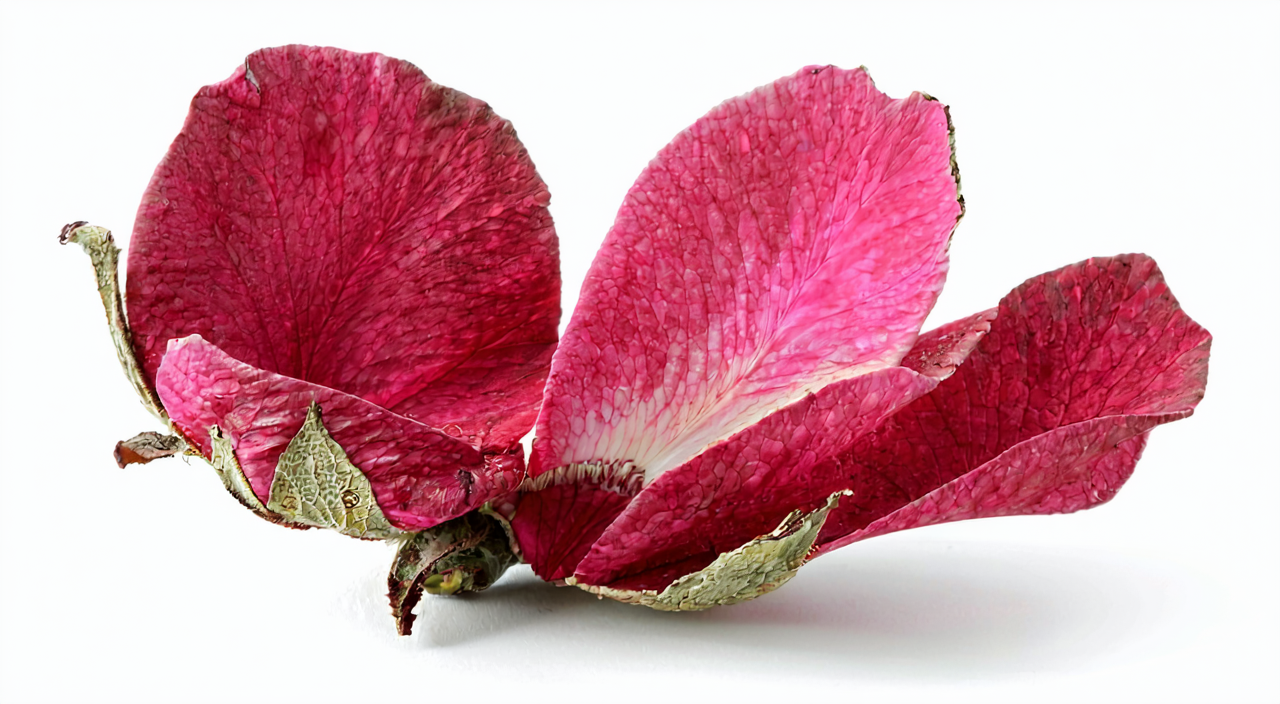
Yue Ji Hua is subspherical or ovoid in shape, usually with a diameter of 1 to 2.5 cm. The flower buds are half-open, and the petals are closely arranged in an imbricate pattern. The color is mainly purple-red or pink, and medicinal products generally select the purple-red ones. The receptacle is inversely conical, green or brownish-green, and relatively hard. There are five sepals, lanceolate, reflexed downward, and partially fused with the receptacle. After drying, the petals of the whole flower become wrinkled but still retain a delicate and elegant fragrance, not as strong as that of roses, but with a slightly sweet note. By observing the flower shape, receptacle, and aroma, one can relatively easily distinguish it from Mei Gui Hua and Qiang Wei Hua (Rosa multiflora).
What Is the Medicinal Part of Yue Ji Hua?
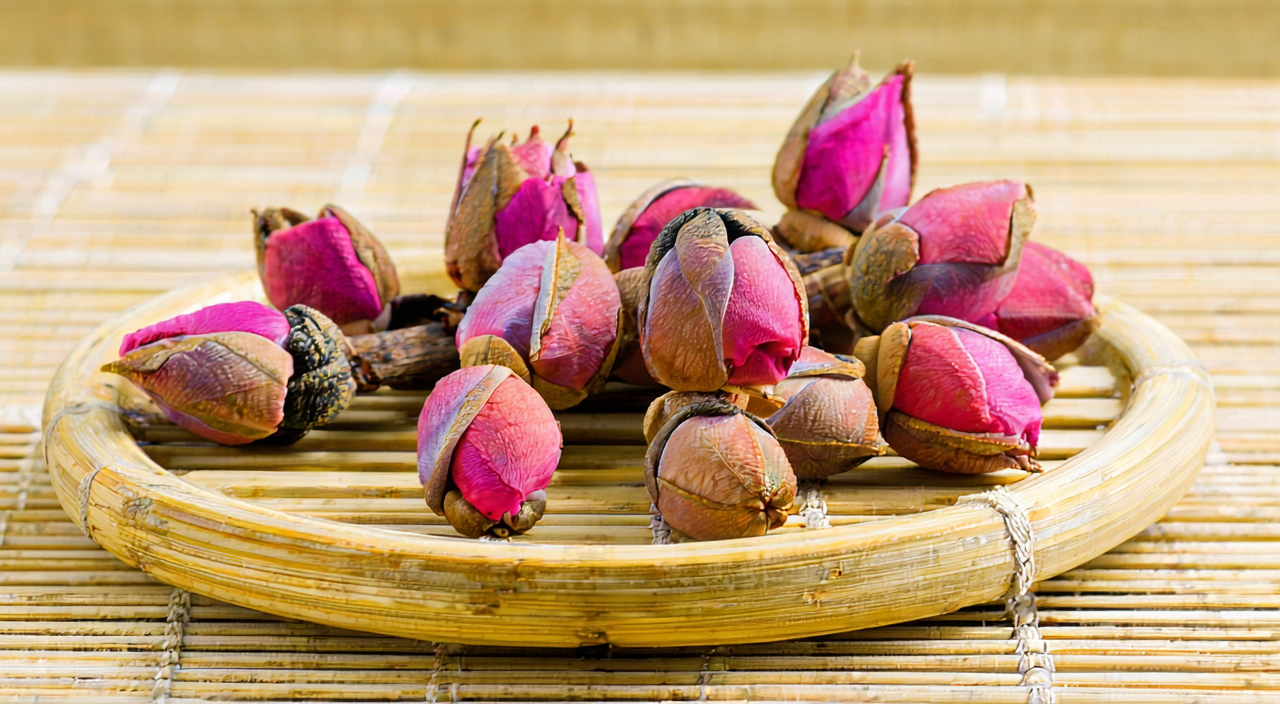
The medicinal part is the semi-open flower of Yue Ji Hua. The best time for harvesting is in spring and summer when the buds have enlarged but have not yet fully opened; at this stage, the petals are intact and the aroma is sufficient, and traditional beliefs hold that the active components are relatively abundant. After harvesting, remove impurities such as pedicels, then dry directly in the sun or at low temperature in the shade, and store sealed away from light. The timing of harvesting directly affects quality; if flowers are collected after fully blooming, the petals easily fall off; if buds are too small, the aroma is weak and the efficacy is weaker.
How Does Traditional Chinese Medicine Understand Yue Ji Hua?
Yue Ji Hua is warm in nature, sweet and slightly bitter in taste, and enters the Liver meridian. The liver stores blood and governs the free flow of qi. In women, the liver is regarded as the congenital foundation. Liver qi stagnation often manifests as irregular menstruation, distension and fullness in the chest and hypochondrium, and so on. Yue Ji Hua is adept at entering the blood aspect of the Liver meridian. Traditionally, its actions are understood from the perspectives of promoting blood circulation, regulating menstruation, and soothing the liver to relieve depression. It is often used for delayed menstruation, painful or obstructed menstrual flow, and premenstrual breast distension caused by blood stasis and qi stagnation. In addition, it may also be found in external or internal empirical use for traumatic swelling and pain. When applying it, one still needs to differentiate cold, heat, deficiency, and excess, rather than using it indiscriminately for all menstrual problems.
What Have Modern Studies Found?
Yue Ji Hua contains flavonoids, volatile oils, phenolic acids, and other components. Among them, flavonoids such as quercetin have shown antioxidant activity and effects on microcirculation in experiments. These findings are somewhat related to the traditional understanding of “promoting blood circulation”, but current research is mostly limited to in vitro or animal experiments and lacks human clinical data. Therefore, existing research provides more of a background perspective and cannot yet be equated with confirmation of efficacy.
What Are the Differences Between Yue Ji Hua, Mei Gui Hua, and Ling Xiao Hua?
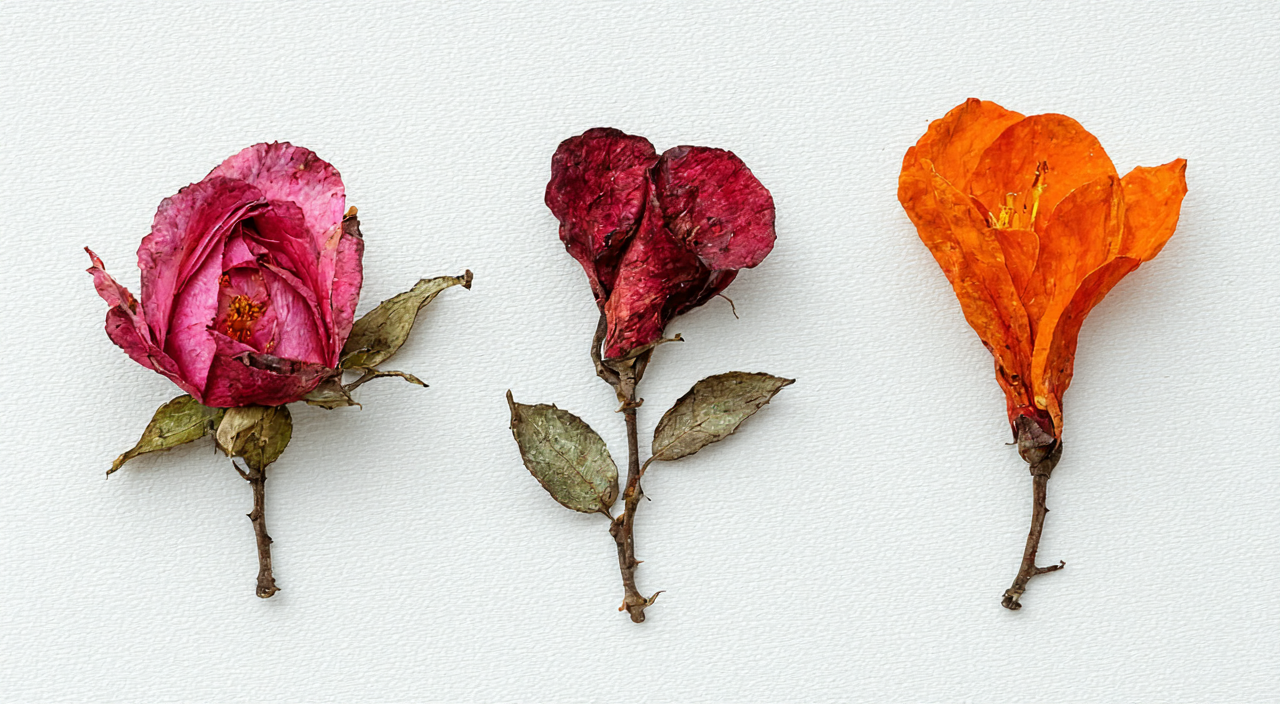
These three are easily confused, but they can be distinguished by petals, receptacle, and color. Yue Ji Hua has densely overlapping petals, an inversely conical receptacle, reflexed sepals, a purple-red color, and a light fragrance. Mei Gui Hua also belongs to the rose family; its petals are more rounded, the receptacle is pot-shaped, the sepals usually do not reflex, and the fragrance is strong, sweet, and mellow. Traditionally, it focuses more on moving qi to relieve depression and harmonizing blood to stop pain. Ling Xiao Hua belongs to the trumpet vine family; its flowers are trumpet-shaped, orange-red or bright red, odorless or with a faint smell, and it is often used to cool blood, dispel wind, and unblock menstruation. Although the three flowers have somewhat similar functions, each has its own emphasis and should not be substituted arbitrarily.
Which Formulas Use Yue Ji Hua?
Yue Ji Hua Tang (Chinese Rose Decoction) often combines Yue Ji Hua with Dang Gui (Angelica sinensis), Chuan Xiong (Ligusticum wallichii), etc., and is used for delayed menstruation and cold pain in the lower abdomen due to blood stasis and qi stagnation. Yue Ji Hua San (Chinese Rose Powder) grinds Yue Ji Hua into powder and takes it with water, traditionally used for traumatic bruising and swelling, drawing on its intention to disperse stasis. In addition, many formulas in the category of promoting blood circulation and regulating menstruation may include Yue Ji Hua as an auxiliary addition to enhance the effect of unblocking menstruation. All formulas must be used based on syndrome differentiation according to constitution and symptoms. It is recommended to consult a Chinese medicine practitioner or pharmacist after fully understanding the situation, and not to prepare and use it on one’s own.
What Precautions Should Be Taken When Using Yue Ji Hua?
Pregnant women should avoid using it, as its blood-promoting properties may bring uncertain effects. Those with heavy menstrual bleeding, flooding and spotting, or bleeding tendencies should not use it. People with coagulation disorders or using anticoagulant medications should also avoid it. Those allergic to pollen of the rose family should be particularly cautious; if rash or respiratory discomfort occurs, discontinue use immediately and seek help. If symptoms persist or worsen, medical examination should be sought promptly and not delayed.
Summary
Yue Ji Hua is used medicinally as half-open flower buds. Identifying its receptacle, flower color, and light fragrance, and distinguishing it from Mei Gui Hua and Ling Xiao Hua, are prerequisites for reasonable use. Traditional Chinese medicine often selects it from the perspectives of promoting blood circulation, regulating menstruation, and soothing the liver to relieve depression, but individual differences are large, and it must be treated cautiously according to constitution and symptoms. No matter how one comes into contact with Yue Ji Hua, popular science information should be used as a reference, and professional guidance should be sought when necessary to ensure safety.