
What Is Zhe Bei Mu? Identification, Medicinal Parts, and Common Formulas
Many people are familiar with the name “Bei Mu,” but there are several types on the market, and Zhe Bei Mu is among the most widely used. It comes from the dried bulb of the lily family plant Fritillaria thunbergii, mainly produced in Zhejiang, Jiangsu, and other regions. In traditional Chinese medicine, it is often considered for managing patterns involving cough with profuse sputum, phlegm-heat stagnation, and certain types of masses. If you are looking into Zhe Bei Mu, understanding its basic characteristics, medicinal part, and differences from other Bei Mu types will be very helpful.
What Does Zhe Bei Mu Look Like? How to Identify It
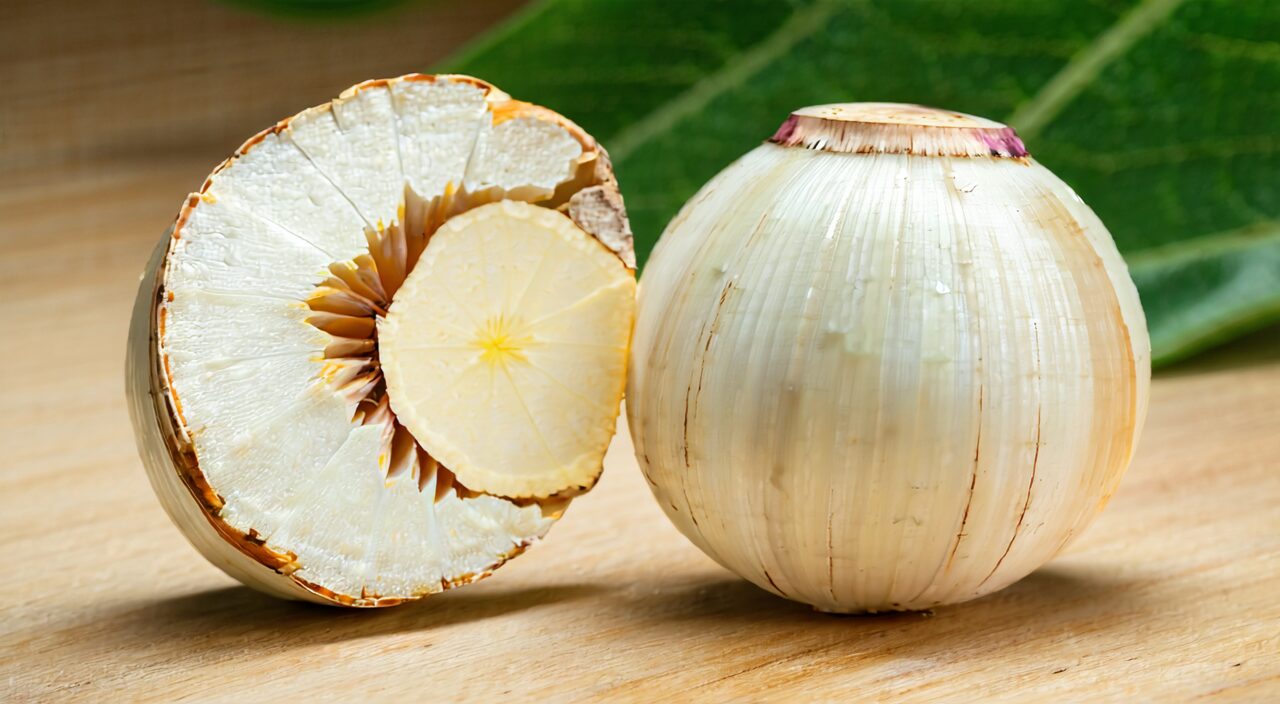
Zhe Bei Mu is commonly available in two commercial forms: Da Bei (large bulb) and Zhu Bei (pearl bulb). Da Bei consists of the thick outer scale leaves of the bulb, often crescent-shaped, 2–3.5 cm long, 1–2 cm high, with a surface that is off-white to pale yellow. One end is blunt and rounded while the other is slightly pointed, and the outer surface has fine wrinkles. The texture is firm, and the cut surface is off-white and highly starchy, with a faint odor and a bitter taste. Zhu Bei is the complete bulb, mostly oblate-spherical, 2–3 cm in diameter, formed by two scale leaves of similar size embracing each other, resembling an abacus bead. The top shows a closed opening, and the cut surface is also quite starchy. Regardless of the form, Zhe Bei Mu has a distinctly bitter taste when chewed, which is an important distinguishing feature from some sweet-tasting Bei Mu varieties. Traditional experience holds that bulbs with thick, starchy scale leaves and an off-white color are superior, while a grayish surface or musty smell may indicate poor quality.
What Is the Medicinal Part of Zhe Bei Mu?
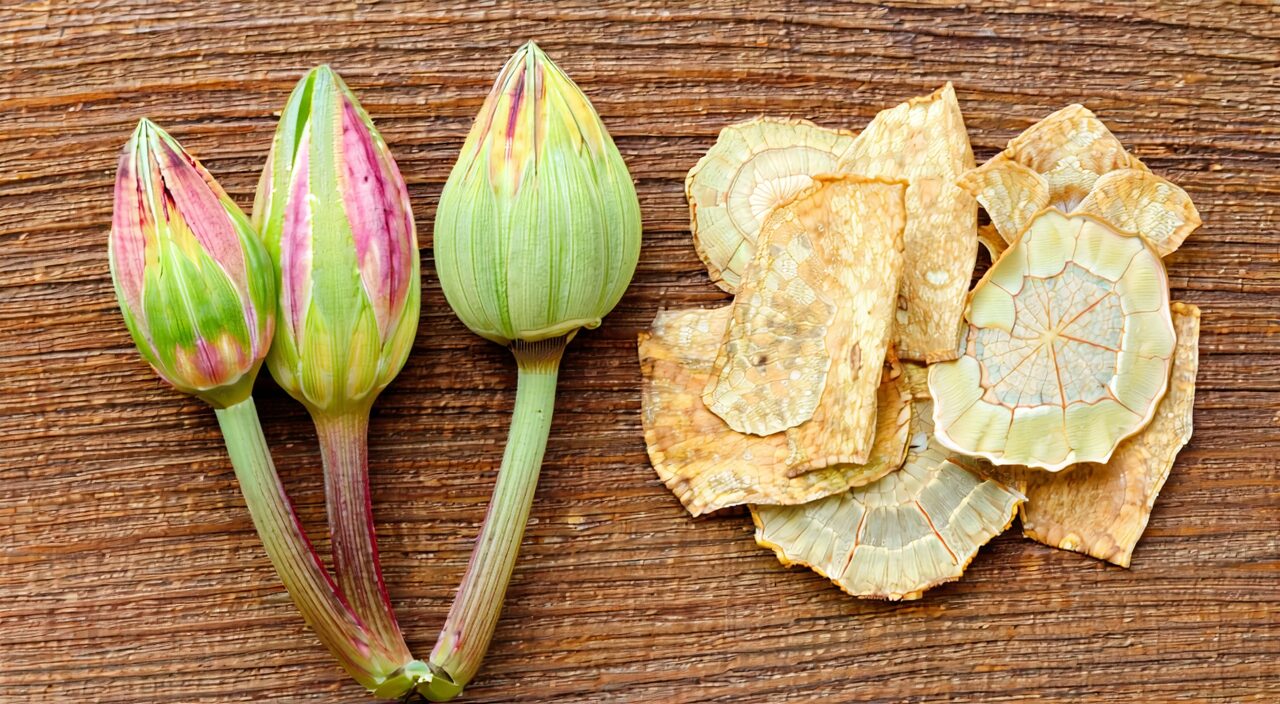
The medicinal part of Zhe Bei Mu is its dried bulb. The bulbs are usually harvested in early summer after the plant has withered, washed, and processed according to size. Large bulbs have their outer scale leaves removed and the core bud taken out to make “Da Bei”; smaller bulbs are kept whole and dried directly to become “Zhu Bei”; scale leaves that have had their outer skin scraped off and the milky juice absorbed with calcined shell powder during processing are called “Zhe Bei Pian” (Zhejiang Fritillaria slices). Regardless of the commercial form, they all come from the bulb of Fritillaria thunbergii, with processing methods accounting for the differences in appearance. Harvesting and processing affect the quality of the medicinal material. Traditionally, timely harvesting and prompt drying are thought to preserve good starchiness and bitterness.
How Does Traditional Chinese Medicine Understand Zhe Bei Mu?
In traditional Chinese medicine, the understanding of Zhe Bei Mu centers on its nature, flavor, and actions. Zhe Bei Mu is bitter in taste and cold in nature, entering the Lung and Heart meridians. Its core direction is to clear heat, resolve phlegm, dissipate nodules, and eliminate abscesses. Unlike Chuan Bei Mu, which tends to moisten the Lungs and resolve phlegm, Zhe Bei Mu focuses more on clearing and draining Lung heat, opening constraint, and dissipating masses. In traditional thinking, it is commonly used for phlegm-heat cough and wind-heat cough, presenting with thick yellow sputum, sore throat, and chest oppression. It is also used for scrofula, goiter, breast abscesses, and sores due to phlegm-fire stagnation, often combined with Xuan Shen (Scrophulariae Radix), Mu Li (Ostreae Concha), and Hai Zao (Sargassum). These applications stem from the accumulated experience of generations of practitioners and reflect Zhe Bei Mu’s bitter-cold and descending nature. However, whether it is suitable for a given constitution must be assessed in combination with individual symptoms, tongue, and pulse, and should not be directly copied.
Modern Research
In modern research, Zhe Bei Mu contains various steroidal alkaloids, such as peimine and peiminine. Some experimental studies suggest that these components have antitussive, expectorant, and bronchial smooth muscle relaxant effects. Some studies have also noted inhibitory activity against certain tumor cells. However, these findings are mostly at the basic research stage and can serve as a reference for understanding its traditional actions, but they cannot be directly equated with clinical treatment conclusions. Additionally, from a quality control perspective, alkaloid content is often used as one of the markers for evaluating Zhe Bei Mu medicinal material.
What Are the Differences Between Zhe Bei Mu and Chuan Bei Mu?
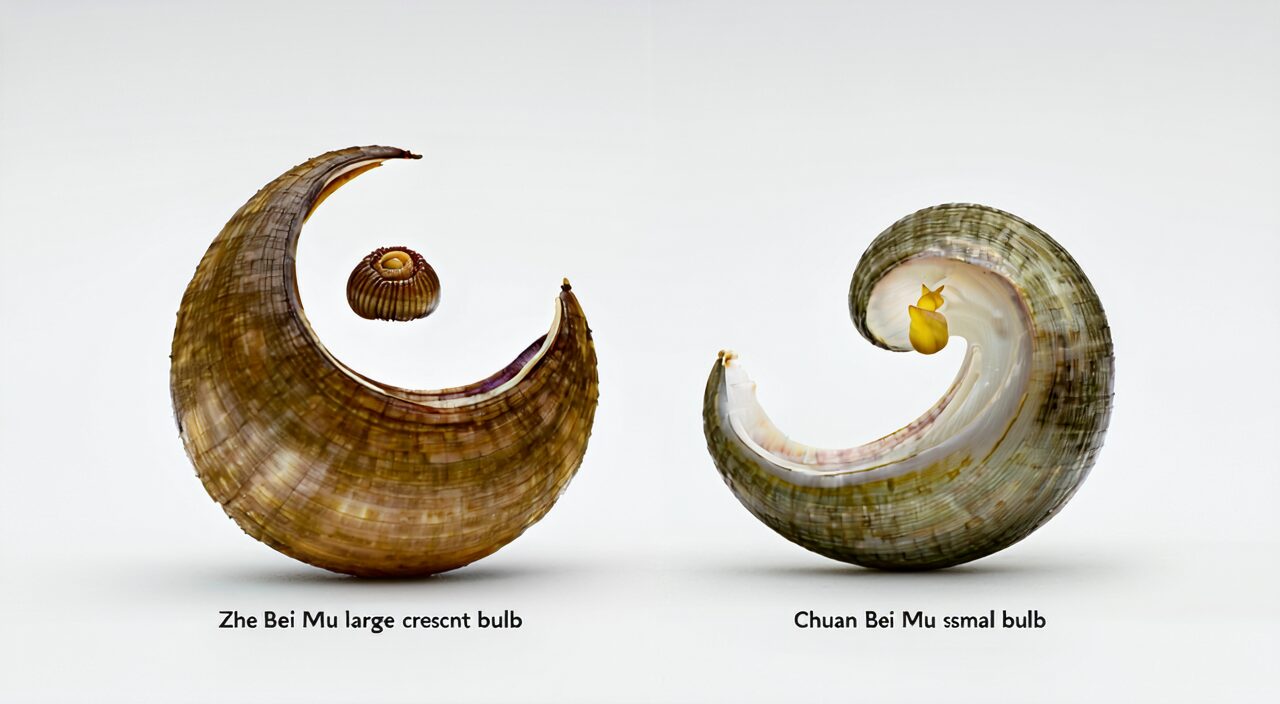
Although Zhe Bei Mu and Chuan Bei Mu have similar names, they differ markedly in origin, morphology, traditional application, and price. In terms of size and shape, Zhe Bei Mu scale leaves are larger, often seen as crescent-shaped Da Bei or oblate-spherical Zhu Bei, with diameters mostly over 2 cm. Chuan Bei Mu, on the other hand, is generally smaller. Common types such as Song Bei, Qing Bei, and Lu Bei are delicate, often around 1 cm in diameter, and Song Bei displays the distinctive “embracing the moon in the arms” feature, where the two outer scale leaves differ greatly in size, with the small one tightly embracing the large one and the unembraced part forming a crescent shape. In traditional application, Zhe Bei Mu is more bitter and cold, emphasizing clearing heat, resolving phlegm, opening constraint, and dissipating masses, suitable for patterns such as phlegm-heat obstructing the Lungs, cough with yellow sputum, scrofula, and sores. Chuan Bei Mu tends to be sweet and moistening, focusing on moistening the Lungs, stopping cough, resolving phlegm, and calming wheezing, often used for yin deficiency dry cough, chronic cough with little sputum. This is the origin of the folk saying “Chuan Bei moistens, Zhe Bei drains.” In terms of market price, Chuan Bei Mu is often wild or cultivated at high altitudes with lower yields, so its price is often several times or even dozens of times higher than Zhe Bei Mu. As a result, mixing or substitution occasionally occurs in the market, requiring careful identification.
Which Formulas Use Zhe Bei Mu?
In traditional formulas, Zhe Bei Mu is often used as an important herb for dissipating nodules and resolving phlegm. The following common formulas can serve as examples:
- Xiao Luo Wan (Scrofula-eliminating Pill): Composed of Zhe Bei Mu, Xuan Shen, Mu Li, etc., traditionally used for scrofula and phlegm nodules, embodying its approach of softening hardness and dissipating nodules.
- Hai Zao Yu Hu Tang (Sargassum Jade Flask Decoction): Contains Hai Zao, Kun Bu (Laminariae Thallus), Zhe Bei Mu, Lian Qiao (Forsythiae Fructus), etc., traditionally used for goiter, demonstrating Zhe Bei Mu’s supportive role in nodule-dissipating formulas.
- Bei Mu Gua Lou San (Fritillaria and Trichosanthes Powder): Composed of Zhe Bei Mu, Gua Lou (Trichosanthis Fructus), Tian Hua Fen (Trichosanthis Radix), etc., focusing on clearing heat and resolving phlegm, often used for cough with sticky sputum, dry throat, and other phlegm-heat signs.
- Ling Yang Qing Fei Wan (Antelope Horn Lung-clearing Pill): As a patent medicine, it contains Zhe Bei Mu combined with Ling Yang Jiao (Antelopis Cornu), Sang Bai Pi (Mori Cortex), etc., traditionally used for lung heat cough, sore throat, and related conditions.
Each of these formulas has its own applicable prerequisites and should be used with reference to product instructions and individual symptom characteristics, under the guidance of a professional, rather than being self-combined.
What Precautions Should Be Taken When Using Zhe Bei Mu?
Although Zhe Bei Mu is a commonly used medicinal, several points should be noted in its use. First, it is traditionally considered unsuitable for those with spleen and stomach deficiency cold or cold-phlegm cough when used alone. Zhe Bei Mu is cold in nature, and for conditions such as cough with clear, thin white sputum, epigastric sensitivity to cold, or unformed stools, it may not be appropriate and could even worsen discomfort. Second, there are traditional contraindication records stating that Zhe Bei Mu should not be used together with Aconitum herbs such as Chuan Wu (Aconiti Radix), Cao Wu (Aconiti Kusnezoffii Radix), and Fu Zi (Aconiti Lateralis Radix Praeparata), which is a common contraindication shared by many Bei Mu varieties. Furthermore, do not judge quality or authenticity solely by price. Although Zhe Bei Mu is less expensive than Chuan Bei Mu, this does not mean it is inferior; its heat-clearing and nodule-dissipating actions can be more targeted in appropriate situations. When purchasing, look for features such as thick scale leaves, rich starchiness, and pronounced bitterness rather than focusing only on the price tag. Finally, if a cough is accompanied by persistent fever, chest pain, or blood in the sputum, or if a neck mass continues to enlarge and harden, seek professional diagnosis promptly rather than relying solely on herbal remedies.
Summary
Zhe Bei Mu is a commonly used medicinal that clears heat, resolves phlegm, dissipates nodules, and eliminates abscesses. Its medicinal part is the bulb, characteristically appearing as crescent-shaped Da Bei or oblate-spherical Zhu Bei, with significant differences from Chuan Bei Mu in size, traditional actions, and price. Traditional formulas such as Xiao Luo Wan and Hai Zao Yu Hu Tang often include Zhe Bei Mu, but each has its suitable context. Attention should be paid to cold patterns, spleen-stomach deficiency cold, and contraindications with Aconitum herbs, and decisions should be based on individual circumstances. This article is for informational reference only and cannot replace professional diagnosis or treatment advice.