
What Is Bai Zi Ren? An Introduction to Medicinal Parts, Identification, and Common Formulas
Many people first hear about Bai Zi Ren and associate it with common cypress seeds, but they can’t say exactly what it is, what it looks like, or where it is used. If they also hear about Suan Zao Ren at the same time, it’s even easier to confuse the two. This article starts from Bai Zi Ren’s source, appearance, and medicinal parts, then combines traditional Chinese medicine understanding and common formulas to help you build a clearer picture. It should be noted that this article is for informational reference only and does not constitute any form of medical advice. Specific use should be combined with individual circumstances, and consult professionals when necessary.
What Does Bai Zi Ren Look Like? How to Identify It
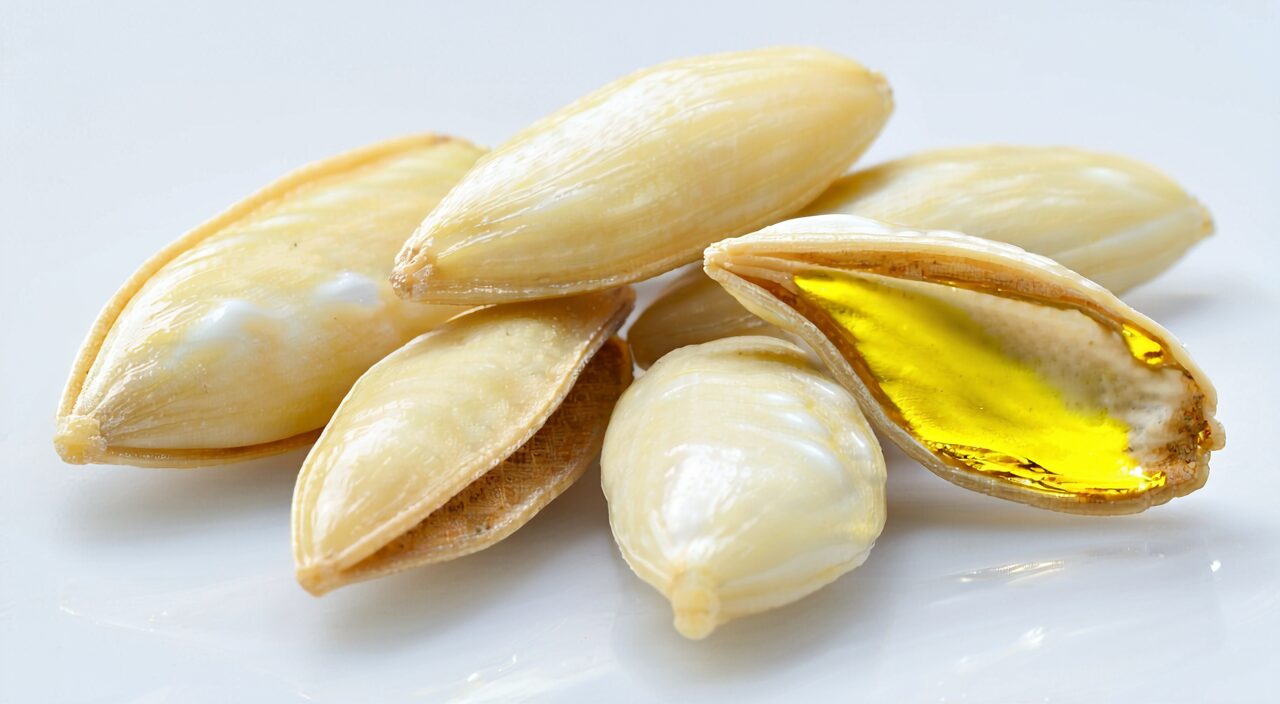
Bai Zi Ren is the kernel of Chinese arborvitae. Upon close examination, several typical characteristics can be observed. The overall shape is long-ovoid or long-elliptical, some slightly flattened, generally 4–7 mm in length and about 1.5–3 mm in diameter. The outer surface is yellowish-white or pale yellowish-brown; sometimes a thin layer of yellowish-brown seed coat remains, but well-processed herbs usually remove this layer, leaving only the kernel.
The apex is slightly pointed, where a small dot-like hilum mark can be seen, and the base is relatively blunt and rounded. Fresh or well-preserved Bai Zi Ren has an oily texture; light finger pressure reveals noticeable oiliness. The cross-section is yellowish-white and oily, with a slight fragrance and a bland taste. In identification, oiliness is a key point. Completely dry and shriveled kernels are usually of poor quality, but ones that are excessively greasy with a rancid smell indicate spoilage and should not be used.
Also note that Bai Zi Ren easily becomes oily and rancid, meaning fatty acid spoilage, so storage should generally be sealed, away from light, in a cool, dry place. If there is a noticeable old-oil smell or the surface color darkens and becomes sticky, it suggests that storage conditions or duration may have been suboptimal.
What Is the Medicinal Part of Bai Zi Ren?

The medicinal part of Bai Zi Ren is the dried ripe kernel of Chinese arborvitae, not the fruit peel or the whole fruit. When the seeds mature in autumn and winter, they are harvested, sun-dried, then the seeds are threshed, and the outer shell and seed coat are removed to collect the pure kernel for medicinal use. This process explains why the Bai Zi Ren we see is usually a cleaned seed kernel, relatively clean and intact in form.
In Chinese herbal preparations, two common forms are raw Bai Zi Ren and Bai Zi Ren frost (Bai Zi Ren Shuang). Raw Bai Zi Ren is the cleaned dried kernel, highly oily, with a relatively pronounced moistening intestine effect, traditionally used more for dry intestine constipation. Bai Zi Ren Shuang is made by crushing raw Bai Zi Ren into a paste, wrapping it in oil-absorbing paper, pressing to remove oil, and then grinding it into a fine powder. Its oil content is reduced, and its texture is nourishing without burdening the stomach, commonly used in formulas for nourishing the heart and calming the mind to reduce the possibility of loosening the bowels. Which form to use should be determined based on specific combinations and individual conditions, not a blanket rule.
How Does TCM Understand Bai Zi Ren?
From the perspective of traditional Chinese medicine, Bai Zi Ren is neutral in nature, sweet in flavor, and mainly enters the Heart, Kidney, and Large Intestine channels. Because its sweetness can harmonize and its neutral nature is unbiased, it is traditionally considered a relatively gentle herb for calming the mind and moistening the intestines. Ancient practitioners often understood its actions in terms of nourishing the heart to calm the mind, moistening intestines to promote bowel movements, and stopping sweating.
When symptoms such as mental restlessness, deficiency-type irritability with insomnia, palpitations, and severe anxiety are prominent, some formulas combine Bai Zi Ren with Suan Zao Ren, Yuan Zhi, Fu Ling, etc., aiming to improve discomfort by nourishing heart qi and calming the mind. It should be noted that this approach is more based on the framework of yin-yang and qi-blood imbalance. If sleep problems are caused by obvious excess patterns like liver fire or phlegm-heat, using Bai Zi Ren alone is usually not the focus.
In terms of moistening the intestines and promoting bowel movements, traditional experience holds that Bai Zi Ren is particularly suitable for intestinal dryness and constipation caused by yin deficiency or blood deficiency, where the stool is dry and hard but there is no severe abdominal pain or distension, often accompanied by dry mouth and dry skin. If combined with Tao Ren (peach kernel), Xing Ren (apricot kernel), Song Zi Ren (pine nut kernel), etc., it can enhance the moistening effect; for example, Wu Ren Wan is a representative formula of this type. As for stopping sweating, it is often used for night sweats due to yin deficiency or spontaneous sweating due to heart qi deficiency, usually combined with Ren Shen (ginseng), Huang Qi (astragalus), Mu Li (oyster shell), etc. Overall, TCM positions Bai Zi Ren more toward “moistening” and “nourishing” rather than drastic purging, which is why it is retained in many chronic restorative formulas.
What Components and Effects Does Modern Research Focus On?
Modern research on Bai Zi Ren’s components mainly focuses on fatty oil, saponins, phytosterols, and small amounts of vitamins and trace elements. The fatty oil content is relatively high, mostly unsaturated fatty acids, which partly explains its physical basis for moistening the intestines and promoting bowel movements. Experimental studies have found that Bai Zi Ren extracts may show certain sedative and sleep-improving trends in animal models, such as prolonging sleep time induced by pentobarbital sodium in mice, but these remain at the animal experiment level.
In vitro studies, some components of Bai Zi Ren also show antioxidant and neuroprotective potential, but there is currently insufficient human clinical evidence to support its use as a standalone treatment. Therefore, such research is more for understanding traditional use and cannot be directly equated with confirmed effects in humans. For readers dealing with long-term sleep issues or anxiety, it is more appropriate to view these studies as “directions worth watching” rather than “confirmed functions.”
What Are the Differences Between Bai Zi Ren and Similar Herbs?
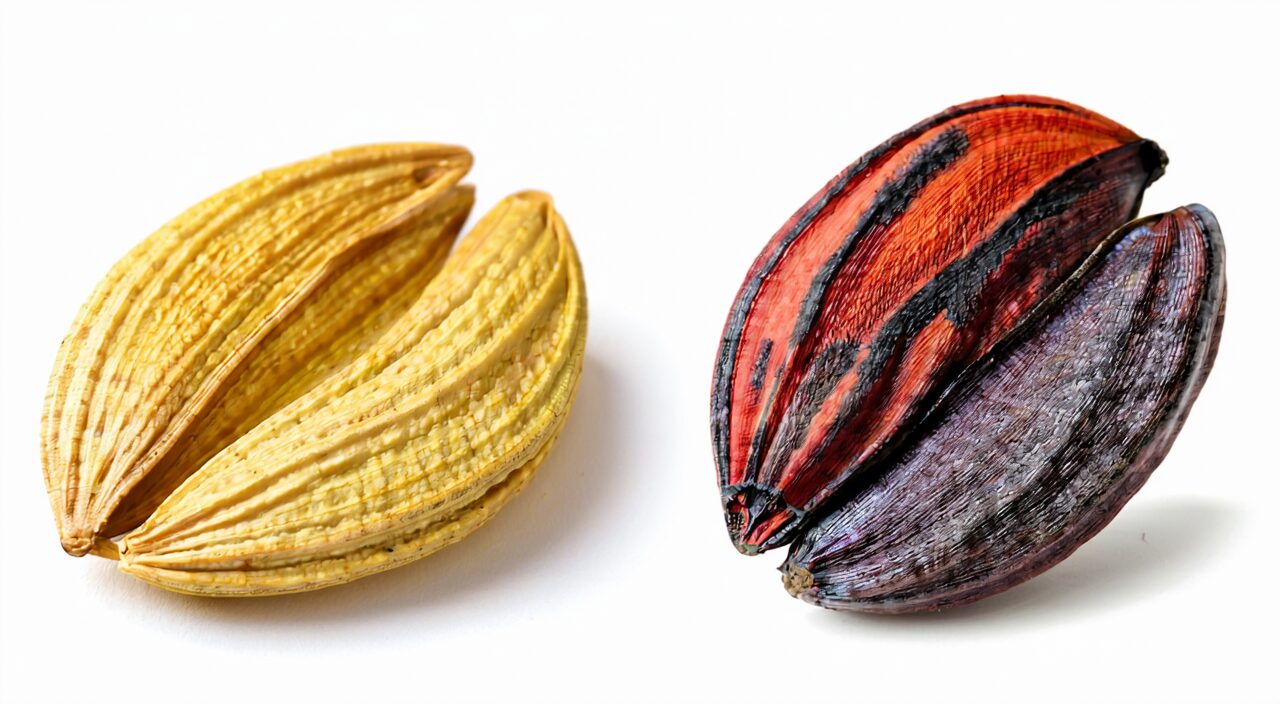
The herb most easily confused with Bai Zi Ren is Suan Zao Ren. Both are commonly used calming herbs with “Ren” (kernel) in their names, but they differ significantly in source, appearance, and traditional application focus. Suan Zao Ren is the dried mature seed of the plant Ziziphus jujuba var. spinosa, belonging to the Rhamnaceae family, not a cyprus kernel. In appearance, Suan Zao Ren is oblate or oblate-elliptical, about 5–9 mm in diameter, larger than Bai Zi Ren. The outer surface is purplish-red or purplish-brown, glossy, with one side relatively flat, bearing a distinct longitudinal raised line in the center, while the other side is slightly convex; it has a slight fragrance and a slightly sour taste. Bai Zi Ren is overall smaller, long-ovoid, yellowish-white or pale yellowish-brown, with prominent oiliness, without purplish-brown color or raised line.
In terms of medicinal parts, although both are seed-based herbs, Bai Zi Ren uses the shelled kernel, while Suan Zao Ren uses the whole seed with its seed coat. Traditionally, Suan Zao Ren mainly nourishes the heart and liver, calms the mind, and astringes sweat, more often used for insomnia and deficiency irritability due to heart-liver blood deficiency, as well as general deficiency with excessive sweating. Bai Zi Ren nourishes the heart and calms the mind while also moistening the intestines, commonly used in patterns such as heart yin deficiency or heart-kidney disharmony. If someone has both restless sleep and dry stools, Bai Zi Ren may be preferred; but if the main issues are heart-liver blood deficiency with vivid dreams, easy waking, and deficiency irritability, Suan Zao Ren or a combination of both is traditionally emphasized. Neither is absolutely superior; suitability depends on the overall condition.
Which Formulas Use Bai Zi Ren?
The following lists some representative formulas to illustrate Bai Zi Ren’s compatibility role. Note that this is only a popular science introduction of traditional usage, not treatment recommendation. Before any use, combine with product instructions and professional advice.
Bai Zi Yang Xin Wan: In common formulations, Bai Zi Ren is combined with Dang Shen, Huang Qi, Dang Gui, Chuan Xiong, etc., leaning toward boosting qi, warming yang, nourishing blood, and calming the mind. Traditionally used for easily being startled, forgetfulness, and excessive dreaming caused by heart qi deficiency and restless mind. Here, Bai Zi Ren plays the role of nourishing the heart and calming the mind, while also providing moistening nourishment.
Tian Wang Bu Xin Dan: In the formula for nourishing yin and blood, tonifying the heart and calming the mind, Bai Zi Ren is often combined with Suan Zao Ren, Tian Dong, Mai Dong, Sheng Di Huang, Dang Gui, Yuan Zhi, etc., targeting palpitations, insomnia, and dry stools caused by yin-blood deficiency and virtual fire disturbance. Here, Bai Zi Ren helps both calm the mind and moisten the intestines, synergizing with the yin-nourishing herbs.
Yang Xin Tang: The composition of this formula varies slightly among versions, but commonly includes Bai Zi Ren, Suan Zao Ren, Ren Shen, Huang Qi, Dang Gui, Fu Shen, etc., focusing on supplementing qi and blood, nourishing the heart and calming the mind. Traditionally used for palpitations, insomnia, and fatigue due to qi-blood deficiency and lack of heart mind nourishment. Bai Zi Ren serves as part of the heart-nourishing and moistening combination.
Wu Ren Wan: Mainly composed of oily seed herbs such as Bai Zi Ren, Tao Ren, Xing Ren, Song Zi Ren, Yu Li Ren, with a prominent moistening intestine and laxative effect, commonly used for constipation due to fluid depletion and intestinal dryness. Here, Bai Zi Ren mainly demonstrates its intestine-moistening aspect, with little connection to its calming effect.
In practical application of the above formulas, the dosage, processing method, and whether to use Bai Zi Ren frost will vary. It is recommended not to apply them mechanically on your own, but to follow professional judgment after understanding the applicable directions.
Precautions for Using Bai Zi Ren
For Bai Zi Ren, there are several common situations requiring special attention. First, those with loose stools or profuse sticky phlegm should not use it in large amounts or for a long time. Because Bai Zi Ren is rich in oil and tends to be lubricating, using it when having loose stools may worsen looseness; when there is profuse phlegm with difficult expectoration, oily-moistening substances may promote dampness and generate phlegm.
Second, Bai Zi Ren easily becomes oily and spoiled. Once a rancid smell appears, color darkens and becomes sticky, it indicates severe fatty acid spoilage and should not be used further. After purchase, it is best to store it sealed and refrigerated, avoid prolonged exposure to air, and observe changes in its properties.
Third, if you are using other sedative or central nervous system-acting drugs and are considering preparations containing Bai Zi Ren, extra caution is needed. Because the possible combined effects currently lack sufficient research, it is best to do so under a doctor’s guidance.
Finally, if sleep problems are severe, long-lasting, or accompanied by significant anxiety, palpitations, chest tightness, weight loss, sudden changes in bowel habits, etc., do not place all hopes on a single herb or a traditional formula. Seek medical attention promptly to rule out conditions requiring professional intervention.
Summary
Bai Zi Ren comes from the mature kernel of Chinese arborvitae, a Chinese herb traditionally recognized mainly for nourishing the heart, calming the mind, moistening the intestines, and promoting bowel movements. It is typically a yellowish-white, oily, long-ovoid kernel, distinctly different from Suan Zao Ren in appearance, source, and application focus. Whether studying it alone or with formula reference, attention should be paid to its storage conditions and usage restrictions, especially issues like loose stools, excessive phlegm, and its tendency to become rancid. This article is for informational education only and cannot replace professional diagnosis or treatment advice. Whether it is suitable for individual conditions still requires professional judgment.