
What Is White Hyacinth Bean? Medicinal Parts, Identification, and Common Formulas
In the context of TCM food therapy and materia medica, white hyacinth bean (Bai Bian Dou) is a bean variety with relatively identifiable features. Living abroad, many people encounter the term “Bai Bian Dou” on soup packs or in the ingredient lists of spleen-fortifying and dampness-dispelling Chinese patent medicines, yet they are often unsure whether it is the same as the white kidney bean or other common white beans they eat. Starting from the basic question “what is white hyacinth bean?”, this article will sort out its appearance, medicinal parts, traditional understanding, and common formulas, helping readers build a clearer framework for identification.
What Does White Hyacinth Bean Look Like? How to Identify It?
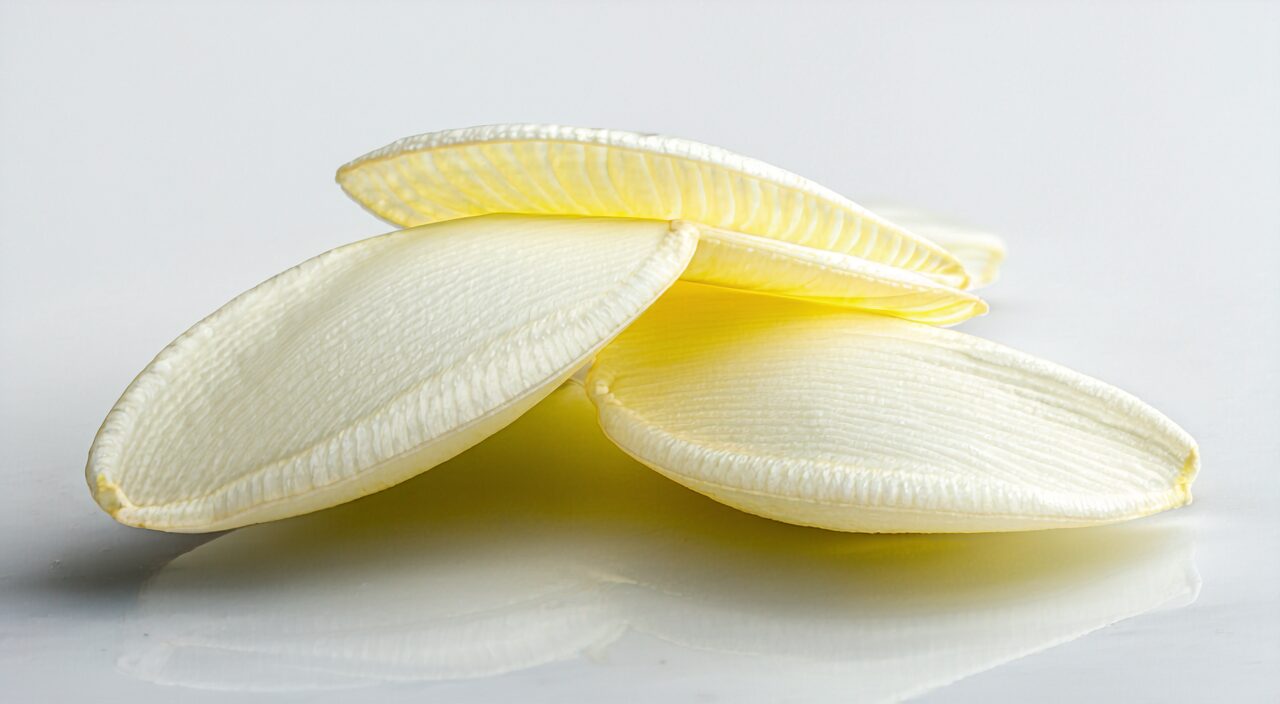
White hyacinth bean is the dried mature seed of the hyacinth bean. Its appearance is quite distinctive; by grasping a few key points, you can initially distinguish it from other white beans.
The medicinal material is generally flat-elliptical or flat-ovoid, slightly narrower than a common soybean, about 8–13 mm long, 6–9 mm wide, and 4–7 mm thick. The surface is mostly yellowish-white or pale yellow, sometimes with a slight light yellowish-brown tone; the texture is smooth, and on some seeds fine surface striations can be seen.
The most prominent identifying feature is a distinct hilum along one edge — the line-like structure on the seed that resembles a “little white eyebrow.” The hilum of white hyacinth bean is white, long and wide, accounting for about one-third to half of the circumference of the seed, slightly raised, like a soft white eyebrow attached to the side of the seed. This is one reason for the folk name “eyebrow bean.”
The medicinal white hyacinth bean is hard and not easily broken by hand; when cracked or cut open, the cross-section is off-white to a light yellow, with a noticeable starchy character. The beany smell is not strong, and chewing gives a mild bean taste. If the beans you see are bright pure white, the hilum is indistinct, and the seed coat is thin and fragile, you should suspect they may be other types of beans.
What Is the Medicinal Part of White Hyacinth Bean?
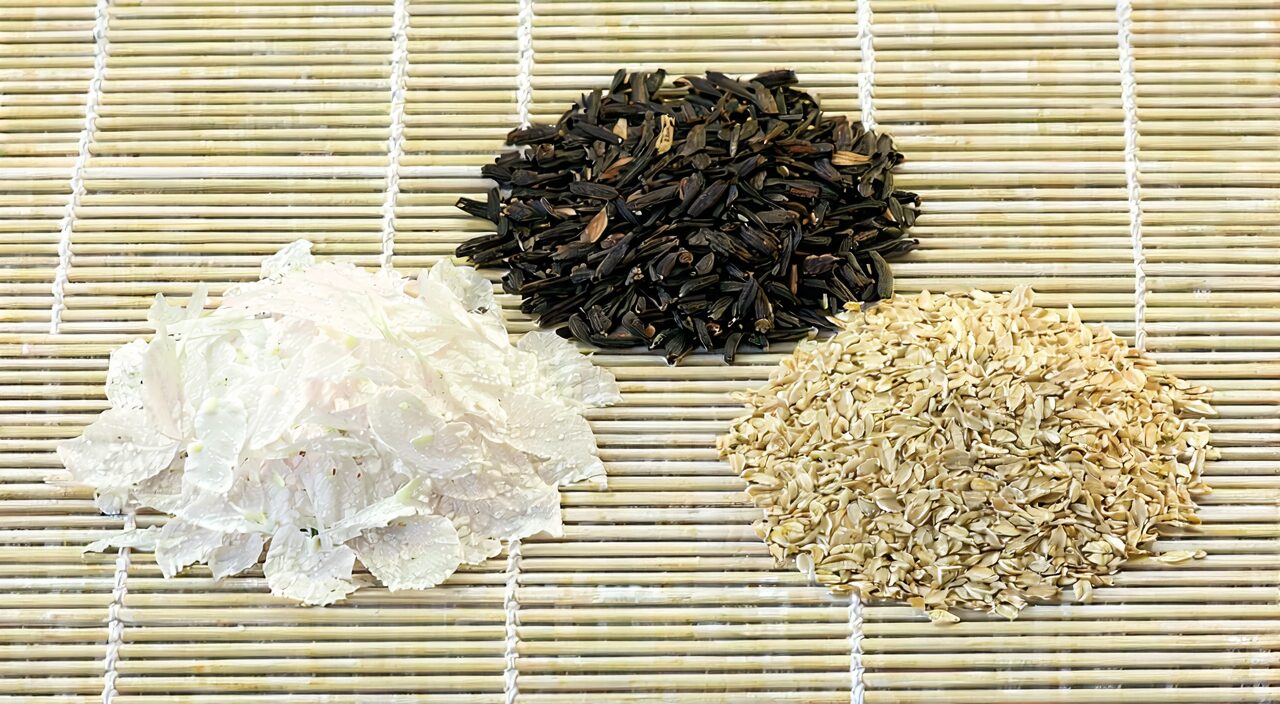
The medicinal part of white hyacinth bean is the dried mature seed of the legume plant Dolichos lablab. They are harvested in autumn when the pods are ripe; the seeds are removed and sun-dried or dried at low temperature before being used as medicine.
In the herbal market, white hyacinth bean commonly appears in two forms: one is the whole seed with the skin, referred to as “Bai Bian Dou”; the other is the kernel with the outer seed coat removed, often called “Bai Bian Dou Ren” or “bian dou ren.” The form with the skin is slightly stronger at strengthening the spleen and transforming dampness, while the peeled kernel tends more to harmonize the middle jiao and is less likely to cause stagnation. Which type to use is usually decided based on the formula and individual constitution.
In addition, the seed coat of white hyacinth bean is sometimes used alone as a medicine, known as “bian dou yi” (hyacinth bean coat). Its action is more focused on transforming dampness and is relatively mild, so it is often treated as distinct from the whole bean. When looking at prepared herbal slices, you may also encounter dry-fried white hyacinth bean (chao bai bian dou); after dry-frying, the surface turns slightly burnt yellow and the aroma increases. Traditionally, the dry-fried form is considered more effective at strengthening the spleen and stopping diarrhea. These different processed forms all belong to the medicinal part of white hyacinth bean, only differing in processing methods and emphasis of use.
How Does TCM Understand White Hyacinth Bean?
In traditional Chinese medicine, white hyacinth bean is commonly classified as a qi-tonifying herb or a dampness-transforming herb. In terms of flavor, nature, and channel entry, it is generally described as sweet and bland, slightly warm or neutral in nature, and it enters the spleen and stomach channels.
In terms of its core applications, TCM mainly understands white hyacinth bean from two perspectives: strengthening the spleen and transforming dampness, and harmonizing the middle jiao and relieving summerheat. When the spleen and stomach’s transportation and transformation functions are weak and water-dampness accumulates, leading to poor appetite, loose stools, and a heavy body sensation, white hyacinth bean is often combined with other spleen-fortifying herbs to help restore the middle burner’s function. In summer, when one is affected by summerheat-dampness and experiences mild nausea, chest stuffiness, and reduced appetite, some traditional formulas also add white hyacinth bean for its effects of relieving summerheat, transforming dampness, and harmonizing the stomach.
It is important to note that in TCM, white hyacinth bean is almost never used alone in large doses. In most cases, it is combined with herbs such as poria (Fu Ling), atractylodes (Bai Zhu), Chinese yam (Shan Yao), and coix seed (Yi Yi Ren) to achieve a synergistic effect. Therefore, the traditional understanding of white hyacinth bean is best viewed through the lens of “formula synergy,” rather than taken to mean that it can solve certain problems on its own.
What Components and Effects of White Hyacinth Bean Are Studied in Modern Research?
Modern phytochemical studies show that white hyacinth bean contains proteins, starches, polyphenols, phytohemagglutinins (lectins), and minerals. Some experimental studies have observed that extracts of white hyacinth bean exhibit certain antioxidant capacity and effects on digestive enzymes in vitro, and preliminary observations in animal tests have noted influences on gastrointestinal motility or immune regulation.
However, it is necessary to distinguish that these are mostly component studies or small-scale experimental investigations, not clinical therapeutic evidence. Laboratory findings do not necessarily translate into the same effects in the human body, nor do they mean that daily consumption or medicinal use is equivalent to achieving these functions. At present, the exploration of the components and actions of white hyacinth bean is better suited as a modern perspective for understanding the mechanisms behind its traditional use, supporting directional understanding rather than deriving treatment conclusions.
How Is White Hyacinth Bean Different from Similar Herbs?
White hyacinth bean is most easily confused with white kidney bean and hyacinth bean coat. The three differ noticeably in origin, appearance, and traditional application.
White kidney bean belongs to the Phaseolus genus; it is larger, plumper, and distinctly kidney-shaped. Its hilum is often dot-like or a short streak, and its color is usually not pure white but bears light brown spots or mottling. White kidney bean is not a commonly used medicinal substance in TCM and is mainly consumed as food. In contrast, white hyacinth bean is a member of the Dolichos genus, with flat-elliptical seeds and an eyebrow-like hilum. The two differ completely in plant genus and medicinal status.
Hyacinth bean coat is the dried seed coat of white hyacinth bean. It appears as shriveled, thin flakes, yellowish-white or light yellowish-brown in color, light and soft in texture, with a mild smell. Traditionally, hyacinth bean coat is considered to have a lighter, more agile dampness-transforming action; it may be selected when summerheat-dampness is relatively mild and the spleen is functioning poorly with slight water-dampness, an emphasis that slightly differs from the whole white hyacinth bean.
In addition, black hyacinth bean seeds can sometimes be seen; they are a different variety of the same plant, often used medicinally as “hei bian dou.” Their focus may lean slightly toward supplementing the kidney or entering the kidney channel, but they are not a mainstream variety. When unsure, overseas users can first identify whether what they have is true white hyacinth bean by examining the shape, the hilum features, and professional herbal labeling.
Which Formulas Use White Hyacinth Bean?
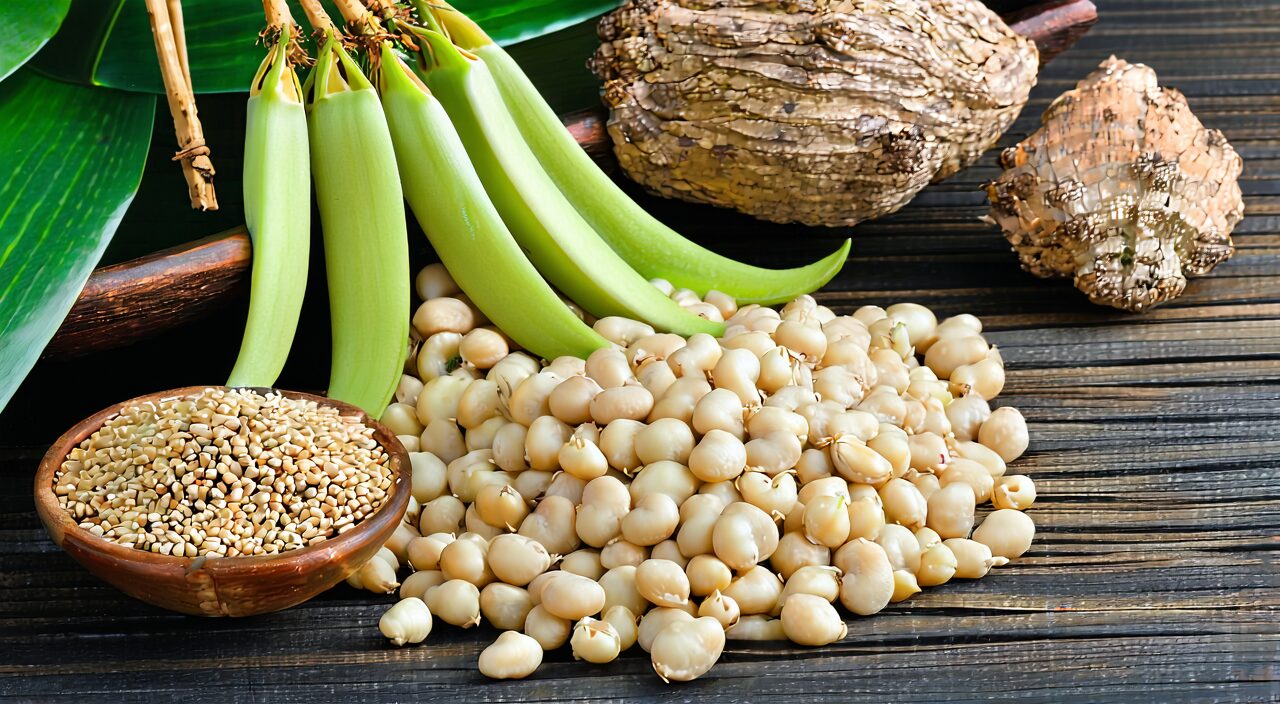
White hyacinth bean appears in numerous traditional formulas, often playing the role of strengthening the spleen, transforming dampness, harmonizing the middle jiao, and supplementing deficiency. Below are three relatively well-known formulas.
Shen Ling Bai Zhu San (Ginseng, Poria, and Atractylodes Macrocephala Powder) is a widely used formula for fortifying the spleen, boosting qi, percolating dampness, and stopping diarrhea. In this formula, ginseng, atractylodes (Bai Zhu), and poria (Fu Ling) boost qi and strengthen the spleen; coix seed (Yi Yi Ren) and white hyacinth bean assist in percolating dampness and harmonizing the middle; amomum (Sha Ren) awakens the spleen; and platycodon (Jie Geng) lifts the actions of the herbs upward. Here, white hyacinth bean mainly displays its property of strengthening the spleen and transforming dampness without being warming or drying. The entire formula is traditionally used for patterns of spleen deficiency with dampness accumulation, where there may be loose stools, shortness of breath, and fatigue.
Wan Dai Tang (Discharge-Ceasing Decoction), from Fu Qingzhu’s Gynecology, is mostly used for patterns of spleen deficiency with exuberant dampness and thin, profuse leukorrhea. In this formula, atractylodes (Bai Zhu) and Chinese yam (Shan Yao) supplement the spleen; plantago seed (Che Qian Zi) promotes diuresis and drains dampness; atractylodes (Cang Zhu) dries dampness; and white hyacinth bean works together with coix seed to transform dampness and stop vaginal discharge, jointly restoring the restraining function of the belt channel. In this formula, white hyacinth bean is more oriented toward fortifying the spleen and transforming dampness, helping to reduce damp-turbidity pouring downward.
Bai Bian Dou San (White Hyacinth Bean Powder) is relatively simple, often consisting of white hyacinth bean combined with a small number of other herbs. It is traditionally used for conditions such as spleen deficiency with vomiting and diarrhea, or internal injury from summerheat-dampness. In this formula, white hyacinth bean often serves as the sovereign or an important minister herb, centrally embodying its harmonizing-the-middle action.
All three formulas mentioned above are merely combination strategies formed under TCM theory. Whether they are suitable for an individual’s condition must be determined by considering their constitution, symptoms, and the judgment of a qualified professional. Do not copy them for self-use.
What Precautions Should Be Taken When Using White Hyacinth Bean?
Although white hyacinth bean is common, there are still several important points to keep in mind when using it.
Raw white hyacinth bean contains phytohemagglutinins and must be fully cooked until done; it must not be eaten raw or ground into powder and swallowed directly with water. Undercooked white hyacinth beans can cause nausea, vomiting, diarrhea, and other discomforts, consistent with the general characteristics of hyacinth bean species. In daily medicinal cuisine or dietary therapy, it is recommended to use herbal slices that have been thoroughly boiled or processed by standard methods, and to avoid skipping the heating step for the sake of convenience.
When there is marked abdominal bloating, food accumulation with indigestion, or heavy damp-heat patterns, white hyacinth bean should not be used in large amounts, especially the form with the seed coat, which has a slightly stronger tendency to cause stagnation. If you often experience bloating, belching, and sticky, unsatisfactory bowel movements after eating, it is best to first clarify whether the main problem is spleen deficiency or food accumulation before using it. If the therapeutic direction is incorrect, it may actually aggravate the discomfort.
There is no essential difference in origin between white hyacinth bean used as food and that used as medicine; however, medicinal herbal slices have more explicit quality standards and processing specifications. When used in everyday soups, it is better to understand its supplementary value in strengthening the spleen and dispelling dampness from a dietary perspective, rather than treating it as a drug. Furthermore, if there are long-term digestive disturbances, recurrent abdominal pain, black stools, or weight loss, one should prioritize seeking medical evaluation, not relying solely on food ingredients to correct the problem.
Summary
In traditional Chinese medicine, white hyacinth bean is primarily used as an herb that strengthens the spleen, transforms dampness, harmonizes the middle jiao, and relieves summerheat. Its flat-elliptical seed and white eyebrow-like hilum are key features that distinguish it from white kidney bean. The medicinal part is the mature seed, which appears in various processed forms. In formulas, it is often seen in combinations such as Shen Ling Bai Zhu San and Wan Dai Tang, and single-herb use is not recommended. In daily use, be sure to cook it thoroughly, and avoid consuming it in large amounts during stages of bloating and food accumulation. This article is for informational reference only and cannot replace professional diagnosis or treatment advice. Specific use should be based on individual conditions and the guidance of a qualified professional.