
What Is Lygodium Spore? Medicinal Parts, Identification Methods, and Common Formulas
In the world of Chinese herbal medicine, Lygodium spore (Hai Jin Sha) is a distinctive and easily recognizable substance. Many overseas Chinese users encountering Lygodium spore for the first time often wonder: what part of the plant does it actually come from? Why does it look like a fine, yellowish-brown powder? How does it differ from Cattail Pollen, which is also powdery? This article offers a systematic look at the origin of Lygodium spore, its identifying characteristics, traditional Chinese medicine understanding, common herbal combinations and formulas, and important precautions for its use.
What Does Lygodium Spore Look Like and How to Identify It?
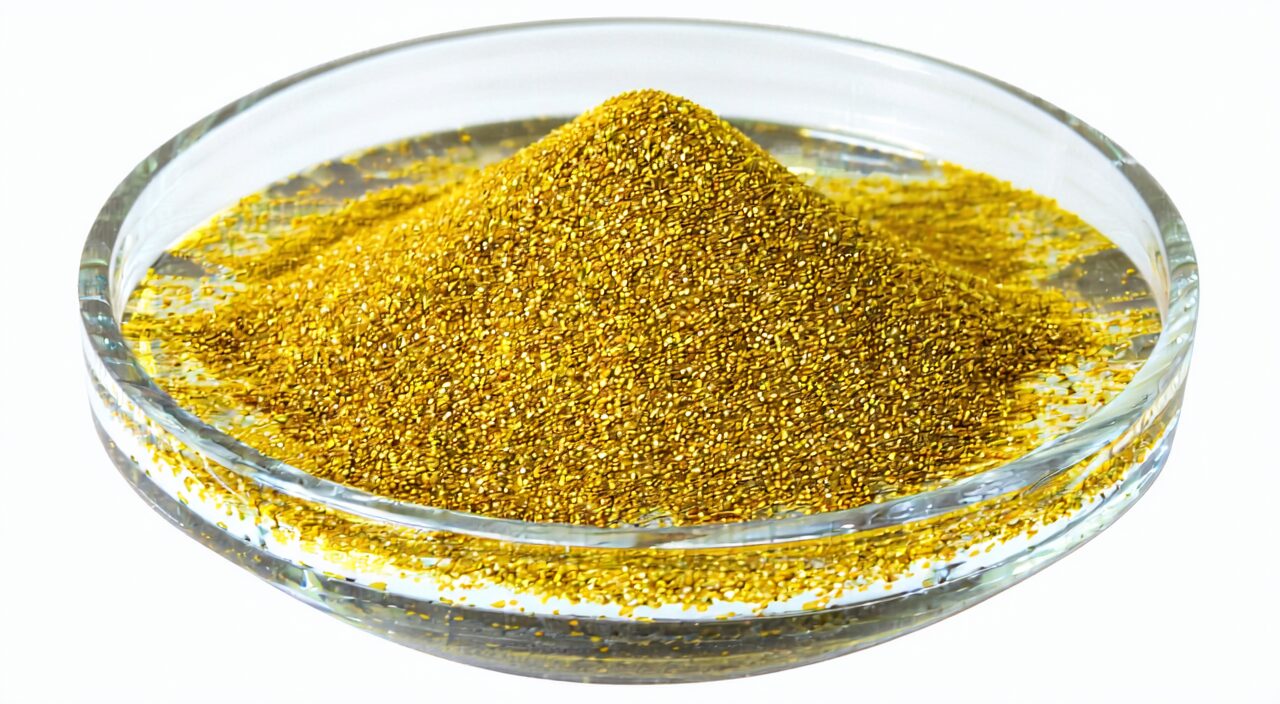
The medicinal appearance of Lygodium spore is a yellowish-brown or brownish-yellow fine powder. It is extremely light; when rubbed between the fingers, it feels smooth without any gritty sensation. Because it is so light, even slight air currents can make it fly up, so it should be handled gently. In traditional identification, a common characteristic is: when a small amount is sprinkled onto the surface of clean water, the powder floats and disperses on the surface without sinking immediately; only when heated or stirred, or after some time, does it gradually settle. This water-floating property differs from some plant pollens or fungal spores and serves as an important reference for identifying Lygodium spore. Additionally, when burned, it produces a slight crackling sound and flashes of light, which can be another distinguishing feature, but this test is not recommended for non-professionals. In pharmacies or herbal dispensing, experienced herbalists can often recognize Lygodium spore by its color, texture, and water test reaction.
What Is the Medicinal Part of Lygodium Spore?
Lygodium spore comes from the mature spores of the Lygodium fern (Lygodium japonicum), a climbing fern of the Lygodiaceae family. In late summer and early autumn, when the spores are mature, the fronds are cut, dried in the sun, then rubbed or beaten to release the spores. The material is then sieved to remove leaf fragments, stems, and other impurities, yielding the fine, sand-like spore powder. Thus, the herb is not derived from the root, stem, leaf, or seed, but from the specialized reproductive bodies—the mature spores. Because of this special source, harvesting and storage require careful attention to keep it dry and prevent clumping from moisture.
How Does Traditional Chinese Medicine Understand Lygodium Spore?
In traditional Chinese medicine theory, Lygodium spore enters the Bladder and Small Intestine meridians. It is sweet and bland in taste, and cold in nature. Historically, physicians have understood its action primarily from the perspective of clearing damp-heat, promoting urination, and relieving pain. Specifically, it is often used when damp-heat pathogens pour down into the bladder, leading to difficult urination, painful and dribbling urination, or urinary tract stones. It is sometimes combined with other heat-clearing and strangury-relieving herbs such as Lysimachia (Jin Qian Cao), Pyrrosia (Shi Wei), and Plantain Seed (Che Qian Zi) to work together in a regulating manner. These uses are not directly aimed at specific modern diseases but are based on the overall traditional approach of syndrome differentiation. For individuals experiencing difficult or uncomfortable urination, Lygodium spore would only be considered as part of a formula after a TCM practitioner has clearly identified a damp-heat pouring downward pattern or a related syndrome.
Modern Research on Lygodium Spore
Modern studies have conducted preliminary analyses of the chemical constituents of Lygodium spores, finding that they contain fatty oils, lygodin, sterols, and other components. Some in vitro experiments suggest that Lygodium spore extracts have certain inhibitory effects on specific microorganisms and may also influence the formation of urinary calculi. Animal experiments have observed that Lygodium spore can reduce crystal formation in rat models of urinary tract stones, but this result has not been validated in humans. Overall, these studies remain mostly at the laboratory stage and cannot be directly translated into clinical medication guidelines. Therefore, Lygodium spore is still in the exploratory phase in terms of modern pharmacology, and its traditional applications are largely based on long-term accumulated empirical knowledge.
How Does Lygodium Spore Differ from Cattail Pollen and Puffball?
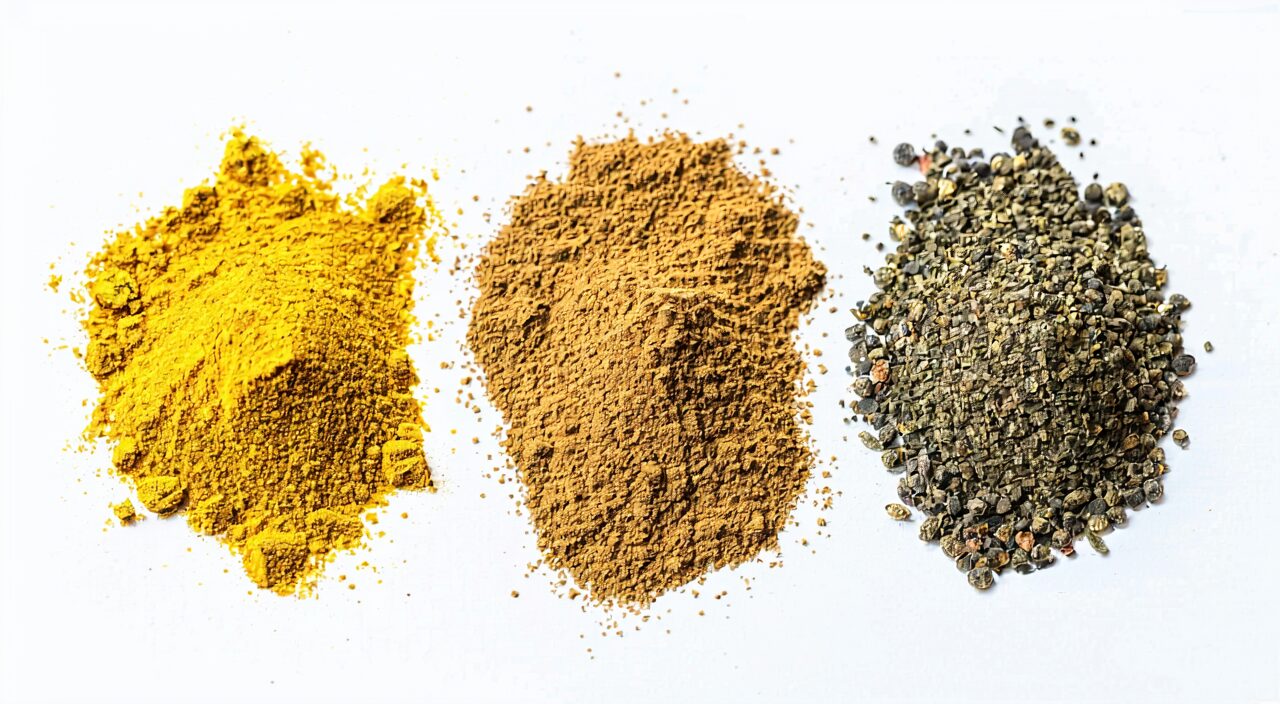
Because Lygodium spore, Cattail Pollen (Pu Huang), and Puffball (Ma Bo) are all powdery herbal substances, they can be easily confused in the pharmacy or at home. However, they originate from completely different plant parts and biological groups, and can be distinguished in the following ways:
- Source and Color: Lygodium spore is the spore of a fern, appearing yellowish-brown or brownish-yellow; Cattail Pollen is the pollen of a plant from the Typhaceae family, bright yellow or deep yellow in color, with a finer texture; Puffball is the spore powder of a fungus from the Lycoperdaceae family, grayish-brown or yellowish-brown, sometimes with a residual odor of fungal hyphae.
- Feel: Lygodium spore feels smooth when rolled between the fingers and does not clump together due to its spore wall structure; Cattail Pollen feels slippery and tends to stick to the fingers; Puffball powder is looser and sometimes feels slightly cottony.
- Water Test: When sprinkled on water, Lygodium spore floats and disperses on the surface, not sinking for a short time; Cattail Pollen tends to form clumps floating on the water, but may partially disperse upon stirring; Puffball powder often sinks to the bottom or partially suspends.
- Heat Reaction: When placed over a flame, Lygodium spore crackles and flashes brightly, a property caused by its spore contents; Cattail Pollen and Puffball generally do not exhibit this phenomenon.
Understanding these differences can help with preliminary judgment during purchasing or use, but for accurate identification, confirmation by a professional institution or a licensed herbalist is still required.
Which Formulas Contain Lygodium Spore?
In herbal formulary, Lygodium spore often appears as a heat-clearing and strangury-relieving herb in traditional combinations. Here are some common formulas that include Lygodium spore:
- Lygodium Spore Powder (Hai Jin Sha San): Originating from the Standards for Diagnosis and Treatment (Zheng Zhi Zhun Sheng), this formula consists of Lygodium spore, Lysimachia (Jin Qian Cao), Talcum (Hua Shi), Akebia Stem (Mu Tong), and others. Traditionally, it is used for painful urinary dribbling and stone obstruction caused by internal damp-heat. Although the composition may vary among versions, the core idea remains clearing damp-heat, promoting urination, and expelling stones.
- Two-Ingredient Powder (Er Shen San): Mainly composed of Lygodium spore and Talcum, powdered and combined, this formula is often used for painful urination and urinary burning when damp-heat is predominant. It is a simple, focused formula that has been used by physicians throughout history.
- Lygodium Spore Decoction (Hai Jin Sha Tang): This is a modern empirical formula or clinical modification. In addition to Lygodium spore, it often includes herbs such as Plantain Seed (Che Qian Zi), Knotgrass (Bian Xu), and Dianthus (Qu Mai) to support the relief of strangury. It is suitable for assisting regulation in individuals with a damp-heat strangury constitution.
It is important to note that these formulas are not universal “stone-expelling” or “anti-inflammatory” remedies. Their suitability depends entirely on the individual’s pattern differentiation and constitutional characteristics. If you experience abnormal urination, back pain, or blood in the urine, you should not self-prescribe these formulas; first have a physician clarify the cause.
What Precautions Should Be Taken When Using Lygodium Spore?
Several aspects deserve special attention when using Lygodium spore:
- Risk of Dust Inhalation: Lygodium spore powder is extremely light and easily becomes airborne during pouring or repackaging. A mask should be worn, or breath held during handling to avoid inhaling the fine powder, which can cause respiratory irritation or discomfort.
- Kidney Stones or Urinary Obstruction Require Prompt Medical Attention: Although Lygodium spore is traditionally used for sandy and stony strangury, if a large kidney stone, ureteral obstruction, or acute urinary tract blockage is suspected, blindly using strangury-relieving herbs not only fails to address the root problem but may also delay proper treatment. Seek medical help immediately.
- Purity and Adulteration Issues: Because Lygodium spore consists of fine spores, there is sometimes a risk of adulteration with sand, Cattail Pollen, or other powders. Choosing reputable sources and channels reduces the risk of obtaining inferior or fake products.
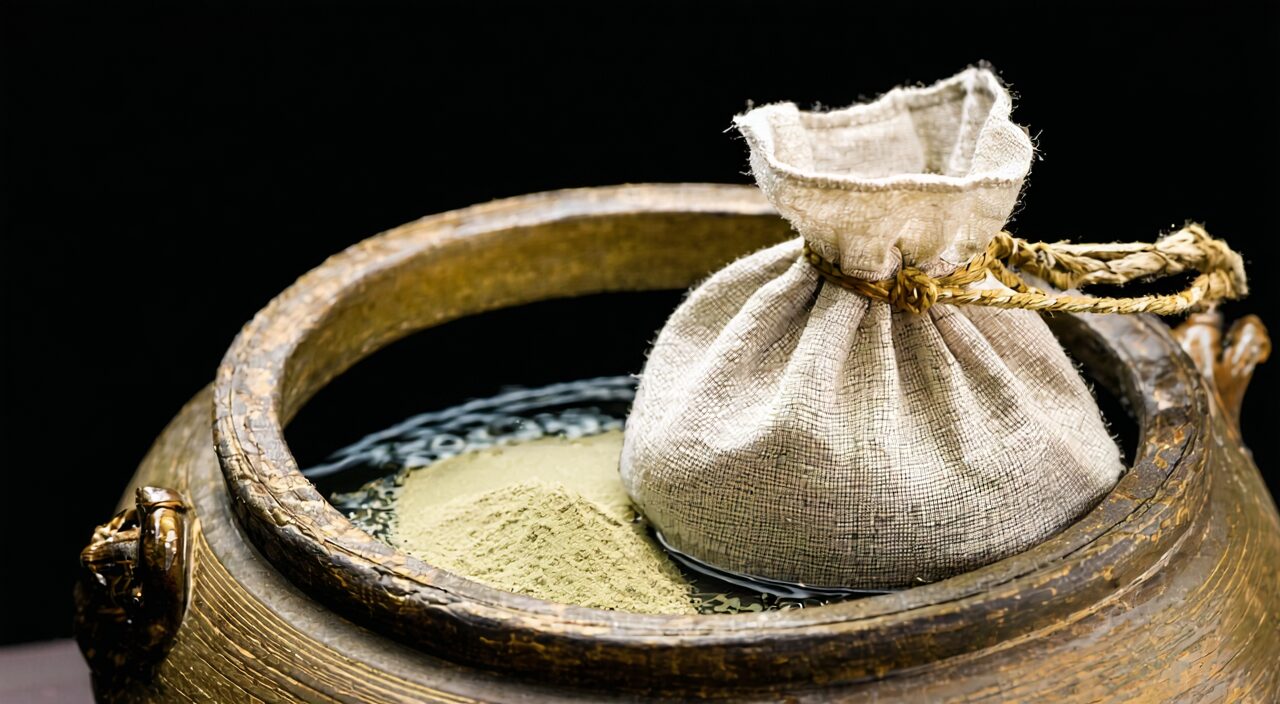
- Decoction in a Wrapped Bag: Lygodium spore powder is very fine. If added directly to a decoction pot without a wrapping cloth, it can easily make the decoction turbid, cause scorching, or stick to the bottom, affecting both taste and quality. The correct method is to place the Lygodium spore into a gauze or non-woven fabric bag before decocting it together with the other herbs.
- Individual Variation and Professional Guidance: Chinese herbal formulas must be applied based on cold, heat, deficiency, and excess patterns and are not suitable for everyone. Traditionally, Lygodium spore is not selected for those with spleen-stomach deficiency cold, fluid damage, or urinary difficulty without damp-heat excess. Patients with long-term recurrent urinary discomfort or those experiencing severe lumbar or abdominal pain, fever, or hematuria should never self-medicate with strangury-relieving herbs; they should promptly seek medical diagnosis. Consult a qualified TCM physician or pharmacist before use.
Summary
Lygodium spore is a traditional Chinese medicinal substance with a special origin. Its yellowish-brown spore powder form and characteristic of floating on water make it uniquely distinguishable from Cattail Pollen and Puffball. In traditional Chinese medicine, it is associated with clearing damp-heat, promoting urination, and relieving pain, and is used in classic formulas such as Lygodium Spore Powder and Two-Ingredient Powder. However, because its dust easily becomes airborne, it requires wrapped decoction, is not suitable for patterns other than damp-heat, and should never replace necessary medical examinations, maintaining an objective and prudent understanding is most appropriate. This article is for informational reference only and cannot substitute for professional diagnosis or treatment advice.