
What Is Xian He Cao? Medicinal Parts, Identification Methods, and Common Formulas
When many people first hear the name “Xian He Cao” (literally “Crane Herb”), they picture the long legs and graceful stance of a crane. In traditional herbal medicine, Xian He Cao is indeed a medicinal herb with a highly recognizable appearance and purpose. It comes from the dried aerial parts of Agrimonia pilosa, a plant in the Rosaceae family, and is also known colloquially as Tuo Li Cao (“Fatigue-Relieving Herb”) or Lang Ya Cao (“Wolf Tooth Herb”). For those living overseas and interested in Chinese herbal medicine, understanding the physical characteristics, medicinal parts, and differences from similar plants can help in gaining a safer and more informed understanding of this herb.
What Does Xian He Cao Look Like? How to Identify It
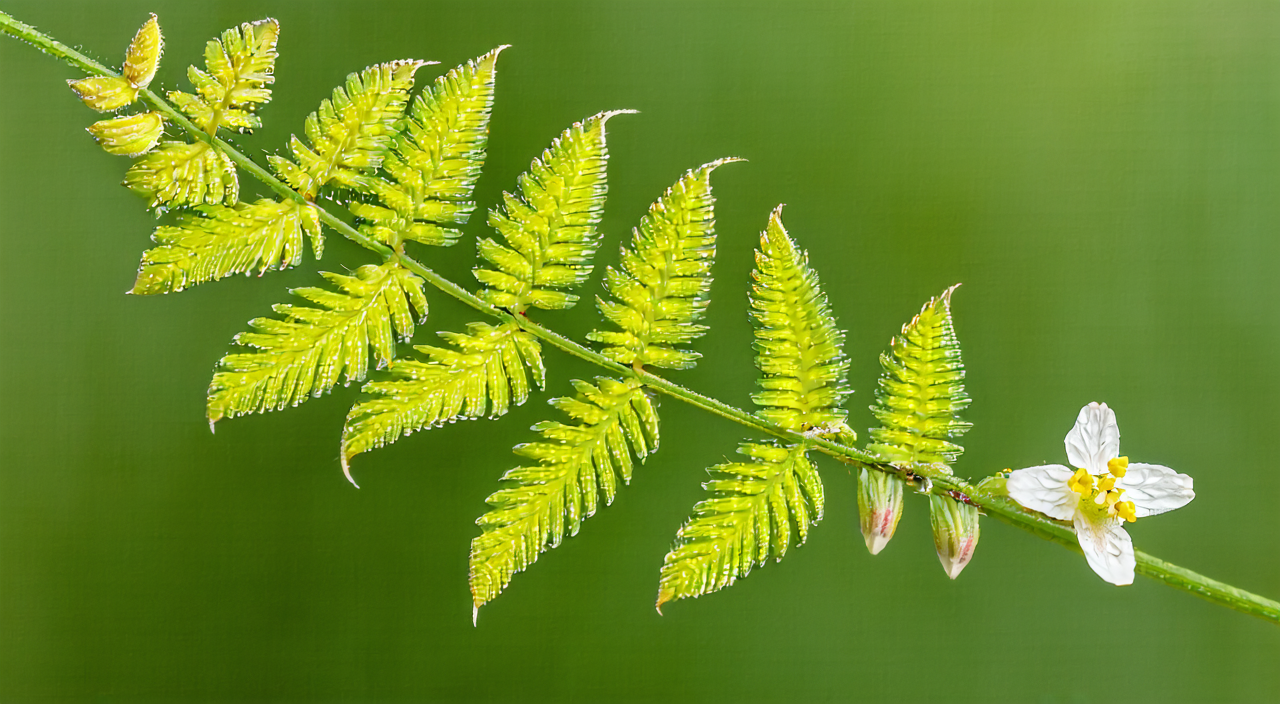
Xian He Cao is a perennial herbaceous plant, typically growing 30 to 100 cm tall. The entire plant is covered with soft hairs, giving it a rough feel to the touch. Its rhizome is tuberous and often bears underground buds. The stem is erect, branching in the upper portion, with alternate stem leaves.
The leaves are interruptedly odd-pinnately compound—a key identification character. On the same leaf, the leaflets vary in size, with larger and smaller leaflets alternating, creating an “interrupted” appearance. The leaflets are mostly obovate or obovate-elliptic, with regularly serrated margins, green on the upper surface and somewhat paler beneath, and covered with soft hairs on both sides. The veins are noticeably raised on the lower surface, yielding a distinctly rough sensation when touched.
Flowering usually occurs in summer and autumn. Slender racemes of many small yellow flowers emerge from the stem tips or leaf axils. The flowers typically have five oblong petals and numerous stamens. After flowering, achenes develop within a cup-shaped hypanthium armed with hooked bristles. The fruit surface bears hooked prickles that easily catch on clothing or animal fur as one passes by—this is its method of seed dispersal and also serves as a useful identifying feature in the field.
Crude drug slices usually consist of fragmented stems and leaves: stem segments bearing hairs, broken leaf pieces with serrated margins, occasional small yellow flowers, and a few remnants of fruits with hooked bristles. After drying, the material is dark green or greyish-green, brittle in texture, with a slight odor and a mildly bitter, astringent taste.
What Is the Medicinal Part of Xian He Cao?
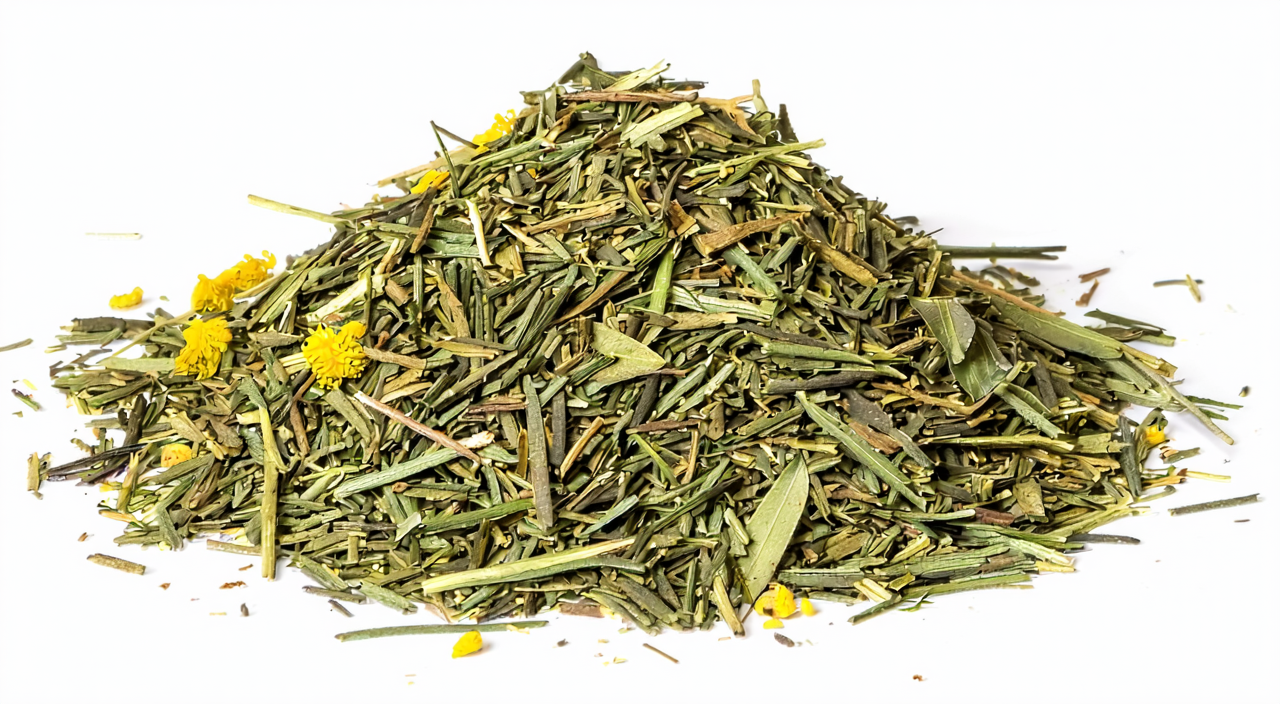
The medicinal part of Xian He Cao is clearly defined: the dried aerial part of Agrimonia pilosa. The term “aerial part” here encompasses the stems, leaves, and sometimes the flowers and fruits that are present at harvest. Traditional collection is generally done in summer and autumn when the stems and leaves are lush and the flowers have not completely withered. At harvest, the aboveground portions are cut, foreign matter and withered basal parts are removed, and the material is then either dried in the sun directly or cut into segments and dried.
During primary processing and slicing preparation, the dried raw herb is further cut or crushed to facilitate prescription and decoction. The resulting slices typically reflect the complete plant features: stem segments with a yellowish-green or brownish-green surface, longitudinal ridges, and traces of soft hairs can be seen; the leaves are crumpled and broken but remnants of pinnately compound leaflets and serrations are still observable; occasionally, a few yellow petals or hooked prickly fruits are intermixed. When purchasing or using Xian He Cao, if these characteristic fragments are absent, one should be alert to the possibility of adulterants or improper processing.
How Does Traditional Chinese Medicine Understand Xian He Cao?
Traditional Chinese medicine (TCM) assigns a rather distinctive profile to Xian He Cao, emphasizing both its astringent and hemostatic actions and its ability, under certain conditions, to relieve dysentery, interrupt malarial paroxysms, resolve toxin, and supplement deficiency. Therefore, while it is primarily classified as an astringent hemostatic in classical herbals, its applications extend beyond bleeding disorders.
In terms of astringing and stopping bleeding, Xian He Cao is often included in treatment strategies for various types of hemorrhage such as hemoptysis, hematemesis, epistaxis, hematochezia, and metrorrhagia. Traditionally, it is considered neutral in nature and bitter-astringent in flavor; bitterness and astringency can astringe and bind, making it potentially suitable for bleeding without significant stasis. When bleeding is accompanied by profuse dark clots, or when the cause involves trauma or acute febrile disease, a more targeted differential diagnosis is usually required.
For chronic diarrhea or recurrent dysentery, the astringent intestine and antidiarrheal approach of Xian He Cao is also employed in traditional practice. Especially in cases of bloody dysentery and persistent dysentery with mild bleeding tendencies, Xian He Cao may be used in compound formulas. As for interrupting malarial paroxysms, ancient practitioners would incorporate herbs like Xian He Cao when malaria proved difficult to resolve—a usage now uncommon but indicative of its traditional spectrum of applications.
Beyond these, there is a folk custom of using Xian He Cao for fatigue-induced debility, abscesses, and sores. The name “Tuo Li Cao” originated from the practice of boiling it with jujubes and consuming the decoction to address overall exhaustion and bodily fatigue, as a form of supplementary and restorative measure. These applications reflect empirical understanding at the traditional level; whether they suit a specific individual must be judged in light of one’s constitution and current health status.
What Perspectives Does Modern Research Offer?
Modern phytochemical studies have isolated from Agrimonia pilosa a variety of constituents including agrimoniin, agrimol, tannins, and flavonoids. Some preliminary experiments suggest that under certain conditions these substances may show a tendency to influence bleeding time in the short term through effects on platelet function, local vasoconstriction, or modulation of inflammatory processes. In addition, exploration related to certain digestive discomforts has indicated that extracts of Xian He Cao might exert a regulatory effect on intestinal motility.
Most of these findings, however, remain at the stage of experimental observation or small-scale clinical exploration and are still far from yielding stable therapeutic conclusions. It should be noted that the dosages and purity of extracts used in research differ considerably from those of traditionally decocted crude slices, and laboratory results should not be directly equated with effects in everyday use. Therefore, this article continues to focus on the framework of traditional understanding, serving only as a popular science reference.
How Does Xian He Cao Differ from Wei Ling Cai and Di Yu?
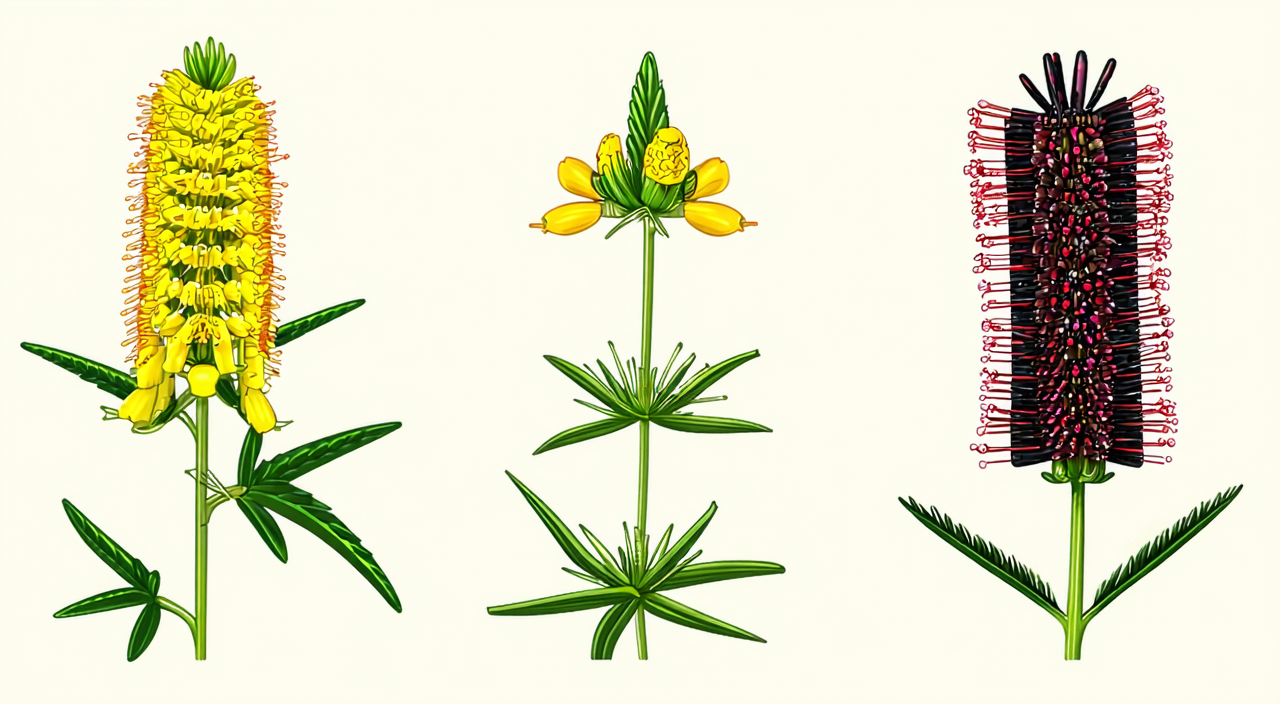
Xian He Cao, Wei Ling Cai (Potentilla chinensis), and Di Yu (Sanguisorba officinalis) are all herbaceous plants that can be encountered in the wild, and their leaf shapes are easily confused, but a closer comparison can distinguish them by leaf form, flowers, and fruits.
Wei Ling Cai also belongs to the Rosaceae family but to a different genus. Its leaflets are also arranged like a pinnately compound leaf; however, the underside of the leaf is densely covered with white tomentum, giving it a whitish appearance, the plant is generally shorter, the flowers are yellow but arranged in a compound corymb, and the fruit lacks obvious hooked bristles. In contrast, Xian He Cao’s leaflets are interruptedly arranged, the lower leaf surface is hairy but not markedly white, the inflorescence is an elongated raceme, and the fruit bears hooked prickles—this being the most intuitive difference.
Di Yu is likewise a rosaceous plant, and its leaf shape somewhat resembles that of Xian He Cao, but its leaflets are mostly opposite, with more deeply incised margins, and its inflorescence is a dark purplish-red or brownish-red spike, densely packed into a cylindrical form that looks from a distance like a dark red mulberry. Xian He Cao’s inflorescence is yellow and forms a slender spike, giving the plants an entirely different color impression.
In terms of traditional usage, the three also differ in emphasis. Wei Ling Cai is mostly used to clear heat, resolve toxin, and cool the blood, suited to conditions like heat-toxin dysentery; Di Yu excels at cooling the blood and stopping bleeding, particularly for bleeding from the lower body such as hemorrhoidal bleeding and hematochezia; Xian He Cao leans toward astringent hemostasis while also supplementing deficiency and checking diarrhea, offering a broader range of applications. In practical use, confusing the three can misdirect treatment principles, which is a major reason why differentiation is emphasized.
Which Formulas Include Xian He Cao?
Xian He Cao is used in both empirical formulas and modern Chinese patent medicines, but it is usually not employed alone as a main formula. Instead, it is combined with other medicinals based on the specific situation. Some of the more well-known examples include Xian He Cao Decoction, Xian He Cao Powder, and various hemostatic formulas that incorporate Xian He Cao as part of the strategy.
Xian He Cao Decoction is commonly seen in modern TCM clinical summaries. It often combines Xian He Cao with Sheng Di Huang (Rehmannia root), Mu Dan Pi (Moutan bark), Ce Bai Ye (Platycladi cacumen), and other herbs to address bleeding tendencies caused by frenetic blood heat or failure of the spleen to contain blood. Such formulations emphasize a combination of astringency and blood-cooling, and different clinicians will adjust dosages and specific ingredients based on patient presentation. Xian He Cao Powder, similarly centered on Xian He Cao and often combined with Bai Ji (Bletilla rhizome) and Di Yu (Sanguisorba root), is traditionally oriented toward an auxiliary approach for gastrointestinal bleeding or traumatic hemorrhage.
Commercially available Xian He Cao granules appear either as single-herb products or in compound form, some integrated with traditional hemostatic formulas for portability and convenience. For those considering these products, it is essential to first distinguish the type and cause of bleeding—for instance, whether it is due to deficiency-cold or to blood heat, whether blood stasis is present, and whether there are any other underlying health conditions. A single herb or hemostatic formula rarely covers every type of presentation; hasty application may delay accurate assessment. Therefore, regardless of the dosage form chosen, a comprehensive judgment should be made by understanding one’s own situation and combining product information with professional advice.
What Precautions Should Be Taken When Using Xian He Cao?
Although Xian He Cao is traditionally classified as a neutral medicinal with a primary astringent action, there are still several key precautions to observe when using it.
First, if the cause of bleeding is unclear—particularly in cases of unexplained visceral bleeding, recurrent subcutaneous bruising, or prolonged gingival bleeding—one should not self-administer single-herb or compound Xian He Cao products to manage the symptom. Instead, a clear diagnosis should be obtained as soon as possible. Individuals with coagulation disorders, thrombocytopenia, or those taking long-term anticoagulant medications should exercise particular caution when using Xian He Cao or related preparations, because the astringent and hemostatic direction may interact with the current therapeutic regimen and must be evaluated by a professional.
Second, pregnant or breastfeeding women and individuals with allergic constitutions should use Xian He Cao cautiously or avoid it. Traditionally, its astringent properties are thought to potentially restrict the movement of Qi and body fluids, which may not be suitable during special physiological stages. Those with a history of allergy to plants in the Rosaceae family should also be alert to potential cross-sensitivity.
Moreover, in the event of acute massive bleeding, hematemesis, melena, hemoptysis accompanied by difficulty breathing or altered consciousness, and other urgent or severe presentations, emergency medical treatment must be sought at once. No herbal remedy should ever be used as a substitute for emergency medical care. Xian He Cao–related formulas are more commonly applied as an auxiliary approach in relatively stable phases or for mild bleeding and must never delay critical intervention.
Summary
Xian He Cao is a medicinal herb with distinctive features in both identification and use. From its pinnately compound leaves and small yellow flowers to its hooked prickly fruits and its traditional emphasis on astringent hemostasis, there is much that merits careful understanding for those interested in Chinese herbal medicine. Before use, clarifying its differences from similar plants such as Wei Ling Cai and Di Yu can help reduce the risk of misidentification or misuse. More importantly, any empirical formula or product involving Xian He Cao can only serve as a reference direction in health maintenance and cannot replace medical investigation into the cause of bleeding. If persistent, unexplained, or acute bleeding symptoms occur, priority must be given to professional medical evaluation. This is the fundamental premise for safely looking after one’s own health and that of one’s family.