
What Is Di Yu? Medicinal Parts, Identification, and Common Formulas
Many people exploring Chinese herbal medicine repeatedly encounter the name Di Yu when learning about the concept of “cooling blood and stopping bleeding.” It is not as widely recognized as Dang Gui (Angelica sinensis) or Huang Qi (Astragalus), but traditional Chinese medicine has a long history of using Di Yu for issues related to blood heat, such as bleeding and skin conditions. If you are researching this type of herb, or if you come across Di Yu decoction pieces in an overseas Chinese herbal shop and want to understand what it looks like, which part is used, and how it differs from Xian He Cao (Agrimony), this article offers a clear reference framework.
What Does Di Yu Look Like? How to Identify It
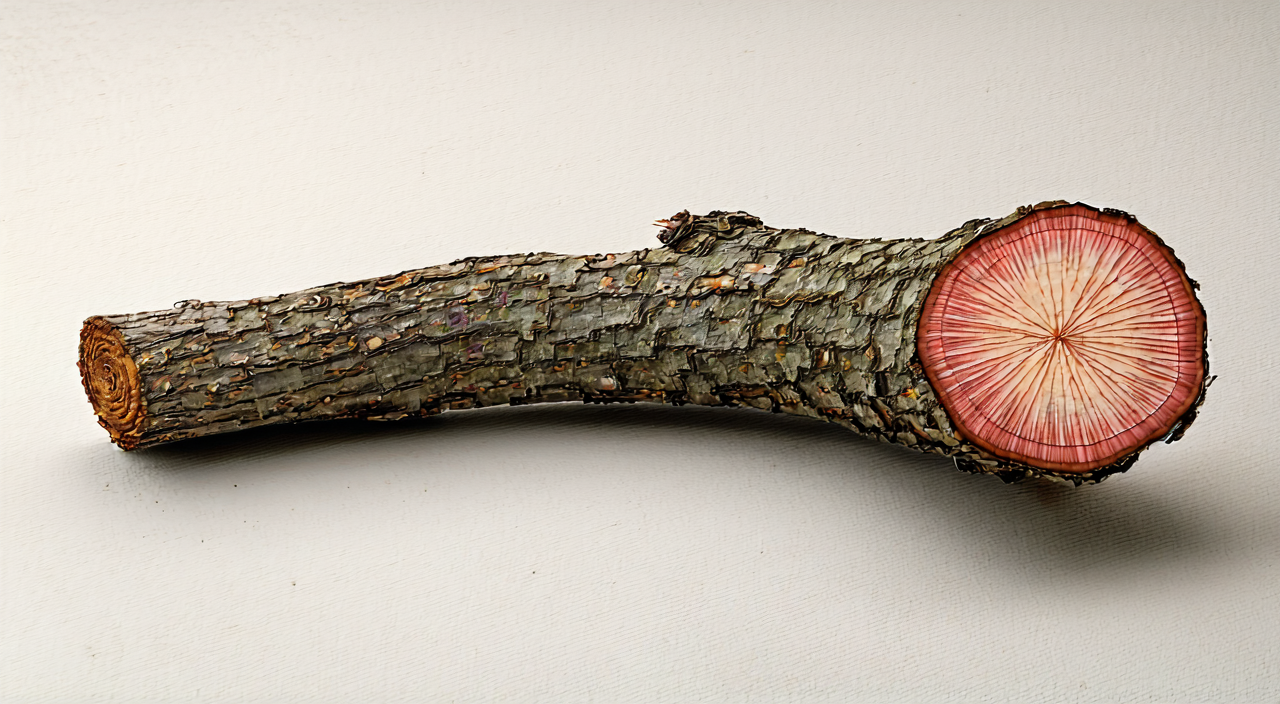
The medicinal part of Di Yu is the dried root, not the whole plant, so what we identify are usually processed root slices. The appearance of Di Yu root is not uniform; it is commonly irregularly spindle-shaped or cylindrical, sometimes slightly curved, mostly 5–15 cm in length and about 0.5–2 cm in diameter.
The surface is mainly grayish-brown, dark brown, or dark purplish-red, rough, with obvious longitudinal wrinkles; sometimes transverse cracks and rootlet scars are visible. The texture is hard and tough, making it difficult to break. The most important feature to note after breaking is the cross-section: the bark of Di Yu often appears reddish-brown or yellowish-brown, while the wood is slightly lighter, brownish-yellow, with radial patterns and sometimes fine, dense pores. If you see Di Yu Tan (charred Di Yu), that is a processed product made by stir-frying Di Yu slices; it has a scorched black surface, a charred brown cross-section, and a more brittle texture.
When identifying, be aware that some other root herbs can look similar, but the reddish-brown or yellowish-brown cross-section with radial lines is a relatively distinctive feature of Di Yu. If the root is whole and uncut, the top may sometimes show remnants of stem bases or leaf stalks, but the market mainly offers slices or oblique slices, so you need to evaluate the cross-section color and texture when purchasing.
What Is the Medicinal Part of Di Yu?
The medicinal part of Di Yu is the root, sourced from the dried roots of Sanguisorba officinalis (garden burnet) or Sanguisorba officinalis var. longifolia, both of which belong to the Rosaceae family. In herbal medicine, both are collectively called “Di Yu,” with the root of the long-leaf variety generally being thicker and sometimes showing a darker cross-section color.
Harvesting and processing usually occur in spring before sprouting or in autumn after the aerial parts have withered, when the roots are relatively rich in nutrients. After digging, the rootlets are removed, the root is washed clean, and it is cut into thick slices or oblique slices while fresh, then dried in the sun or at low temperature. During sun-drying, avoid piling and covering, as this can darken the cross-section color and affect quality.
Besides raw Di Yu, there is a common processed form called Di Yu Tan (charred Di Yu). To make Di Yu Tan, clean Di Yu slices are stir-fried over high heat until the surface turns charred black and the interior becomes charred brown; a little water is then sprayed to extinguish any sparks, and the slices are air-dried. In TCM, charring is traditionally believed to enhance its astringent and hemostatic effects, so for certain bleeding presentations, formulas often specifically call for Di Yu Tan.
How Does TCM Understand Di Yu?
In traditional Chinese medicine theory, Di Yu is commonly classified under the categories of cooling blood and stopping bleeding, and resolving toxins and astringing sores. Its nature and taste are typically recorded as bitter, sour, and astringent, with a slightly cold property; it mainly targets the Liver, Stomach, and Large Intestine meridians.
“Cooling blood and stopping bleeding” does not mean it can stop all types of bleeding directly; rather, it is considered for bleeding caused by heat in the blood level, known as “reckless movement of hot blood,” such as hemorrhoidal bleeding, bloody stools, or uterine bleeding of a heat pattern. Its cold nature is used to clear blood-level heat, while its astringent taste is employed to restrain and secure the blood vessels.
The “resolve toxins and astringe sores” aspect is more often applied externally. Ancient physicians would grind raw Di Yu into fine powder, mix it with sesame oil to form a paste, and apply it to burns, scalds, skin ulcerations, or sores and swellings. This approach uses Di Yu’s astringent action to reduce exudation and ease local redness and swelling; it is not a modern pharmacological concept of killing bacteria or preventing infection. It is particularly important to note that this is only a traditional external method. For large wounds or obviously infected sores, do not self-treat with herbal powder; seek medical help promptly under modern conditions.
Overall, TCM’s understanding of Di Yu places it within a framework of adjusting the body’s state, not simply targeting a single symptom. Whether it is suitable for use must be determined by a comprehensive assessment of the individual’s constitution, their tendency toward cold or heat, and the specific presentation.
What Aspects Are Studied in Modern Research?
Modern research on Di Yu has mainly focused on its chemical constituents, such as tannins, triterpenoid saponins, flavonoids, and gallic acid. The astringent property of tannins has long been one explanation for Di Yu’s traditional external use on wounds. In addition, some experimental studies have observed its antioxidant and anti-inflammatory activities, but most of these findings remain at the laboratory stage and cannot be directly equated to clinical efficacy; they serve more as background information for understanding the herb’s nature.
For the general public, these modern research insights can help explain why Di Yu has been used in traditional ways, but they should not be used as a basis for self-adjusting dosage or usage.
How Does Di Yu Differ from Xian He Cao and Huai Hua?
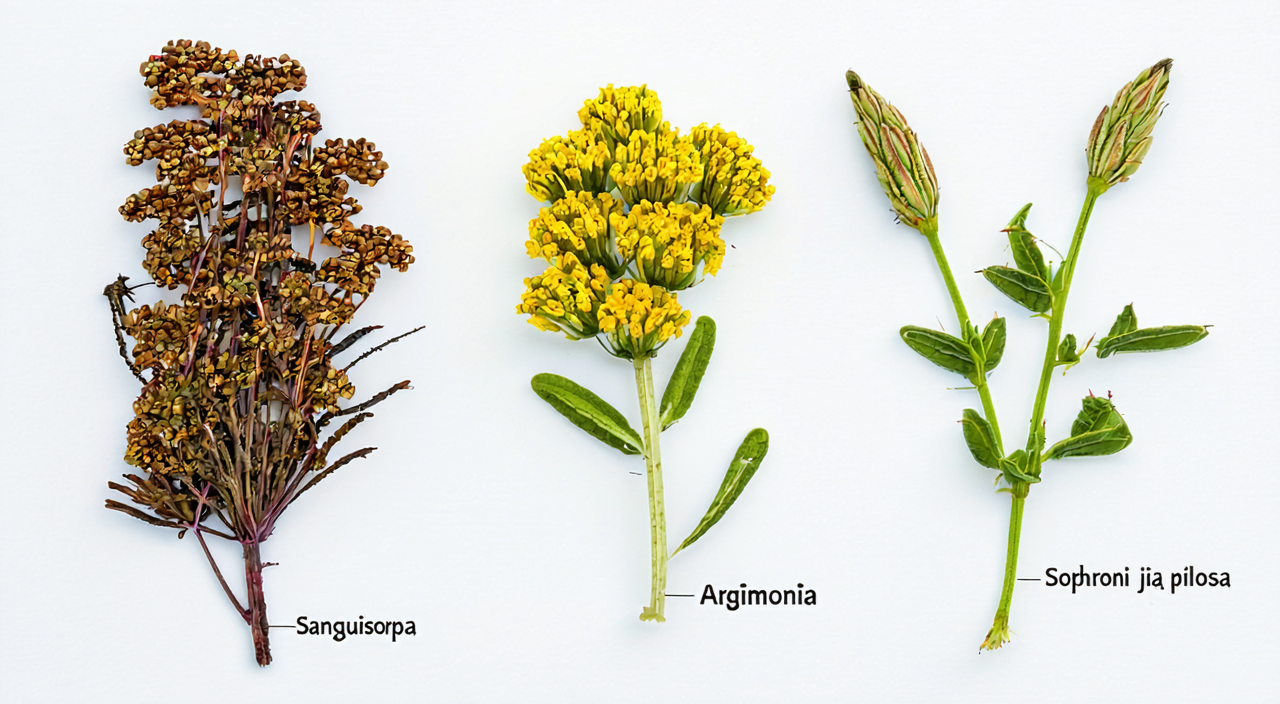
Many people new to Di Yu can easily confuse it with Xian He Cao (Agrimony) and Huai Hua (Sophora flower). What they have in common is that all are traditionally used for bleeding-related conditions, but their botanical sources, medicinal parts, and clinical emphases differ.
Di Yu uses the root from plants of the Rosaceae family; its nature is cold and astringent, mainly targeting lower-jiao blood heat causing symptoms such as bloody stools and hemorrhoidal bleeding, with an emphasis on astringing and also topical application for sores. Xian He Cao uses the aerial parts—the whole herb—from Agrimonia pilosa, also in the Rosaceae family; its nature is relatively neutral. It is traditionally used to astringe and stop bleeding, regardless of cold, heat, deficiency, or excess patterns, and it also has a certain tonifying effect on deficiency, earning it the folk name “Tuo Li Cao” (strength-restoring herb). Huai Hua uses the dried flowers and flower buds of Sophora japonica, from the Fabaceae family. It primarily clears liver fire and cools blood to stop bleeding, especially indicated for red eyes, headache, and bloody stools, targeting liver heat or large intestine heat excess.
In broad terms: Di Yu stops bleeding with an emphasis on astringency and cold, adept at acting on the lower jiao while also treating sores; Xian He Cao stops bleeding with a neutral, astringent approach and can also tonify deficiency; Huai Hua stops bleeding with a clearing and draining effect, focusing on clearing liver and large intestine heat. Understanding these differences helps avoid conflating the properties of different herbs when consulting references.
Which Formulas Include Di Yu?
In traditional formulas, Di Yu appears most frequently in combinations aimed at cooling blood and stopping bleeding. Each formula has its own emphasis; the following is only a directional introduction, and specific applications require professional judgment.
Huai Hua San (Sophora Flower Powder) is a relatively well-known formula, mainly composed of Huai Hua (Sophora flower), Ce Bai Ye (Platycladus orientalis leaf), Jing Jie Sui (Schizonepeta spike), and Zhi Qiao (Aurantium fruit); Di Yu is sometimes added according to the situation. It is used for bloody stools or hemorrhoidal bleeding caused by damp-heat in the large intestine or blood heat, and is traditionally considered to clear the intestines, cool the blood, and disperse wind while moving qi.
Di Yu San (Di Yu Powder) is named directly after the herb; its typical composition includes Di Yu, Huang Qin (Scutellaria), Huang Lian (Coptis), and Zhi Zi (Gardenia). It is commonly used in strategies addressing damp-heat internal accumulation damaging blood vessels, causing dysentery with blood or bloody stools.
Di Yu Wan (Di Yu Pill) likewise has Di Yu as the main ingredient, often combined with Dang Gui (Angelica sinensis), A Jiao (donkey-hide gelatin), Huang Lian, and others. It suits chronic conditions with blood deficiency accompanied by heat, prolonged dysentery, and bloody stools, balancing both clearing and supplementation.
In addition, Di Yu often appears in other formulas for cooling blood and stopping bleeding, such as those addressing uterine bleeding or hemorrhoidal bleeding, where it is combined with other herbs that cool blood, stop bleeding, or supplement qi and contain blood.
These formulas each have their own indications and constitutional requirements in TCM. For example, Di Yu San leans toward clearing heat and drying dampness, suitable for those with pronounced damp-heat; Di Yu Wan emphasizes nourishing blood, suited for prolonged illness where yin and blood depletion is prominent. Because the appropriate direction can be completely opposite for different constitutions and symptoms, one must not self-prescribe simply upon seeing “stop bleeding.” It must be based on individual circumstances and professional guidance.
What Precautions Should Be Taken When Using Di Yu?
Although Di Yu is not a strong or harsh herb, there are still several points that require special attention when using it.
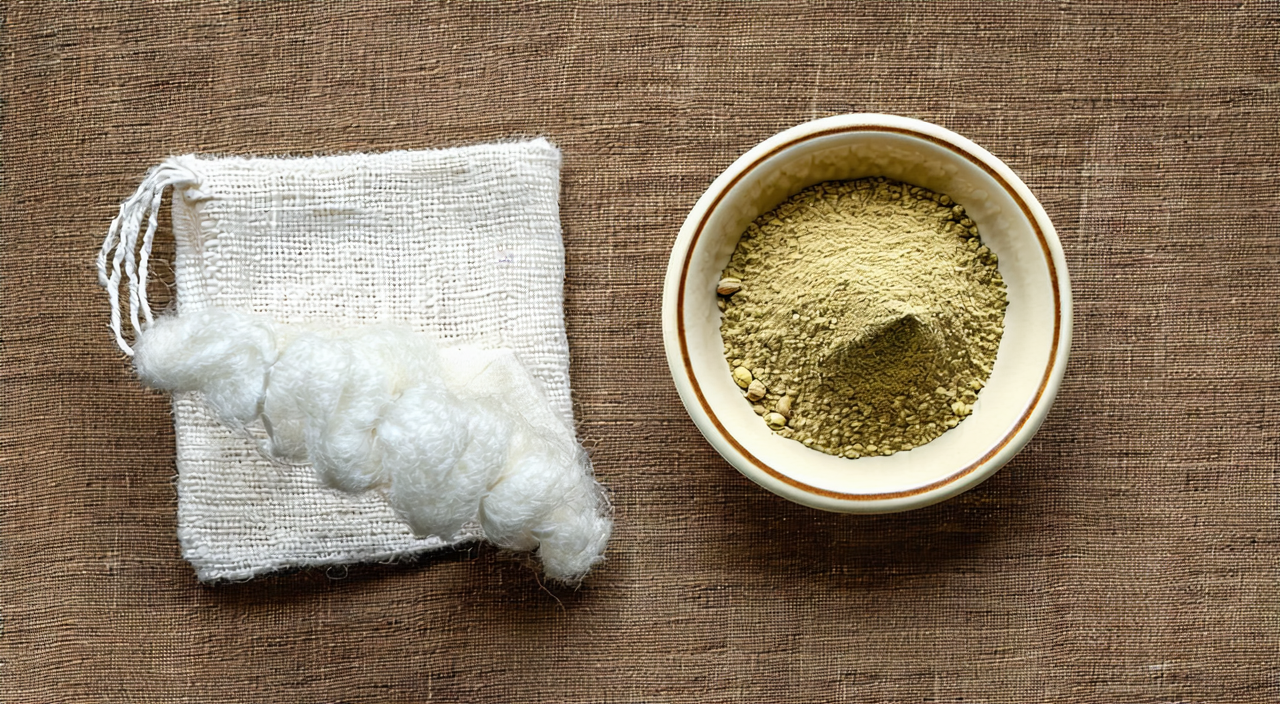
First, regarding external use: traditionally, Di Yu powder mixed into a paste has been used for mild burns and scalds to exert an astringent and wound-protecting effect. However, there is an easily overlooked risk: if the burn area is large, or if blisters, broken skin, exudation, or even signs of infection have already appeared, self-applying herbal powder to the wound may actually increase the risk of infection and complicate subsequent treatment. Any extensive or deep burns require immediate medical attention and should not rely on herbal external applications.
Secondly, Di Yu’s nature is cold and astringent, so for bleeding of a deficiency-cold pattern—characterized by dark, thin blood, aversion to cold, cold limbs, and loose stools—raw Di Yu may be inappropriate and could even worsen cold stagnation. In such cases, even a TCM formula would typically combine it with warming and tonifying herbs, or substitute processed products, while strictly controlling the dosage.
In addition, if sudden massive bleeding occurs—for instance, fresh blood in large amounts accompanied by palpitations, dizziness, and a pale complexion—this is a signal requiring immediate emergency medical help. Do not expect a few herbs to manage it. In such situations, Di Yu can only be one part of an auxiliary approach and must never replace professional emergency care.
Finally, everyone’s body condition is different. If you are taking other herbal formulas or medications, potential interactions also need to be considered. Always consult a TCM practitioner or pharmacist before use, and make a comprehensive assessment based on your personal constitution and medical history.
Summary
Di Yu is a root herb used in traditional Chinese medicine for cooling blood, stopping bleeding, resolving toxins, and astringing sores. Both Sanguisorba officinalis and Sanguisorba officinalis var. longifolia dried roots are used as Di Yu, and a key identifying feature is the reddish-brown or yellowish-brown cross-section with radial patterns. Although Di Yu, Xian He Cao, and Huai Hua all belong to the category of hemostatic herbs, they differ in medicinal parts, nature, taste, and application focus, which can cause confusion. In classic formulas, Huai Hua San, Di Yu San, and Di Yu Wan each reflect Di Yu’s traditional application ideas in different combinations. Overall, Di Yu is cold and astringent; it should not be used casually for large wounds, burns, or deficiency-cold bleeding. Any real situation must be assessed based on professional diagnosis and the individual’s constitution. This article is for informational reference only and cannot replace professional advice.