
What Is Cebai Ye (Platycladi Cacumen)? Medicinal Parts, Identification, and Common Formulas
Many overseas friends interested in traditional Chinese medicine often hear the name “Cebai Ye,” but often cannot distinguish whether it refers to leaves, branches, or fruits. In fact, Cebai Ye is the dried twig tips and leaves of Platycladus orientalis; although it comes from the same plant as Bai Zi Ren (the seeds), they are completely different medicinal substances. This article organizes a clear introduction from the perspectives of visual identification, medicinal parts, traditional understanding, and common formulas containing Cebai Ye, helping you recognize and understand it more accurately when needed.
What Does Cebai Ye Look Like? How to Identify It?
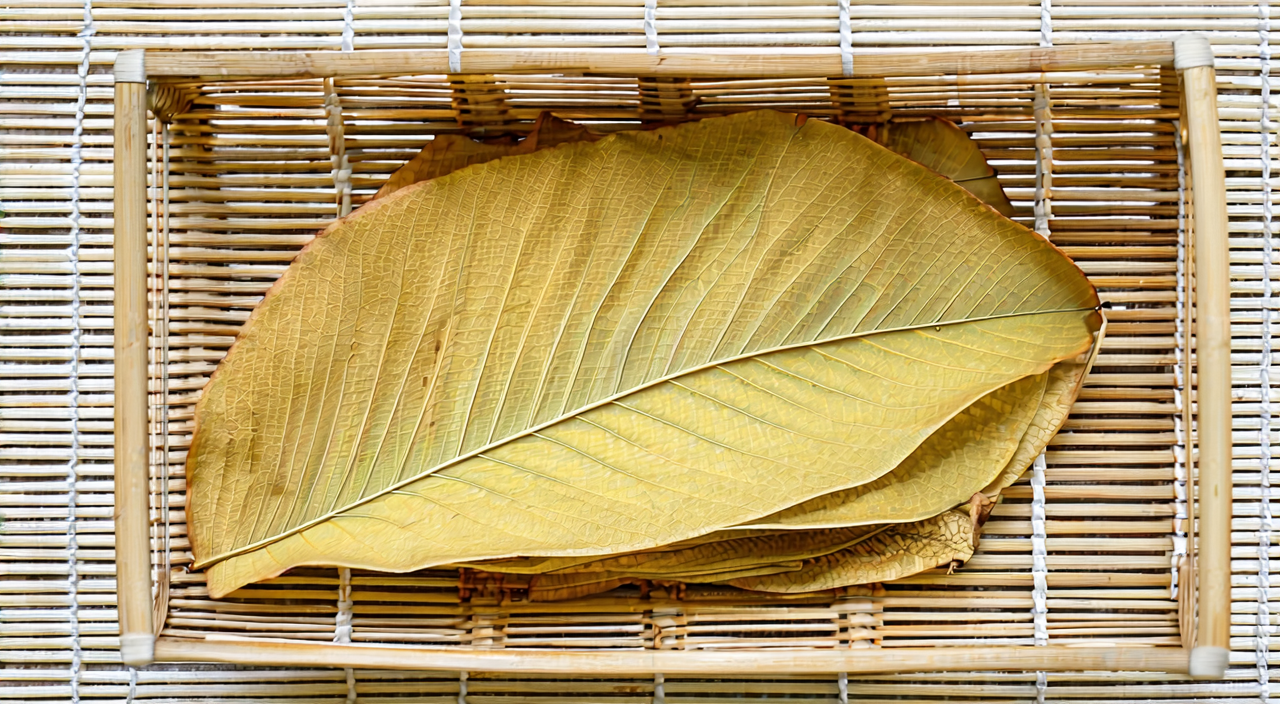
Cebai Ye has a distinctive appearance; once you grasp a few key details, it is not easily confused with other cypress or pine varieties.
Fresh Platycladus branchlets are flat, and the leaves are tiny scale-like, closely appressed to the twigs in opposite pairs, resembling flattened green braids. The leaf color is usually dark green or yellow-green; after drying, the color lightens and the texture becomes brittle. When rubbed by hand, it emits a relatively fresh, aromatic scent that many find similar to the natural fragrance of conifers, but not as strong as pine resin.
Commercial Cebai Ye decoction pieces are mostly dried leafy branch tips of varying lengths. You can often see some small woody twigs with dried scale leaves attached. Because the leaves are closely pressed against the twigs, the overall contour is smooth, unlike the sharp feel of some needle-leaved or juniper species. If you only see completely broken powder or fragments, you need to combine smell and color to make a comprehensive judgment, to avoid mixing it up with other medicinal materials.
What Is the Medicinal Part of Cebai Ye?
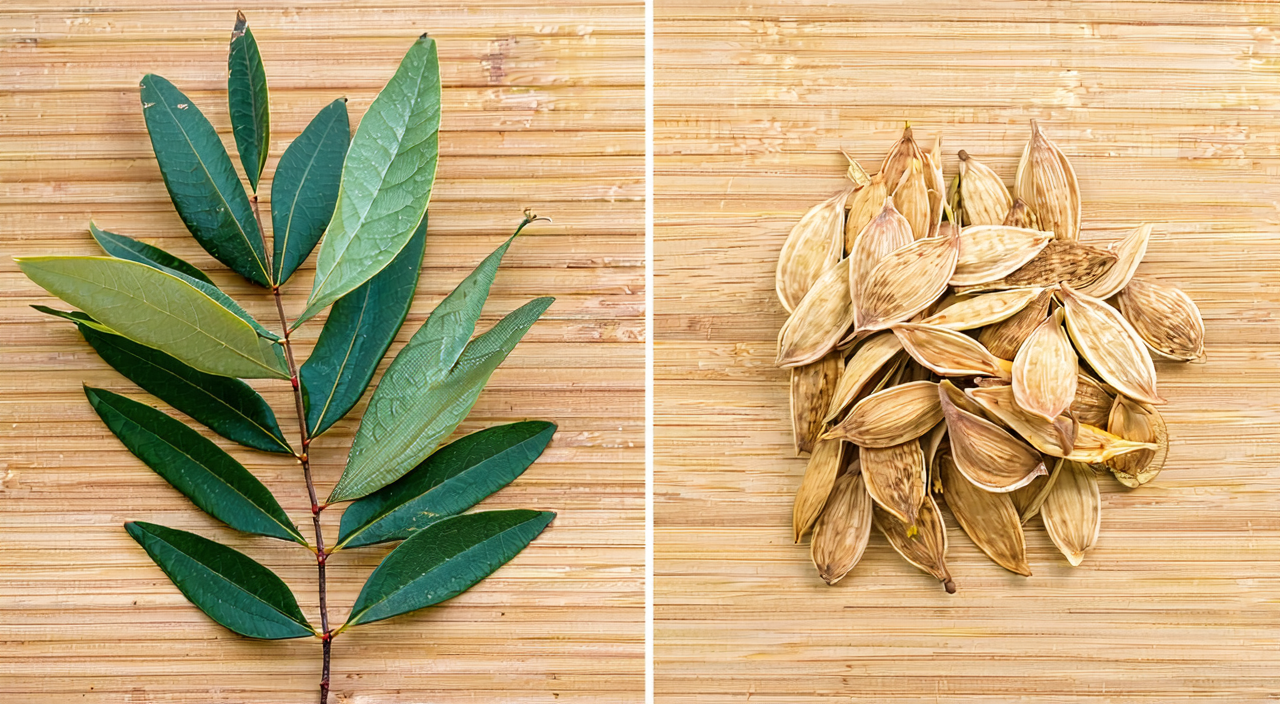
The medicinal part of Cebai Ye is very clear: it is the dried twig tips and leaves of Platycladus orientalis. During harvesting, the current-year or second-year leafy tender shoot tips are usually cut, coarse stems and impurities are removed, and then they are sun-dried or dried at low temperature. The processing mainly retains the flat branchlets and the dense scale leaves on them, not the thick woody trunk parts.
In traditional use, besides direct use of the dried product, there is also a commonly used processed form — Cebai Ye Charcoal (Ce Bai Tan). Cebai Ye Charcoal is prepared by stir-frying clean Cebai Ye until charred, making the surface scorched brown and the interior scorched yellow, partially carbonized. After this treatment, its properties lean toward astringing and stopping bleeding, which differs from the raw product in application. Therefore, when learning about the medicinal part, it is also important to distinguish between the raw and charred forms, as this often affects the subsequent choice of use.
How Does Traditional Chinese Medicine Understand Cebai Ye?
In traditional Chinese medicine thinking, Cebai Ye is mainly associated with cooling the blood and stopping bleeding, resolving phlegm and relieving cough, and promoting hair growth and darkening hair.
Cooling the blood and stopping bleeding is a traditional use that draws considerable attention to Cebai Ye. For various bleeding manifestations caused by blood heat, such as coughing up blood, vomiting blood, nosebleeds, blood in the stool, or uterine bleeding, some classical formulas include Cebai Ye as an adjuvant to correct the blood-heat condition. It is often combined with unprocessed Rehmannia root (Sheng Di Huang), mugwort leaf (Ai Ye), lotus leaf (He Ye), and other herbs to jointly clear heat, cool the blood, astringe, and stop bleeding.
In the direction of resolving phlegm and relieving cough, Cebai Ye mainly targets coughs caused by phlegm-heat. With a slightly cold nature, it is traditionally believed to clear lung heat and transform phlegm turbidity, and is often combined with expectorant and antitussive herbs.
Regarding hair growth and darkening, Cebai Ye has also been widely used in folk and traditional external applications. The ancients believed that Cebai Ye enters the blood level, and blood heat or blood dryness can affect the hair; therefore, boiling Cebai Ye in water to wash the hair or grinding it into powder to apply to the scalp is commonly seen in traditional external experiences for addressing hair loss and premature graying. These are only traditional cognitive directions; whether they suit an individual’s situation still needs to be judged based on specific constitution and manifestations.
General Directions of Modern Research
Modern research on Cebai Ye mainly focuses on the chemical composition level. Preliminary studies have found that Cebai Ye contains flavonoids, volatile oils, tannins, and other components, among which quercitrin, kaempferol, and other flavonoids are considered its relatively important active ingredient groups. In related in vitro experiments or animal studies, Cebai Ye extracts have shown certain anti-inflammatory and antioxidant activities, and some trends have been observed in hemostatic and antibacterial models. However, most of these are exploratory studies and are still far from being directly extrapolated to specific effects in the human body. Therefore, this information is more suitable as background reference for understanding the medicinal material and should not be directly equated with medicinal guidance.
What Are the Differences Between Cebai Ye, Bai Zi Ren, and Juan Bai?
Many people easily confuse Cebai Ye with Bai Zi Ren because they come from the same plant — Platycladus orientalis. Bai Zi Ren is the dried ripe kernel of the seed, obtained by collecting the seeds from the cones and removing the shells; it is long-ovoid or long-elliptical, oily in texture, and traditionally used mainly for nourishing the heart, calming the spirit, and moistening the intestines to relieve constipation. In contrast, Cebai Ye uses the twig tips and leaves, a completely different direction. Simply put, one is “leaf and twig,” the other is “seed kernel,” with obvious differences in source, form, and use.
Juan Bai (Selaginella) is an entirely different plant. Juan Bai is the dried whole herb of Selaginella tamariscina or Selaginella pulvinata, looking like a small green curled-up ball; when dried it shrinks into a clump, but expands again when soaked in water. Traditionally, it is more often used to invigorate blood and unblock menstruation, which is quite different from Cebai Ye’s approach of cooling blood and stopping bleeding. Although both names contain the character “Bai,” they belong to different plant families and genera and cannot be substituted for each other.
Which Formulas Use Cebai Ye?
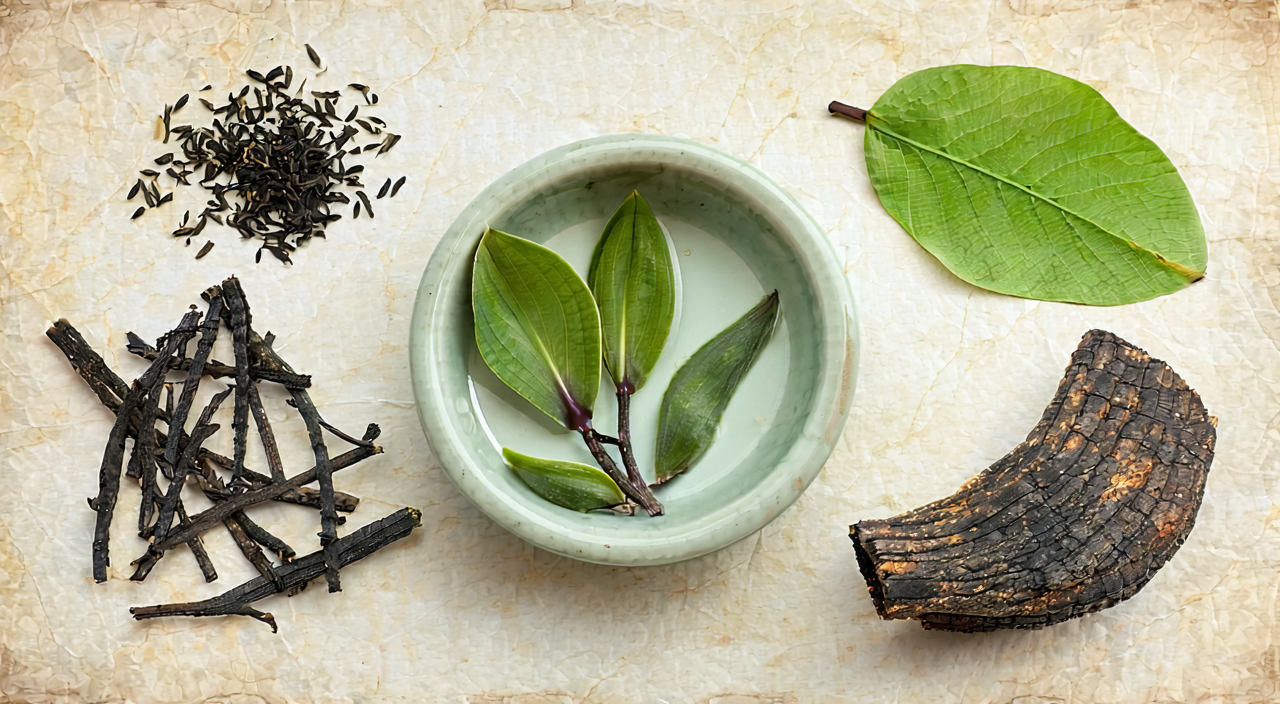
In traditional formulas, Cebai Ye often appears in combination with other herbs rather than being used alone. Below are some relatively well-known formulas containing Cebai Ye, which can serve as a direction for understanding.
Shi Hui San (Ten Charred Herbs Powder) is one of the classic hemostatic formulas, composed of charred herbs such as Japanese thistle (Da Ji), field thistle (Xiao Ji), Cebai Ye, lotus leaf (He Ye), cogongrass rhizome (Mao Gen), among others. It is traditionally used for various types of bleeding caused by reckless movement of blood heat. In this formula, Cebai Ye cools the blood and stops bleeding, while cooperating with other charred herbs to enhance the astringent effect.
Si Sheng Wan (Four Fresh Pills) is made from four fresh ingredients: fresh Cebai Ye, fresh Rehmannia root (Sheng Di Huang), fresh mugwort leaf (Ai Ye), and fresh lotus leaf (He Ye). The original idea targets vomiting of blood and nosebleed caused by blood heat, emphasizing cooling the blood and clearing heat. In this formula, Cebai Ye is used fresh to capture its blood-cooling effect.
Bai Ye Tang (Platycladi Leaf Decoction) consists of Cebai Ye, dried ginger (Gan Jiang), mugwort leaf (Ai Ye) and others. It does not solely follow a heat-clearing approach but combines warming and unblocking with astringency, suitable for bleeding conditions involving mixed cold and heat. Cebai Ye is used together with warm-natured herbs in the formula, reflecting the flexibility of TCM formula compatibility.
Cebai Ye San (Cebai Ye Powder) refers to a category of formulas with Cebai Ye as a main component; different versions have slightly different combinations. Some emphasize external application, while others are for internal use, but they generally revolve around the core ideas of cooling blood, stopping bleeding, and astringing.
The application directions of these formulas vary greatly; some tend to be cold and cool, while others use cold and warm herbs together. If you try to infer a formula’s scope of use based on only a single medicinal, misjudgment is very likely. Whether a formula is suitable must be comprehensively judged by combining an individual’s constitution, symptom presentation, and a professional’s assessment.
What Precautions Should Be Taken When Using Cebai Ye?
Before using Cebai Ye, there are several practical precautions to be aware of.
First, distinguish between the raw and charred products. Raw Cebai Ye leans toward cooling the blood, while charred Cebai Ye leans toward astringing to stop bleeding; the appropriate situations differ between the two processed forms. If self-administering, it is easy to overlook this distinction.
Second, allergic reactions. Cebai Ye contains volatile oils and other components; a small number of people may experience allergic manifestations such as skin redness and itching after external or internal use. If you have a history of sensitivity to conifer plants, pay special attention when using it for the first time.
Third, scalp irritation during external use. Although washing hair with Cebai Ye decoction is common in folk hair-growth experiences, too high a concentration or broken skin on the scalp may cause discomfort. Hair loss has many causes, including genetics, endocrine factors, and immune factors; external use of Cebai Ye is not suitable for all types of hair loss. If hair loss or scalp bleeding is significant, it is advisable to first clarify the cause before choosing an appropriate direction.
Additionally, if there is recent acute bleeding, long-term recurrent bleeding, or accompanying symptoms such as marked weight loss, black stools, or severe abdominal pain, you should not rely on a single medicinal herb to address the situation on your own but should seek medical attention promptly for a clear diagnosis.
Summary
As a common Chinese medicinal, the key points about Cebai Ye are: its medicinal parts are the dried twig tips and leaves, not the seeds or whole herb; in traditional understanding, it is often used to cool blood and stop bleeding, resolve phlegm and relieve cough, and promote hair growth externally, while the raw and charred products have different emphases; before use, one must distinguish the processed form, be mindful of possible allergies, and promptly identify situations requiring professional evaluation. This article is for informational reference only and cannot replace professional diagnosis or treatment advice.