
What Is Bai Mao Gen? Medicinal Parts, Identification, and Common Formulas
Many people have seen Bai Mao (Imperata cylindrica) by riversides or in grasslands and are familiar with its fluffy white flower spikes, yet they may not realize that the underground rhizome is the part valued in traditional Chinese medicine. When exploring approaches for cooling blood, stopping bleeding, clearing heat, or promoting urination, Bai Mao Gen is often mentioned. For overseas readers interested in this herb, the most common questions center on: What does Bai Mao Gen look like? Which part is used? How does it differ from the similar-looking Lu Gen? And which formulas include it? This article addresses these common inquiries and provides foundational knowledge about Bai Mao Gen.
What Does Bai Mao Gen Look Like? How to Identify It
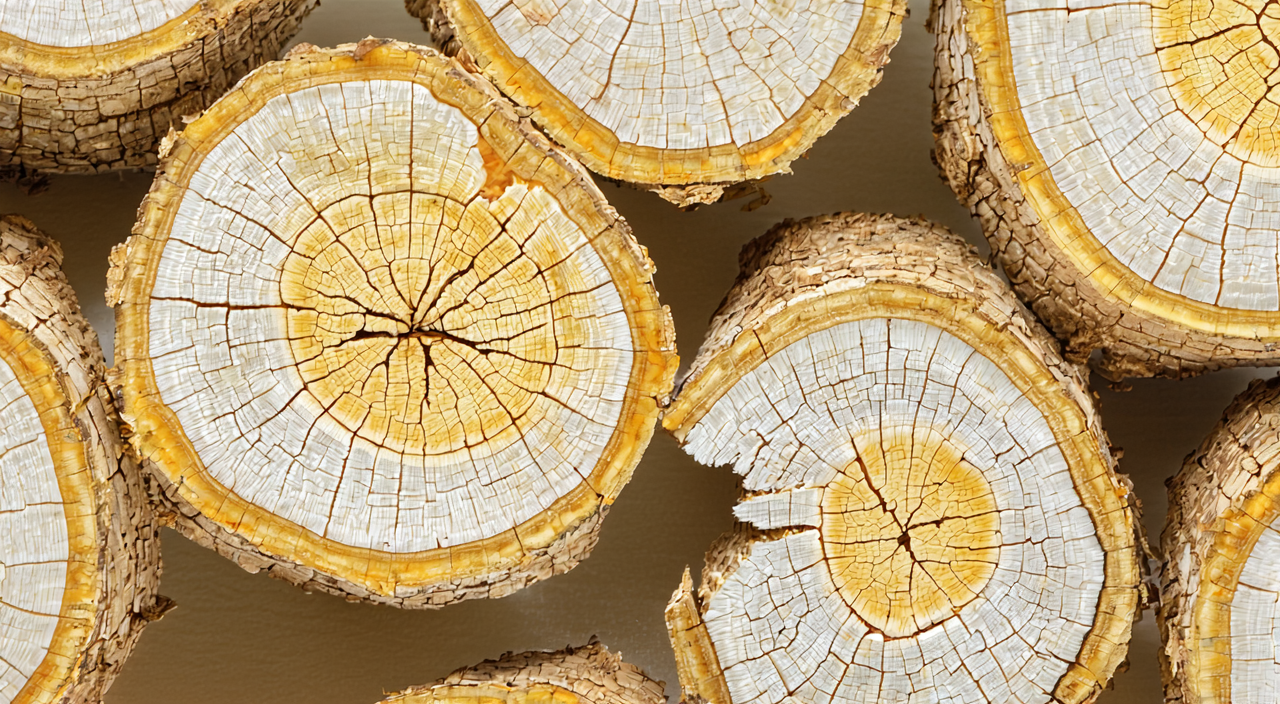
The medicinal part of Bai Mao Gen is not the above-ground stems or leaves, but the dried rhizome buried in the soil. When identifying it, pay attention to the following aspects.
The overall shape is a slender cylindrical form, usually about two to three millimeters in diameter, varying in length, often curved, and sometimes branched. The surface color is mainly yellowish-white or pale yellow; some pieces may have remnants of brownish membranous scale leaves, and the texture feels slightly longitudinally wrinkled. One of the most distinguishing features is the prominent nodes, which are typically spaced evenly, with small rootlet scars or traces of shed rootlets often present at the nodes.
The characteristics become clearer after breaking. Bai Mao Gen is light yet tough, not easy to snap completely; however, once broken, the cross-section typically reveals a hollow or loosely pithy center, with yellowish-white margins and a paler or even empty core. This obvious hollow or pithy structure helps distinguish it from solid rhizome herbs. In terms of odor and taste, Bai Mao Gen is relatively bland, with a slight sweetness when chewed.
When selecting or examining the herb, if the rhizome is overly thick and solid, with a surface that tends toward dark brown and without conspicuous nodal swellings, it likely does not match the typical features of Bai Mao Gen and may belong to another plant.
What Is the Medicinal Part of Bai Mao Gen?
The part used is precisely the dried rhizome described above. Traditional harvesting is typically done in spring and autumn, especially before sprouting in spring or after the aerial parts wither in autumn, when the rhizome has relatively well-accumulated constituents. After digging, the soil, aerial stems and leaves, scale leaves, and fibrous roots must be removed—a labor-intensive step—and then thoroughly washed.
After washing, the fresh rhizomes are usually cut into segments and sun-dried or dried at low temperature to become the commonly available Bai Mao Gen slices on the market. The sliced form is mostly short cylindrical pieces, with the same diameter and color characteristics as the intact rhizome; the cut surface often shows a hollow or loose pith. Whether using whole rhizomes or cut segments, impurities and moldy parts should be removed during preparation. Because Bai Mao Gen easily absorbs moisture, it should generally be stored in a ventilated, dry place to prevent oil leakage or insect infestation.
Understanding the medicinal part and basic processing helps users form a more intuitive understanding of the source and appearance of Bai Mao Gen products, and also makes it easier to distinctly describe the characteristics of the slices they have seen when communicating with doctors or pharmacists.
How Is Bai Mao Gen Understood in Traditional Chinese Medicine?
In traditional Chinese medicine theory, Bai Mao Gen is generally categorized as a cooling blood and hemostatic herb as well as a heat-clearing and diuretic herb. Although various herbal texts may have slightly different emphases, the overall direction remains fairly consistent.
In terms of nature, flavor, and meridian tropism, Bai Mao Gen is mostly described as sweet and cold, primarily entering the Lung, Stomach, and Bladder meridians. Its sweet and cold properties mean it is often used for conditions related to blood heat or heat syndromes. If a person shows bleeding tendencies due to blood heat—such as nosebleeds, coughing up blood, blood in the urine, or subcutaneous bleeding—traditional thinking may consider using Bai Mao Gen to cool the blood and stop bleeding. At the same time, it can help clear heat from the Lung and Stomach, and there are records of its use for restlessness, dry mouth, or discomfort caused by stomach heat.
Another important aspect of Bai Mao Gen is clearing heat and promoting urination. When the body experiences difficult urination, dark yellow urine, or painful urination due to accumulated damp-heat, traditional usage often employs Bai Mao Gen to facilitate urine flow so that heat pathogens are discharged with the urine. In some cases of edema during the recovery stage of febrile diseases or caused by water-dampness stagnation, Bai Mao Gen may be included in formulas, taking advantage of its diuretic property without damaging yin.
It should be noted that the above is only the perspective of traditional Chinese medicine and does not mean that Bai Mao Gen can directly replace medication or is suitable for all similar manifestations. Whether it is appropriate for an individual still depends on their constitution, symptoms, and professional judgment.
Brief Overview of Modern Research
Modern research on Bai Mao Gen has mainly focused on its constituents such as triterpenoids, flavonoids, polysaccharides, and some organic acids. Some laboratory studies indicate that Bai Mao Gen extracts show certain hemostatic, diuretic, and anti-inflammatory activities in animal models. For example, some studies have observed shortened blood coagulation time or increased urine output, findings that provide a modern perspective for traditional use. However, overall, related research is still at the stage of basic experiments and preliminary exploration, and rigorous clinical evidence remains limited.
For ordinary users, understanding this research background can enhance knowledge about Bai Mao Gen, but it should not be taken as confirmation of specific pharmacological effects or therapeutic benefits. Any health discomfort, especially recurrent bleeding, persistent abnormal urine color, or edema, should be investigated under professional guidance.
Differences Between Bai Mao Gen, Lu Gen, and Xiao Ji
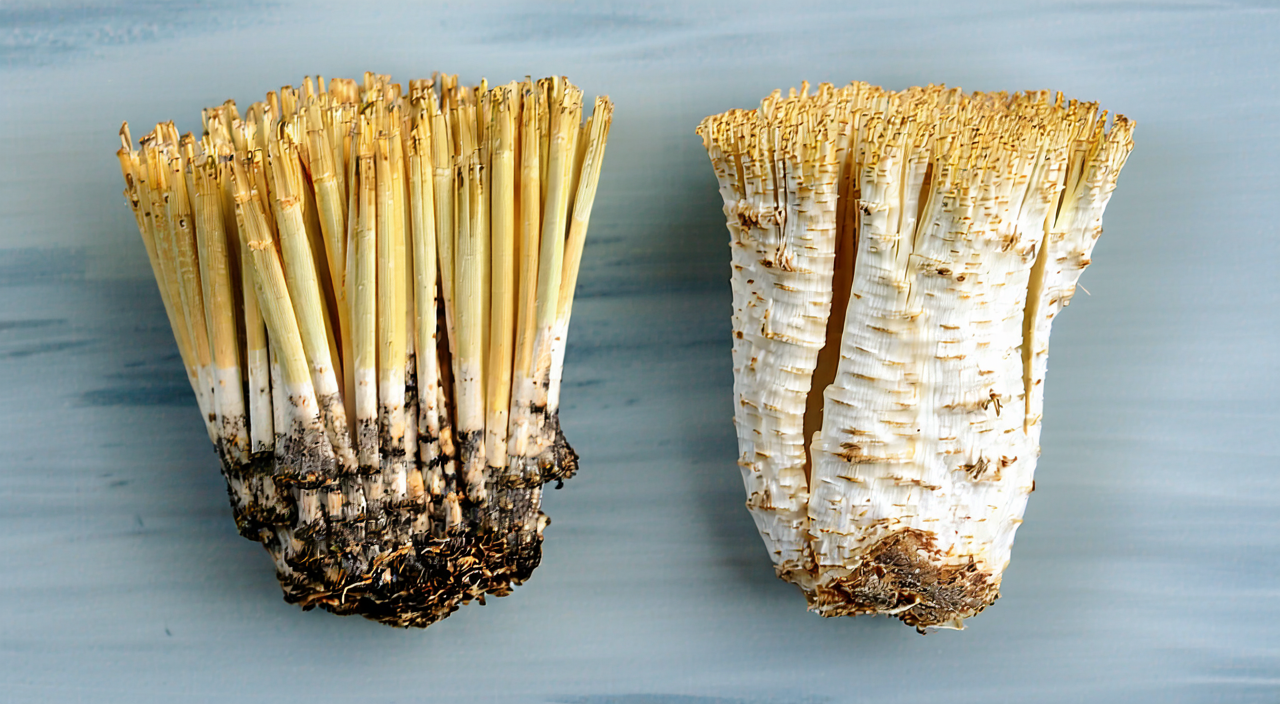
Bai Mao Gen can easily be confused with Lu Gen, especially since both are grass family rhizomes and share some appearance similarities. At the same time, Xiao Ji is often mentioned alongside Bai Mao Gen for cooling blood and stopping bleeding, making it also worth comparing.
The differences between Bai Mao Gen and Lu Gen mainly lie in thickness, color, and pith characteristics. Lu Gen is usually thicker, often over five millimeters in diameter, with a surface color tending toward yellowish-white to grayish-yellow, a lustrous appearance, more swollen nodes, and a relatively harder texture. Although the cross-section of Lu Gen is also hollow, the cavity is larger, the walls are thicker, and its taste is even milder than Bai Mao Gen, lacking noticeable sweetness. In traditional use, Lu Gen is more focused on clearing heat, generating fluids, relieving restlessness, and stopping vomiting, which differs from Bai Mao Gen’s cooling blood and hemostatic direction.
The difference between Bai Mao Gen and Xiao Ji is even more fundamental. Xiao Ji is the aerial part or whole herb of the thistle Cirsium setosum, not a rhizome. Its stems and leaves have spines, giving it an entirely different appearance. In traditional medicine, Xiao Ji is also a commonly used herb for cooling blood and stopping bleeding and is often combined with Bai Mao Gen for bleeding due to blood heat. However, Xiao Ji also possesses actions of dispersing stasis and detoxifying, while Bai Mao Gen is characterized by cooling blood, stopping bleeding, and clearing heat to promote urination. The two are frequently used together in formulas but are not substitutes for each other.
Knowing the differences between these herbs helps avoid confusion when studying formula composition or selecting medicinal materials, especially given their somewhat similar appearances or functions.
Which Formulas Use Bai Mao Gen?
Bai Mao Gen is not uncommon in classical formulas, mainly appearing in heat-clearing, blood-cooling, hemostatic, and diuretic categories. The following are some representative formulas that can serve as a starting point for understanding.
Shi Hui San is a classic formula for coughing up blood, vomiting blood, and nosebleeds due to blood heat. It is composed of Da Ji, Xiao Ji, Ce Bai Ye, Qian Cao, Bai Mao Gen, and other medicinals that are charred but retain their natures, with Bai Mao Gen mainly playing a role in cooling blood and stopping bleeding. Traditionally, Shi Hui San is considered suitable for cases where blood heat is relatively intense, the blood is bright red, and heat signs are present.
Xiao Ji Yin Zi uses Xiao Ji, Sheng Di, Hua Shi, Tong Cao, Pu Huang, Ou Jie, Dang Gui, Zhu Ye, Shan Zhi, and other ingredients, and Bai Mao Gen is often added or used in modifications for lower jiao heat-induced bloody strangury or hematuria. In this formula, Bai Mao Gen works with Xiao Ji and diuretic herbs to cool the blood, stop bleeding, and promote urination, thereby directing heat out through the urine.
Bai Mao Gen Tang is a single-herb or small formula centered on Bai Mao Gen, sometimes simply a concentrated decoction of Bai Mao Gen alone, traditionally used for blood-heat nosebleeds, hematuria, or thirst during febrile diseases. In addition, many heat-clearing and hemostatic formulas, such as Mao Gen Yin Zi and Mao Hua Tang, also use Bai Mao Gen or Bai Mao Hua (the flower) as important components, generally following the principles of cooling blood, stopping bleeding, and clearing heat.
These formulas are provided only as clues and are not meant for self-administration. The suitability of each formula must be determined based on overall presentation, tongue and pulse diagnosis, and specific etiology. If mistakenly used for bleeding due to deficiency-cold, it may actually be unsuitable. Therefore, formulas containing Bai Mao Gen are best used as a starting point for further discussion, with a thorough understanding of one’s constitution and symptoms.
Precautions When Using Bai Mao Gen
Although Bai Mao Gen is traditionally considered sweet, cold, and relatively mild, there are still some precautions to be aware of.
First, people with spleen-stomach deficiency-cold are not ideally suited for regular use of Bai Mao Gen. Such individuals may tend to have cold sensations in the abdomen, loose stools, and average appetite; taking the relatively cold Bai Mao Gen could worsen abdominal discomfort or cause diarrhea. If heat-clearing and diuretic effects are truly needed, traditional practice usually combines it with warming the middle or fortifying the spleen herbs, but the specific combination must be managed by an experienced professional.
Second, Bai Mao Gen has a certain diuretic effect. For individuals with low blood pressure or those at risk of electrolyte imbalances, large or prolonged use could further affect fluid metabolism. Also, people taking diuretics or antihypertensive drugs should be aware of potential additive effects. Any persistent bleeding, such as repeated heavy nosebleeds, blood in urine, or black stools, should not be expected to be resolved by Bai Mao Gen alone; a clear medical diagnosis is necessary first to rule out organic pathology or coagulation disorders.
Finally, although Bai Mao Gen is traditionally considered a medicinal and edible item, regulatory policies may differ across countries and regions. Overseas, one should pay attention to local regulations on Chinese herbal medicines and obtain quality-tested herbs from reliable sources.
Summary
As a commonly used Chinese medicinal, Bai Mao Gen is characterized by its slender, cylindrical, yellowish-white rhizome with distinct nodes and a hollow cross-section. It is traditionally used mainly for cooling blood, stopping bleeding, clearing heat, and promoting urination. Understanding its differences from Lu Gen and Xiao Ji, as well as the general principles of formulas like Shi Hui San and Xiao Ji Yin Zi, can help build a more comprehensive appreciation. However, no health discomfort should be self-diagnosed or self-treated, especially recurrent or severe bleeding and urinary abnormalities; professional medical consultation should be sought promptly. This article serves only as a popular science reference for medicinal materials and cannot replace professional diagnosis or treatment advice.