
What Is Yizhi Ren? Medicinal Parts, Identification Methods, and Common Formulas
Many people hearing “Yizhi Ren” for the first time may think it is directly related to intelligence, but it actually comes from the ripe fruit of Alpinia oxyphylla, a plant in the ginger family. In traditional Chinese medicine, Yizhi Ren is commonly used for such purposes as warming the kidneys to secure essence and reduce urination, and warming the spleen to stop diarrhea and control saliva. It is also often compared with other ginger-family fruits such as Sha Ren and Bai Dou Kou. This article introduces its appearance identification, medicinal parts, common formulas, and precautions to help readers build a basic understanding.
What Does Yizhi Ren Look Like? How Is It Identified?
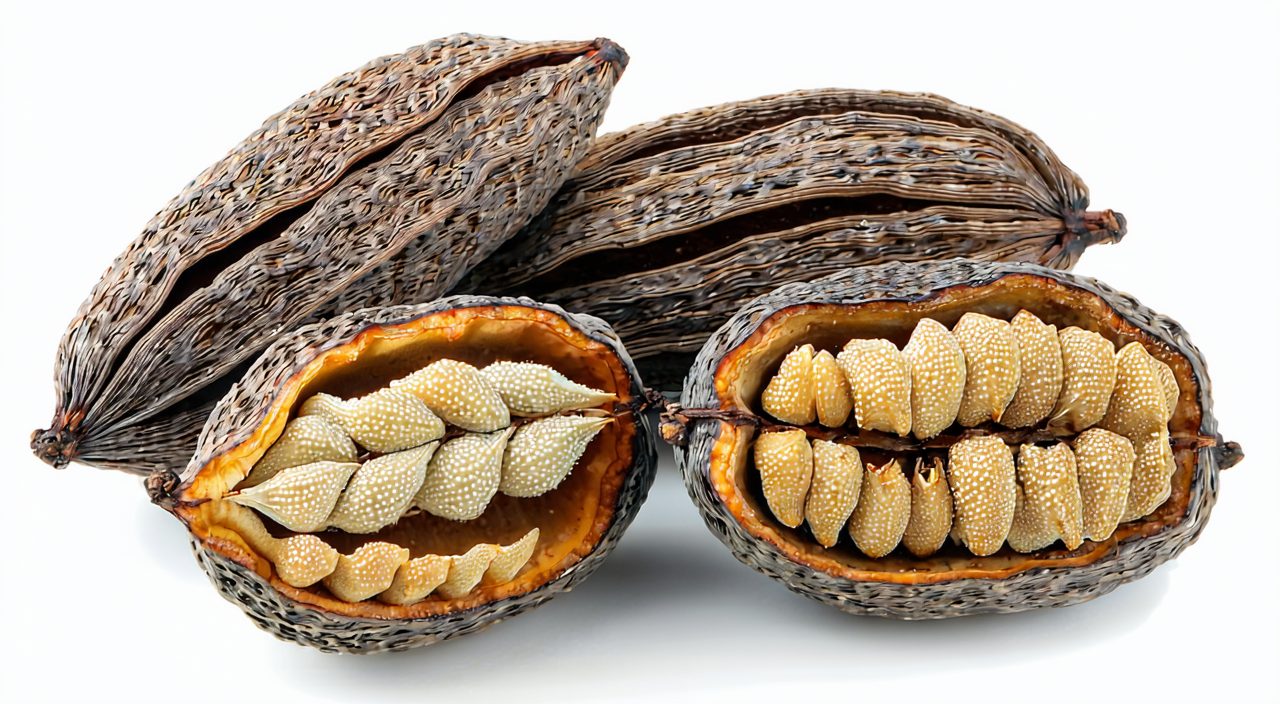
Overall Shape and Surface Features
Yizhi Ren is generally oval or spindle-shaped, slightly pointed at both ends, and usually about one to two centimeters in length and around one centimeter in diameter. Compared with Sha Ren, it tends to be more slender. The surface color is brown or grayish brown, with some variation between batches.
A distinctive identification feature is the longitudinal raised ridges on the fruit surface. These lines are relatively clear and are an important characteristic of Yizhi Ren’s appearance. The tip of the fruit may retain dot-like calyx remnants, and the base may sometimes show a scar left after the fruit stalk falls off.
Internal Seed Mass and Aroma
The fruit wall is relatively tough, and after peeling it open, a seed mass can be seen. The seed mass is usually divided into several segments by membranes. Individual seeds are irregularly flattened and round, with a rough surface or fine dense texture. The odor is aromatic and pungent, and chewing produces a pungent taste with slight bitterness. In traditional experience, those with a strong aroma, full seeds, and no mold are generally considered to be of better quality.
What Is the Medicinal Part of Yizhi Ren?
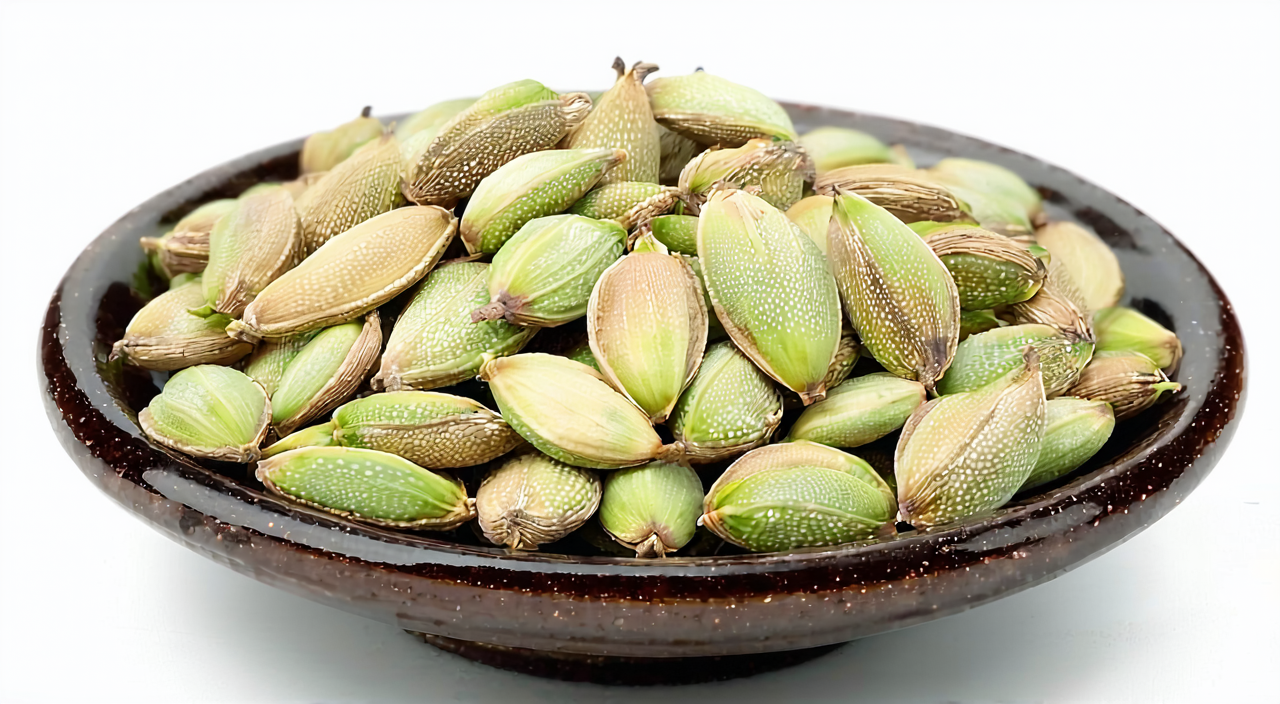
Yizhi Ren comes from the dried ripe fruit of Alpinia oxyphylla, but the actual part used medicinally can differ depending on the product specification and processing method. It is commonly seen as the ripe fruit with the shell or as the seed mass after shelling.
After traditional harvesting, the fruit must be dried. Some specifications retain the fruit wall and are circulated as whole fruits; more often, the shell is removed to obtain the inner seed mass, which is the common form of Yizhi Ren. Therefore, the “Yizhi Ren” familiar to many people is not the whole fruit but the inner seed mass.
In terms of processing, raw Yizhi Ren and salt-processed Yizhi Ren are commonly seen. Salt-processed Yizhi Ren is usually made by mixing clean Yizhi Ren with salt water and then dry-frying or steaming it. Traditional views hold that salt processing can guide the medicinal action to the kidneys and moderate its pungent, drying nature. Whether to choose a particular processed form should be determined based on individual circumstances and professional advice.
How Does Traditional Chinese Medicine Understand Yizhi Ren?
Traditional Chinese medicine regards Yizhi Ren as pungent and warm in nature, entering the spleen and kidney meridians, and classifies it as a warming yang and astringent medicinal. Its traditional actions mainly follow two directions.
Warming the Kidneys to Secure Essence and Reduce Urination
For manifestations such as frequent urination, enuresis, and clear profuse urination caused by insufficient kidney yang and an unstable bladder, traditional formulas may use Yizhi Ren together with herbs such as Wu Yao and Shan Yao to strengthen securing and astringing.
Warming the Spleen to Stop Diarrhea and Control Saliva
For diarrhea, cold abdominal pain, and watery excessive saliva caused by spleen cold, traditional Chinese medicine may use Yizhi Ren from the perspective of warming and activating spleen yang and consolidating body fluids.
These are traditional pattern-based treatment ideas and do not mean that it can be used directly for self-treating related symptoms. Whether it is appropriate should be determined comprehensively based on cold and heat, deficiency and excess, body constitution, and accompanying symptoms.
What Are the Differences Between Yizhi Ren, Sha Ren, and Bai Dou Kou?
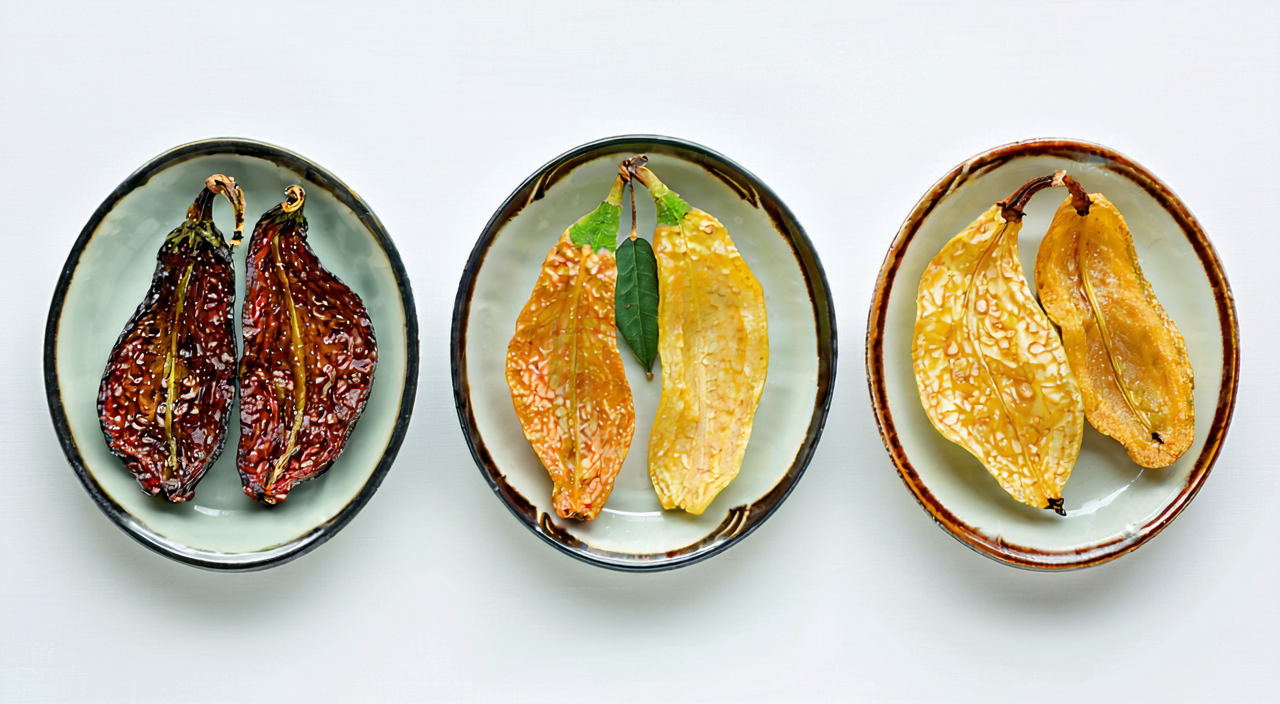
All three are ginger-family fruits with aromatic and pungent dispersing odors, so they are easily confused, but they differ in fruit shape, surface features, and traditional uses.
In terms of fruit shape, Yizhi Ren is mostly oval or spindle-shaped and relatively slender; Sha Ren is often ovoid or oval, with a surface that often has soft spines or net-like texture; Bai Dou Kou is nearly spherical, lighter in color, and mostly yellowish-white or pale yellowish-brown.
In terms of aroma, Yizhi Ren has a pungent fragrance with an astringent note; Sha Ren is more associated with transforming dampness and moving qi; Bai Dou Kou has a stronger odor and tends to act on the middle and upper burners.
In terms of traditional use, Yizhi Ren tends to warm the spleen, stop diarrhea, control saliva, and warm the kidneys to reduce urination; Sha Ren is often used to awaken the spleen, transform dampness, move qi, and harmonize the middle; Bai Dou Kou is more often used to transform dampness, move qi, warm the middle, and stop vomiting. Although the three belong to the same plant family, their uses are not entirely the same, and they should be distinguished according to clinical needs.
Which Formulas Contain Yizhi Ren?
Yizhi Ren appears in a number of traditional formulas. The following is only for understanding formulation ideas and does not mean that they can be used casually in daily life.
Suo Quan Wan uses Yizhi Ren, Wu Yao, and Shan Yao as its main ingredients. Traditionally, it is often used for frequent urination and enuresis due to insufficient kidney qi and a weak bladder, especially when cold signs are obvious and urination is clear and profuse.
Yizhi Ren Tang in some formula books takes Yizhi Ren as the chief herb, often combined with Gan Jiang and Bai Zhu, and is used for spleen-cold diarrhea, watery excessive saliva, and related manifestations. Different versions may have different compositions, so professional formula books or a physician’s prescription should be followed.
Bi Xie Fen Qing Yin is commonly used in traditional contexts for lower-burner damp turbidity and turbid urine. Some versions combine Yizhi Ren, Bi Xie, and Wu Yao to reflect the approach of warming the spleen and kidneys and separating clear from turbid. This formula has many versions, and the herbs used differ depending on whether the pattern leans toward dampness, cold, or deficiency.
Formulas that warm the spleen and secure or astringe are often designed around insufficient spleen yang and insecure body fluids. In these formulas, Yizhi Ren mainly plays an auxiliary role in warming the spleen, controlling saliva, and stopping diarrhea. Such formulas tend to be warming or securing in nature, so they are not suitable for those with excess patterns, damp-heat patterns, or yin deficiency with effulgent fire. Before use, one should evaluate based on individual circumstances and professional advice.
What Precautions Should Be Taken When Using Yizhi Ren?
Yizhi Ren is pungent and warm in nature, so it is not suitable for everyone to use long term.
Those with yin deficiency and effulgent fire should be cautious. This group often has heat in the palms and soles, dry mouth and throat, night sweating, a red tongue with little coating, and similar signs. Using pungent-warm and securing herbs may further aggravate heat and damage yin.
People with pronounced damp-heat or difficult urination should not use it alone in large amounts. For example, when frequent urination is accompanied by dark urine, urgency, painful urination, or when stools are sticky and foul-smelling and the tongue coating is yellow and greasy, it does not fall within the warming and securing scope of Yizhi Ren, and the cause should be identified first.
In addition, long-term self-use is not recommended. Even when a traditional use is considered relatively mild, it should be used after pattern differentiation and evaluated regularly. If recurrent or severe frequent urination, enuresis, diarrhea, drooling occurs, or if it is accompanied by marked weight loss, abdominal pain, bloody stools, painful urination, or other symptoms, consult a physician or qualified professional promptly.
Summary
Yizhi Ren comes from the ripe fruit of Alpinia oxyphylla in the ginger family. It can be initially identified by its oval shape, brown surface, and longitudinal ridges. The medicinal part is mainly the seed mass obtained after shelling the ripe fruit. Traditional Chinese medicine mostly understands its actions as warming the kidneys to reduce urination and warming the spleen to stop diarrhea and control saliva, and it is distinguished from other ginger-family fruits such as Sha Ren and Bai Dou Kou. Actual use should be determined based on cold, heat, deficiency, excess, body constitution, and specific manifestations; long-term self-use is not recommended. This article is for general reference only and cannot replace professional diagnosis or treatment advice.