
What Is Bai Fu Zi? Medicinal Parts, Identification, and Common Formulas
When people hear “Bai Fu Zi,” many easily confuse it with the “Fu Zi” occasionally used in the kitchen, or even think the difference is only in color. In reality, Bai Fu Zi comes from the dried tuber of the plant Du Jiao Lian (Typhonium giganteum), which belongs to the Araceae family, and is a completely different medicinal substance from Fu Zi (aconite), which comes from the Ranunculaceae family. Raw Bai Fu Zi is highly irritating and has never been traditionally used as an ordinary food ingredient. For overseas Chinese friends who wish to regulate their health with Chinese medicinal materials, accurately understanding the appearance, medicinal part, and potential risks of Bai Fu Zi is an important prerequisite for using related products safely.
What does Bai Fu Zi look like? How to identify it?
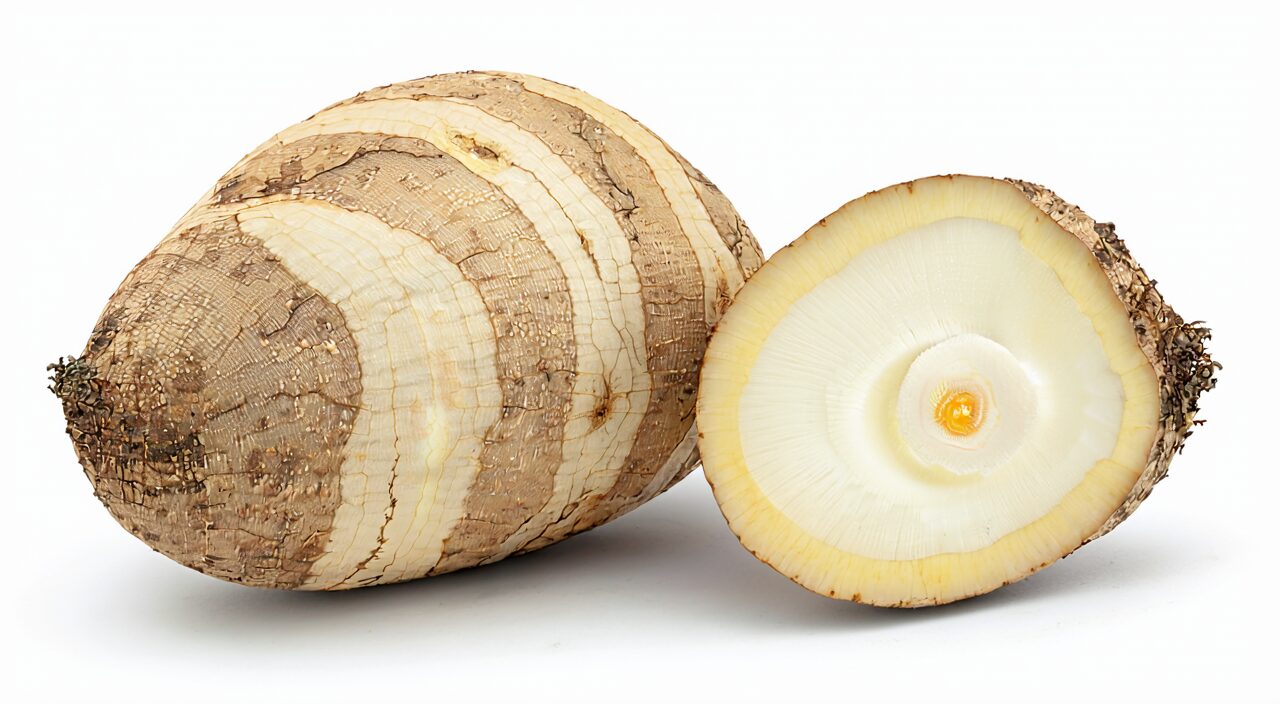
The medicinal part of Bai Fu Zi is the underground tuber. After processing, it appears elliptical or ovoid, generally 2–5 cm long and 1–3 cm in diameter. The surface of the unprocessed raw product is mostly yellowish-white or grayish-white, sometimes with faint brown residual outer skin. A relatively distinctive identification feature is the presence of ring marks on the surface. These rings are traces left by nodes and rootlet scars, encircling the surface of the tuber in numbers ranging from a few to over a dozen.
At the top of the tuber, a depressed stem scar can usually be found, and sometimes small bud scars can be seen nearby. This is an important detail to distinguish it from some similar-looking medicinal materials. The texture is firm and heavy, not easy to break. When cracked open, the cross-section appears white or yellowish-white, with obvious starchy quality. Gently rubbing with a finger reveals a fine, powdery texture, and sometimes scattered vascular bundle points can be seen on the cross-section. These combined features can help users make a preliminary judgment on whether the medicinal material in hand is Bai Fu Zi. Of course, more accurate identification still needs to be done by professionals.
What is the medicinal part of Bai Fu Zi?
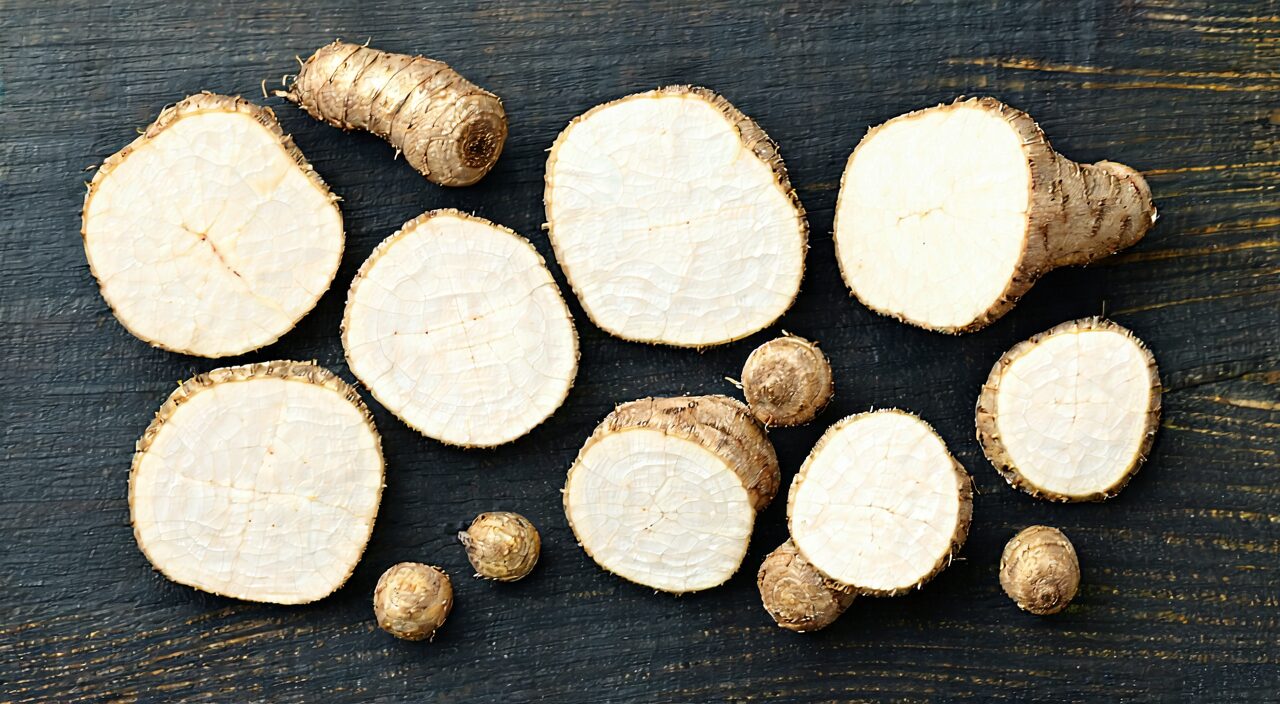
The sole medicinal part of Bai Fu Zi is the tuber of Du Jiao Lian. It is harvested in autumn after the stems and leaves wither. The aerial parts, fibrous roots, and outer skin are removed to obtain the fresh tuber, which then undergoes further processing before becoming a pharmaceutical product or raw material. If dried directly without processing, it becomes raw Bai Fu Zi, which is highly toxic and generally only for external use, never for internal consumption.
To reduce toxicity and irritation, it is traditionally processed by heating together with auxiliary materials such as Sheng Jiang (fresh ginger) and Bai Fan (alum), yielding processed Bai Fu Zi (Zhi Bai Fu Zi). Processed Bai Fu Zi has a whiter appearance and still retains its starchy quality, but its irritant properties are significantly reduced. It is the form actually used in most formulas. Throughout the harvesting and processing stages, every step directly affects the final quality. Therefore, while understanding the medicinal part, paying attention to the processing technique also helps explain why Bai Fu Zi cannot be casually self-prepared or used raw.
How does Chinese medicine understand Bai Fu Zi?
In traditional Chinese medicine theory, Bai Fu Zi is acrid, sweet, and warm in nature, toxic, and enters the Stomach and Liver meridians. Its core characteristic is summarized as “drying and ascending fiercely,” and it excels at dispersing wind-phlegm pathogens in the head and face region. Ancient practitioners often applied Bai Fu Zi in several directions: first, “dispelling wind-phlegm,” used when wind pathogen combines with phlegm to disturb the upper body, leading to facial muscle twitching or deviation of the eye and mouth, where Bai Fu Zi is often an important choice; second, “calming convulsions,” for cases where phlegm turbidity clouds the senses causing limb twitching or infantile convulsions, it is also frequently considered; lastly, “removing toxicity and dissipating nodules,” in external application formulas for certain skin sores, scrofula, or venomous snake bites, raw Bai Fu Zi is mashed and applied topically, leveraging its acrid dispersing force to dissipate local lumps.
It must be emphasized that these are understandings from a traditional perspective. Whether it is suitable for a specific individual must be comprehensively judged by combining constitution, the predominance of cold or heat, and the overall condition at the time. Bai Fu Zi is warm and drying; people with yin-blood deficiency or predominant excess heat may experience aggravated discomfort after use.
What does modern research say about Bai Fu Zi?
Modern research on Bai Fu Zi focuses considerably on its irritating components and potential toxicity. Bai Fu Zi contains various bioactive substances, including β-sitosterol, choline, and some glycosides. Additionally, calcium oxalate raphides present in the raw product are considered one of the main causes of the intense stinging sensation in the oral cavity and throat. Chewing the raw product directly can cause needle-like numbness, swelling of the mouth and tongue, and even laryngeal edema within minutes, which is extremely dangerous.
Some preliminary laboratory studies suggest that Bai Fu Zi extracts may have anticonvulsant and anti-inflammatory potential, but most are still limited to animal experiments or in vitro studies, far from mature clinical conclusions. Therefore, these preliminary findings cannot currently be directly equated with efficacy for daily consumption. For ordinary users, the most meaningful message from modern research remains: Bai Fu Zi must never be used raw without authorization, and improper processing or inaccurate dosage can lead to toxic reactions.
What are the differences between Bai Fu Zi, Fu Zi, and Tian Nan Xing?
Bai Fu Zi and Fu Zi differ by only one word in name, but their origins are completely different. Fu Zi comes from the daughter root of the aconite plant (Aconitum carmichaelii) in the Ranunculaceae family. It is mostly conical, with a grayish-black or dark brown surface, obvious longitudinal wrinkles, a hard texture, and a horn-like cross-section. Bai Fu Zi, on the other hand, comes from the tuber of Du Jiao Lian in the Araceae family, with a yellowish-white surface; the ring marks and starchy cross-section are the main identifying points. They belong to different plant families, and their therapeutic directions also differ significantly. They must never be substituted or confused with each other.
Another easily confused medicinal material is Tian Nan Xing. Tian Nan Xing and Bai Fu Zi both belong to the Araceae family, but Tian Nan Xing’s botanical sources are the tubers of Arisaema erubescens, Arisaema heterophyllum, etc. Tian Nan Xing tubers are flattened-spherical, with a central depression at the top and pitted rootlet scars around, looking more oblate overall, while Bai Fu Zi is typically elongated-elliptical. In traditional usage, Tian Nan Xing can also dispel wind-phlegm, but Bai Fu Zi tends more to ascend to the head and face, while Tian Nan Xing has a slightly different range in its ability to reduce swelling and dissipate nodules. Understanding these distinctions helps one know more clearly what actual ingredients are present when encountering formulas containing these substances.
Which formulas contain Bai Fu Zi?
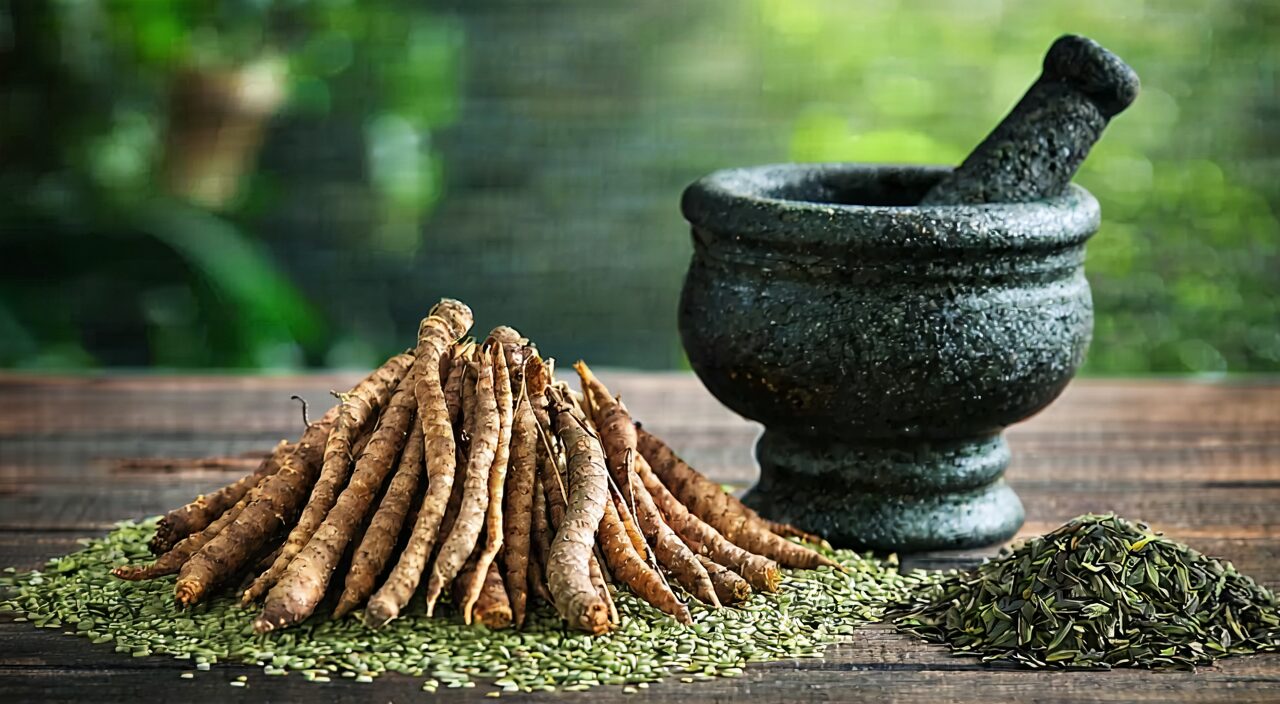
In traditional formulas, Bai Fu Zi is often combined with Jiang Can (silkworm) and Quan Xie (scorpion) to address patterns of wind-phlegm obstructing the head and face meridians. One frequently discussed example is Qian Zheng San, where Bai Fu Zi is used together with Jiang Can and Quan Xie, traditionally indicated for situations where facial muscles on one side become flaccid and the mouth angle deviates to the opposite side. Another representative is Yu Zhen San, where Bai Fu Zi is combined with Tian Nan Xing and Fang Feng (saposhnikovia), recorded in some ancient medical texts for severe conditions like convulsions and lockjaw related to trauma; in modern clinics it is rarely used exactly as originally described. There is also Bai Fu Zi San, named after Bai Fu Zi, which emphasizes topical application or internal administration as a dressing, traditionally used for certain skin boils or wind pathogen accumulation in the head and face.
The above formulas are only traditional usages recorded in historical literature and are not ready-to-apply treatment plans. Every formula has strict indications, specific combining ratios, and usage requirements. Whether it suits an individual’s situation requires assessment based on specific constitution, current manifestations, and professional judgment. One must never self-prescribe based on the formula names alone.
What precautions should be taken when using Bai Fu Zi?
The first principle for the safe use of Bai Fu Zi is clear: the raw product must never be taken internally on one’s own. Raw Bai Fu Zi is highly toxic. Accidental ingestion quickly causes numbness of the mouth and tongue, throat swelling and pain, drooling, nausea, and vomiting. In severe cases, it can affect breathing. Once these signs appear, use must be stopped immediately and medical help sought. Even for processed Bai Fu Zi, it should only be used in standardized products or under professional guidance; dosage should not be increased arbitrarily, nor should it be taken long-term.
Pregnant women, breastfeeding women, and those with weak constitutions should avoid Bai Fu Zi and related products. When applying the raw product externally, one must also be mindful of skin irritation. It should not be applied over large areas or for prolonged periods. If redness, swelling, or burning sensation occurs locally, it should be washed off immediately. If symptoms such as facial nerve palsy, convulsions, or recurrent headaches already exist, these must first be clearly diagnosed by a doctor. One cannot simply rely on Bai Fu Zi-type formulas to self-treat. In any situation, maintaining caution and prioritizing consultation with a professional is a responsible approach to one’s own health.
Summary
Bai Fu Zi is a traditional medicinal substance with distinct characteristics, derived from the dried tuber of Du Jiao Lian. The raw product is toxic and must undergo standardized processing before cautious use. In Chinese medicine thinking, it focuses on ascending to the head and face and is often used in regulating facial discomfort caused by wind-phlegm, but it is a completely different medicinal material from the aconite-derived Fu Zi. Whether identifying its appearance, understanding formulas, or considering internal or external use, one must always recognize the irritant risks of Bai Fu Zi, avoid unapproved self-use, never equate historical records directly with a suitable plan for oneself, and seek professional judgment when needed.