
What Is Bai He? Medicinal Part, Identification Methods, and Common Formulas
Bai He is the dried fleshy scale leaf of the lily species Lilium lancifolium, Lilium brownii var. viridulum, or Lilium pumilum. In traditional Chinese medicine, it is often regarded as an herb that nourishes yin, moistens the lungs, clears the heart, and calms the spirit. Many people become interested in the source and specific uses of Bai He when exploring dietary therapy or herbal formulas, yet they easily confuse medicinal Bai He with the fresh lily bulbs commonly eaten. This article will unfold from the perspectives of visual identification, the medicinal part, traditional understanding, components of modern research interest, as well as the differences from Chuan Bei Mu and edible lilies. It will also introduce several common formulas to help readers build a relatively clear framework of understanding.
What Does Bai He Look Like? How to Identify It?
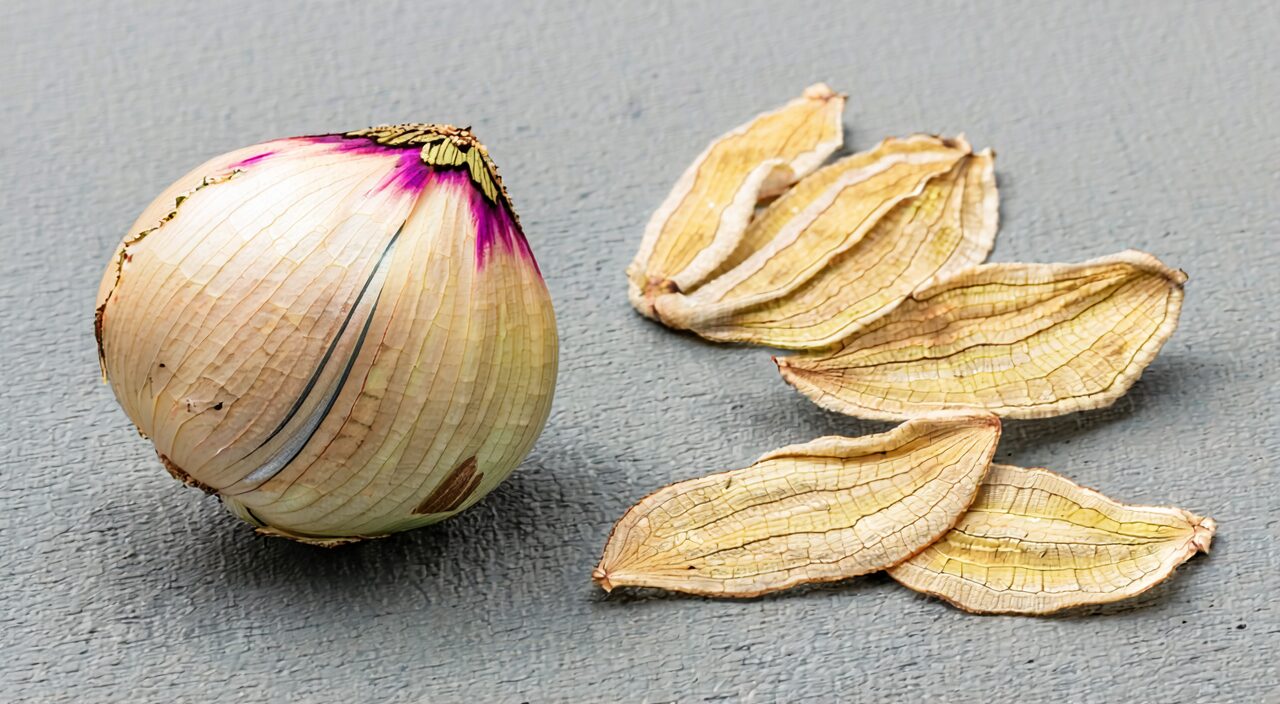
The typical feature of medicinal Bai He is its petal-like, fleshy scale leaves. The dried Bai He crude herb mostly appears as oblong or elongated triangular thin slices with slightly curled edges, measuring about 2 to 5 cm in length and about 1 to 2 cm in width, thicker in the center and thinner at the edges.
In appearance, the surface of dried Bai He is generally off-white, pale yellowish-white, or slightly pale brown. The texture is relatively hard and brittle, but the fractured surface is fairly flat with a subtle granular feel. When held up to the light, fine longitudinal vein markings can often be seen inside. This is a detail that some experienced users value highly in identification.
Regarding odor, Bai He carries a faint, delicate fragrance. When tasted in the mouth, it is slightly bitter with a sticky texture. This is often used as an auxiliary basis to distinguish it from other similar crude herbs. If one has the chance to see the fresh product, the bulb is formed by numerous thick, fleshy scale leaves tightly embracing each other, appearing spherical or oblate. The visual difference from the dried prepared slices is quite obvious.
What Is the Medicinal Part of Bai He?
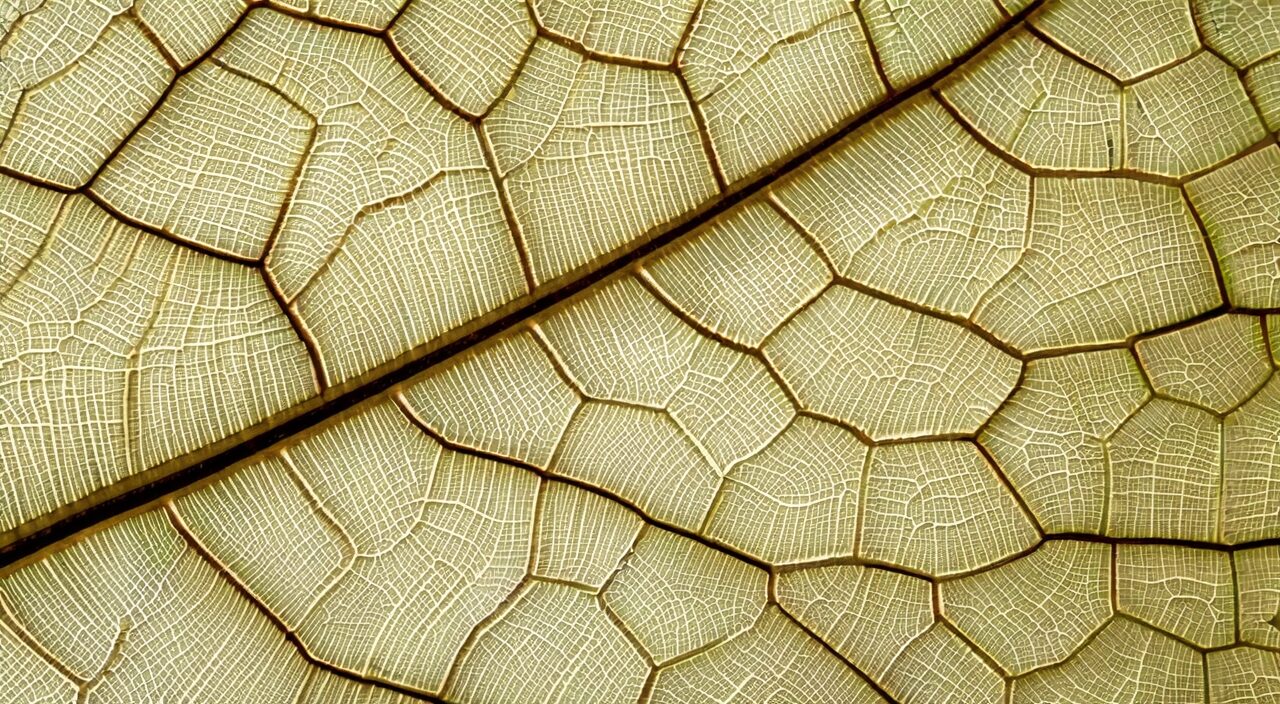
The medicinal part of Bai He is its dried fleshy scale leaves. Harvesting generally takes place in autumn when the stems and leaves wither. The bulbs are dug up, the scale leaves are stripped, and they are dried after briefly scalding in boiling water or steaming. Depending on the processing method, Bai He crude herb available on the market includes the directly dried raw product and honey-fried Zhi Bai He (processed Bai He).
In prepared slice form, raw Bai He mostly retains complete petal-like pieces, with a color tending toward white or slightly yellow. Honey-fried Bai He usually has a glossy surface and a slightly darker color than the raw product, and its smell carries a hint of honey fragrance in addition to the original delicate scent of Bai He itself. Chinese pharmacies in different regions may offer different specifications of Bai He prepared slices; some are entire scale leaves, while others are flattened or broken forms. When purchasing, pieces that are evenly shaped, thick in flesh, white or slightly yellow, and free of insect damage are generally preferred as a visual reference, but specific usage should still be combined with individual circumstances and professional guidance.
How Does Traditional Chinese Medicine Understand Bai He?
Traditional Chinese medicine often understands Bai He from the perspectives of nature, flavor, and channel tropism. It is generally considered sweet in flavor and slightly cold in nature, entering the Lung and Heart channels. Within this framework of understanding, its actions mainly center on nourishing yin, moistening the lungs, clearing the heart, and calming the spirit.
When a person experiences dry cough with little phlegm, dry throat, and thirst due to yin deficiency and lung dryness, or feels vexation, insomnia, and palpitations after a febrile disease due to insufficient heart yin, Bai He may be incorporated into the regulation approach. In traditional understanding, unlike some drastic medicinals that disperse external pathogens, it tends to be moistening and stabilizing. Therefore, it is commonly seen in situations requiring slow, gradual recuperation. However, this understanding is based on traditional usage experience. Whether it is suitable for a specific individual still needs to be judged by a professional considering constitution, symptoms, and other factors.
What Components and Actions of Bai He Are Modern Research Focused On?
Modern research mainly focuses on components such as steroidal saponins, polysaccharides, phospholipids, and alkaloids contained in Bai He. Some in vitro experiments and animal experiments suggest that Bai He polysaccharides may have certain immunomodulatory effects, while steroidal saponins exhibit activities like antitussive, expectorant, and anti-inflammatory effects to a certain extent. Other studies have observed the effects of Bai He on the sleep duration and spontaneous activity of experimental animals, but most of these are at the stage of laboratory exploration and cannot yet be directly extrapolated as therapeutic efficacy in humans.
It is important to note that results from component research and in vitro or animal experiments cannot be equated with clinical treatment conclusions, nor can they be directly used as a basis for dosage. One can stay attentive to these research developments, but in daily use, traditional experience and the guidance of professionals should remain the primary reliance.
What Are the Differences Between Bai He and Similar Crude Herbs?
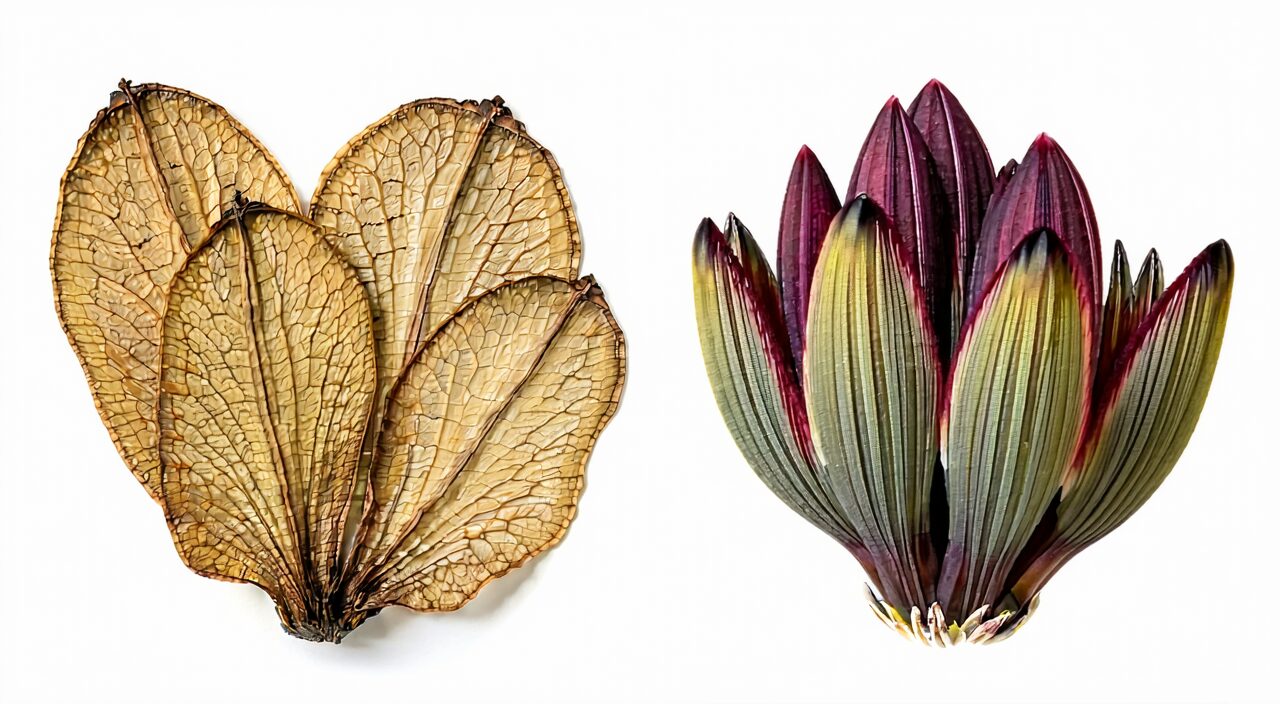
Two substances easily confused with Bai He are Chuan Bei Mu and edible lily varieties. Although all three are mentioned in daily life, their origins, medicinal parts, and traditional application emphases differ considerably.
Chuan Bei Mu is the dried bulb of Fritillaria cirrhosa, Fritillaria unibracteata, Fritillaria przewalskii, or related species of the Liliaceae family. Although its medicinal part is also the bulb, its shape is mostly subconical or nearly spherical, with smaller granules and a usually closed apex. The texture is firm, and the fractured surface is white and powdery. Traditionally, Chuan Bei Mu leans toward clearing heat, moistening the lungs, and transforming phlegm to stop cough, and it is often used for patterns such as yin deficiency dry cough and consumptive prolonged cough. In contrast, Bai He’s yin-nourishing and spirit-calming effects are more prominent, and it frequently appears in formulas related to the heart spirit. In terms of visual differentiation, Chuan Bei Mu looks like compact small granules, while Bai He is spread-out petal-like slices, with a clear difference in shape.
Edible lilies generally use the fresh bulbs of varieties such as Lanzhou lily. The scale leaves are thick, fleshy, and juicy with a sweet taste, mainly used as a vegetable or dessert ingredient. Although edible lilies also have some moistening effect, the medicinal Bai He circulating in the traditional crude herb market has undergone specific harvesting and processing, and its component proportions are not entirely identical to those of the fresh product. One cannot simply substitute edible lily for medicinal Bai He. If one wishes to consider both medicinal and dietary use in daily regulation, it is advisable to first clearly understand the variety and source being used.
What Formulas Use Bai He?
In some traditional formulas, Bai He often appears as an important component. Below are a few representative formulas to help readers understand its role in combinations.
- Bai He Di Huang Tang (Lily and Rehmannia Decoction): Composed of Bai He and Sheng Di Huang (Rehmannia glutinosa raw root), this formula is traditionally often used for trance, restlessness, and bitter taste in the mouth caused by yin deficiency with internal heat and heart spirit disquiet. In this formula, Bai He focuses on nourishing yin and clearing the heart, while Sheng Di Huang assists in cooling the blood and enriching yin. The two work together, making it a suitable reference direction for regulating patterns related to heart yin insufficiency. Since this formula is closely associated with “Bai He disease” in classical texts, those wanting to understand the traditional use of Bai He often encounter it.
- Bai He Zhi Mu Tang (Lily and Anemarrhena Decoction): This pairs Bai He with Zhi Mu (Anemarrhena asphodeloides rhizome). Both have moistening and clearing properties. In traditional understanding, Zhi Mu can clear heat and relieve vexation, while Bai He calms the spirit and moistens the lungs. When post-febrile disease symptoms like vexation, thirst, and restless sleep appear, this combination may be considered, but it also requires evaluation in conjunction with specific constitutions.
- Bai He Gu Jin Tang (Lily Decoction for Consolidating Metal): In this formula, Bai He is used together with Sheng Di Huang, Shu Di Huang (processed Rehmannia root), Mai Dong (Ophiopogon root), Xuan Shen (Scrophularia root), Dang Gui (Angelica sinensis root), Bai Shao (white peony root), Jie Geng (Platycodon root), and Gan Cao (licorice root). The main approach is to nourish yin, moisten the lungs, stop cough, and transform phlegm. For traditional indications such as cough, blood-streaked sputum, and dry, sore throat due to lung and kidney yin deficiency, Bai He plays a role in moistening lung yin and settling the upper burner. In comparison, Bai He Gu Jin Tang leans more toward the lung system, while the previous two formulas lean more toward the heart spirit and emotional level.
The above formulas are combinations based on traditional medication experience. Whether they are suitable for an individual situation must be assessed in consideration of constitution, current presentation, and a professional’s evaluation. It is not advisable to use them directly by copying the formula on one’s own.
What Precautions Should Be Noted When Using Bai He?
Although Bai He is often regarded as relatively gentle in nature, there are still some directions that require attention during use.
First, it is traditionally believed that people with wind-cold cough—that is, cough accompanied by aversion to cold, clear runny nose, and clear, thin, white phlegm—are not very suitable for using Bai He. Because Bai He is slightly cold and moistening, it can easily promote dampness and retain pathogens, potentially making the wind-cold exterior pattern linger and difficult to resolve.
Second, those with spleen deficiency and loose stools, or those who frequently feel abdominal distension or have unformed stools, should also be cautious. Bai He’s moistening, yin-leaning nature may increase the burden on the spleen and stomach. If there is indeed a need for regulation, it generally should be combined with spleen-fortifying and qi-regulating herbs in a compound formula rather than using Bai He alone.
Additionally, a special reminder: medicinal Bai He and edible lily differ in source and processing method, and the two cannot be casually substituted. When using it for dietary therapy, if the aim is heat-clearing, lung-moistening, or spirit-calming effects, it is also recommended to use it judiciously after clearly understanding the crude herb’s source and one’s own condition, and it is not advisable to take it in large amounts over a long period. For conditions like prolonged cough, recurrent insomnia, or when accompanied by significant chest tightness, palpitations, or emaciation, it is still important to seek medical attention promptly to avoid delay.
Summary
Bai He is a crude herb widely applied in traditional Chinese medicine. The key points for its identification lie in its petal-like fleshy scale leaves and the longitudinal vein markings on the surface. Its medicinal part comes from processed, dried scale leaves. The differences between Bai He, Chuan Bei Mu, and edible lilies are reflected not only in appearance but also in the emphasis of traditional application and the method of use. Whether it is Bai He Di Huang Tang, Bai He Zhi Mu Tang, or Bai He Gu Jin Tang, each represents the combination approach of Bai He in different directions. However, these are merely empirical combinations based on traditional understanding. Specific use still requires integration with individual constitution and a professional’s judgment. This article serves only as scientific reference and cannot replace professional diagnosis or treatment advice.