
What Is Bletilla Striata? Medicinal Parts, Identification & Common Formulas
When encountering Chinese medicine or natural herbs overseas, many people hear about “bai ji,” but few truly understand it. Some may confuse ornamental garden orchids with medicinal bai ji, while others cannot tell the difference between bai ji and other tuberous herbs such as gastrodia or pleione (shan ci gu). What exactly is bai ji? Which plant does it come from? How can its medicinal form be identified? How is it conventionally used for stopping bleeding and healing sores? With these questions in mind, let’s start by looking at the basic characteristics of bai ji, gradually learning about its medicinal parts, identification methods, traditional understanding, common formulas, and necessary boundaries of use.
What Does Bai Ji Look Like? How to Identify It
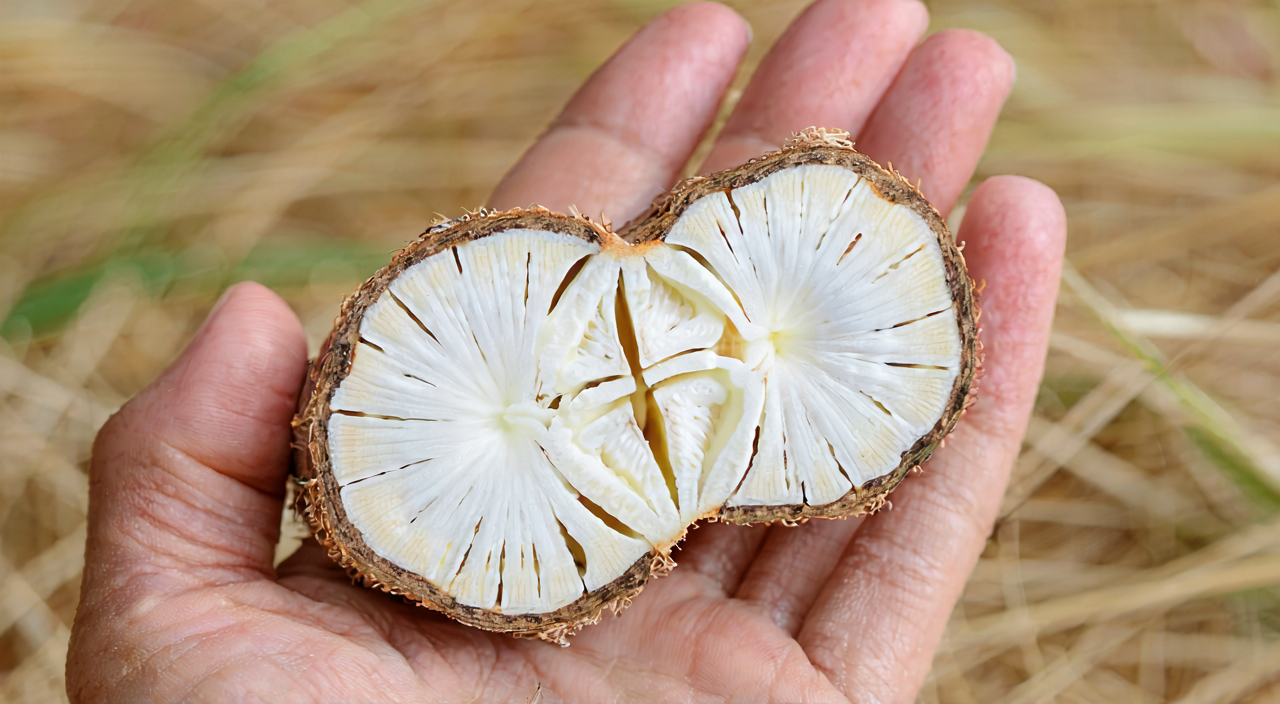
Medicinal bai ji is not casually processed from any roadside orchid; it comes from a specific plant source and requires defined processing standards. The standard medicinal bai ji is typically the dried tuber of Bletilla striata.
In appearance, the standard bai ji tuber is mostly flattened spherical or irregularly rhomboid, slightly compressed, generally 1.5 to 3 cm in length and about 0.5 to 1 cm thick. The surface is predominantly yellowish-white or light yellowish-brown, with a firm texture. Upon close inspection, fine concentric rings or rootlet scars can be seen. A distinct bud scar, resembling a small indented dot, is often visible on one end—an important feature for identifying genuine bai ji.
When broken or cut open, the cut surface is white or pale yellow, with a distinct horn-like luster that resembles translucent wax. This is a key distinguishing feature from other starchy or woody tubers. Occasionally, other plant roots are fraudulently substituted or confused on the market, and the presence of this semi-transparent horn-like cut surface is often used to judge authenticity. Additionally, bai ji has a very faint odor and becomes slightly sticky when chewed—a point often mentioned in traditional empirical identification.
For ordinary users unfamiliar with medicinal materials, remembering a few key points is enough: flattened spherical or irregular rhomboid shape, yellowish-white surface, concentric rings and bud scar, a white and lustrous cut surface, and stickiness. These visual characteristics can help initially distinguish bai ji from other similar tubers.
What Is the Medicinal Part of Bai Ji?
The medicinal part of bai ji is its dried tuber. The tuber is not used directly after harvesting; it must undergo a series of processing steps.
Typically, after the plant has grown for a certain number of years, the underground tubers are harvested in summer or autumn. After harvesting, the fibrous roots and soil are removed, they are washed clean, and then boiled or steamed thoroughly in boiling water until the cut tuber shows no white core—a process often termed “kill green” or “steam through.” Afterwards, they are taken out and dried in the sun until half-dry, or sliced and then dried, becoming the bai ji we see in medicinal form.
The emphasis on the tuber as the medicinal part is important because some orchid enthusiasts grow ornamental orchids in home gardening; even if they belong to the Orchidaceae family, their roots or pseudobulbs have different forms and cannot be used as medicinal bai ji. Standard medicinal materials must meet requirements in cultivation, harvesting, processing, and characteristics. One should not self-harvest from ornamental plants for medicinal use.
Therefore, understanding that “the medicinal part is the properly processed dried tuber” helps overseas users avoid mis-harvesting and misuse, and aids in selecting quality herbs from reliable sources.
How Does Traditional Chinese Medicine Understand Bai Ji?
Within the theoretical framework of traditional Chinese medicine (TCM), the understanding of bai ji is mainly centered on two directions: astringent hemostasis (converging to stop bleeding) and reducing swelling to promote tissue regeneration. It does not stop bleeding through strong drying of dampness or blood activation; rather, it embodies the concept of “astringing”—similar to helping local areas contract, reducing exudation, and promoting repair.
Ancient herbal literature often assigns bai ji to the lung, stomach, and liver meridians, considering its sticky texture suitable for entering the lung and stomach networks. For coughing up blood or vomiting blood due to lung heat or yin deficiency, or for local bleeding caused by trauma, bai ji might traditionally be used in formulas for its astringent nature to help stop bleeding. For early-stage sores or chronic non-healing wounds, bai ji is also frequently used externally as a powder or paste to help astringe the wound surface and promote new tissue recovery—this is the traditional concept of “reducing swelling and generating new flesh.”
It should be especially noted that these understandings come from traditional experience and the summaries of past physicians. In contemporary use, they still need to be assessed based on specific constitution and symptoms. Bai ji’s hemostatic effect is more targeted toward chronic oozing or superficial local injuries; it cannot replace emergency medical measures for acute massive bleeding. Traditional understanding offers a direction of insight, not a blanket statement that it “suits all bleeding.”
What Do Modern Studies Tell Us?
In recent years, modern research on bai ji has mainly focused on its chemical constituents and biological activities. Studies have found that bai ji contains bletilla gum (primarily composed of bletilla polysaccharide), bibenzyls, phenanthrenes, and other phenolic compounds. Among them, bletilla gum is the main source of its stickiness and provides a physical barrier effect, forming a protective film locally to reduce irritation and protect wounds. Some in vitro experiments and animal studies suggest that bletilla gum and bletilla extract may have a protective trend on gastric mucosal injury, or participate in hemostasis, antibacterial activity, and tissue repair processes.
However, most of these studies are still at the laboratory or pharmacological exploration stage and cannot be directly equated with clinical efficacy. For general users, this information can serve as background knowledge to help understand why bai ji’s astringent and tissue-regenerating properties are traditionally valued, but it should not be used as a basis for self-medication or exaggerating its benefits.
Differences Between Bai Ji, Gastrodia, and Pleione (Shan Ci Gu)
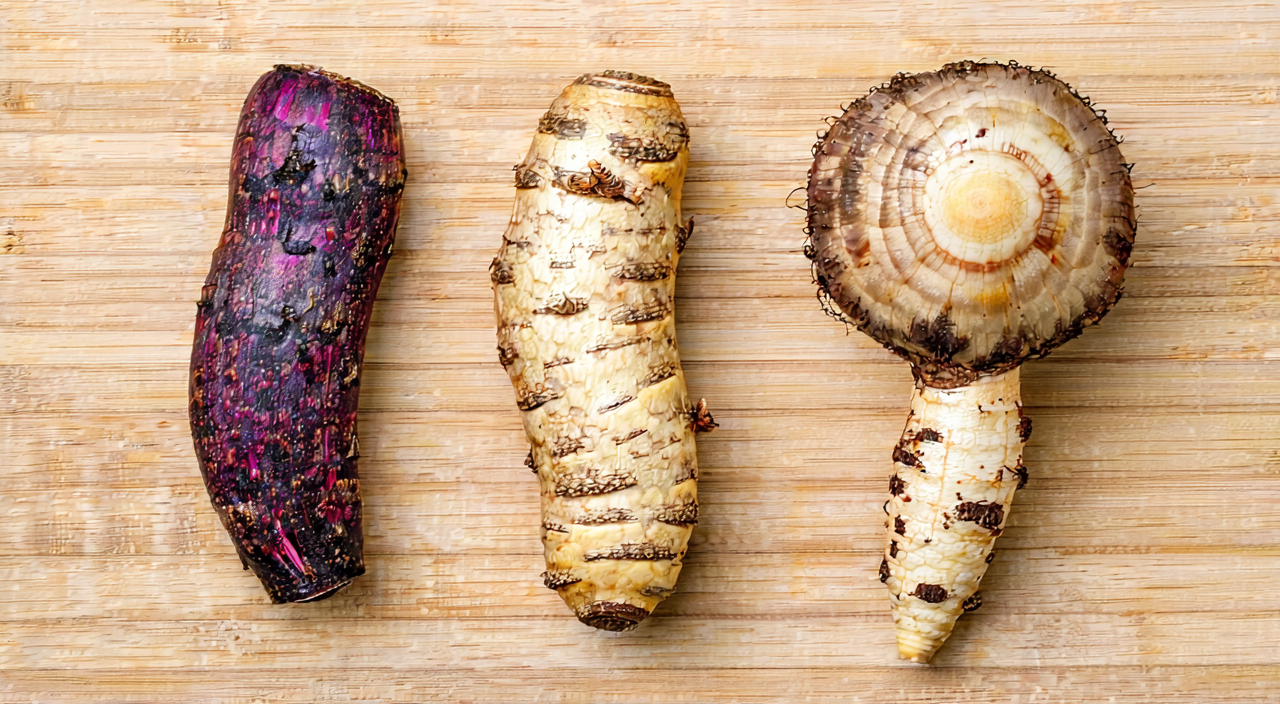
Bai ji, gastrodia (tian ma), and pleione (shan ci gu) are all common Chinese medicinal herbs, all being tubers or tuberous roots that are easily confused by those unfamiliar with them. However, because their traditional uses differ greatly, it is necessary to distinguish among them.
Bai ji tubers are typically flattened spherical or irregularly rhomboid, with a yellowish-white surface, concentric rings and bud scars, a white horn-like cut surface, and high stickiness. Traditionally, they are used mainly for astringent hemostasis, reducing swelling, and promoting tissue regeneration. Gastrodia tubers are mostly oblong-elliptical or flattened long strips, with a yellowish-white or light yellowish-brown surface, distinct transverse rings composed of dotted bud scars, a relatively flat cut surface that is horn-like but with low stickiness. Gastrodia is traditionally used mainly for calming the liver, extinguishing wind, and unblocking collaterals to relieve pain—entirely different from bai ji. Pleione consists of tubers from various plant species, often nearly spherical, with fine longitudinal wrinkles on the surface, and a cut surface that is somewhat starchy or slightly granular. Traditionally, it is mostly used for clearing heat, detoxifying, resolving phlegm, and dissipating nodules, also different from bai ji.
If you still cannot tell them apart, a simple method is to observe the cut surface and texture: bai ji’s cut surface is shiny and sticky, gastrodia is harder with distinct ring patterns, and pleione tends to be more starchy or slightly granular. There are also differences in taste, but ordinary people should not taste unknown herbs. The safest approach is to focus on visual characteristics and, when necessary, consult an experienced Chinese medicine professional.
Which Formulas Use Bai Ji?
Bai ji commonly appears in both internal and external formulas throughout history. Below are several common formulas that include bai ji; they are usually combined with other herbs and a single bai ji alone cannot achieve the intended therapeutic direction.
Bai Ji San (Bletilla Powder) is one of the classic basic formulas, typically composed of bai ji combined with other astringent and hemostatic herbs, traditionally used for coughing up blood or vomiting blood due to lung meridian injury, and sometimes applied externally for traumatic bleeding. Bai Ji Wan (Bletilla Pill) is the pill form derived from the concept of Bai Ji San, convenient for storage and administration. Bai Ji Pi Pa Wan (Bletilla and Loquat Pill) often combines bai ji with loquat leaf (pi pa ye), ejiao (donkey-hide gelatin), etc., aimed at dry lung chronic cough with blood-streaked sputum, leveraging bai ji’s astringent nature and loquat leaf’s moistening and descending properties. External wound-healing formulas often use finely ground bai ji powder mixed with calcined gypsum, pearl powder, etc., to dress chronic non-healing wounds or late-stage ulcers, aiming to astringe the wound and promote healing.
It must be emphasized that all these formulas have their own indications and contraindications. For example, internal formulas usually require adjustments in composition based on the nature of bleeding, deficiency or excess, cold or heat; external powders also require wound conditions suitable for wet compresses or dry application. For general users, this information on formulas can serve as a way to understand traditional use. When you or your family face similar situations, you should consider your constitution, symptom presentation, and professional TCM advice to determine the direction, and self-prescribing or mixing herbs is not recommended.
Precautions for Using Bai Ji
Although bai ji has been widely used traditionally, its usage prerequisites and contraindications must equally be taken seriously to avoid risks from improper use.
First, in cases of severe internal or external bleeding—such as profuse vomiting of blood, black stools with dizziness, or massive bleeding following trauma that does not stop—you must immediately seek emergency medical care. Do not rely on bai ji alone or formulas containing bai ji to manage these. Bai ji is more suitable for chronic oozing or mild injuries as an aid to stop bleeding and cannot replace emergency intervention.
Second, for deep wounds, severe infected ulcers, or wounds with significant tissue necrosis, it is not advisable to self-apply bai ji powder externally. Such conditions may require debridement, drainage, and antibacterial treatment. Indiscriminate use of powder may seal bacteria inside the wound, increasing the risk of infection. External application should only be done on clean, well-defined superficial wounds, with close monitoring of wound changes.
Furthermore, according to traditional incompatibility guidelines, bai ji is generally incompatible with aconite herbs (including chuan wu, cao wu, fu zi, etc.). The classic “Eighteen Incompatibilities” say “Ban xia, gua lou, bei mu, bai lian, and bai ji attack wu tou,” where “ji” refers to bai ji. When choosing compound products containing bai ji or self-combining herbs, special attention should be paid to avoid violating these traditional warnings.
Finally, if you experience recurrent unexplained bleeding, long-term non-healing wounds, significant weight loss, or other systemic symptoms, you should promptly consult a physician or professional TCM practitioner for a systematic examination rather than relying solely on a single herb. The use of bai ji should be based on a clear understanding of your constitution and pattern differentiation, combined with product instructions and professional advice for comprehensive judgment.
Summary
As a traditional Chinese herb, bai ji’s value centers on astringent hemostasis, reducing swelling, and promoting tissue regeneration. Genuine bai ji can be identified by its flattened spherical tuber, yellowish-white surface, concentric rings and bud scar, and white horn-like cut surface. When using it, one must differentiate it from gastrodia and pleione and maintain a rational perspective on formulas containing bai ji, such as Bai Ji San and Bai Ji Pi Pa Wan; the application of these formulas requires personal condition and professional judgment. Meanwhile, severe bleeding or deep wounds should not be self-treated. Traditional incompatibility precautions and necessary medical consultation are both prerequisites for safe use. This article is for educational reference only and cannot replace professional diagnosis or treatment advice.