
What Is Bai Qian? Medicinal Parts, Identification Methods, and Common Formulas
Among the herbs frequently used in traditional Chinese medicine to resolve phlegm and stop coughing, Bai Qian appears with remarkable regularity. Yet for many who are new to it, questions like “What is Bai Qian?”, “What does it actually look like?”, and “How is it different from Qian Hu that I’ve heard of before?” often arise right away. Centered on traditional understanding, this article introduces the origin, appearance features, medicinal parts, common directions of use, and points requiring attention regarding Bai Qian, aiming to help you establish a relatively clear foundational picture.
What does Bai Qian look like? How to identify it
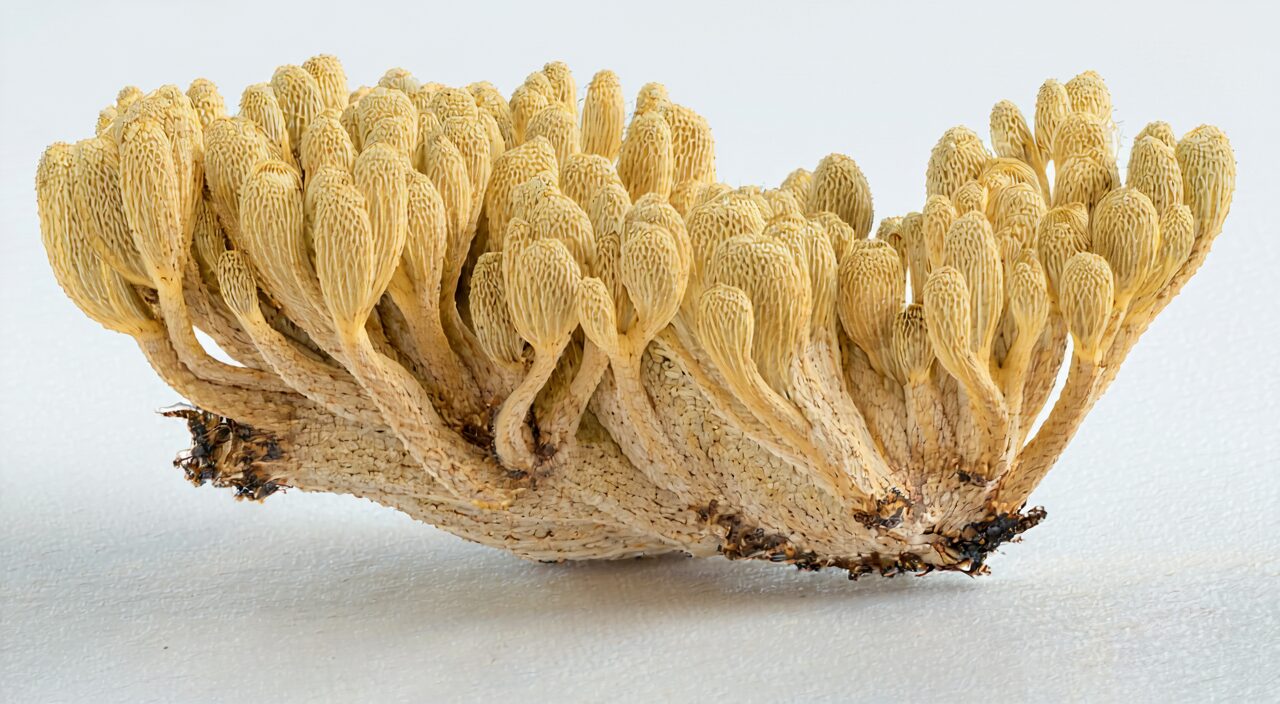
Commercial Bai Qian is mostly available as dried prepared slices, and its original plant is Cynanchum stauntonii or Cynanchum glaucescens. The following aspects can be used for identification:
The dried rhizome is slender and cylindrical, often branching, generally measuring several to over ten centimeters in length and only one to two millimeters in diameter. The surface is mostly yellowish white or yellowish brown and relatively smooth, but the nodes are very conspicuous — slightly swollen and spaced at varying distances from one another. Many fine fibrous roots can be seen growing from the nodes, often in clusters, which is one of the key identifying characteristics of Bai Qian.
In terms of texture, dried Bai Qian is rather brittle and breaks easily. The fractured surface is uneven, and a small yellowish white woody core can be seen in the center. The odor is faint, and the taste is slightly sweet with a mild bitterness. If a specimen shows excessively thick rhizomes, indistinct nodes, or sparse fibrous roots, one should be alert to possible adulteration with other species.
What are the medicinal parts of Bai Qian?
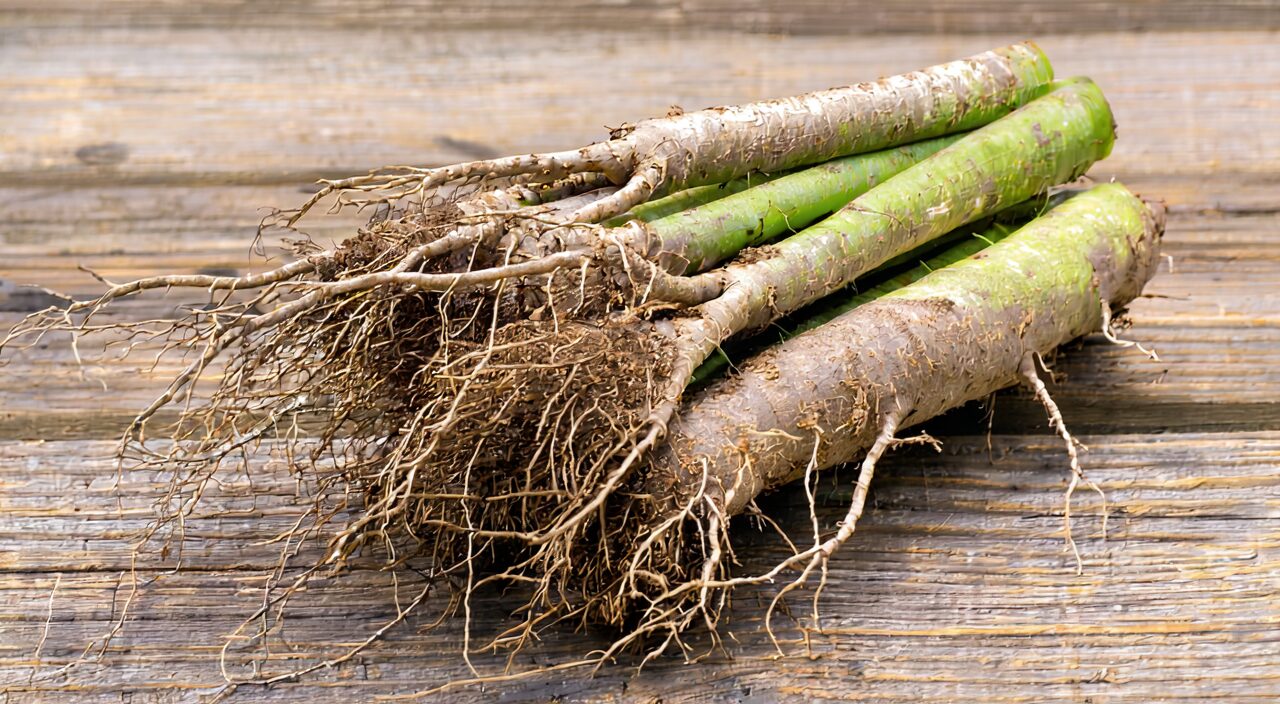
According to traditional processing methods, it is precisely the rhizome and root that are used as Bai Qian. The underground parts are typically harvested in autumn, after which the above-ground stems, leaves, and soil are removed. They are then washed clean and dried in the sun before being used medicinally. In some regions, they are further cut into short segments to facilitate later use.
The pharmacopoeial Bai Qian source plants accepted in the Chinese Pharmacopoeia are exactly Cynanchum stauntonii and Cynanchum glaucescens, and the medicinal part is clearly defined as the dried rhizome and root. The Bai Qian prepared slices commonly seen in daily practice often carry many fine fibrous root-like structures at the rhizome nodes, which are not only an identification marker but also a natural appearance of the medicinal substance. Therefore, there is no need to trim away all the fibrous roots, as these rootlets are equally part of Bai Qian’s medicinal parts.
How does traditional Chinese medicine understand Bai Qian?
In traditional theory, Bai Qian is slightly warm in nature, acrid and bitter in flavor, and it enters the Lung meridian. Its core functions focus on directing qi downward, reducing phlegm, and stopping cough. Rather than acting as a direct tonic, it eases the sensations of coughing and chest tightness by regulating lung qi and facilitating the expulsion of phlegm.
Traditionally, it is often used for manifestations such as cough with counterflow of qi, profuse phlegm, and stifling fullness in the chest and costal region. Whether the cough arises from wind-cold invasion or internal phlegm-dampness, as long as there are characteristics of lung qi failing to descend and phlegm obstructing the airways, Bai Qian may be considered as one of the options to explore. Especially for the type of sensation where qi seems to surge upward and the cough becomes unstoppable, it is frequently combined with herbs such as Jiegeng, Ziwan, and Baibu in formulas.
One thing to note is that “directing qi downward” differs from “dispersing.” Bai Qian leans more toward rectifying qi flow in a downward direction, and therefore it may be more suitable for cough with profuse phlegm caused by lung qi rebelling upward. For early-stage exterior patterns that require releasing pathogenic factors, it is often combined with other herbs that diffuse the lung so as to adjust the treatment direction. Whether it is appropriate still requires a comprehensive assessment based on one’s individual constitution, symptom characteristics, and professional judgment.
Brief overview of modern research
Modern research on Bai Qian is still in a stage of ongoing accumulation. Some studies indicate that Bai Qian contains constituents such as C21 steroidal saponins and shows certain tendencies toward antitussive and expectorant effects in animal experiments, but the studies are mostly based on crude extracts or preliminary pharmacological observations. There is still a distance to go before forming clear guidance for clinical application, so they are provided only for general reference.
What are the differences between Bai Qian, Qian Hu, and Bai Wei?
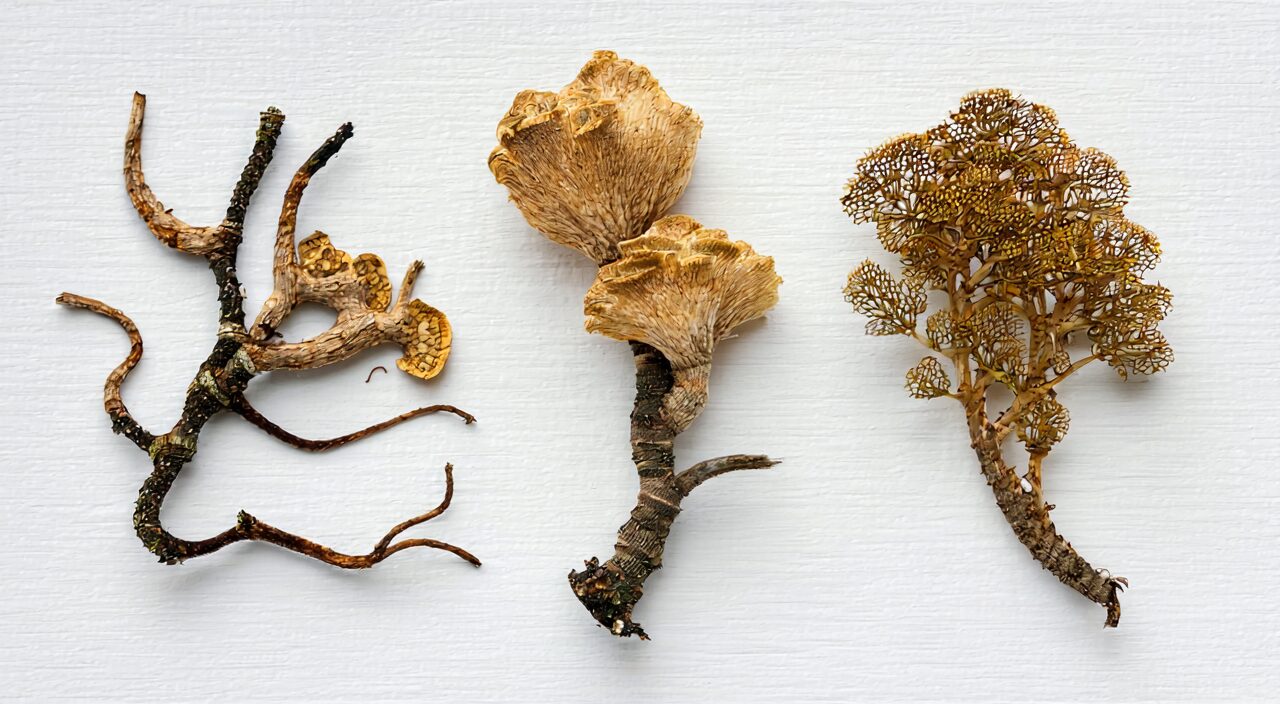
These three medicinal substances have similar-sounding names or overlapping functional domains, yet clear differences exist in their origin, morphology, and traditional applications.
In terms of original plant and medicinal parts, Bai Qian uses the rhizome and root of the Asclepiadaceae plants Cynanchum stauntonii or Cynanchum glaucescens; Qian Hu uses the root of the Apiaceae plant Peucedanum praeruptorum; Bai Wei comes from the root and rhizome of the Asclepiadaceae plants Cynanchum atratum or Cynanchum versicolor. The three differ in their plant families and genera, with Qian Hu even belonging to a different family.
From the standpoint of physical identification, Bai Qian’s rhizome is slender and elongated with distinct nodes, and its fine fibrous roots are soft and clustered, with a surface color tending toward yellowish white or yellowish brown. Qian Hu’s root head often bears remnant stem bases and fibrous leaf sheaths; the main root is conical, darker in surface color, and has obvious annular striations and longitudinal furrows. The rhizome of Bai Wei frequently extends transversely; its surface is brownish yellow, and the cut surface shows fine brownish textures that are noticeably different from the slender, straight sensation of Bai Qian.
As for traditional usage, Bai Qian emphasizes directing qi downward and eliminating phlegm and is commonly used for cough caused by lung qi ascending counterflow. Qian Hu can both direct qi downward and disperse wind-heat, so it may be more suitable for cough with phlegm-heat or wind-heat cough accompanied by exterior patterns. Bai Wei, by contrast, focuses on clearing heat and cooling the blood and is less directly associated with cough. Therefore, when distinguishing among them in practice, it is not advisable to use them interchangeably; careful differentiation is needed based on specific characteristics.
Which formulas use Bai Qian?
Several traditional formulas in which Bai Qian plays a primary role are often taken as reference points for understanding. They are not formulas to be directly adopted as personal health regimens and are listed as follows:
Zhi Sou San (Stop-Coughing Powder) is a commonly used formula from Yi Xue Xin Wu (Medical Insights). Its composition includes Jiegeng (Platycodonis Radix), Jingjie (Schizonepetae Herba), Ziwan (Asteris Radix et Rhizoma), Baibu (Stemonae Radix), Bai Qian, and others. Traditionally it is used for persistent coughing after an external wind pathogen has been contracted, accompanied by an itchy throat with scanty sputum or difficulty expectorating, employing the strategy of Bai Qian directing qi downward and transforming phlegm together with diffusing the lung and scattering pathogens.
Bai Qian Tang (Bai Qian Decoction) originates from Bei Ji Qian Jin Yao Fang (Essential Formulas Worth a Thousand Gold Pieces for Emergencies) and is composed of Bai Qian, Ziwan, Banxia (Pinelliae Rhizoma), etc. This ancient formula is mostly used for coughing with profuse phlegm and fullness and oppression in the chest caused by lung qi stagnation, with a stronger emphasis on directing qi downward and dispelling phlegm.
Bai Qian San (Bai Qian Powder) appears in various formulary texts with different emphases in its combinations. Some versions include Sangbaipi (Mori Cortex), Digupi (Lycii Cortex), etc., aiming to regulate conditions of lung heat cough with counterflow of qi. Traditionally, it emphasizes clearing lung heat and directing qi downward simultaneously.
Each of these formulas has distinct properties and directional tendencies, and they require a professional to determine appropriateness based on a clear understanding of the individual’s constitution and disease pattern. It is not advisable to directly copy and apply them on one’s own.
What precautions should be taken when using Bai Qian?
Although Bai Qian is a relatively common herb for resolving phlegm and stopping cough, it is not suitable for every type of cough.
Based on traditional experience, for cases of yin-deficiency dry cough, i.e., dry cough with scanty sputum, dry throat and mouth, and a sensation of heat in the palms, Bai Qian’s tendency toward being warm and dispersing may be a poor match and could potentially exacerbate the consumption of yin fluids. If hemoptysis or blood-streaked sputum appears, self-directed use of Bai Qian is also not advised, so as to avoid irritating the lung collaterals.
Some individuals may experience stomach discomfort after using Bai Qian, which is related to personal digestive sensitivity. If gastric distension, dull pain, or nausea occurs during the period of taking a related formula, one can provide feedback to the prescribing herbalist to see whether the dosage or combination needs adjustment.
More importantly, a cough is only a signal from the body. If a cough persists for more than three weeks without relief, or if it is accompanied by chest pain, breathing difficulty, recurrent fever, or significant unexplained weight loss, the priority should be to clarify the cause rather than relying solely on a single herb or empirical formula to suppress the symptom. In such circumstances, it is advisable to consult a physician as soon as possible.
Summary
Bai Qian is derived from the rhizome and root of Cynanchum stauntonii or Cynanchum glaucescens. Traditionally, it is used mainly to direct qi downward, eliminate phlegm, and stop coughs, and is commonly found in formulas such as Zhi Sou San and Bai Qian Tang. It is clearly distinct from Qian Hu and Bai Wei in terms of both appearance and function, and careful identification is necessary. Whatever the intended purpose of use, it is advisable to consider Bai Qian in the context of individual constitution, symptoms, and professional judgment. Especially for persistent cough or cases accompanied by other systemic symptoms, seeking medical evaluation should be the priority. This article is for general informational reference only and cannot replace professional diagnosis or treatment advice.