
What Is Chuan Bei Mu? Medicinal Parts, Identification, and Common Formulas
Among those seeking authentic Chinese herbs overseas, Chuan Bei Mu (Fritillariae Cirrhosae Bulbus) has always been a highly regarded ingredient. It frequently appears in seasonal wellness formulas during autumn and winter, yet its many commercial grades and wide price range often cause confusion. Simply put, Chuan Bei Mu is not a single plant but the dried bulbs of several Fritillaria species, such as Fritillaria cirrhosa, Fritillaria unibracteata, Fritillaria przewalskii, and Fritillaria delavayi. In the market, it is commonly categorized into Song Bei, Qing Bei, and Lu Bei. This article will sort out a relatively clear framework covering visual characteristics, medicinal parts, traditional understanding, differences from Zhe Bei Mu, common formulas, and usage precautions.
What Does Chuan Bei Mu Look Like? How to Identify It?
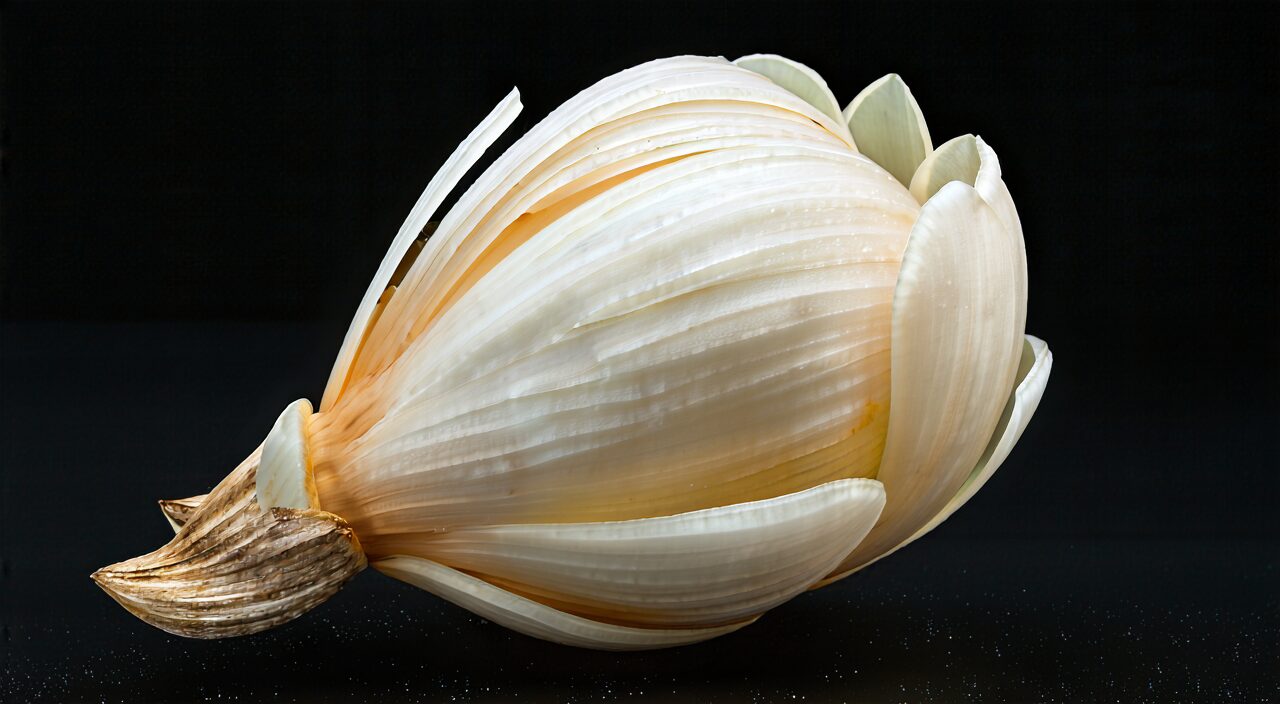
To understand the appearance of Chuan Bei Mu, it’s essential to first grasp the three main commercial forms: Song Bei, Qing Bei, and Lu Bei.
Song Bei, also called “Jian Bei,” is mostly subconical or nearly spherical, approximately 0.3–0.8 cm in height and 0.3–0.9 cm in diameter. Its most distinctive feature is the two outer scale leaves of strikingly different sizes: the larger scale tightly embraces the smaller one, and the unenclosed portion forms a crescent shape—commonly described as “Huai Zhong Bao Yue” (embracing the moon in the arms). The apex is closed, and the base is slightly concave, showing a greyish-brown root scar. The texture is hard and brittle; the fractured surface is white and starchy; the odor is slight and the taste slightly bitter. This is the superior grade and commands a relatively higher price.
Qing Bei is subspherical and flattened, 0.4–1.4 cm in height and 0.4–1.6 cm in diameter. The two outer scale leaves are similar in size and hug each other; the apex is open, revealing the tiny inner scale leaves and bud. The base is slightly flat, also showing a root scar. The surface is whitish or pale yellowish, and the texture is firm.
Lu Bei is mostly elongated conical and relatively large, 0.7–2.5 cm in height and 0.5–2.5 cm in diameter. The surface is usually off-white or pale yellowish-brown, often marked with yellowish-brown spots customarily called “tiger-skin spots.” The two outer scale leaves are similar in size, with an open and slightly pointed apex, and a slightly pointed or somewhat blunt base. The texture is less firm than Song Bei and Qing Bei, and the fractured surface is white and starchy. When identifying Lu Bei, focus on the “tiger-skin spots” and the elongated conical shape.
What Is the Medicinal Part of Chuan Bei Mu?
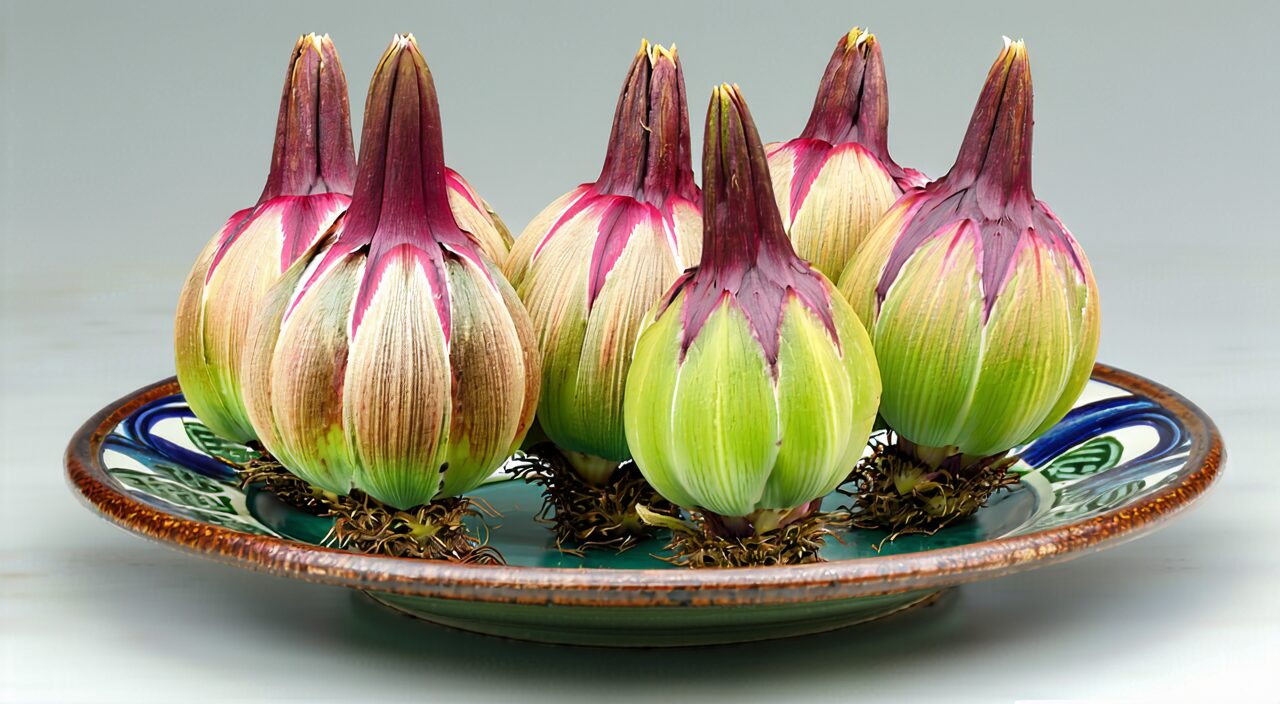
The medicinal part of Chuan Bei Mu is unequivocally the dried underground bulb of the plant. A bulb is a modified storage organ consisting of layers of fleshy scale leaves. Harvesting usually takes place in summer and autumn, or after the snow melts in high-altitude regions. After digging, the bulbs are cleaned of soil, rootlets, and rough outer skin, then dried in the sun or at a low temperature. During processing, it is important to avoid damaging the scale leaves, as this can easily compromise quality and storage. Traditional experience holds that the best quality is marked by intact scale leaves, firm starchy texture, and a pure white color. The washing and drying stages are especially critical; improper handling may lead to yellowing, mold, or insect infestation, affecting subsequent use. Therefore, choosing Chuan Bei Mu with a clear source is more practical than fixating on a single appearance indicator.
How Does Traditional Chinese Medicine Understand Chuan Bei Mu?
In TCM theory, Chuan Bei Mu is characterized as bitter and sweet, slightly cold, and it enters the Lung and Heart meridians. Its main actions are summarized as clearing heat, moistening the lung, transforming phlegm, stopping cough, and dispersing masses and resolving abscesses. Unlike some herbs that purely resolve phlegm, Chuan Bei Mu leans toward moistening dryness, a point repeatedly emphasized in classical texts.
When conditions such as lung heat with dry cough, dry cough with little phlegm, yin deficiency with consumptive cough, or blood-streaked sputum arise, many formulas include Chuan Bei Mu. Its purpose is to moisten the lung without damaging yin while resolving the sticky phlegm obstructing the airways. From a treatment strategy perspective, it is often regarded as a clearing and moistening agent rather than a drying dampness and transforming phlegm one. Accordingly, it is traditionally combined with yin-nourishing herbs such as Glehniae Radix (Sha Shen), Ophiopogonis Radix (Mai Dong), Lilii Bulbus (Bai He), and Rehmanniae Radix (Di Huang) to form formulas that emphasize nourishment. It is important to note that this application is based on the traditional syndrome differentiation system; whether it suits an individual must be determined according to their specific constitution, tongue, pulse, and symptom presentation.
What Are the Directions of Modern Research?
Modern research on Chuan Bei Mu primarily focuses on its active constituents and pharmacological effects. Various alkaloids, such as chuanbeinone, sipeimine, and peimisine, have been isolated from different source species. Some laboratory studies indicate that these components show certain activities in relieving cough, expelling phlegm, and relieving asthma; some studies also explore antioxidant and antibacterial directions. However, most of these are in vitro or animal experiments, and there is still a gap before direct clinical application. Modern phytochemistry and pharmacology provide a perspective for understanding traditional uses, but at present, it is not possible to simply infer the effects of Chuan Bei Mu based on the properties of common foods or isolated ingredients. For overseas readers, understanding this information helps to view this medicinal substance more calmly, without expecting instant results or miraculous effects.
What Are the Differences Between Chuan Bei Mu and Zhe Bei Mu?
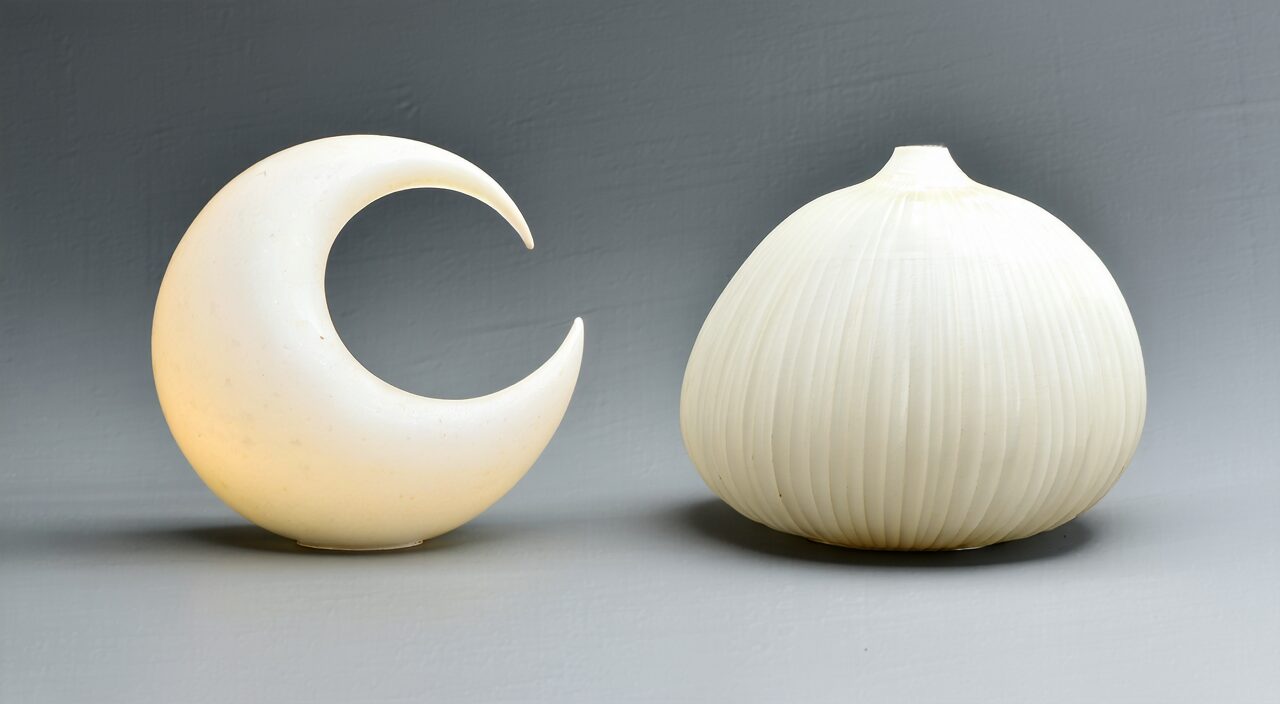
Although both are called “Bei Mu,” Chuan Bei Mu and Zhe Bei Mu have marked differences in origin, appearance, and traditional application emphasis, and it is worth taking some space to clarify them.
First, the botanical sources differ. Chuan Bei Mu comes from the bulbs of several Fritillaria species, as described above; Zhe Bei Mu is mainly derived from the bulbs of Fritillaria thunbergii, predominantly cultivated in Zhejiang and other regions. Visually, Chuan Bei Mu is generally smaller—most Song Bei and Qing Bei are about 1 cm in diameter, while Lu Bei is slightly larger. Zhe Bei Mu’s “Zhu Bei” (pearl bulb) is flattened-spherical, 1–2.5 cm in diameter, with particularly thick outer scale leaves that are kidney-shaped and hug each other; the apex is relatively flat and is often compared to a “sycee” shape. There is also “Da Bei” (large bulb), which is the outer single scale leaf, concave on one side and convex on the other, crescent- or water-chestnut-shaped, and even larger.
In traditional application, Chuan Bei Mu is slightly cold and tends to moisten, mostly used for yin deficiency dry cough, chronic cough with little phlegm, and other patterns oriented toward “moistening.” Zhe Bei Mu is more strongly bitter and cold, leaning toward clearing heat and dispersing masses, and is commonly used for coughs caused by external wind-heat or phlegm-fire constraint, as well as for scrofula and sores—patterns mainly treated by “clearing” and “dispersing.” In terms of price, Chuan Bei Mu as a whole is more expensive than Zhe Bei Mu, especially Song Bei, while Zhe Bei Mu is relatively cheaper. As a result, the market occasionally sees Zhe Bei Mu or even small Ping Bei Mu used to imitate Chuan Bei Mu. When distinguishing authenticity, in addition to key features like “embracing the moon,” one should also pay attention to the overall shape, texture, and odor, and choose trustworthy channels.
Which Formulas Use Chuan Bei Mu?
There are many formulas containing Chuan Bei Mu, and the emphasis of each formula differs. The following introduces a few common examples to help understand the role of Chuan Bei Mu in traditional compound formulas.
Bei Mu Gua Lou San originates from the “Yi Xue Xin Wu” and consists of Chuan Bei Mu, Gua Lou (Trichosanthis Fructus), Tian Hua Fen (Trichosanthis Radix), Fu Ling (Poria), Ju Hong (Citri Rubrum Exocarpium), and Jie Geng (Platycodonis Radix). It is traditionally used to moisten the lung, clear heat, regulate qi, and transform phlegm, and is often applied when there is lung dryness with phlegm, difficult expectoration, and a dry throat. Bai He Gu Jin Tang mainly includes Bai He (Lilii Bulbus), Sheng Di Huang (Rehmanniae Radix), Shu Di Huang (Rehmanniae Radix Praeparata), Mai Dong (Ophiopogonis Radix), Xuan Shen (Scrophulariae Radix), and Chuan Bei Mu. Its approach leans toward nourishing the lung and kidney, transforming phlegm, and stopping cough, and it is mostly used for cough, dyspnea, bloody sputum, and dry, sore throat caused by lung and kidney yin deficiency with flaring of deficient fire. Chuan Bei Pi Pa Gao is a widely known prepared Chinese medicine ointment, primarily composed of Chuan Bei Mu, Pi Pa Ye (Eriobotryae Folium), Jie Geng, and Bo He Nao (menthol). It is often selected for dry-heat cough, dry and itchy throat, and hoarseness. She Dan Chuan Bei Ye leans toward clearing lung heat, soothing the throat, and stopping cough, with She Dan Zhi (snake bile) and Chuan Bei Mu as the main ingredients. It has a cool taste and is often used for lung-heat cough with abundant yellow phlegm.
It is particularly important to note that the applicable presentations and constitutions for these formulas or prepared medicines vary greatly; they are not to be applied whenever a cough appears. For example, Bei Mu Gua Lou San is moistening, while She Dan Chuan Bei Ye is clearing and draining lung heat—using the wrong one could instead trigger discomfort. Therefore, whether to use them and which one to choose should be determined in conjunction with product instructions, one’s actual presentation, and consultation with an experienced professional.
What Precautions Should Be Taken When Using Chuan Bei Mu?
Although Chuan Bei Mu is regarded as a relatively gentle substance, there are still certain boundaries to keep in mind when using it.
First, it should not be casually used when signs of cold-phlegm or damp-phlegm are present. If the cough produces abundant white, thin, or watery, frothy sputum, and is accompanied by chest tightness, reduced appetite, and a white, greasy tongue coating, this generally belongs to a pattern of excess cold-dampness. In such cases, using the cool-moistening Chuan Bei Mu may instead impair spleen and stomach function and make the phlegm-dampness even harder to resolve.
Second, according to traditional contraindications, Chuan Bei Mu is incompatible with aconite-type drugs such as Chuan Wu (Aconiti Radix), Cao Wu (Aconiti Kusnezoffii Radix), and Fu Zi (Aconiti Radix Lateralis Praeparata), and should not be used together with them. This incompatibility is strictly observed in TCM. Even if one merely intends an occasional combination in a dietary recipe, they should be aware of this boundary.
Third, use in children requires extra caution. Because children’s constitutions are delicate and their responses and tolerance to medicinals differ from those of adults, the decision to use Chuan Bei Mu, as well as its method and dosage, should be made by someone with pediatric experience. Parents are not advised to administer it solely based on their own experience, especially long-term use without a proper diagnosis.
Fourth, there are issues of authenticity and adulteration. In the market, not only are similar-looking varieties such as Zhe Bei Mu and Ping Bei Mu used to imitate Chuan Bei Mu, but also bleaching by sulfur fumigation and weight-increasing methods occur. Bulbs that appear excessively white, taste sour, or give off a pungent odor should raise caution. A prudent approach is to choose channels with good reputation and traceable origins.
Summary
Chuan Bei Mu is an authentic Chinese herb known for moistening the lung and transforming phlegm. Its different commercial grades—Song Bei, Qing Bei, and Lu Bei—each have relatively stable visual characteristics, with Song Bei’s “embracing the moon” being the most distinctive. It differs markedly from Zhe Bei Mu in size, shape, and traditional application emphasis. When using it, one should pay attention to the unsuitability for cold-phlegm and damp-phlegm patterns, incompatibility with aconite drugs, and issues of authenticity and quality. The above content is for informational reference as TCM knowledge only and cannot replace professional diagnosis or individualized healthcare advice.