
What Is Chuan Wu? Medicinal Part, Identification, and Common Formulas
When exploring traditional Chinese herbs, many overseas users encounter the name “Chuan Wu” and easily confuse it with Fu Zi (aconite accessory root) and Cao Wu (kusnezoff monkshood). They come from the same plant but differ in part used and usage, leading to differences in effects and toxicity risks. This article covers the source, identification features, medicinal part, TCM understanding, modern safety information, differences from Fu Zi, common formulas, and usage precautions, aiming to provide a clear reference for those who want to understand Chuan Wu systematically.
What does Chuan Wu look like? How to identify it?
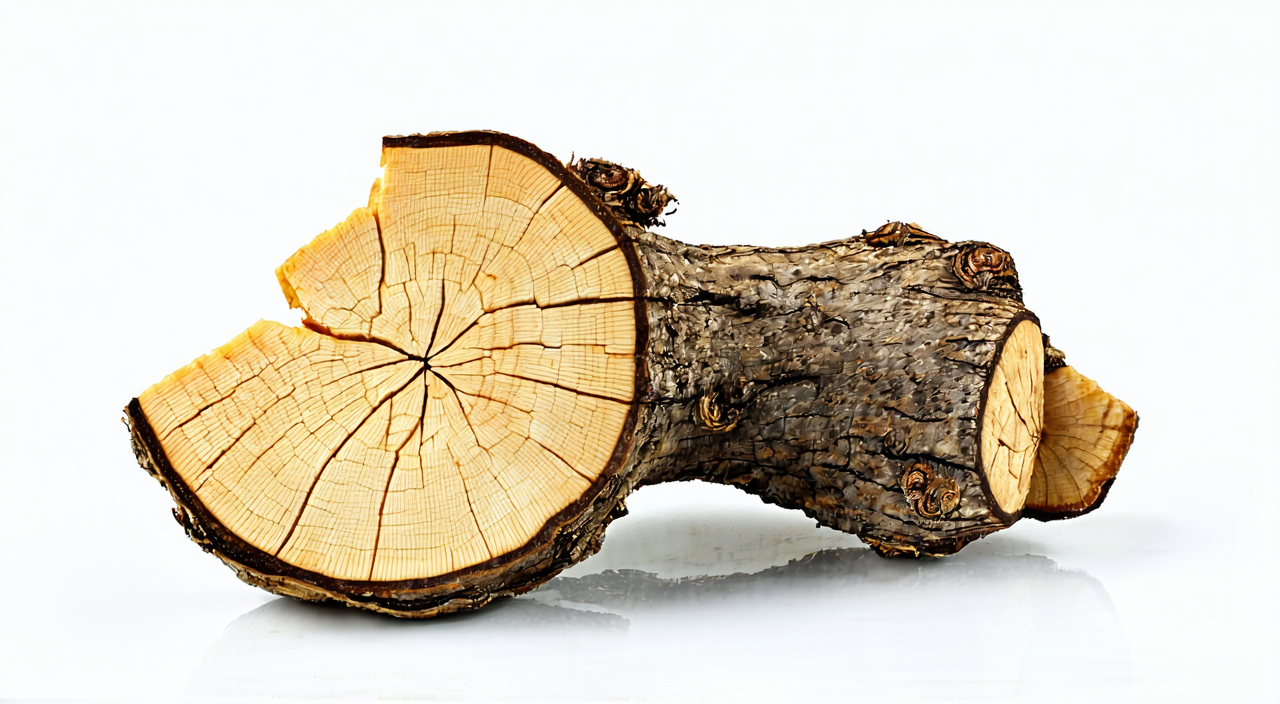
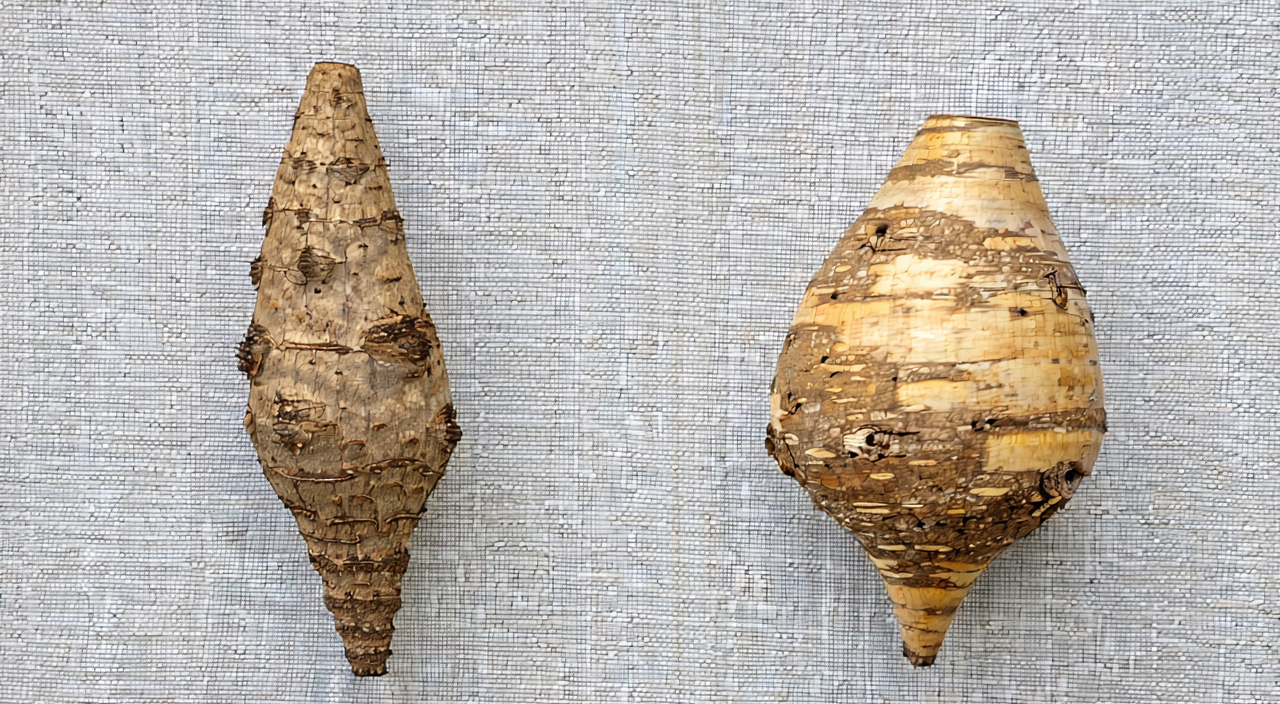
Chuan Wu is the dried mother root of the Aconitum carmichaeli plant, with distinctive morphological features. The herb is irregularly conical, slightly curved, with a remnant stem base often remaining at the tip, somewhat resembling a small “bird’s head” or “crow’s head,” which is also the origin of its plant name. The surface is grayish-brown or dark brown, with longitudinal wrinkles and raised rootlet scars. It feels hard to the touch.
When broken, the cross-section reveals starchy texture; the outer cambium ring is often irregularly polygonal, an important identification marker. High-quality Chuan Wu has a dense, starchy cross-section and a grayish-white color. Scraping with a fingernail often produces a fine, powdery sensation. Overall, compared to Fu Zi, it appears more slender and less plump, and it also differs from Cao Wu in shape and surface texture. Identification requires a comprehensive evaluation of multiple features.
What is the medicinal part of Chuan Wu?
The medicinal part of Chuan Wu is the mother root of Aconitum carmichaeli. After harvesting in autumn, the daughter roots (the source of Fu Zi) are removed, and the remaining mother root is cleaned and dried to become raw Chuan Wu. Raw Chuan Wu is extremely toxic and is traditionally not taken internally; it must undergo rigorous processing such as water soaking and steaming to produce processed Chuan Wu before being used in formulas.
Compared to the raw form, the toxicity of processed Chuan Wu is significantly reduced, but it still belongs to the category of herbs requiring dose control. Overseas or without professional guidance, you must not casually soak or process raw Chuan Wu on your own, as this poses a very high safety risk. Therefore, understanding that the medicinal part is the mother root and distinguishing between raw and processed products is the first step in building safety awareness.
How does TCM understand Chuan Wu?
From a TCM perspective, Chuan Wu is acrid, bitter, and hot with major toxicity, entering the Heart, Liver, Kidney, and Spleen meridians. Traditionally, it is mainly used to dispel wind-dampness and warm the channels to stop pain. Practitioners have often applied it to joint bi-pain, numbness of the limbs, and cold-type pain caused by wind-cold-dampness invasion. For example, joint discomfort that worsens with cold, or heaviness and limited flexion/extension in the lower back and legs due to cold-dampness—Chuan Wu may play a warming and unblocking role in compound formulas.
However, it must be emphasized that this warming and unblocking action is based on its “hot” nature and “acrid dispersing” property, making it unsuitable for cases with internal heat, yin deficiency with fire hyperactivity, or qi and blood deficiency. Therefore, TCM places great importance on pattern differentiation and combination when using it, often pairing it with qi- and blood-tonifying or yin-nourishing and sinew-softening herbs to moderate its harsh nature. This is also why Chuan Wu is not suitable for single-herb use, and even less suitable for individuals to use in cooking or alcohol infusion on their own.
What safety information does modern research suggest?
Modern pharmacological studies have found that the main active and toxic components of Chuan Wu are diester-type aconitine alkaloids, with significant effects on the heart and nervous system. These compounds can cause abnormal excitability of myocardial cells, and in severe cases, lead to arrhythmia, decreased blood pressure, respiratory depression, and other critical conditions. Early signs of poisoning may include numbness of the mouth and tongue, nausea, vomiting, diarrhea, chest tightness, and palpitations, with symptoms rapidly worsening as the dose increases or absorption accelerates.
Meanwhile, the processing procedure can hydrolyze the highly toxic diester-type aconitines into less toxic benzoylaconine or aconine, significantly reducing the risk. This explains why standardized decoction pieces and patent medicines must use processed Chuan Wu and have strict requirements for dosage and decoction time. For poisoning rescue, modern medicine mainly employs gastric lavage, antiarrhythmic drugs, and symptomatic supportive treatment. These studies remind us that even a seemingly traditional herb has a very narrow safety window, and the risks should not be casually underestimated.
What are the differences between Chuan Wu, Fu Zi, and Cao Wu?
Chuan Wu, Fu Zi, and Cao Wu differ in source, medicinal part, and toxicity level, which is a point of confusion for many users. Chuan Wu is the mother root of Aconitum carmichaeli; Fu Zi is the daughter root of the same plant, morphologically fuller and thicker, with properties leaning toward supplementing fire and assisting yang, and restoring yang to rescue from collapse. Cao Wu comes from the tubers of other Aconitum species such as Aconitum kusnezoffii, with equally fierce toxicity, traditionally used for wind-cold-damp bi-syndrome and traumatic injuries.
Simply put, Chuan Wu and Fu Zi are different parts of the same plant—one master root, one daughter root—while Cao Wu is from a different plant. Although all three have warming and cold-dissipating effects, their emphases and risk levels differ. In clinical application, processed Chuan Wu is often used in formulas for dispelling wind-dampness and stopping bi-pain, processed Fu Zi often appears in formulas for warming yang to rescue collapse, and processed Cao Wu is used even more cautiously. Understanding these differences helps avoid confusion when consulting related formulas.
Which classic formulas use Chuan Wu?
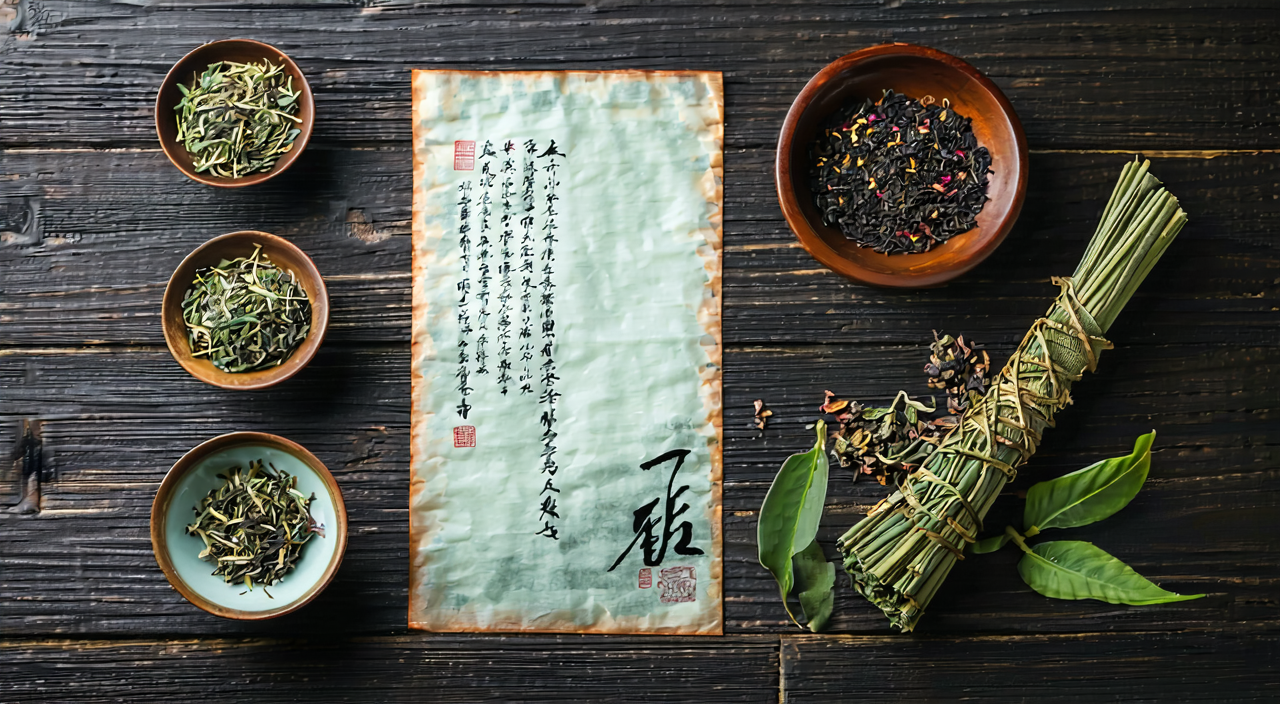
Chuan Wu plays a role in warming the channels, dissipating cold, and removing dampness to stop pain in some traditional formulas, often combined with herbs like Ma Huang (Ephedra), Shao Yao (Peony), Huang Qi (Astragalus), and Gan Cao (Licorice) to balance its harsh nature. Below are a few representative formula directions, provided only for informational purposes and not as medication advice.
Wu Tou Tang is a formula from the “Essential Prescriptions of the Golden Cabinet,” with Chuan Wu as the main ingredient, combined with Ma Huang, Shao Yao, Huang Qi, and Gan Cao, traditionally used for severe joint pain and limited mobility caused by cold-dampness invasion. Xiao Huo Luo Dan and Da Huo Luo Wan are patent medicines; the former contains processed Chuan Wu, processed Cao Wu, Di Long (Earthworm), Ru Xiang (Frankincense), Mo Yao (Myrrh), etc., traditionally used for limb numbness, joint stiffness, and impaired movement caused by wind-cold-damp obstruction. Da Huo Luo Wan further adds wind-dispelling, blood-activating, and phlegm-dissolving channel-unblocking herbs, offering a broader range of applications. Chuan Wu San is a traditional powder formula for external or internal use, rarely manufactured in modern dosage forms, but recorded in ancient texts for cold-damp headaches or toothaches.
Although these formulas and patent medicines have a long history, each has strict indication presentations and contraindicated populations. Whether they are appropriate must be determined by a professional based on individual constitution and symptom characteristics; do not apply them on your own.
What precautions should be taken when using Chuan Wu?
Safety in using Chuan Wu is the core theme of this article. First, absolutely do not purchase raw Chuan Wu for home decoction, alcohol infusion, or powdering. Raw Chuan Wu is severely toxic, and even a very low dose can cause serious poisoning; there is no safe margin for any home-based self-treatment.
Second, although processed Chuan Wu in traditional decoction pieces has been treated, it must still be used under the guidance of a TCM practitioner and with strict adherence to processing standards and decoction times. For long-term, recurrent joint pain, or pain accompanied by noticeable chest tightness, palpitations, breathing difficulties, or other abnormal manifestations, it is even more important to first have a physician rule out organic problems rather than trying Chuan Wu-type formulas on your own.
Additionally, according to traditional combination contraindications, Chuan Wu should not be used together with Ban Xia (Pinellia), Gua Lou (Trichosanthes), Bei Mu (Fritillaria), Bai Ji (Bletilla), Bai Lian (Ampelopsis), etc., which fall under the “Eighteen Incompatibilities.” Although this contraindication is still debated in modern times, for safety reasons, formulas containing Chuan Wu typically avoid concurrent use with these herbs in the absence of sufficient research evidence.
If accidental ingestion occurs or symptoms such as mouth and tongue numbness, nausea and vomiting, dizziness and palpitations, or limb numbness appear, immediately stop contact, retain the sample, and seek emergency medical care without delay. Never attempt to neutralize the poison with folk remedies. These precautions are not overstated risks but essential information that any responsible communicator must convey clearly.
Summary
Chuan Wu is a herb with two distinct faces: on one hand, it has a long tradition of use in dispelling wind-dampness and warming channels to stop pain; on the other, its aconitine-type toxic components make its safety window extremely narrow. From identifying the mother root, distinguishing it from Fu Zi and Cao Wu, to classic formulas containing Chuan Wu, and the unavoidable combination contraindications and poisoning risks, understanding this background knowledge is far more important than curious experimentation. This article is for informational reference only and cannot replace professional diagnosis or treatment advice. Any pain issues should first be consulted with a qualified healthcare professional.