
What Is Fu Pen Zi? Medicinal Parts, Identification and Common Formulas
When encountering traditional Chinese medicine overseas, the name “Fu Pen Zi” often raises questions: is it the same as the raspberry fruit we normally eat? Why are the raspberries sold in supermarkets bright red and sweet, while the Fu Pen Zi mentioned in herbal prescriptions is mostly grayish-green and tastes sour and astringent? In fact, medicinal Fu Pen Zi has strict harvesting standards and specific use scenarios and cannot simply be replaced with the fresh fruit. This article offers a science-based reference for readers who wish to understand this herb from the perspectives of visual characteristics, medicinal parts, traditional understanding, differences from similar products, and common formulas.
What does Fu Pen Zi look like? How to identify it?
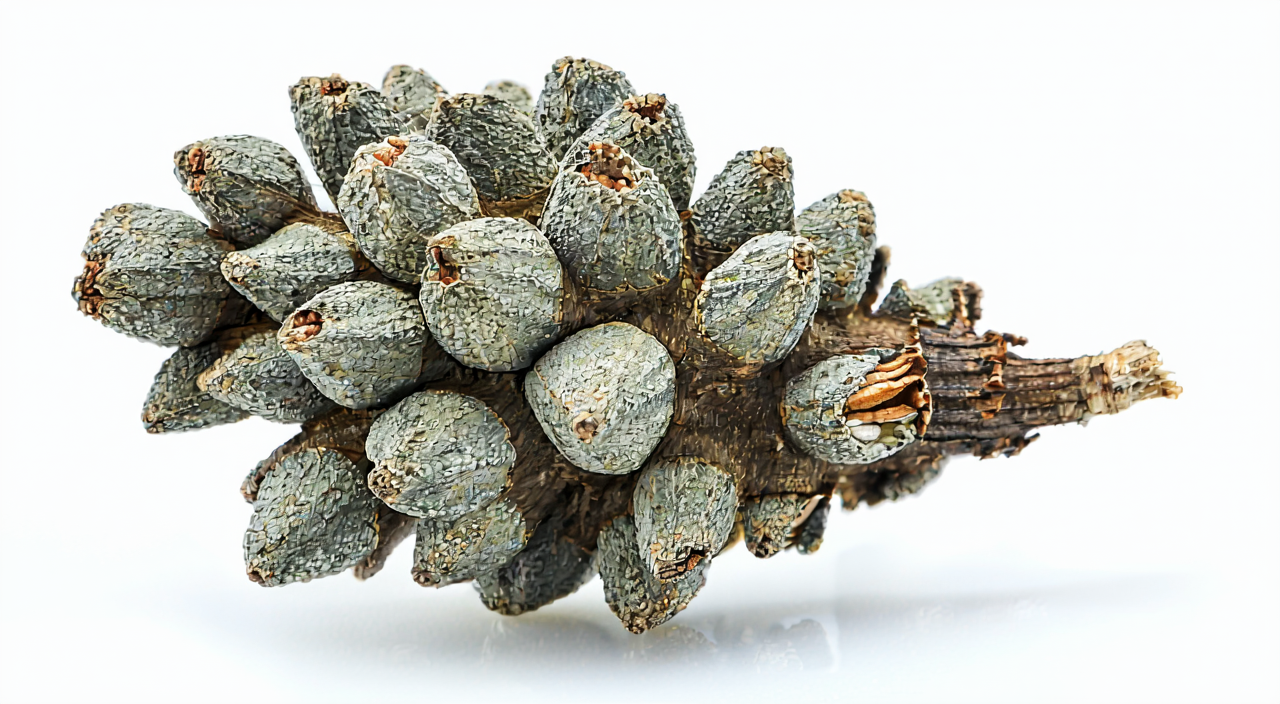
Medicinal Fu Pen Zi is an aggregate fruit composed of many small drupelets. The whole fruit is typically conical or oblate-spherical, with a slightly flat base and a blunt, rounded apex. Unlike the common red raspberry found in supermarkets, the surface of medicinal Fu Pen Zi is mostly grayish-green, yellowish-green, or pale brown, covered with a layer of fine grayish-white fuzz. Magnified, each small drupelet is half-moon shaped, with a ridged back and reticulated texture on the surface, tightly packed together.
Texture and smell can also assist in identification. Dried Fu Pen Zi is light in weight, firm and brittle, and easily splits along the seams between the drupelets. When peeled apart, the small brown or reddish-brown pits can be seen, also with fine surface textures. In terms of smell, medicinal Fu Pen Zi has a faint, delicate fragrance and a sour, slightly astringent taste without strong sweetness. If compared with fully ripe fresh raspberries, the fresh ones are more purplish-red or deep red, the flesh is noticeably softer, and the sweetness is much higher than the medicinal dried product. When identifying Fu Pen Zi, focus on the aggregate fruit shape, the grayish-green or yellowish-green color, and the sour-astringent taste; these features often help distinguish medicinal Fu Pen Zi from edible raspberries or other substitutes.
What is the medicinal part of Fu Pen Zi?
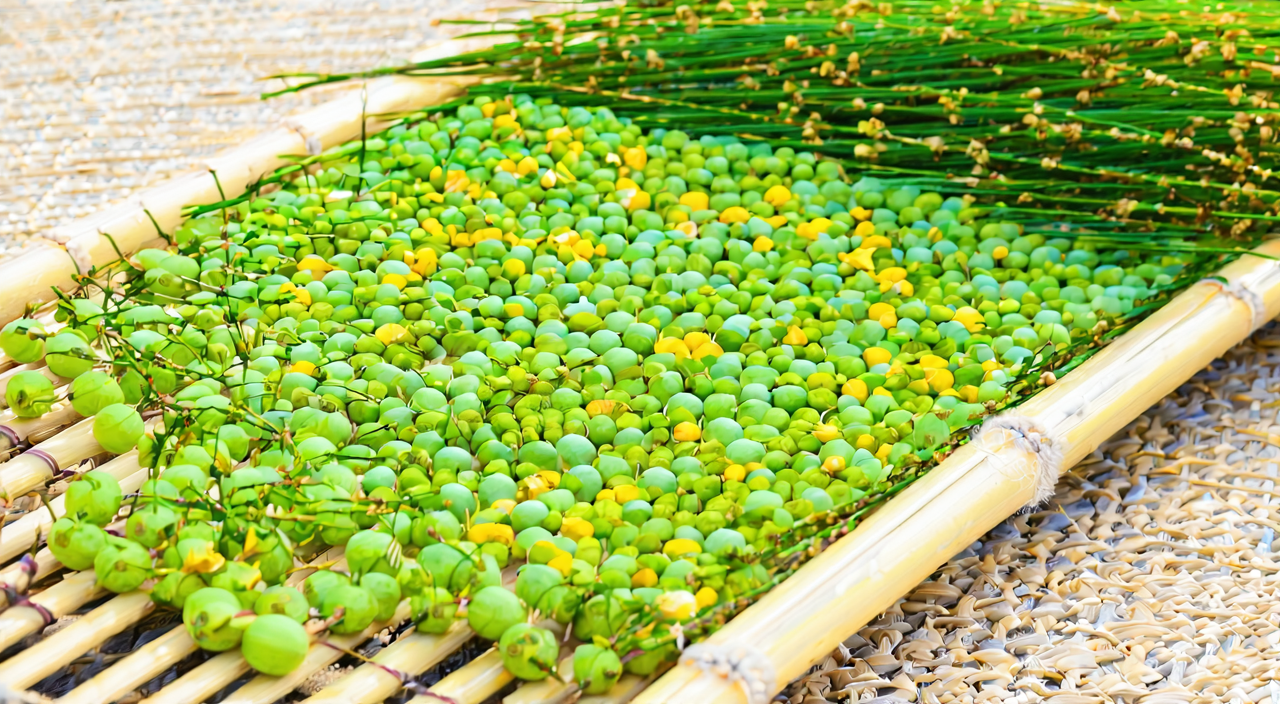
The medicinal part of Fu Pen Zi is the nearly ripe dried fruit of the Rosaceae plant Rubus chingii Hu. It is important to note that the fruit used in medicine is not the fully ripened, completely red and sweet fruit. Instead, it is harvested in early summer when the fruit changes from green to greenish-yellow but has not yet fully turned red and soft. After harvesting, impurities are removed, the fruits are briefly scalded in boiling water or steamed, and then dried in the sun or by heat, becoming the dried Fu Pen Zi commonly seen in herbal medicine.
This harvesting and processing approach is closely related to the understanding of Fu Pen Zi in traditional Chinese medicine. Nearly ripe fruits have a stronger sour and astringent sensation, and it is traditionally believed that the astringing and securing power of the fruit is most potent at this stage. If the fruit is allowed to fully ripen, its sweetness increases while the sour and astringent qualities decrease, changing its functional direction and making it more suitable as food than as medicine. Therefore, when purchasing or learning about related products, one should not assume that “Fu Pen Zi is simply dried raspberry.” Instead, it is essential to clearly distinguish the harvesting standards, processing methods, and final uses.
How does TCM understand Fu Pen Zi?
In traditional Chinese medical theory, Fu Pen Zi is commonly classified as an astringent medicinal, mainly used for supplementing the kidneys and securing essence, reducing urination, nourishing the liver, and brightening the eyes. Its nature and flavor are sweet, sour, and slightly warm, and it enters the kidney and liver meridians. Descriptions in classical herbal texts often focus on its astringent and securing characteristics, considering it a medicinal that can simultaneously astringe and preserve essence while also supplementing and boosting the liver and kidneys — a substance that “tonifies while also astringing.”
From an application perspective, Fu Pen Zi is often seen in managing patterns involving kidney qi insecurity, such as enuresis, frequent urination, nocturnal emission, and spermatorrhea. At the same time, because the liver opens into the eyes and the liver and kidney share a common source, Fu Pen Zi is also used to assist patterns such as liver blood insufficiency and dim vision. For example, in some formulas targeting eye strain and gradually blurring vision, Fu Pen Zi is often combined with Gou Qi Zi (goji berry) and Tu Si Zi (dodder seed) to nourish the liver and brighten the eyes. It must be emphasized that these directions represent traditional understanding and clinical experience; whether they are suitable for a specific individual must be combined with constitution, symptoms, and the judgment of a professional.
What have modern studies discovered?
Modern research has conducted preliminary explorations into the constituents of Fu Pen Zi, finding that it contains raspberry acid, tannins, flavonoids, organic acids, vitamins, and various trace elements. Some in vitro experiments and animal studies suggest that Fu Pen Zi extracts may have potential in areas such as antioxidation, anti-fatigue, and regulation of reproductive endocrine functions. There are also studies focusing on its protective effects on retinal pigment epithelial cells, offering some modern reference for the traditional use of Fu Pen Zi in nourishing the liver and brightening the eyes.
However, most of these studies are still at the laboratory stage or involve small sample sizes and are still some distance from forming clear medicinal guidelines. Readers may take this information as background for further understanding but should not use it to self-assess the efficacy of Fu Pen Zi, nor should it replace standardized TCM pattern differentiation and modern medical diagnosis and treatment.
What are the differences between Fu Pen Zi, edible raspberry, and Wu Wei Zi?
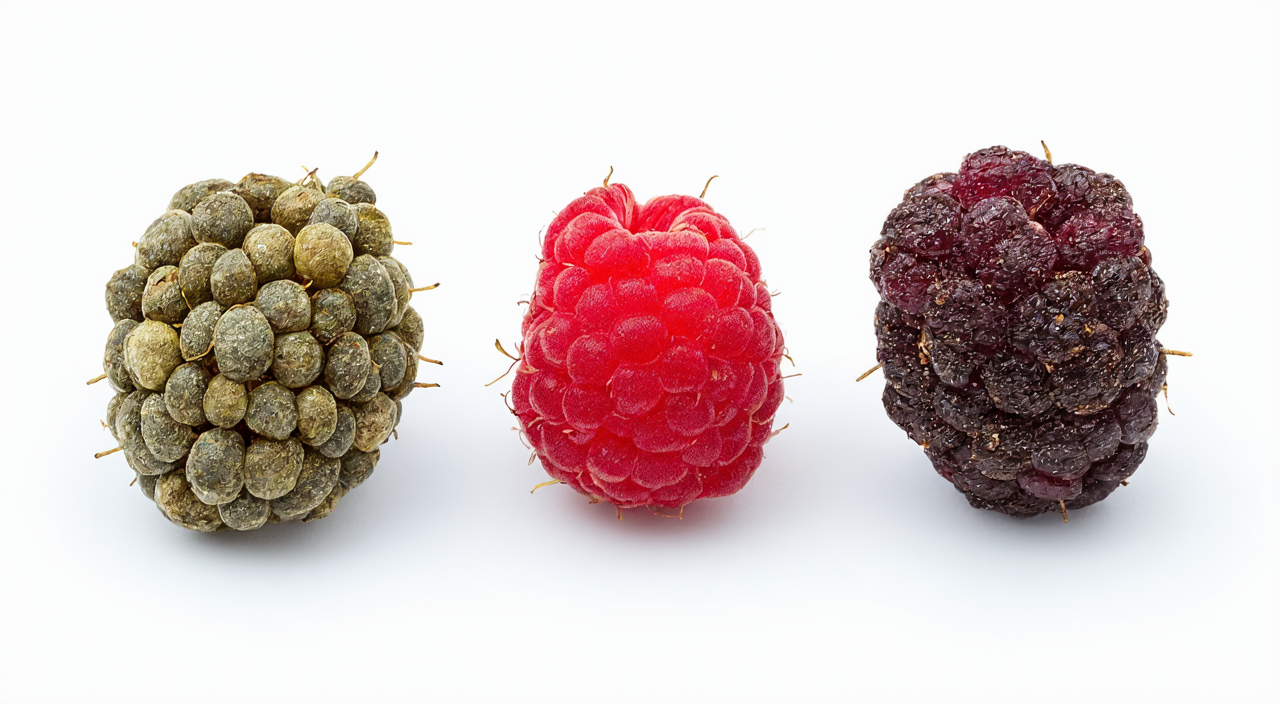
Fu Pen Zi is easily confused with edible raspberries and another medicinal herb, Wu Wei Zi (Schisandra fruit), due to similarities in name or appearance.
Compared with edible raspberries, the core difference lies in the degree of ripeness and usage. Edible raspberries are typically harvested when the fruit is fully ripe, deep red or purplish-red in color, with soft, juicy flesh and high sweetness, mainly used as fruit or processed into jams and desserts. Medicinal Fu Pen Zi, on the other hand, is harvested when nearly ripe. After drying, the sour and astringent flavor is prominent, the sweetness is very faint, and the overall texture is firm and brittle. Simply substituting one for the other not only affects the functional direction of the formula but may also cause other issues due to differences in sugar content.
Another substance easily confused with Fu Pen Zi is Wu Wei Zi, especially since the two are sometimes used together in certain supplementing and astringent formulas. Although Wu Wei Zi also has astringent and securing characteristics, its nature and flavor are more sour and warm, and it mainly enters the lung, heart, and kidney meridians. It is stronger in astringing the lungs and enriching the kidneys, generating fluids and stopping sweating, and calming the heart and settling the spirit. In appearance, it is a spike-like or spherical dried fruit, entirely different from the aggregate fruit form of Fu Pen Zi. The two differ in plant origin, nature, flavor, meridian entry, and primary functional directions, so they generally need to be distinguished according to specific presentations in clinical use.
Which formulas use Fu Pen Zi?
Fu Pen Zi appears with relatively high frequency in traditional formulas, especially in those designed to secure the kidneys, astringe essence, and reduce urinary frequency. Several representative formulas are listed below for interested readers as directions for further understanding.
Wu Zi Yan Zong Wan is a classic formula composed of Fu Pen Zi, Gou Qi Zi, Tu Si Zi, Wu Wei Zi, and Che Qian Zi (plantain seed). It is traditionally used for patterns such as kidney essence deficiency and detriment to yang from yin damage, manifesting in male infertility, nocturnal emission, premature ejaculation, and soreness and weakness of the lower back and knees. In this formula, Fu Pen Zi is combined with Tu Si Zi and Gou Qi Zi with the intention of both tonifying and astringing.
Fu Pen Zi Wan and Tu Si Zi Wan are also formulas centered around Fu Pen Zi. Different versions vary slightly in composition, but they generally revolve around the strategy of securing kidney qi and supplementing the liver and kidneys. In addition, in some essence-securing formulas, Fu Pen Zi is frequently used together with herbs such as Jin Ying Zi (Cherokee rose hip), Qian Shi (Euryale seed), and Long Gu (fossilized bone) for conditions of kidney deficiency insecurity and instability of the essence gate.
It must be reiterated that these formulas carry traditional use experience and do not mean that one can self-apply them. Whether a formula is suitable should be determined by combining an individual’s constitution and specific presentations, referring to product instructions, or consulting a TCM professional for a comprehensive judgment.
What precautions should be taken when using Fu Pen Zi?
Although Fu Pen Zi is commonly seen in various traditional healthcare scenarios, there are still some situations that require attention during use.
Firstly, because Fu Pen Zi has strong astringent and securing properties, people with patterns of abundant internal damp-heat, short and painful urination with astringent sensation, or sticky and difficult bowel movements are traditionally advised to use it with caution. In such cases, it often needs to be combined with other herbs that clear and drain damp-heat to avoid trapping pathogens inside.
Secondly, Fu Pen Zi contains a certain amount of organic acids and natural fructose. For individuals who need to control sugar intake, when selecting preparations or decoction pieces containing Fu Pen Zi, attention should be paid to product descriptions to avoid mistaking edible raspberry jam or dried raspberry snacks for medicinal Fu Pen Zi. The sugar and water content of fresh raspberries or edible berries is significantly different from medicinal dried fruit, and consuming large quantities directly may impose a metabolic burden.
Moreover, Fu Pen Zi is usually used as one ingredient in a formula and is rarely used alone. If symptoms such as long-term or recurring enuresis, nocturnal emission, declining vision, or significant anxiety, soreness and pain in the lower back, or abnormal urination occur, self-formulating herbal combinations is not recommended. One should promptly consult a doctor or professional for a systematic evaluation.
Summary
As a traditional astringent medicinal, Fu Pen Zi requires special attention to the difference between the nearly ripe fruit and edible raspberries. There are clear differences in harvesting standards, nature and flavor tendencies, and usage; the two cannot be used interchangeably. At the same time, Fu Pen Zi is mainly oriented toward supplementing the kidneys, securing essence, reducing urination, nourishing the liver, and brightening the eyes, and is commonly seen in formulas such as Wu Zi Yan Zong Wan and Fu Pen Zi Wan, but specific application must be combined with constitution and professional judgment. During use, one should pay attention to patterns such as damp-heat constitution, inhibited urination, and glucose metabolism, and avoid equating fresh edible berries or jams with medicinal substances. This article is for science-based reference only and cannot replace professional diagnosis and treatment advice.