
What is Uncaria? Medicinal Parts, Identification Methods, and Common Formulas
When it comes to Uncaria (Gou Teng), many people interested in Chinese herbal medicine will first think of its hooked stems and branches. Seeing a few small branches with curved hooks lying among the herbs always sparks curiosity about the plant they come from and why precisely the hooked section is used. This article provides a systematic overview, from visual identification and the medicinal part to traditional understanding and common formulas, aiming to help build a general picture of Uncaria.
What Does Uncaria Look Like and How to Identify It
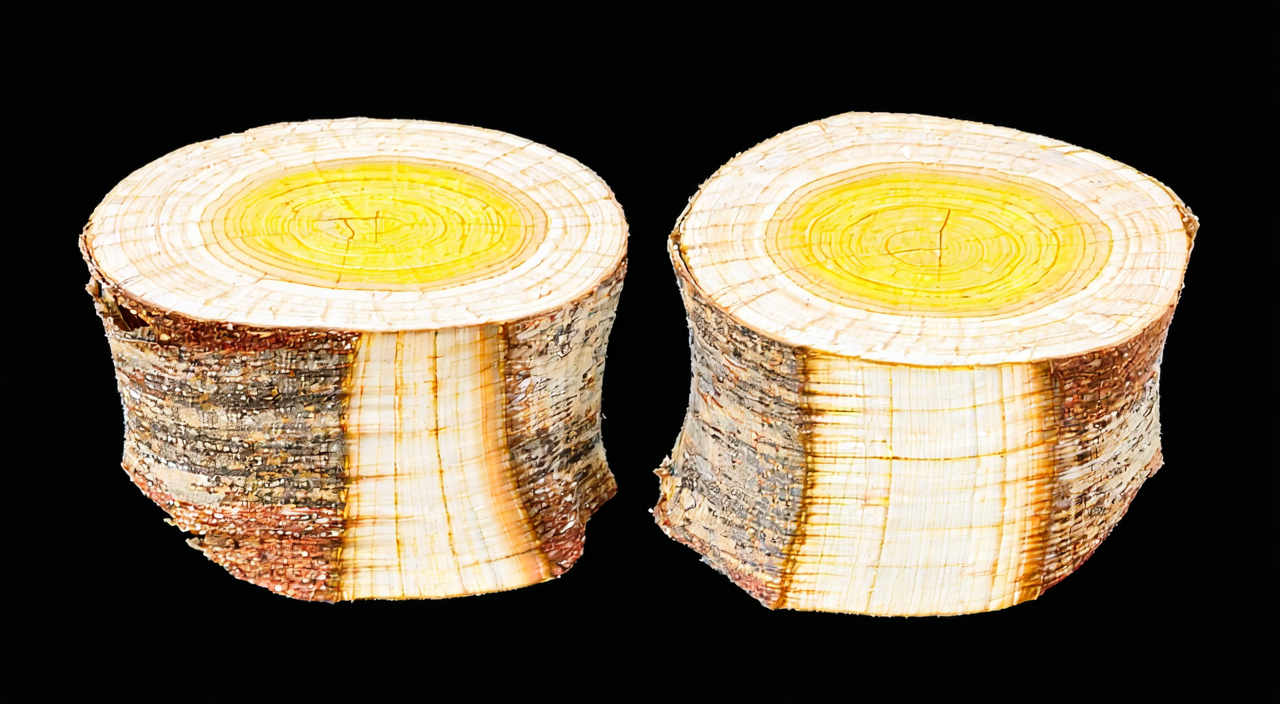
Uncaria is one of the most easily identifiable Chinese medicinal materials. Uncaria available on the market primarily consists of the dried hooked stems and branches of various Uncaria species from the Rubiaceae family, cut into short segments after processing.
Overall, Uncaria stems are cylindrical or somewhat square in cross-section, usually around 2–5 mm in diameter. The surface is not smooth but bears fine longitudinal striations. The color ranges mostly from greyish-brown and reddish-brown to purplish-brown, with some nodes slightly swollen and traces of fallen leaf stalks still visible.
The most striking feature is the hook. Some stems bear only a single hook, known as a “single hook”; others have an opposite pair of hooks, like two fingers curving toward each other. The surface of the hook also shows longitudinal striations, and the texture is tough—even after drying, they are not easy to break. If you examine a cross-section closely, the stem’s cut surface is typically yellowish-white, the pith is lighter in color, and sometimes a little loose. Unlike typical vine stems, Uncaria does not break with extensive fibers but snaps relatively cleanly.
In addition, dried Uncaria slices often emit a faint, fresh fragrance, have a mild taste, and feel slightly mucilaginous when chewed. These are all useful details for rough identification in daily life. Of course, if precise authentication is needed, microscopic features or physicochemical tests should be applied, especially to distinguish it from other vines that look somewhat similar.
What Is the Medicinal Part of Uncaria?
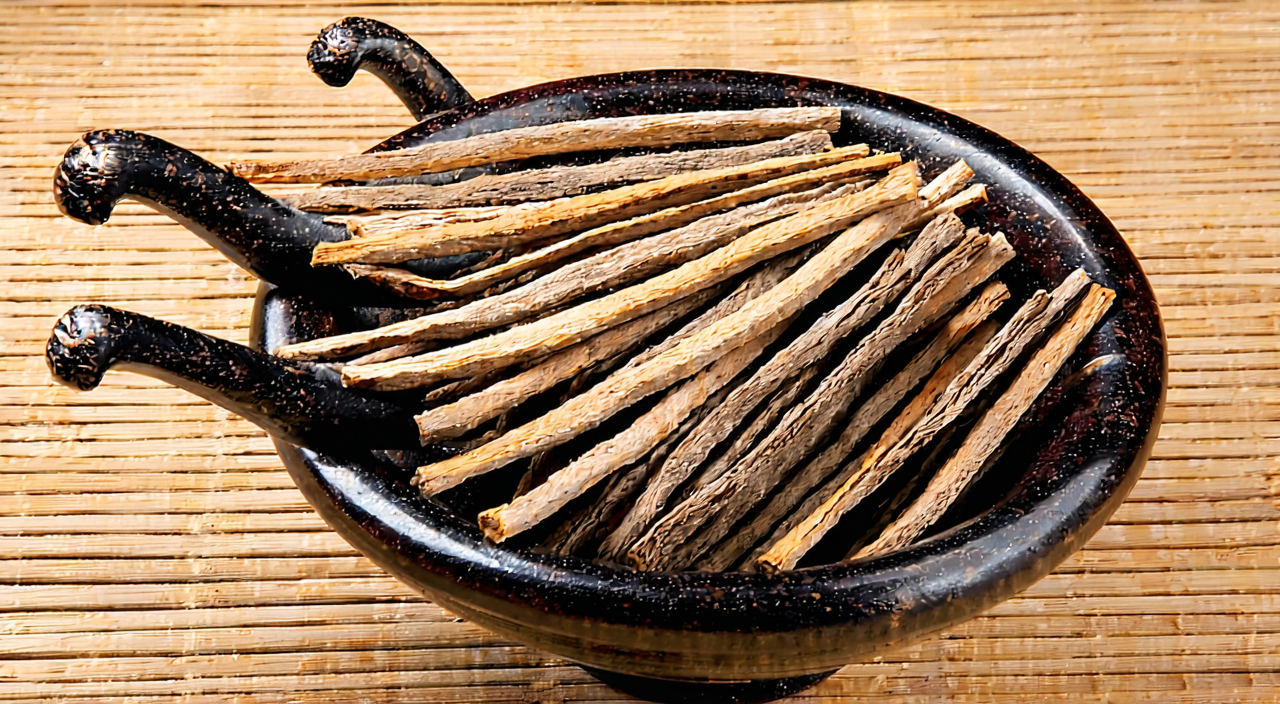
The medicinal part of Uncaria is clearly defined: the hooked stems and branches. According to the Chinese Pharmacopoeia, Uncaria consists of the dried hooked stems and branches of Uncaria rhynchophylla, Uncaria macrophylla, Uncaria hirsuta, Uncaria sinensis, or Uncaria sessilifructus.
Harvesting usually takes place in autumn and winter, when the above-ground growth slows and the accumulation of active compounds is relatively stable. Young hooked stems and branches are selected, leaves and excess thick stalks are removed, and they are cut into short segments and dried in the sun or at low temperature. During this process, the hooked portions are preferentially kept because it is traditionally believed that the medicinal strength is more concentrated in the hooks and the stem sections immediately adjacent to them.
In terms of decoction method, Uncaria has a particularity: it needs “later addition.” Many traditional formulas specify that Uncaria should not be boiled for a prolonged time. Usually it is added a few minutes before the other herbs finish cooking, or dissolved and poured into the decoction at the end. From a traditional viewpoint, the reason is mainly to retain its light, dispersing, and release-promoting nature and avoid weakened efficacy after lengthy boiling. Modern research has also offered some explanations regarding the stability of its chemical components. In any case, when preparing a decoction at home, if Uncaria is included in the formula, paying attention to the order of addition is advisable.
How Does Traditional Chinese Medicine View Uncaria?
In TCM theory, the functions of Uncaria are often summarized as extinguishing wind, calming fright, clearing heat, and pacifying the liver. It mainly enters the Liver and Pericardium meridians and is traditionally used for patterns associated with “liver wind” and “liver heat.”
“Extinguishing wind and calming fright” does not refer to treating a specific disease name but rather, from the perspective of traditional pattern differentiation, considers Uncaria relatively suitable for manifestations arising from ascendant liver yang and internal stirring of liver wind—such as distending headache and dizziness, irritability, or, in children, night crying and sudden startling during sleep. When encountering these presentations, many TCM practitioners may include Uncaria in the formula as a regulating approach.
The “clearing heat and pacifying the liver” aspect focuses more on a state of heat in the Liver meridian. If a person tends to be easily agitated and irritable, has facial flushing, dry, sore, or swollen eyes, or elevated blood pressure, TCM may intervene from the angle of pacifying the liver and subduing yang, combining Uncaria with herbs such as Gastrodia (Tianma) and Haliotidis Concha (Shi Jue Ming). However, it is important to emphasize that these are only traditional usage directions; whether they are suitable for an individual must be judged by a TCM practitioner based on constitution and specific symptoms.
What Does Modern Research Say About Uncaria?
Modern pharmacological research on Uncaria has mainly focused on its alkaloid constituents, such as rhynchophylline and isorhynchophylline. In experiments, these compounds have demonstrated some cardiovascular activities, including a vasodilatory effect on vascular smooth muscle and, under certain conditions, a regulatory effect on blood pressure.
Additionally, some studies have explored the impact of Uncaria on the central nervous system, finding that it may possess sedative and anticonvulsant potential. Some in vitro experiments also suggest that Uncaria extracts might have a protective effect on certain nerve cells. These findings provide a modern perspective to partially explain the traditional use of Uncaria, but most are still at the research stage and are some distance from directly guiding everyday use. This information is mainly provided to help understand the background of the herb, rather than serving as a basis for self-medication.
What Are the Differences Between Uncaria, Gastrodia, and Star Jasmine?
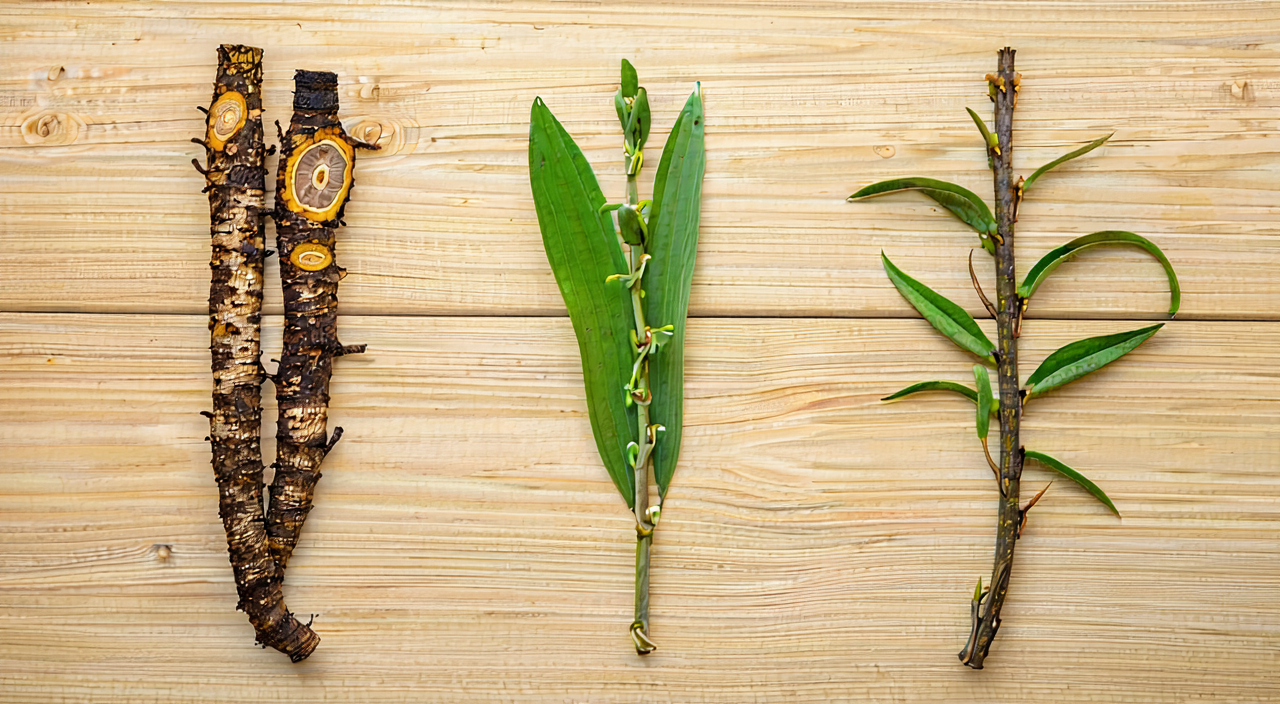
Many people associate Uncaria with Gastrodia (Tianma) or Star Jasmine (Luoshiteng) when they first see it, but they are entirely different medicinal materials. Once you grasp a few key points, distinguishing them is not difficult.
Uncaria is the hooked stem and branch; Gastrodia is the dried tuber of the orchid Gastrodia elata; and Star Jasmine is the dried leafy vine stem of Trachelospermum jasminoides from the Apocynaceae family. In terms of medicinal parts, Uncaria uses the young aerial stems and branches, Gastrodia uses the underground tuber, and Star Jasmine uses the vine stems and leaves—three completely different parts.
In appearance, Gastrodia is oblong or elongated, with a reddish-brown withered bud at one end and a round, navel-like scar where it detached from the mother tuber at the other; the surface has longitudinal wrinkles and horizontal rings formed by latent buds. The texture is firm, with a horny fracture surface, and it bears no hooks or barbs. Star Jasmine, by contrast, is a slender, cylindrical vine stem with a reddish-brown or greyish-brown surface, adventitious roots, swollen nodes, and opposite leaves; sometimes small fruits are visible. It looks nothing like the conspicuous paired hooks of Uncaria.
In terms of traditional use, Uncaria emphasizes extinguishing wind, calming fright, clearing heat, and pacifying the liver. Gastrodia, while also extinguishing wind and stopping spasms, is often used for headache, dizziness, and numbness of the limbs; its liver-pacifying action is broader, whereas Uncaria excels at clearing liver heat. Star Jasmine primarily dispels wind, unblocks collaterals, cools the blood, and reduces swelling, and is commonly used for wind-damp painful obstruction and tendon or vessel contractures. Although all three can appear in formulas related to “wind,” their emphases differ considerably; the selection should be based on the actual presentation.
Which Formulas Use Uncaria?
Many formulas in classical texts include Uncaria, and some are still flexibly adapted in clinical practice today. Here are a few representative examples.
Tianma Gouteng Yin (Gastrodia and Uncaria Decoction) is where many people first learn about Uncaria. This formula combines Uncaria with Gastrodia, Haliotidis Concha (Shi Jue Ming), Gardenia (Zhi Zi), Scutellaria (Huang Qin), Eucommia (Du Zhong), and Taxillus (Sang Ji Sheng). It is traditionally used for dizziness, headache, and insomnia caused by ascendant liver yang and liver wind stirring upward. Uncaria mainly plays the role of clearing liver heat and pacifying liver yang, working in synergy with Gastrodia—one clears, one pacifies—to jointly address the upward disturbance of wind-yang.
Lingjiao Gouteng Tang (Antelope Horn and Uncaria Decoction) originates from Tongsu Shanghan Lun (Popular Treatise on Cold Damage). The original formula features antelope horn and Uncaria as principal ingredients, complemented by mulberry leaf, Fritillaria, fresh Rehmannia, and chrysanthemum. It is traditionally used for severe conditions such as high fever, convulsions, and even loss of consciousness caused by extreme heat generating wind. In modern practice, antelope horn is often replaced by goat horn or water buffalo horn, while Uncaria remains an important component. This formula demonstrates the strong wind-extinguishing and spasm-relieving power of Uncaria, but its application is quite specific—it is by no means an everyday formula.
Gouteng Yin (Uncaria Drink) appears under several variations in classical texts. A common version uses Uncaria as the main herb, with insect-derived substances such as Scorpio (Quan Xie), Bombyx (Jiang Can), and Periostracum Cicadae (Chan Tui), targeting acute infantile convulsions and spasms. Such formulas have a relatively drastic nature and must be used under strict pattern differentiation by a qualified TCM practitioner.
In addition, Uncaria can be found in some liver-settling and wind-extinguishing formulas, for example combined with Os Draconis (Long Gu), Ostreae Concha (Mu Li), Haematitum (Dai Zhe Shi), and Achyranthes (Huai Niu Xi) for dizziness, vertigo, and limb tremors due to yin deficiency with yang hyperactivity and internal liver wind stirring.
It is important to note that each of these formulas has its own specific indications and complex ingredient combinations, and they should never be self-applied based on just one or two symptoms. For instance, Tianma Gouteng Yin leans toward clearing liver heat and pacifying liver yang, whereas liver-settling and wind-extinguishing formulas often also nourish yin and subdue yang—different therapeutic focuses. If you wish to learn more about these formulas, consulting a professional TCM practitioner is advised, taking into account your individual constitution and current health status for a comprehensive assessment.
What Precautions Should Be Taken When Using Uncaria?
Although Uncaria is a commonly used traditional Chinese medicinal, quite a few details warrant attention during use.
First, Uncaria has a notable tendency to lower blood pressure. Therefore, people with low blood pressure need to exercise particular caution when taking formulas containing Uncaria, as a further drop in blood pressure may cause dizziness, fatigue, and other discomforts. If you normally have low blood pressure or are already taking antihypertensive medication, be sure to inform your TCM practitioner or pharmacist.
Second, Uncaria has some sedative effects. If you are already using other sedatives, anti-anxiety medications, or sleep aids, possible excessive additive sedative effects should be considered. This is especially important when driving, operating machinery, or in any situation where alertness is required.
Pregnancy and breastfeeding are special physiological stages. Because Uncaria tends to invigorate blood and unblock collaterals and may have an impact on uterine smooth muscle, its use is generally not recommended for this population without professional guidance. If there is a special need, the decision must be made under the guidance of an experienced physician after weighing the benefits and risks.
In addition, if persistent convulsions, confusion, severe headache, nausea and vomiting, or neck stiffness and breathing difficulty occur, such emergency conditions are beyond the scope of Uncaria or any single Chinese herb and require immediate emergency medical attention without delay.
In summary, before using Uncaria, having a basic understanding of your own constitution and the medicinal background—rather than blindly following trends—is an important prerequisite for ensuring your safety.
Summary
As a traditional Chinese medicinal with high recognizability, Uncaria’s medicinal part is specifically the hooked stems and branches. Traditionally, its actions are understood in terms of extinguishing wind, calming fright, clearing heat, and pacifying the liver. Although Uncaria, Gastrodia, and Star Jasmine can all appear in “wind” related therapies, their origins, appearances, and therapeutic emphases are distinctly different. Understanding these differences helps in forming a more accurate understanding of Uncaria. Regardless of which formula one encounters, it is recommended to carefully assess based on individual constitution and professional advice. This article serves only as an informative reference and cannot replace professional diagnosis or treatment recommendations.