
What Is Hu Huang Lian? Identification, Medicinal Part, and Common Formulas
When encountering Chinese herbal medicines overseas, many people hear the name “Hu Huang Lian” and easily confuse it with the more common Huang Lian (Coptis). In reality, Hu Huang Lian is a distinct medicinal substance with its own unique applications, traditionally used to address conditions related to deficiency heat, nutritional impairment heat, and damp-heat. Understanding its basic characteristics, correct identification methods, and precautions for use is very helpful for selecting and using Chinese herbal medicines safely and appropriately.
What Does Hu Huang Lian Look Like? How to Identify It?
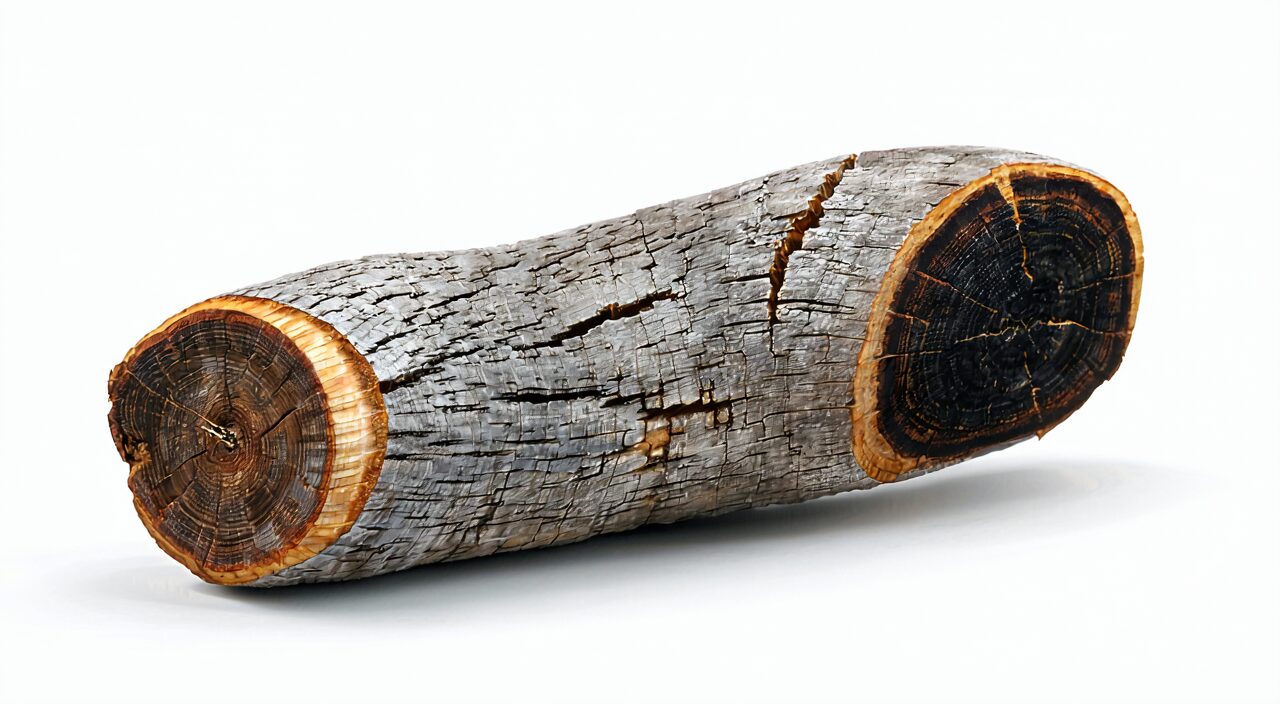
Prepared slices of Hu Huang Lian are usually cylindrical, slightly curved, and uneven in thickness, with lengths ranging from a few centimeters to over ten centimeters. The surface is grayish-brown or grayish-tan, sometimes with a faint dark green tinge, and is relatively rough. A very distinct feature is the presence of raised ring-like markings on the body; some of these rings are closely spaced, while others are more scattered, resembling tiny nodes. The texture is hard and brittle, breaking easily. The fractured surface is dark brown and appears slightly oily. The most characteristic aspect is its taste—extremely bitter upon entering the mouth, with the bitterness lingering for a long time and virtually no sweetness afterward. If the sample tasted has only a mild bitterness, or carries sour, astringent, or other flavors, it is worth re-examining more carefully.
What Is the Medicinal Part of Hu Huang Lian?
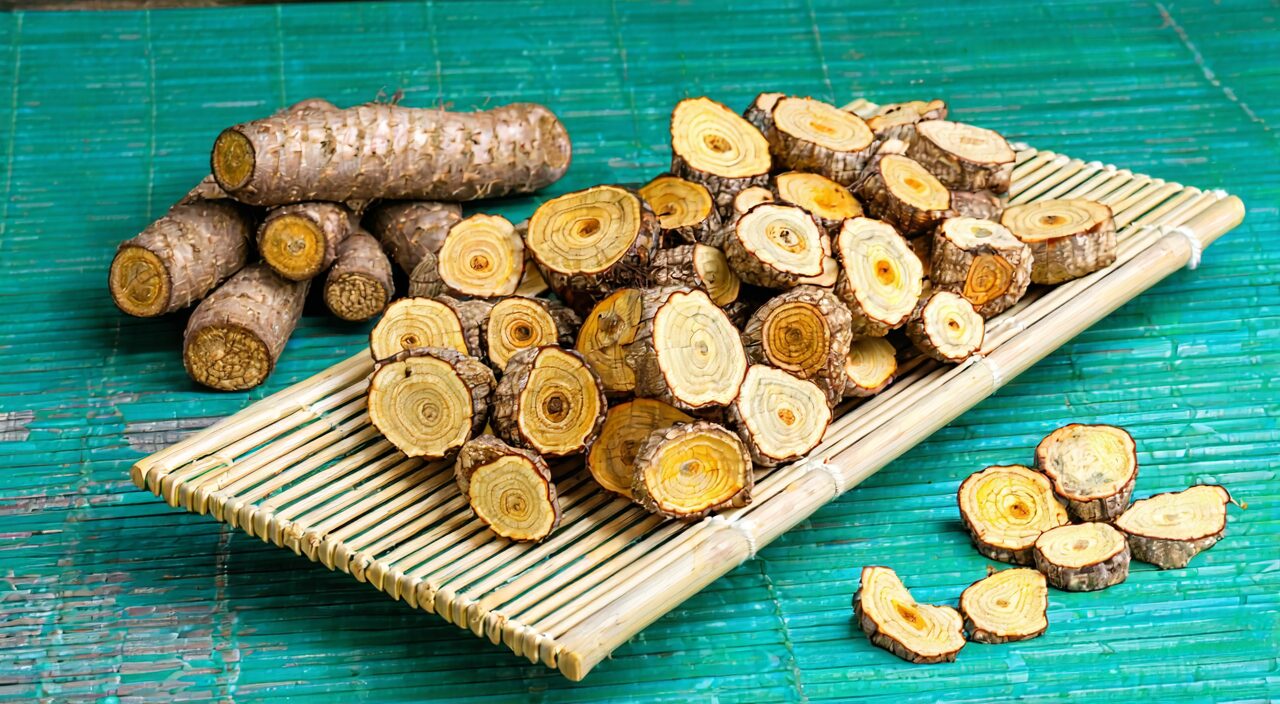
The medicinal part of Hu Huang Lian is its dried rhizome. It is usually harvested in autumn after the aerial parts have wilted, then the fibrous roots and sediment are removed. It is cut into thick slices while fresh or dried directly. Processing commonly involves sun-drying or low-temperature oven-drying to preserve the color and bitter components inside the material. According to traditional experience, specimens that are thick, brittle in texture, with a dark brown fractured surface and intensely bitter taste are considered superior. Because the bitter constituents of Hu Huang Lian are closely related to its therapeutic direction, care is taken during preparation and storage to avoid excessive moisture and direct sunlight, so as to prevent significant loss of active components.
How Does Chinese Medicine Understand Hu Huang Lian?
In the theoretical framework of traditional Chinese medicine, Hu Huang Lian is often classified among heat-clearing medicinals, but it is particularly adept at clearing “deficiency heat” and “nutritional impairment heat,” which differs slightly from the general tendency of heat-clearing medicinals to drain excess fire. Specifically, Hu Huang Lian is recognized from three main perspectives: first, it abates deficiency heat; for presentations such as afternoon low-grade fever, hot sensations in the palms and soles, and irritability caused by insufficient yin fluids giving rise to internal deficiency heat, it may be considered as a reference direction. Second, it relieves nutritional impairment heat; when children experience sallow complexion, emaciation, abdominal distension, and fever similar to an “infantile nutritional impairment” (gan) state due to spleen-stomach dysfunction and impaired nutrient absorption, Hu Huang Lian has traditionally been regarded as a possible option worth understanding. Third, it clears damp-heat; for certain skin problems or damp itching in the lower body caused by damp-heat accumulation, Hu Huang Lian is sometimes taken into account in formulation strategies. Of course, these traditional understandings need to be viewed within an overall pattern differentiation framework and should not be equated with a single herb being able to resolve complex conditions.
What Perspectives Does Modern Research Offer?
Modern research on Hu Huang Lian focuses mainly on its iridoid glycoside constituents, such as picroside I and II. Some in vitro experiments suggest that these components may possess hepatoprotective, choleretic, and anti-inflammatory activities, but most of these studies remain at the laboratory stage and should not yet be directly equated with definitive effects in the human body. Additionally, the extremely bitter nature of Hu Huang Lian is also considered a factor that may influence digestive function. Overall, modern research provides some material-level explanations for traditional uses, but practical application still relies on more comprehensive clinical evaluation.
What Are the Differences Between Hu Huang Lian and Huang Lian?
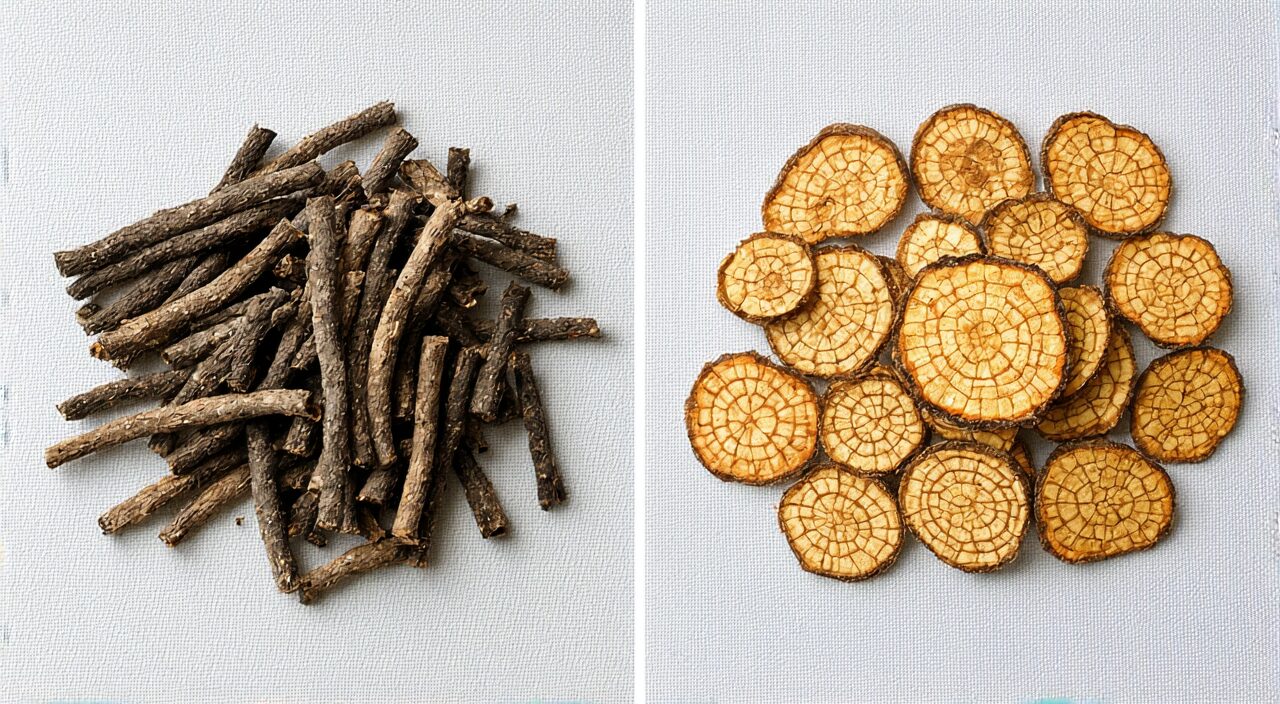
Many people confuse Hu Huang Lian with Huang Lian, but they actually differ significantly. First, their botanical origins are different: Huang Lian comes from the dried rhizome of plants in the Ranunculaceae family, such as Coptis chinensis, Coptis deltoidea, or Coptis teeta, whereas Hu Huang Lian comes from the dried rhizome of Picrorhiza kurroa, a plant in the Scrophulariaceae family—completely different plant families. In appearance, Huang Lian is often irregularly knotty, resembling chicken claws, with a yellowish-brown or brownish-yellow surface and a orange-yellow or reddish-yellow fractured surface; it also tastes extremely bitter, but the section color is distinctly more yellow. Hu Huang Lian, by contrast, is cylindrical, with ring-like markings, a dark brown fractured surface, an equally intense bitterness, but a deeper color. In terms of traditional application emphasis, Huang Lian is more often used to clear damp-heat from the middle burner and drain fire to resolve toxicity, commonly seen in patterns such as irritability, vomiting, diarrhea, and dysentery. Hu Huang Lian tends more toward abating deficiency heat, relieving nutritional impairment heat, and clearing damp-heat, especially in cases of yin-deficiency fever and infantile nutritional impairment heat. Therefore, although the two names are similar and both taste bitter, they have distinct emphases and should not be substituted for one another arbitrarily.
Which Formulas Include Hu Huang Lian?
Hu Huang Lian appears as one of the ingredients in certain traditional formulas. Here are a few representative examples, provided for educational reference only and not as treatment recommendations.
Qing Gu San is a classic formula primarily used for steaming bone fever due to yin deficiency. In this formula, Hu Huang Lian is combined with Yin Chai Hu, Di Gu Pi, Qing Hao, Zhi Mu, Qin Jiao, and others, where Hu Huang Lian often plays a role in abating deficiency heat. Traditionally, it is recognized as part of a regulatory approach when manifestations such as afternoon fever, night sweats, and heat sensations in the palms and soles are present.
Fei Er Wan is a formula frequently used for infantile nutritional impairment (gan accumulation) in children. Besides Hu Huang Lian, its composition includes Shi Jun Zi, Bing Lang, Mu Xiang, and others. The traditional strategy aims to strengthen the spleen, expel parasites, dissipate accumulation, and clear heat in order to improve conditions like emaciation, abdominal distension, and abnormal appetite in children. However, because children’s constitutions are delicate, such formulas should only be considered under the thorough assessment of a qualified professional.
Hu Huang Lian Wan is a formula directly named after Hu Huang Lian. Although the composition varies slightly across different classical texts, the overall direction still revolves around relieving nutritional impairment heat and clearing deficiency heat. These formulas reflect ancient physicians’ recognition of the unique actions of Hu Huang Lian and also remind us that Hu Huang Lian is rarely used alone; it generally works in coordination with other medicinal substances to exert its effects.
What Precautions Should Be Taken When Using Hu Huang Lian?
Hu Huang Lian has a relatively strong bitter-cold nature and is not suitable for everyone. Individuals with a pattern of spleen-stomach deficiency cold, who easily experience poor appetite, loose stools, cold abdominal pain, or aversion to cold and preference for warmth, need to be particularly cautious before using products that contain it. Selecting it blindly without understanding one’s own constitution may aggravate gastrointestinal discomfort.
For children, although Hu Huang Lian has historically been mentioned in the context of managing nutritional impairment heat, modern recommendations are stricter: pediatric use must be guided by professionals with relevant experience, and parents should not independently select preparations containing Hu Huang Lian for their children. During acute infections, chronic wasting diseases, or pregnancy, the decision must also be weighed after a detailed understanding of individual circumstances.
Furthermore, any ready-made Chinese patent medicine or formula is only one part of an overall regimen. Whether it is suitable still requires a comprehensive assessment combining personal constitution, symptoms, and professional advice. If persistent fever, marked weight loss, recurrent abdominal pain, or abnormal crying occur, prompt medical attention should be sought; do not rely on a single herb or formula to manage the situation on your own.
Summary
As a traditional Chinese herbal medicine, Hu Huang Lian holds a unique position in abating deficiency heat, relieving nutritional impairment heat, and clearing damp-heat. However, it differs markedly from the more common Huang Lian in origin, appearance, and therapeutic direction and must not be confused. Whether for adults or children, the use of Hu Huang Lian requires caution, especially for those with spleen-stomach deficiency cold and for young children, whose use should be considered only under professional evaluation. This article is provided for informational purposes only and cannot replace professional diagnosis or treatment advice. When in doubt, consult a qualified Chinese medicine practitioner or medical professional first.